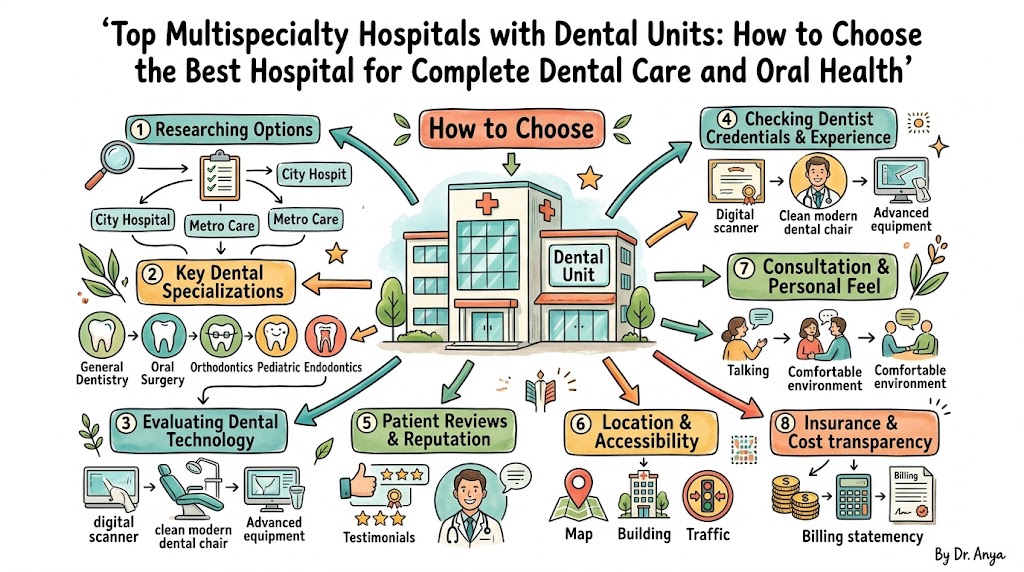
Maintaining oral health is a vital component of your overall physical well-being. A healthy mouth does more than just give you a confident smile; it prevents systemic inflammation, aids in proper nutrition, and protects you against chronic illnesses. While traditional dental clinics offer excellent basic care, many patients require the enhanced safety, collaboration, and high-tech resources found only in top multispecialty hospitals with dental units.Choosing where to seek care can feel overwhelming given the abundance of options available today. BESTDENTALHOSPITALS simplifies this process, helping patients compare dental hospitals, explore diverse treatment options, evaluate specialist credentials, and make informed oral healthcare decisions with absolute confidence. In this comprehensive guide, we will explore the advantages of choosing hospital-integrated dental care, the latest in dental technology, and actionable steps to maintain a healthy smile for a lifetime.
Understanding Dental Units in Multispecialty Hospitals
A dental unit integrated within a multispecialty hospital is significantly different from a standalone practice. These units operate under the umbrella of a large healthcare facility, meaning they have immediate access to hospital-grade resources, including advanced diagnostic labs, surgical suites, and multidisciplinary teams.If a dental patient has complex medical conditions—such as heart disease, diabetes, or severe allergies—a hospital-based dental unit is the safest choice. The ability to collaborate instantly with on-site physicians and anesthesiologists ensures that every dental procedure is performed with comprehensive medical oversight.
Why Dental Health Is Important
Your mouth is the gateway to your body. Oral health issues, such as untreated periodontitis, have been linked to an increased risk of heart disease, stroke, and diabetes complications. Bacteria from persistent oral infections can enter the bloodstream and cause systemic inflammation.
Consistent, high-quality dental care is not merely about aesthetics; it is a fundamental preventive measure. By prioritizing oral health, you are actively safeguarding your cardiovascular, metabolic, and respiratory health, ensuring your body functions at its peak for decades to come.
Benefits of Choosing Multispecialty Hospitals with Dental Units
When you opt for a multispecialty hospital, you are choosing a higher standard of integrated care. The primary benefits include:
- Multidisciplinary Collaboration: Dentists can consult with other hospital specialists instantly, which is vital for patients with complex systemic health histories.
- Emergency Infrastructure: In the event of dental trauma or severe infection, hospitals provide 24/7 emergency response, including rapid surgical intervention.
- Hospital-Grade Sterilization: These units maintain the most rigorous infection-control protocols, ensuring a sterile environment that meets international medical standards.
- Comprehensive Diagnostics: You gain access to in-house radiology (CT scans, MRIs) for precise planning of implants, jaw surgeries, and complex orthodontic treatments.
- Sedation and Sleep Dentistry: For patients with severe dental anxiety or for lengthy surgeries, hospitals offer advanced sedation options managed by board-certified anesthesiologists.
Common Dental Services Available
Table 1: Common Dental Services and Benefits
| Service | Purpose | Benefits | Ideal Candidates |
| Preventive Dentistry | Routine cleanings, sealants, exams. | Prevents decay and gum disease early. | All patients, twice yearly. |
| Cosmetic Dentistry | Whitening, veneers, bonding. | Enhances smile confidence and aesthetics. | Patients wanting aesthetic improvements. |
| Restorative Dentistry | Fillings, crowns, bridges. | Repairs damage from decay or injury. | Patients with chipped or decayed teeth. |
| Orthodontics | Braces, clear aligners. | Corrects bite and teeth alignment. | Patients with crowded or misaligned teeth. |
| Dental Implants | Permanent tooth replacement. | Restores bite force and bone density. | Patients with one or more missing teeth. |
| Oral Surgery | Wisdom tooth removal, jaw surgery. | Addresses complex anatomical issues. | Patients needing surgical intervention. |
Advanced Technologies Used in Modern Dental Care
The landscape of dentistry has shifted toward digital precision, making treatments faster, more comfortable, and highly accurate.
- Intraoral Scanners: Replace messy physical impressions with instant, high-definition 3D digital maps of your teeth.
- Cone Beam CT (CBCT): Provides 3D imaging of the jawbone and nerves, which is essential for accurate dental implant placement.
- Laser Dentistry: Allows for gum surgeries and decay removal with minimal bleeding, reduced swelling, and often without the need for stitches.
- CAD/CAM Milling: Enables the on-site, single-visit fabrication of high-quality porcelain crowns and bridges.
How to Choose the Right Dental Hospital
Your oral health deserves careful planning. Use the following guide to identify the best fit for your specific needs.
Table 3: Factors to Consider When Choosing a Dental Hospital
| Factor | Importance | Questions to Ask |
| Specialist Qualifications | Ensures expert handling of complex cases. | “Are the dentists board-certified in their specialty?” |
| Hospital Accreditations | Guarantees adherence to safety standards. | “What safety and quality certifications do you hold?” |
| Technology Access | Determines the precision of treatment. | “Do you use digital X-rays and 3D imaging?” |
| Emergency Coverage | Vital for sudden dental trauma. | “What is your 24/7 dental emergency protocol?” |
Daily Oral Hygiene and Prevention Tips
Consistent daily care is the backbone of your oral health journey.
- The 2×2 Rule: Brush your teeth twice daily for two full minutes using fluoride toothpaste.
- Floss Once Daily: Use floss or interdental brushes to remove plaque from the 40% of your tooth surface that brushing misses.
- Tongue Scraping: Use a tongue scraper every morning to remove bacterial buildup that causes bad breath.
- Hydrate Often: Drinking water helps neutralize acids produced by bacteria, protecting your enamel throughout the day.
- Smart Snacking: Limit the frequency of sugary snacks, as frequent sugar exposure is a major driver of tooth decay.
Table 4: Daily Oral Care Routine
| Activity | Recommended Frequency | Benefits |
| Brushing | Twice daily (after meals) | Removes plaque and surface stains. |
| Flossing | Once daily (before bed) | Prevents cavities between teeth. |
| Tongue Scraping | Every morning | Reduces bad breath bacteria. |
| Antiseptic Rinse | Once daily (if recommended) | Kills residual bacteria. |
Future of Digital Dental Healthcare
The field of dentistry is moving toward a highly predictive future. With the integration of Artificial Intelligence (AI), dentists can now analyze X-rays to detect microscopic cavities before they are even visible to the human eye. Furthermore, teledentistry is allowing patients to receive initial triage advice and follow-up care from home, making professional dental oversight more accessible than ever before.
Frequently Asked Questions
- What makes multispecialty hospitals better for dental care? They offer integrated care for patients with pre-existing medical conditions.
- How often should I get a dental cleaning? Most experts recommend professional cleaning every six months.
- Are dental implants safe? Yes, they are highly successful and considered the gold standard for tooth replacement.
- What is a dental emergency? Sudden swelling, severe pain, or a knocked-out tooth requires immediate hospital care.
- How do I choose between braces and aligners? A specialist will assess your bite and tooth spacing to recommend the best option.
- Does insurance cover hospital-based dental care? Many policies cover it; verify coverage with your provider beforehand.
- What if I have “dentist anxiety”? Hospitals offer sedation options to ensure a calm, painless experience.
- How long do crowns last? With good care, porcelain crowns can last 10–15 years or longer.
- What is the benefit of a digital X-ray? It significantly reduces radiation exposure and provides instant results.
- Can I get a root canal in one visit? Often, yes, thanks to modern endodontic technology.
- Do I need to see a specialist for a filling? A general dentist is usually sufficient, but complex cases may need an endodontist.
- Is teeth whitening safe for enamel? When done by a professional, it is completely safe for healthy enamel.
- Why do my gums bleed? Bleeding usually indicates gingivitis; you should see a dentist for a professional cleaning.
- How do I find the best hospital? Visit BESTDENTALHOSPITALS.COM to compare local options.
- Can children visit hospital dental units? Yes, many have specialized pediatric departments.
- Are dental checkups expensive? Preventive care is an investment that prevents costly emergency procedures later.
- What is periodontitis? A serious gum infection that can lead to tooth loss if not treated.
- How does diet affect my teeth? Sugary and acidic foods can erode enamel, while crunchy veggies help clean teeth naturally.
- What if I have an artificial joint? Always inform your dentist, as you may require prophylactic antibiotics.
- Is hospital dentistry right for everyone? It is especially ideal for complex, high-risk, or surgical oral health needs.
Conclusion
Choosing the right partner for your oral health is one of the most important investments you can make in your long-term wellness. Throughout this guide, we have explored why Top Multispecialty Hospitals with Dental Units represent the gold standard for comprehensive, safe, and advanced dental care. By opting for a hospital-integrated unit, you gain access to a collaborative network of medical experts, hospital-grade sterilization protocols, and state-of-the-art diagnostic technology that standalone clinics often cannot match.
The synergy within these multispecialty environments ensures that your oral health is managed with a holistic perspective. Whether you are navigating a routine cleaning, requiring a complex surgical intervention, or seeking long-term restorative solutions like dental implants, the ability for your dentist to coordinate with physicians in cardiology, endocrinology, or surgery provides an unmatched layer of safety and personalized precision. Modern dentistry is no longer just about filling cavities; it is about utilizing digital tools—like 3D imaging, laser therapy, and CAD/CAM milling—to deliver results that are faster, more comfortable, and built to last.