Introduction
A smile is one of the most powerful tools in human interaction. It conveys warmth, confidence, and health. However, many people live with misaligned teeth or bite issues that affect not only their self-esteem but their long-term oral health. Misalignment—or malocclusion—can make brushing and flossing difficult, lead to uneven tooth wear, and even contribute to jaw discomfort. Fortunately, the field of orthodontics has undergone a revolution in the last two decades.
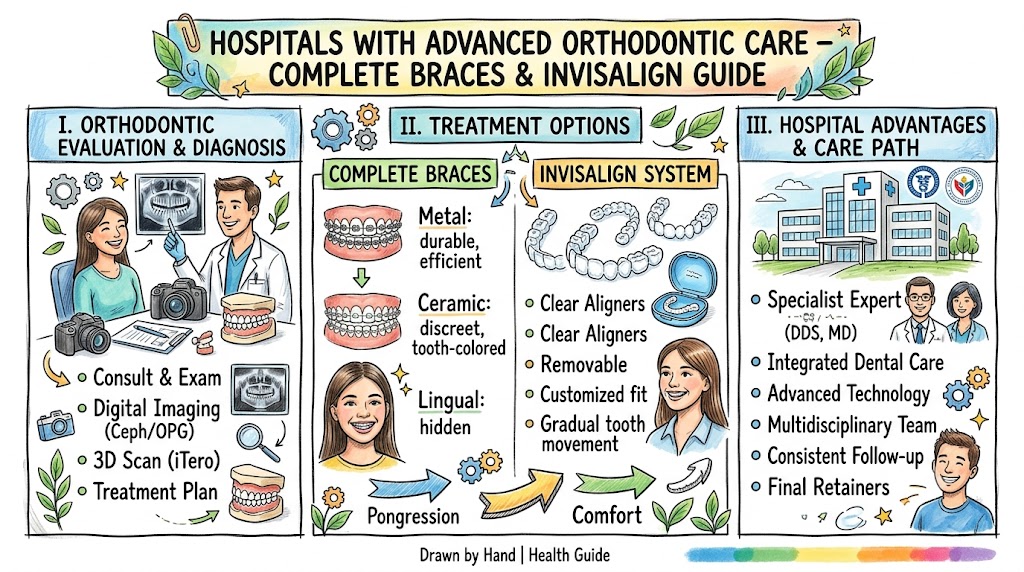
When searching for the right facility, it is essential to look for hospitals with advanced orthodontic care that offer more than just a quick fix. You want a partner—a clinical team that prioritizes long-term stability and functional health over cosmetic appearance alone. Modern dentistry is as much about the science of bite alignment as it is about the art of aesthetics.At BESTDENTALHOSPITALS, we believe that every patient deserves access to the most precise diagnostic tools and the most comfortable treatment modalities available. By choosing a center that utilizes digital scans, AI-assisted planning, and evidence-based practice, you are ensuring the best possible outcome for your dental future.
What is Orthodontics?
Orthodontics is the branch of dentistry that specializes in the diagnosis, prevention, and correction of malpositioned teeth and jaws. While general dentistry focuses on the health of teeth and gums, orthodontics focuses on how teeth fit together—the “bite”—and how that bite influences the overall function of your mouth.The ultimate goal of orthodontic treatment is a healthy, functional, and aesthetically pleasing bite. A proper bite ensures that your teeth meet evenly, reducing the risk of chipping, cracking, or premature wear. It also makes your teeth much easier to clean, which is the best defense against cavities and gum disease. Orthodontic specialists are highly trained professionals who undergo years of extra schooling beyond dental school to master the complex physics and biology of tooth movement.
Common Orthodontic Problems
Understanding your specific orthodontic issue is the first step toward treatment.
- Crowded Teeth: When there isn’t enough space in the jaw for all the teeth. This is a common cause of plaque buildup because it is difficult to floss between overlapping teeth.
- Overbite: When the upper front teeth overlap too far over the lower teeth. It can lead to irritation of the gums and excessive wear on lower teeth.
- Underbite: When the lower teeth protrude past the upper front teeth. This can cause significant strain on jaw joints and facial muscles.
- Crossbite: A situation where some upper teeth sit inside the lower teeth when you bite down. It often leads to uneven jaw growth and asymmetric wear.
- Open Bite: When there is a space between the upper and lower teeth even when the jaws are closed. This can make chewing difficult and affect speech.
Table 1: Common Orthodontic Conditions
| Condition | Symptoms | Possible Treatment |
| Crowding | Misaligned/Overlapping teeth | Braces or Aligners |
| Overbite | Upper teeth hide lower teeth | Corrective Orthodontics |
| Underbite | Lower jaw sits forward | Specialized Orthodontic Care |
| Crossbite | Bite mismatch on sides | Braces/Aligners |
| Open Bite | Teeth don’t meet at all | Orthodontic correction |
Types of Advanced Orthodontic Treatments
Modern hospitals provide an array of tools to straighten teeth with precision and comfort.
Traditional Metal Braces
These are the tried-and-true workhorses of orthodontics. Modern metal braces are smaller, flatter, and more comfortable than their predecessors, using high-tech heat-activated wires that move teeth more efficiently with less pressure.
Ceramic Braces
For those who want a less visible option but require the strength of traditional braces, ceramic brackets match the color of your teeth. They are a popular choice for adults and older teens who want discretion.
Self-Ligating Braces
These brackets use a specialized clip instead of elastic bands to hold the archwire in place. This reduces friction and allows teeth to move more freely, often resulting in fewer adjustment visits.
Clear Aligners and Invisalign
Invisalign treatment hospitals use transparent, custom-made plastic trays that are nearly invisible. They are removable, which makes eating and oral hygiene very easy. With digital treatment planning, you can even see a 3D preview of what your smile will look like before you start.
Pediatric Orthodontic Care
The American Association of Orthodontists recommends that children have their first orthodontic screening by age 7. At this age, permanent teeth are beginning to emerge, and an orthodontist can identify potential issues with jaw growth and tooth eruption.
Interceptive orthodontics (or “Phase I”) can sometimes guide the growth of the jaw to create space for permanent teeth, potentially avoiding the need for extractions later. It is not about perfect alignment at age 7; it is about setting the stage for a healthy, permanent smile later in life.
Adult Orthodontic Treatment
The perception that braces are “just for kids” is a thing of the past. Today, a significant portion of orthodontic patients are adults. Whether you are correcting a relapse from childhood treatment or addressing issues for the first time, adult orthodontics can work wonders.
Adults often choose Invisalign or clear aligners because they fit perfectly into a professional lifestyle. Because adults have fully developed jawbones, treatment may take a different approach than in children, but the biological mechanism for moving teeth remains just as effective.
Digital Technology in Modern Orthodontics
Modern orthodontic hospitals have entered the digital age. Gone are the days of uncomfortable, gooey impression molds.
- Intraoral Scanners: These create a precise 3D digital model of your teeth in minutes.
- CBCT Imaging: Cone Beam Computed Tomography provides a 3D view of your teeth, roots, and jaws, helping specialists plan for complex movements.
- AI-Assisted Planning: Software can now predict how teeth will move, allowing the orthodontist to create a highly optimized and efficient roadmap for your treatment.
How to Choose the Best Hospital for Orthodontic Care
When looking for a hospital, consider the following:
- Experience: Does the hospital have board-certified orthodontists?
- Technology: Do they offer digital scanning and 3D planning?
- Scope: Do they provide services for both children and adults?
- Environment: Is the clinic clean, welcoming, and child-friendly?
- Support: Is there a clear protocol for emergencies (like a broken wire)?
Pre-Treatment Preparation
Before your treatment starts, the team will take records. This includes photos of your face and teeth, panoramic and cephalometric X-rays, and a digital scan. The orthodontist will then review these to design a custom treatment plan that maps out every tiny movement your teeth need to make to reach the ideal position.
Life During Orthodontic Treatment
Treatment requires a partnership. If you have braces, you’ll need to avoid hard, sticky, or chewy foods that could damage the brackets. If you have clear aligners, you must wear them for 20–22 hours a day for them to work. Good hygiene is paramount—orthodontic patients must be diligent about brushing after every meal to keep teeth healthy under the hardware.
Table 4: Orthodontic Treatment Timeline
| Stage | What Happens |
| Consultation | Initial assessment and scans |
| Planning | Digital roadmap design |
| Active Treatment | Regular adjustments to move teeth |
| Finishing | Final details and aesthetic refinement |
| Retention | Custom retainers to lock in the result |
Real-Life Patient Stories
- The Adult Professional: A 32-year-old accountant used Invisalign to fix a persistent gap. He noted that the treatment was so discreet that his colleagues didn’t even realize he was wearing aligners until he was nearly finished.
- The Early Intervention Success: A child with a severe crossbite was treated at age 8. By age 12, his jaw had developed properly, saving him from what would have been a much more complicated surgical case in his adult years.
Future of Orthodontics
The future of the field is centered on efficiency and speed. “Smart” aligners that provide feedback to an app on your phone, 3D printing of aligners in-office for same-day delivery, and even low-level light therapy to speed up tooth movement are all on the horizon. We are moving toward a world where orthodontic care is faster, more predictive, and less invasive than ever before.
FAQs
- What is orthodontic treatment?
It is the correction of misaligned teeth and jaw structure. - When should children see an orthodontist?
By age 7. - Are braces painful?
Most patients feel mild pressure, but not pain. - What is Invisalign?
A clear, removable alternative to braces. - How long does treatment take?
Anywhere from 6 to 30 months depending on complexity. - Are aligners better than braces?
They are more aesthetic, but braces are better for complex cases. - Can adults get orthodontic treatment?
Yes, at any age. - What foods should be avoided?
Hard, sticky, and sugary foods. - How often are follow-up visits needed?
Every 6–8 weeks for braces. - What is a crossbite?
Teeth that don’t meet correctly on the sides. - How do I choose a hospital?
Look for certification and advanced digital tools. - Are digital scans safe?
Yes, they involve no radiation. - What happens after braces are removed?
You must wear a retainer. - Are orthodontic treatments permanent?
They are long-lasting if you wear your retainers. - What is the best age for treatment?
There is no “best” age, though early is often easier.
Final Conclusion
Your smile is a lifetime asset. Advanced orthodontic care has made it easier, faster, and more comfortable than ever to correct misalignments and achieve the smile you deserve. Whether through traditional, highly effective braces or the discreet convenience of modern clear aligners, the technology exists today to accommodate every lifestyle and every age group.Choosing a hospital with advanced orthodontic care is about investing in precision, safety, and long-term results. By leveraging digital 3D planning and the expertise of skilled specialists, you ensure that your treatment is tailored specifically to your anatomy. We hope this guide has empowered you with the knowledge to make an informed decision. Remember, the journey to a straighter smile is also a journey toward better oral health and lasting confidence. Reach out to a qualified specialist and start your transformation today.