Introduction
A smile makeover is a transformative process that combines art and science to enhance the appearance of your teeth and gums. It is not merely about aesthetics; it is about restoring confidence and improving your overall dental health. By utilizing a variety of cosmetic and restorative procedures, dentists can address concerns like discoloration, misalignment, chips, and gaps.Choosing the right facility for these procedures is crucial. Advanced technology and expert planning are the cornerstones of successful outcomes. For those seeking reliable information on how to find the right care, BestDentalHospitals provides resources to help you understand your options and connect with trusted providers. In this guide, we explore the procedures, technologies, and considerations involved in achieving your ideal smile.
Understanding Smile Makeover
A smile makeover is a highly personalized treatment plan designed to improve the look of your smile. Unlike a single dental procedure, a makeover often involves a combination of cosmetic and restorative techniques tailored to your unique facial structure, tooth shape, and skin tone.
Modern dentistry places great importance on “Digital Smile Design,” a process where dentists use software to visualize the final result before any treatment begins. This collaborative approach ensures that the patient and the dentist are aligned on the desired outcome, minimizing uncertainty and maximizing satisfaction.
SMILE MAKEOVER OVERVIEW TABLE
| Aspect | Description |
| Medical Field | Cosmetic and Restorative Dentistry |
| Main Purpose | Enhancing dental aesthetics and functional bite |
| Common Procedures | Veneers, whitening, crowns, orthodontics |
| Ideal Candidates | Those with healthy gums and specific cosmetic concerns |
| Expected Outcome | A balanced, natural-looking, and improved smile |
Common Procedures in Smile Makeover
Teeth Whitening
Professional-grade whitening removes deep stains from the enamel, providing a brighter, more youthful appearance without altering the tooth structure.
Dental Veneers
Thin porcelain or composite shells bonded to the front of teeth to hide imperfections like gaps, chips, or permanent discoloration.
Dental Crowns
Restorations that cover the entire tooth, providing strength and aesthetics for teeth that are damaged or heavily decayed.
Orthodontic Treatment (Braces & Aligners)
Used to correct alignment issues, spacing, and bite problems, which are often the foundation for a successful smile design.
Gum Contouring
A procedure that reshapes the gum line to create a more symmetrical and aesthetically pleasing balance between teeth and soft tissue.
Dental Bonding
A quick, cost-effective way to repair minor chips or close small gaps using tooth-colored resin material.
SMILE MAKEOVER PROCEDURES TABLE
| Procedure | Purpose | Benefit |
| Whitening | Brightening enamel | Immediate aesthetic improvement |
| Veneers | Hiding imperfections | Masking stains, gaps, and chips |
| Crowns | Structural restoration | Strengthening and beautifying teeth |
| Aligners | Correcting positioning | Improved bite and alignment |
| Bonding | Minor repairs | Instant, minimally invasive fix |
| Gum Contouring | Reshaping tissue | Creating a balanced gum line |
Types of Smile Makeover Treatments
Basic Smile Enhancement
Focuses on simple treatments like whitening and bonding for quick, minor aesthetic improvements.
Full Smile Design
A comprehensive approach involving multiple procedures, such as veneers and gum work, to achieve a complete aesthetic overhaul.
Hollywood Smile Makeover
Known for high-brightness and perfect symmetry; this often involves full-arch veneer placement to achieve a uniform, striking appearance.
Full Mouth Rehabilitation
The most complex form of treatment, aimed at restoring the health, function, and aesthetics of every tooth in the mouth, often due to severe wear or erosion.
SMILE DESIGN TYPES TABLE
| Type | Best For | Complexity Level |
| Basic Smile Makeover | Simple whitening/bonding | Low |
| Full Smile Design | Holistic aesthetic changes | Medium |
| Hollywood Smile | Perfect, bright aesthetics | High |
| Full Mouth Rehab | Functional & aesthetic restoration | Very High |
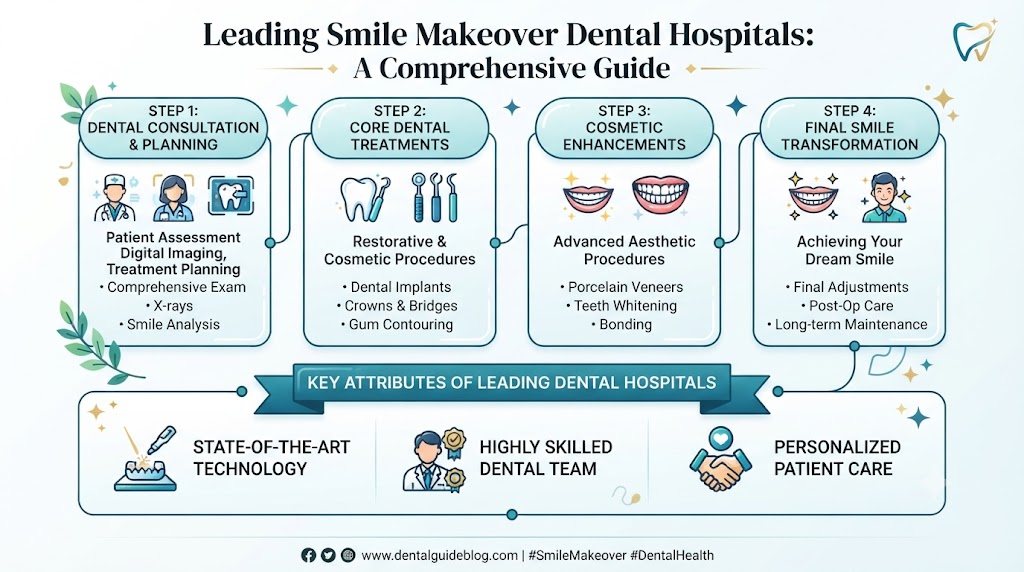
How Smile Makeover Is Performed
- Consultation & Digital Scan: Detailed images are taken to analyze your oral structure.
- Oral Health Evaluation: The dentist ensures that gums are healthy and there are no hidden infections.
- Treatment Planning: A roadmap is created, often showing a digital preview of the anticipated result.
- Procedure Execution: The scheduled treatments are performed in one or more sessions.
- Final Adjustments: After placement, minor tweaks are made to ensure comfort and bite alignment.
SMILE DESIGN PROCESS TABLE
| Step | Description | Purpose |
| Consultation | Discussing goals | Setting realistic expectations |
| Diagnosis | X-rays and scans | Identifying dental health issues |
| Planning | Creating a model/design | Visualizing the final result |
| Treatment | Performing procedures | Implementing the plan |
| Finishing | Final polish/bite check | Ensuring comfort and beauty |
Benefits of Smile Makeover
A smile makeover offers more than just cosmetic gains. It can significantly impact one’s social interactions and self-image. Furthermore, when dental work corrects alignment or replaces missing teeth, it promotes better oral function, making it easier to chew and maintain dental hygiene.
BENEFITS TABLE
| Benefit | Why It Matters |
| Appearance | Enhances facial aesthetics and symmetry |
| Confidence | Boosts self-esteem in social settings |
| Alignment | Improves bite and prevents wear |
| Function | Facilitates better speech and chewing |
| Oral Health | Encourages regular care and hygiene |
Risks and Limitations
While transformative, smile makeovers are not without considerations. Some patients may experience temporary tooth sensitivity following whitening. Porcelain veneers are often irreversible because a small amount of enamel is usually removed to facilitate the bond. It is vital to recognize that these treatments require ongoing maintenance—regular flossing, brushing, and professional cleanings are non-negotiable for longevity.
Recovery and Aftercare
Recovery varies by procedure. Simple whitening requires minimal downtime, while restorative work may involve a short adjustment period for your bite and speech.
📅 RECOVERY TABLE
| Stage | Focus | Recovery Time |
| First Week | Avoiding staining foods/heavy chewing | Immediate adjustment |
| First Month | Establishing new hygiene habits | Routine normalization |
| Long-Term Care | Regular check-ups and maintenance | Ongoing |
HOSPITAL COMPARISON TABLE
| Hospital Name | Location | Expertise | Tech Level | Treatments | Int’l Patients |
| Elite Dental Center | Urban City | Full Rehab | Advanced | All Procedures | Excellent |
| Premier Smile Clinic | Metro Area | Veneers/Design | High | Veneers/Aligners | Moderate |
| Global Oral Care | Capital City | General/Cosmetic | High | All Procedures | High |
Advanced Technologies in Smile Makeover
Modern dentistry relies on technology to ensure precision. Digital Smile Design (DSD) allows patients to see the outcome before starting, while CAD/CAM technology enables the creation of custom-fit crowns and veneers in a single visit in some clinics.
TECHNOLOGY TABLE
| Technology | Purpose | Benefit |
| DSD | Visual simulation | Realistic expectations |
| 3D Scanning | Accurate impressions | Comfort and speed |
| Laser Dentistry | Gum shaping | Less bleeding/faster healing |
| CAD/CAM | Computer-aided design | Precise fit of restorations |
| AI Smile Design | Data-driven planning | Enhanced symmetry |
Who Should Avoid Smile Makeover
Candidates with untreated periodontal (gum) disease, significant decay, or active infections must stabilize their oral health before attempting cosmetic procedures. Additionally, individuals with unrealistic expectations—such as seeking “perfect” results that defy natural anatomy—should have deep, transparent discussions with their dentist first.
Common Mistakes Patients Make
- Choosing Based Solely on Cost: High-quality dentistry is an investment in your health.
- Skipping Consultation: Never start a procedure without a thorough diagnosis.
- Ignoring Gum Health: Cosmetic work on unhealthy gums will lead to failure.
- Expectation Management: Understanding that biological limitations exist is key to happiness.
Real-Life Patient Scenarios
- Whitening Case: A patient with discolored but straight teeth achieves a radiant smile through in-office whitening alone.
- Veneer Case: A patient with minor chips and gaps uses porcelain veneers to create a uniform, Hollywood-style appearance.
- Combination Case: A patient uses clear aligners for six months to correct crowding, followed by minor whitening for a final polish.
Future of Smile Makeover Dentistry
The future lies in biomimetic materials that replicate natural enamel more accurately than ever, and AI-driven diagnostic tools that predict potential future oral health issues based on current patterns.
FUTURE OF SMILE DESIGN TABLE
| Innovation | Potential Benefit |
| AI Smile Design | Hyper-personalized planning |
| Biomimetic Materials | Natural look and long-term durability |
| Digital Dentistry | Reduced treatment time |
| Laser Treatments | Minimal pain and quick recovery |
| CAD/CAM Automation | Higher precision and lower error rates |
FAQs
- What is a smile makeover? A customized treatment plan using multiple cosmetic procedures to improve your smile.
- Is it painful? Most procedures are minimally invasive; local anesthesia ensures comfort.
- How long does it take? It depends on the complexity; some take one day, others several months.
- Are results permanent? Cosmetic results require maintenance and may need refreshing over years.
- What is the cost range? Costs vary based on the procedures performed and the expertise of the clinic.
- Who is a good candidate? Anyone with healthy teeth/gums seeking cosmetic improvement.
- What are veneers? Thin, custom-made shells that cover the front surface of teeth.
- Can I get a natural-looking smile? Yes, expert dentists customize shades and shapes for a natural appearance.
- Is whitening safe? Yes, when performed under professional supervision.
- How to choose the best dental hospital? Look for expert reviews, technology, and transparent consultations.
- Do veneers damage teeth? Minimal preparation is required, but it is a standard clinical process.
- Can I eat normally after? Most patients return to normal eating, though hard foods should be avoided.
- What is an aligner? A clear, removable device that moves teeth into position.
- Will it fix my bite? Many smile makeovers focus on both bite alignment and aesthetics.
- How often should I visit the dentist? Maintain twice-yearly check-ups to protect your investment.
Final Thoughts
A smile makeover is a journey toward improved self-confidence and dental health. Success depends heavily on choosing a qualified team that prioritizes diagnosis and personalized care over generic solutions. By understanding the technologies and procedures involved, you can enter your consultation prepared to ask the right questions and set realistic goals.To begin your journey with confidence, explore resources at BestDentalHospitals to compare clinics and learn more about achieving a healthier, more beautiful smile.