Introduction
A severe toothache is more than just a source of discomfort; it is often your body’s way of signaling an underlying issue that requires professional attention. When dental pain becomes unbearable or is accompanied by swelling and fever, it can quickly evolve into a situation where standard home remedies are no longer sufficient. Recognizing the signs of a dental emergency is the first step toward preserving your oral health and preventing further complications.In this guide, we will explore how to identify a true dental emergency, the treatments available in a hospital setting, and the steps you should take while seeking care. For reliable information on locating urgent care, understanding dental procedures, and finding specialists near you, BestDentalHospitals offers comprehensive resources to guide you through your dental health journey.
What Is a Dental Emergency?
A dental emergency is any oral health condition that causes severe pain, uncontrolled bleeding, or injury to the mouth that requires immediate medical intervention. While mild sensitivity or a small chip might wait for a routine appointment, an emergency situation demands that you seek help as soon as possible to avoid long-term damage.
Emergency vs. Routine Care
- Routine Care: Minor tooth sensitivity, a lost filling that isn’t causing pain, or a small chip can often wait a few days for a scheduled visit.
- Emergency Care: Severe, throbbing pain, facial swelling, fever, or trauma that knocks out a tooth are critical scenarios. Delaying treatment in these cases can lead to the spread of infection, permanent tooth loss, or systemic health issues.
Common Causes of Severe Toothache
Severe tooth pain often stems from issues that have progressed beyond the stage of simple decay.
| Cause | Common Symptoms | Emergency Level |
| Dental Abscess | Severe pain, swelling, fever | High |
| Tooth Decay | Persistent, throbbing pain | Moderate |
| Cracked Tooth | Sharp pain while chewing | Moderate to High |
| Gum Infection | Swollen, bleeding gums | Moderate |
| Wisdom Tooth Infection | Jaw pain and swelling | High |
Warning Signs That Require Immediate Dental Care
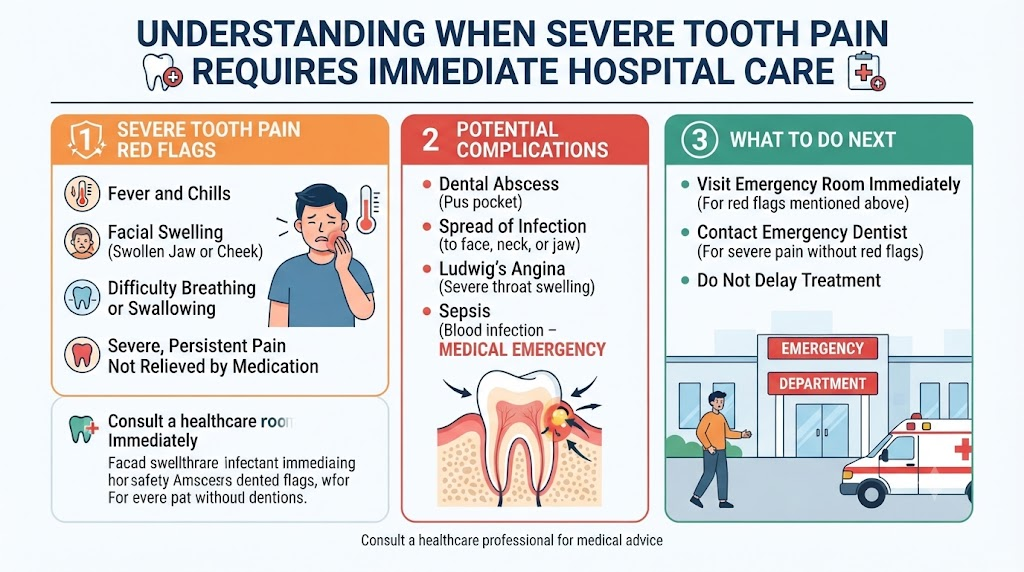
Do not wait for your regular appointment if you notice any of the following “red flag” symptoms:
- Severe, persistent tooth pain that prevents you from sleeping or eating.
- Facial or jaw swelling that may indicate a spreading infection.
- Fever or chills alongside dental pain, which is a sign of a systemic infection.
- Bleeding in the mouth that does not stop after 15–20 minutes of firm pressure.
- Difficulty breathing or swallowing, which is a medical emergency that requires a visit to an emergency room.
- A knocked-out tooth, where every minute counts for potential reimplantation.
Emergency Dental Treatments
In a hospital setting, dental specialists prioritize pain relief and the containment of infection. Common treatments include:
- Emergency Examination & Digital X-rays: Rapid assessment to pinpoint the exact location and cause of the pain.
- Root Canal Treatment: Removing the infected pulp from the center of the tooth to save it from extraction.
- Abscess Drainage: Surgically opening the site of an infection to allow pus to drain and reduce pressure and pain.
- Tooth Extraction: Removing a tooth only when it is too damaged to be saved.
- Antibiotic Therapy: Prescribed to control the spread of infection into surrounding tissues.
Why Specialized Dental Hospitals Matter
When you are in the midst of a dental crisis, general urgent care may not be enough. Specialized dental hospitals provide:
- Multidisciplinary Teams: Oral surgeons, endodontists, and general dentists working together.
- Advanced Imaging: 3D CBCT scans and digital X-rays that offer precise insights that standard dental offices may lack.
- Sterile Operating Facilities: Properly equipped rooms for surgical procedures and infection control.
- Comprehensive Protocols: Established procedures to manage complex emergencies efficiently.
First Aid Tips Before Reaching the Hospital
If you are experiencing an emergency, these steps can help manage the situation until you arrive at BestDentalHospitals:
- Rinse: Gently rinse your mouth with warm salt water to clean the area and reduce bacteria.
- Cold Compress: Apply a cold pack to the outside of your cheek to manage swelling and numb the pain.
- Control Bleeding: Use a clean gauze or a damp tea bag (the tannic acid helps clot blood) to apply firm pressure to any bleeding site.
- Save Teeth: If a tooth is knocked out, hold it by the crown (the top), rinse it gently if dirty, and keep it in milk or saliva until you reach the hospital.
- Do Not: Never place aspirin directly on the gums, as it can burn the delicate tissue. Avoid sharp objects when trying to remove debris.
Common Myths vs Facts
| Myth | Fact |
| Tooth pain always goes away | Persistent pain is a sign of an underlying issue that needs treatment. |
| Antibiotics cure everything | Antibiotics stop the spread of infection but do not fix the source (e.g., a cavity). |
| Extraction is the only way | Many teeth can be saved with root canal therapy or other restorative procedures. |
FAQs
- When is a toothache an emergency?
When it is accompanied by swelling, fever, or severe, persistent pain. - What causes severe pain?
Usually infection, deep decay reaching the nerve, or trauma. - ER or Dental Hospital?
Go to the ER for facial trauma, difficulty breathing, or uncontrollable bleeding. Visit a dental hospital for tooth-specific infections or pain. - Can an infection spread?
Yes, untreated dental infections can spread to the jaw, neck, and even the bloodstream. - Is root canal painful?
With modern anesthesia, it is a routine procedure designed to relieve pain. - Can antibiotics fix it?
They can manage infection but do not replace the need for dental treatment. - How do I save a knocked-out tooth?
Keep it moist in milk and see a dentist within 30–60 minutes. - What are abscess signs?
Throbbing pain, swelling, fever, and a foul taste. - How fast should I act?
As soon as possible, especially if you have swelling or fever. - Can I use aspirin on gums?
No, it causes chemical burns to the tissue. - Do I need a follow-up?
Yes, even after emergency relief, follow-up ensures the tooth is fully healed. - Are X-rays safe?
Yes, modern digital X-rays involve minimal radiation. - Can I prevent this?
Yes, with regular checkups and good oral hygiene. - What if I have difficulty swallowing?
Seek emergency medical care immediately. - How do I choose a hospital?
Look for one with experienced oral surgeons and 24/7 or extended-hour emergency support.
Final Thoughts
Dental emergencies can be frightening, but you don’t have to face them alone. The most important step is to act quickly—early diagnosis and treatment are the best ways to ensure a successful recovery and protect your natural teeth. Remember, persistent pain is never “normal” and should always be addressed by a professional.To find expert emergency dental care, evaluate your options, and learn more about preserving your smile, we encourage you to explore the reliable resources and hospital information provided at BestDentalHospitals.