Introduction
A healthy smile is more than just a cosmetic asset; it is the foundation of your confidence, your ability to enjoy food, and your overall oral well-being. When a tooth is severely damaged, decayed, or missing, it affects your bite, your speech, and how you feel when interacting with the world. Fortunately, restorative dentistry has evolved to provide solutions that look and feel just like your natural teeth.
Dental crowns and bridges are among the most trusted and effective procedures in restorative care. Whether you need to strengthen a weakened tooth or bridge the gap left by an extraction, these treatments can transform your smile. However, the quality of your results depends heavily on the facility and the expertise of the dental team you choose. Selecting a top-tier hospital ensures you have access to precise diagnostics, premium materials, and the latest in digital restorative technology.In this guide, we will explore the ins and outs of crowns and bridges, helping you understand the process, the materials available, and how to find the best care. If you are ready to start your journey toward a stronger, more beautiful smile, you can find expert guidance and resources at BestDentalHospitals to connect with leading professionals in the field. Let’s dive into how restorative dentistry can help you regain your quality of life.
Quick Answer
Hospitals offering dental crowns and bridges provide professional restorative services aimed at repairing damaged teeth and replacing missing ones. A dental crown acts as a protective “cap” over a compromised tooth, while a bridge fills the gap of one or more missing teeth by anchoring to adjacent natural teeth or implants. Choosing a specialized hospital is critical because these facilities offer advanced digital imaging, in-house laboratories for high-quality custom fabrication, and expert dental specialists who prioritize long-term bite health and aesthetic precision, ensuring your restorations are durable, functional, and natural-looking.
Understanding Dental Crowns and Bridges
What Are Dental Crowns?
A dental crown is a custom-made restoration that covers the entire visible portion of a tooth. It essentially acts as a protective helmet, restoring the tooth’s original shape, size, and strength while protecting it from further damage or decay.
What Are Dental Bridges?
A dental bridge is a fixed prosthetic device used to replace one or more missing teeth. It consists of an artificial tooth (or teeth) held in place by dental crowns on the healthy teeth on either side of the gap, known as abutment teeth.
How Crowns and Bridges Work
These restorations work by integrating with your existing dental structure. Crowns bonded to a prepared tooth provide stability, while bridges create a span that restores continuous function, preventing adjacent teeth from shifting into empty spaces.
Importance of Restorative Dentistry
Restorative dentistry is not just about aesthetics; it is about preserving your bite. Without proper restoration, missing or broken teeth can lead to jaw pain, shifting of remaining teeth, and digestive issues due to the inability to chew properly.
Benefits of Early Treatment
Addressing cracks, decay, or missing teeth early prevents the problem from worsening. Waiting often leads to the need for more invasive, expensive procedures like root canals or full tooth extractions.
Common Reasons Patients Need Crowns or Bridges
Damaged Teeth
Teeth that have been weakened by large fillings, trauma, or wear can benefit from the structural support provided by a crown.
Cracked or Broken Teeth
A cracked tooth can worsen over time. A crown holds the tooth together, preventing the crack from spreading into the root, which would require extraction.
Severe Tooth Decay
When a cavity is too large for a standard filling, a crown provides the necessary coverage and protection to ensure the tooth remains functional.
Root Canal Treatment Restoration
After a root canal, a tooth becomes brittle. A crown is almost always recommended to reinforce the tooth and prevent it from fracturing under chewing pressure.
Missing Teeth
Bridges are an excellent, non-removable solution for patients who are not candidates for implants or prefer a fixed traditional bridge option.
Cosmetic Smile Improvements
For teeth that are deeply discolored, misshapen, or have significant enamel defects, crowns can provide a perfectly uniform and natural-looking appearance.
Bite Alignment Support
By restoring a damaged tooth or filling a gap, crowns and bridges help maintain proper bite alignment, reducing stress on your jaw joints (TMJ).
What Makes a Hospital Ideal for Dental Crowns & Bridges?
Experienced Dental Specialists
An ideal hospital employs prosthodontists and restorative dentists who have completed additional years of training specifically in designing and placing complex restorations.
Advanced Dental Imaging
Hospitals that utilize high-resolution cone-beam CT scans and 3D intraoral imaging ensure that your treatment plan is based on the most accurate data available.
Digital Smile Design Technology
This software allows you to preview the final result of your restoration before treatment even begins, ensuring you are happy with the planned shape and shade.
Modern Dental Laboratories
Hospitals with in-house or closely affiliated laboratories can control the quality of the ceramic or zirconia used, leading to better fit and faster turnaround times.
Personalized Treatment Planning
Every patient has a unique bite and aesthetic goal. A great hospital takes the time to discuss your options and tailor the plan to your specific lifestyle.
Long-Term Follow-Up Care
Restorations require maintenance. The best dental hospitals prioritize regular follow-up visits to ensure your crown or bridge is fitting perfectly and remains healthy over time.
Benefits of Dental Crowns
- Restoring Tooth Strength: They reinforce teeth that have been weakened by decay or fractures.
- Improving Appearance: They correct aesthetic flaws such as severe discoloration or irregular shapes.
- Protecting Weak Teeth: They shield teeth that are prone to cracking or have had extensive dental work.
- Supporting Dental Implants: A crown is the final piece placed on top of an implant to create a fully functional artificial tooth.
- Enhancing Chewing Function: They restore the surface area needed for efficient, painless chewing.
Benefits of Dental Bridges
- Replacing Missing Teeth: They provide a stable, fixed solution for gaps, restoring your ability to eat comfortably.
- Restoring Bite Function: They distribute the forces of your bite evenly across all teeth, protecting your jaw.
- Preventing Tooth Shifting: By closing the gap, they stop remaining teeth from tilting or drifting into the empty space.
- Improving Speech: Missing teeth can cause slurred speech; bridges restore the anatomy needed for clear articulation.
- Enhancing Smile Aesthetics: They restore the natural look of a full set of teeth, boosting your confidence.
Comparison Table: Dental Crowns vs Dental Bridges
| Feature | Dental Crown | Dental Bridge |
| Primary Use | Repairs and protects a single tooth | Replaces one or more missing teeth |
| Support | Anchored to a single natural tooth | Anchored to teeth on either side of a gap |
| Longevity | Typically 10–15+ years | Typically 10–15 years with care |
| Procedure | Requires reshaping one tooth | Requires reshaping two or more teeth |
| Aesthetics | Excellent for single-tooth coverage | Excellent for closing gaps |
Comparison Table: Types of Dental Crown Materials
| Material | Aesthetic Quality | Strength | Best For |
| Porcelain/Ceramic | High (looks natural) | Moderate | Front teeth |
| Zirconia | High | Very High | Back and front teeth |
| Metal | Low | Extremely High | Back molars |
| Porcelain-Fused-to-Metal | Good | High | General use |
Types of Dental Crowns
Porcelain Crowns
These are highly favored for their ability to mimic the light-reflecting properties of natural tooth enamel. They are perfect for front teeth where aesthetics are the highest priority.
Ceramic Crowns
Made entirely of dental ceramic, these are both aesthetic and strong. They are biocompatible and ideal for patients who may have metal sensitivities.
Zirconia Crowns
Known for their incredible durability and toughness, zirconia crowns are perfect for patients who grind their teeth or need restorations on back molars.
Metal Crowns
Usually made of gold or other metal alloys, these are the strongest type of crown. They are rarely used in the front of the mouth but are excellent for molars.
Porcelain-Fused-to-Metal Crowns
These combine the strength of a metal base with the natural appearance of porcelain. They are a reliable, time-tested option for many patients.
Implant-Supported Crowns
These crowns are attached directly to a titanium dental implant, providing a permanent solution that functions independently of your natural teeth.
Types of Dental Bridges
Traditional Dental Bridges
The most common type, consisting of one or more artificial teeth held in place by dental crowns on the adjacent natural teeth.
Cantilever Bridges
Used when there is only one natural tooth adjacent to the missing tooth gap. These are less common due to the pressure placed on the single anchor tooth.
Maryland Bridges
Also known as resin-bonded bridges, these use a metal or porcelain framework that is bonded to the back of the adjacent teeth, requiring minimal preparation.
Implant-Supported Bridges
These are used when more than one tooth is missing. The bridge is anchored by dental implants rather than natural teeth, providing superior stability.
Hybrid Restorative Options
Some hospitals offer customized solutions that combine different restorative techniques to manage complex bite issues or multiple missing teeth.
The Dental Crown Procedure
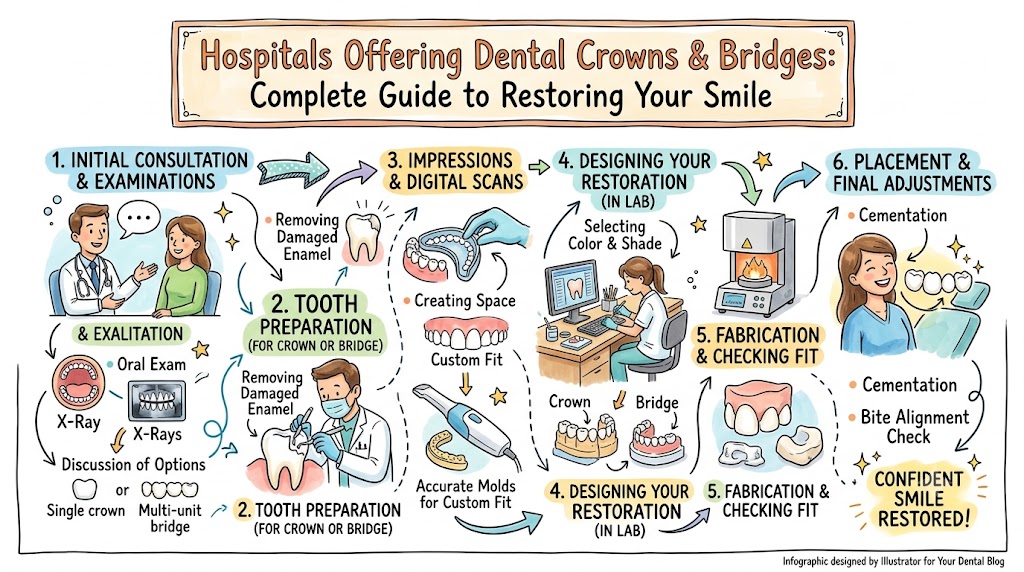
Initial Consultation
The dentist examines your mouth, takes X-rays, and discusses your goals to ensure a crown is the right solution.
Tooth Preparation
The tooth is carefully reshaped to allow space for the crown. Any decay is removed, and the surface is smoothed.
Dental Impressions
Digital scans or traditional putty impressions are taken to create a precise model of your teeth for the lab.
Temporary Crown Placement
A temporary acrylic crown is placed to protect your tooth while your permanent, custom crown is being fabricated.
Final Crown Placement
Once the custom crown is ready, your dentist checks the fit, color, and bite, then permanently bonds it into place.
Follow-Up Care
A final check ensures your bite is comfortable and your gum tissue is responding well to the new restoration.
The Dental Bridge Procedure
Examination and Planning
Your dentist evaluates the teeth that will serve as anchors for the bridge, ensuring they are healthy enough to support it.
Preparation of Supporting Teeth
The anchor teeth are shaped to fit under the crowns that will hold the bridge in place.
Impressions and Fabrication
A mold of the gap and anchor teeth is taken. The lab creates a bridge that perfectly fills the space and matches your natural tooth shade.
Bridge Placement
During the second visit, the bridge is placed, and the dentist ensures it fits snugly and does not interfere with your bite.
Adjustment and Fitting
Minor adjustments are made to ensure the bridge feels comfortable and natural in your mouth.
Recovery and Maintenance
You receive instructions on how to clean under the bridge using specialized floss or interdental brushes to keep it plaque-free.
Advanced Technologies Used in Dental Hospitals
Digital Scanning Systems
These replace the messy traditional impressions, using a small wand to create a highly accurate 3D map of your mouth.
CAD/CAM Dentistry
Computer-Aided Design and Manufacturing allow dentists to design your crown on a computer and mill it directly in the office in many cases.
3D Dental Imaging
Cone-beam CT scans provide a 360-degree view of your jawbone and teeth, which is critical for planning complex bridge or implant work.
AI-Assisted Treatment Planning
Software can now analyze dental data to predict the best placement for restorations, ensuring longevity and optimal bite function.
Same-Day Crown Technology
Some hospitals feature on-site milling machines that can craft a high-quality crown in just a few hours, eliminating the need for temporary crowns.
Digital Smile Design
This tool creates a photographic visualization of your new smile, allowing you and your dentist to agree on the aesthetic goals before treatment begins.
Recovery After Dental Crown and Bridge Procedures
What to Expect After Treatment
You may experience mild sensitivity to temperature or slight gum tenderness, which usually fades within a few days.
Managing Sensitivity
If sensitivity persists, use a desensitizing toothpaste. Avoid extremely hot or cold foods for the first 48 hours.
Eating and Drinking Guidelines
While the cement sets, it is best to avoid sticky or overly hard foods (like caramel or ice) for the first 24 hours.
Oral Hygiene Recommendations
Continue brushing twice a day. For bridges, use a bridge threader or water flosser to ensure you are cleaning underneath the artificial tooth.
Long-Term Maintenance
Regular dental cleanings are mandatory. Your dentist will check your crowns and bridges for signs of wear or marginal leakage at every visit.
Risks and Potential Complications
Crown Loosening
Over time, the cement bond may weaken. If this happens, see your dentist immediately to have it re-bonded to prevent decay underneath.
Bridge Failure
If an anchor tooth develops decay or gum disease, the entire bridge may fail. Consistent hygiene is the best way to prevent this.
Tooth Sensitivity
Mild sensitivity is normal. However, sharp pain when biting may indicate that the crown or bridge is slightly too high and needs a simple bite adjustment.
Gum Irritation
If the edge of the crown is not perfectly flush with your gum line, it can cause irritation. Modern digital scanning has significantly reduced this risk.
Bite Alignment Issues
If your new crown feels “off” or makes your teeth hit differently, inform your dentist. Bite issues can cause discomfort in your jaw joints.
How Specialized Hospitals Reduce Risks
By using digital scans and precision-milled materials, specialized hospitals ensure a perfect fit, which is the best defense against almost all restorative complications.
How to Choose the Right Dental Hospital
Experience of Dental Specialists
Prioritize hospitals where the dental team has extensive experience with prosthetic dentistry and a portfolio of successful cases.
Availability of Modern Technology
Look for a facility that utilizes digital imaging and in-house laboratory services, as these are markers of a high-quality, modern dental hospital.
Quality of Dental Materials
Ask what materials they use. High-quality ceramics and zirconia are far superior to older, less durable materials.
Infection Control Standards
A clean, hospital-grade sterilization environment is non-negotiable for any dental procedure.
Patient Support Services
Does the hospital have a dedicated coordinator to help you through the process, from insurance to follow-up care?
Questions Patients Should Ask
- “How many of these procedures do you perform annually?”
- “What type of material would be best for my specific bite?”
- “Do you offer same-day restoration options?”
- “How long do you expect these restorations to last?”
Cost and Financial Considerations
Factors Affecting Treatment Costs
The cost is determined by the material used, the complexity of the preparation, the number of teeth involved, and the hospital’s geographic location.
Crown Material Selection
Gold or high-end aesthetic ceramics typically cost more than standard porcelain-fused-to-metal crowns, but they often offer better long-term performance.
Bridge Complexity
Replacing one tooth is less expensive than a multi-unit bridge that requires additional anchor teeth or implant support.
Follow-Up Care Expenses
While the initial cost is the largest investment, remember to budget for annual exams and cleanings to protect your new investment.
Insurance and Payment Options
Most dental insurance plans cover a portion of crowns and bridges. Ask the hospital’s financial coordinator about payment plans or financing options to make the treatment more accessible.
Future of Restorative Dentistry
AI in Dental Care
AI is being integrated into diagnostic software to detect micro-cracks and early decay long before they become visible on standard X-rays.
Advanced Biomaterials
Future crowns and bridges will be made of materials that are even more similar to human enamel, offering better integration with the body.
Digital Dentistry Innovations
The trend toward full digital integration means that everything from your initial scan to the final crown delivery is becoming faster and more seamless.
Personalized Smile Restoration
Advances in genetics and saliva testing will soon allow dentists to tailor restorations that match your biological and oral health profile perfectly.
Emerging Restorative Technologies
We are moving toward smart-restorations that might one day have built-in sensors to monitor oral health, preventing future decay or structural failure.
Key Takeaways
- Crowns and bridges are essential for restoring tooth function and confidence.
- Early intervention is key to preventing the need for more invasive treatment.
- Hospitals with digital technology provide more accurate and comfortable experiences.
- Zirconia and porcelain offer the best balance of strength and natural beauty.
- Bridges require specialized cleaning techniques to ensure their longevity.
- Modern digital impressions eliminate the need for traditional, uncomfortable molds.
- Choosing an experienced specialist is the most important factor for success.
- Regular maintenance and cleanings are required to keep restorations healthy.
- Bite alignment is crucial for the comfort of your crown or bridge.
- Financial coordination is a standard service at top-tier dental hospitals.
- Your oral health is a lifelong investment that affects your entire body.
FAQ Section
1.How long do dental crowns and bridges typically last?
With proper oral hygiene, regular dental check-ups, and a balanced diet, crowns and bridges typically last between 10 and 15 years, and often even longer.
2.Is the procedure to get a crown or bridge painful?
The procedure is performed under local anesthesia, so you should feel no pain. Most patients report only mild discomfort during the process and find the result well worth it.
3.Can a bridge fall out?
A bridge is fixed permanently to your anchor teeth. If it feels loose, it is a rare issue that requires an immediate visit to your dentist to ensure the anchor teeth are safe.
4.Do I need a special toothbrush for my bridge?
While you don’t need a special brush, you do need special tools like floss threaders or interdental brushes to clean under the bridge pontic, which is where food can trap.
5.How do I know if I need a crown or a bridge?
If you have a damaged or weak tooth, a crown is usually the solution. If you have an empty space created by a missing tooth, a bridge is the standard replacement.
6.Can I eat normally after getting my crown?
Yes, once the anesthesia wears off and the cement is fully set, you can eat normally. However, avoid biting down on very hard items like ice or unpopped popcorn kernels.
7.Are crowns covered by insurance?
Most dental insurance plans classify crowns and bridges as “major” restorative services and typically provide coverage, though the percentage varies by policy.
8.What is the advantage of zirconia over porcelain?
Zirconia is significantly stronger and more resistant to fractures than porcelain, making it ideal for patients who clench or grind their teeth.
9.Can my bridge decay?
The artificial tooth itself cannot decay, but the natural teeth supporting it still can. Maintaining excellent hygiene around the bridge is vital to protecting the anchor teeth.
10.Can I get a crown in one day?
Many modern dental hospitals now offer CAD/CAM technology that allows for same-day crown fabrication, saving you the need for multiple visits.
Conclusion
Restoring your smile is a significant step toward improving your overall quality of life. Whether you are dealing with a fractured tooth that causes pain or a missing tooth that makes you hesitate to laugh, dental crowns and bridges provide a time-tested, effective solution. These treatments do more than just improve your appearance; they restore the critical functionality of your bite, prevent long-term dental complications, and boost your self-esteem.
When choosing a hospital for your restorative needs, remember that your health is worth the time it takes to find a facility that prioritizes experience, advanced technology, and personalized care. A top-tier dental hospital will guide you through every step of the process—from your first consultation and digital imaging to the final fitting—ensuring that you are comfortable, informed, and satisfied with your results. Your investment in restorative care is an investment in your long-term health, and choosing the right team is the best way to ensure that your new smile remains strong, beautiful, and functional for many years to come.