Introduction
A healthy, straight smile is more than just an aesthetic asset; it is a fundamental pillar of comprehensive oral health. When teeth are misaligned, crowded, or protruding, they create tight spaces that are difficult to clean, significantly increasing the long-term risk of dental caries, periodontal disease, and localized bone loss. Furthermore, structural jaw misalignments can disrupt bite mechanics, leading to premature tooth wear, chronic muscle fatigue, and debilitating temporomandibular joint (TMJ) disorders. For individuals seeking to correct these issues, modern orthodontic treatments offer highly predictable, scientifically advanced solutions that restore both physical function and facial symmetry.
Choosing where to undergo structural dental care requires access to transparent, evidence-based data. Specialized healthcare tracking platforms like BestDentalHospitals serve as an invaluable resource during this research phase. The platform helps patients discover leading dental hospitals, compare orthodontic treatments, explore dental specialists, review braces and aligner options, and make informed oral healthcare decisions. By choosing a premier center equipped with digital planning tools, you ensure that your treatment is tailored precisely to your unique dental anatomy.
Why Orthodontic Treatment Matters
Many people believe that straightening teeth is purely a cosmetic pursuit designed to boost self-confidence. While the psychological benefits of a confident smile are substantial, the clinical, physical reasons for undergoing therapy are even more critical for your long-term health.
Oral Health Benefits
When teeth overlap or are severely rotated, standard toothbrushes and dental floss cannot effectively reach the hidden surfaces. This leads to the chronic accumulation of plaque and calcified tartar. By aligning the dental arches, orthodontics eliminates these hard-to-clean areas, making daily oral hygiene habits much more effective and dramatically reducing the incidence of gingivitis and chronic gum inflammation.
Improved Bite Function
Your teeth are designed to distribute mechanical chewing forces evenly across your jawbones. When you have an abnormal bite, certain teeth bear an excessive load during chewing. This chronic overload can cause micro-fractures in enamel, tooth sensitivity, and gradual recession of the supporting gum tissues. Proper alignment restores a balanced bite, protecting your teeth from uneven wear.
Long-Term Dental Health Advantages
Correcting an uneven bite reduces strain on the temporomandibular joints (the joints connecting your jaw to your skull). This helps prevent chronic issues like jaw clicking, muscle tension, tension headaches, and localized facial pain, while preserving your natural teeth for a lifetime.
What Is Orthodontic Treatment?
Orthodontics is a specialized branch of dentistry focused on diagnosing, preventing, and intercepting dental and facial irregularities. The clinical process involves applying continuous, mild, and highly controlled mechanical forces to individual teeth over an extended period.
These gentle forces trigger a biological process known as bone remodeling. As a tooth moves, specialized cells called osteoclasts gently break down bone tissue in front of the moving root, while cells called osteoblasts build new bone behind it. This slow, controlled process allows teeth to safely shift through solid jawbone into their ideal functional and aesthetic positions.
Common Orthodontic Problems
Orthodontic issues can stem from genetic factors, developmental variations, or childhood habits like prolonged thumb sucking. The most common structural issues treated in modern dental facilities include:
- Crooked Teeth: Individual teeth develop at unusual angles, rotating or overlapping with adjacent teeth within the arch.
- Overbite: The upper front teeth protrude significantly forward over the lower front teeth, which can cause premature wear and increase the risk of trauma to the front teeth.
- Underbite: The lower jaw rests forward, causing the lower front teeth to sit ahead of the upper front teeth, which can strain the jaw joint.
- Crossbite: One or more upper teeth bite inside the lower teeth rather than outside, causing asymmetrical jaw growth if left untreated.
- Open Bite: The upper and lower front teeth fail to meet when the back teeth are closed, making chewing difficult and impacting speech.
- Teeth Crowding: The jawbone lacks sufficient physical space to accommodate all natural teeth normally, forcing them to twist or shift out of alignment.
- Jaw Misalignment: An underlying structural mismatch between the size or position of the upper and lower jawbones, affecting facial balance.
Types of Orthodontic Treatments
Modern orthodontics has evolved beyond traditional, bulky appliances. Today’s specialists utilize a wide variety of advanced materials and discreet tracking systems to match each patient’s lifestyle and clinical needs.
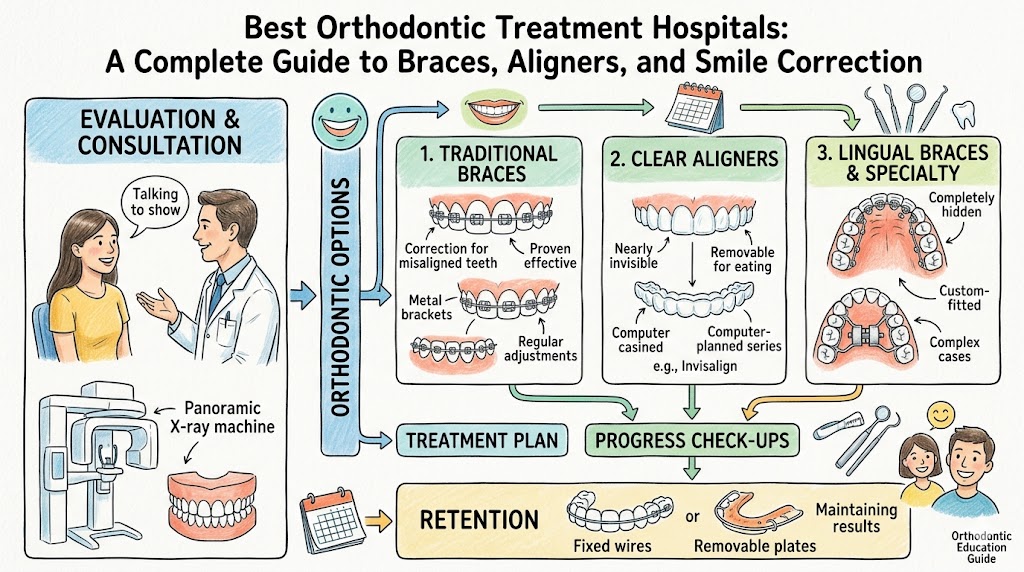
Traditional Metal Braces
Traditional dental braces remain one of the most reliable and effective tools for correcting severe, complex structural misalignments. Modern metal brackets are smaller, lower-profile, and more comfortable than past designs. They use high-strength stainless steel brackets bonded to the teeth and connected by specialized archwires that guide the teeth into place.
Ceramic Braces
Ceramic braces function identically to traditional metal options but offer a more discreet appearance. The brackets are crafted from translucent polycrystalline ceramic materials that match the natural shade of your tooth enamel. While highly aesthetic, ceramic brackets are slightly more fragile than steel and require careful hygiene to prevent staining around the clear ligatures.
Lingual Braces
Lingual braces offer complete cosmetic discretion by placing the metal brackets and archwires on the inner, tongue-side surfaces of the teeth. This makes them virtually invisible from the outside. Because they are custom-crafted to match the internal contours of your teeth, they require highly specialized clinical skill to place and adjust.
Clear Aligners (Invisalign)
Clear aligners have revolutionized adult and teen orthodontics. Systems like Invisalign treatment use a sequential series of custom-molded, removable plastic trays that apply precise, incremental forces to your teeth. Patients switch to a new set of aligners every 1 to 2 weeks, removing them only to eat, drink, brush, and floss. This offers unmatched convenience and simplifies daily oral hygiene.
Self-Ligating Braces
Self-ligating systems use advanced brackets with built-in sliding doors or clips that hold the archwire in place without the need for traditional elastic rubber bands. This specialized design reduces friction during tooth movement, requires fewer routine adjustment visits, and is easier to keep clean.
Retainers
Once active tooth movement is complete, the teeth enter a critical stabilization phase. Because bone tissue takes time to completely solidify around the new root positions, wearing a custom retainer—either a removable clear tray or a discreet wire bonded behind the teeth—is mandatory to prevent orthodontic relapse.
Table 1: Types of Orthodontic Treatments
| Treatment Type | Primary Clinical Benefits | Average Duration | Ideal Candidate Profile |
| Traditional Metal | Exceptional strength; handles severe crowding and complex root corrections predictably. | $12 – 24$ months | Children, teens, and adults with complex structural or skeletal misalignments. |
| Ceramic Braces | Highly discreet appearance; resists staining; matches natural enamel shades. | $12 – 24$ months | Professionals and older teens seeking a low-profile option for moderate-to-severe issues. |
| Lingual Braces | Completely hidden from view; excellent for complex, multi-axis tracking. | $15 – 28$ months | Adults, performers, and public speakers requiring complete aesthetic discretion. |
| Clear Aligners | Removable for easy cleaning; virtually invisible; comfortable with no wire irritation. | $9 – 18$ months | Mild-to-moderate alignment cases; requires strict patient compliance ($\ge 22$ hours/day). |
| Self-Ligating | Lower frictional force; requires fewer adjustments; easier to keep clean. | $12 – 20$ months | Patients seeking a faster, lower-maintenance option with fewer clinical visits. |
Table 2: Metal Braces vs. Ceramic Braces vs. Clear Aligners
| Feature / Metric | Traditional Metal Braces | Ceramic Braces | Clear Aligners (Invisalign) |
| Material Composition | High-grade stainless steel / titanium. | Translucent polycrystalline ceramic. | Medical-grade polyurethane polymer. |
| Visual Visibility | High visibility; noticeable metallic look. | Low visibility; blends with tooth color. | Virtually invisible clear plastic trays. |
| Removability | Fixed; permanently bonded to teeth. | Fixed; permanently bonded to teeth. | Removable for eating and brushing. |
| Dietary Restrictions | Sticky, hard, and crunchy foods must be avoided. | Sticky, hard, and crunchy foods must be avoided. | No restrictions (trays are removed to eat). |
| Hygiene Complexity | High; requires specialized proxy brushes. | High; meticulous cleaning needed. | Low; brush and floss normally. |
| Emergency Risk | Moderate; loose wires or broken brackets. | Moderate; bracket fractures can occur. | Extremely low; no wires or sharp parts. |
Signs You May Need Orthodontic Treatment
While some alignment issues are obvious, other structural defects can develop subtly beneath the gumline, showing signs only through secondary symptoms. You should schedule a consultation with an orthodontist if you notice any of the following signs:
- Frequent Cheek or Tongue Biting: Your teeth do not meet evenly, causing accidental soft tissue trauma during normal chewing.
- Difficulty Chewing Certain Foods: An uneven bite prevents your incisors or molars from shearing food efficiently, affecting digestion.
- Speech Impediments or Lisping: Misaligned front teeth alter airflow and tongue placement, making certain consonant sounds difficult to pronounce clearly.
- Persistent Jaw Fatigue or Joint Clicking: Chronic soreness in the facial muscles or a clicking sound in the TMJ, indicating a structural bite imbalance.
- Early Loss of Baby Teeth: If a child loses baby teeth prematurely due to decay or injury, the surrounding teeth can drift, blocking the path for adult teeth.
What Makes the Best Hospitals for Orthodontic Treatments Stand Out?
Achieving a balanced, long-lasting bite requires advanced clinical expertise. When researching the best dental hospitals, look for key indicators of quality and clinical capability:
Specialized, Elite Orthodontists
Top-performing facilities recruit specialized orthodontic specialists who have completed an additional 2 to 3 years of rigorous, full-time university residency training after dental school. Look for providers who maintain active fellowships with international orthodontic boards and regularly participate in advanced continuing education.
Advanced Digital Infrastructure
Leading orthodontic hospitals invest heavily in modern dental technologies. This includes high-definition intraoperative scanners that replace uncomfortable silicone impressions, digital low-radiation panoramic X-rays, and advanced 3D cone-beam computed tomography (CBCT) imaging to visualize root anatomy and bone density clearly.
Multidisciplinary Collaborative Care
The best dental centers provide comprehensive, integrated care under one roof. If your treatment requires preliminary extractions, periodontal therapy to strengthen the gums, or jaw surgery (orthognathic surgery), top facilities feature in-house oral surgeons and periodontists who collaborate directly with your orthodontist to manage your care seamlessly.
Advanced Technologies Used in Modern Orthodontics
Technology has transformed the orthodontic patient experience, replacing traditional guess-and-verify methods with highly precise, computer-guided treatments.
- Intraoral Digital Scanning: Advanced digital scanners (such as iTero or 3Shape) use a small, hand-held wand to capture thousands of images of your teeth per second. Software then stitches these images together to create a precise 3D digital model of your mouth, eliminating the need for traditional, messy impression putty.
- 3D Treatment Simulation Software: Specialized software allows clinicians to map out your entire treatment digitally. Patients can view a step-by-step animation of how their teeth will move and see a simulation of their final smile before brackets are even bonded.
- AI-Assisted Treatment Monitoring: Many advanced hospitals utilize smartphone apps paired with specialized intraoral scan scopes. Patients take weekly photos of their teeth at home, and AI algorithms analyze the tracking, alerting the orthodontist immediately if a tooth isn’t moving as planned. This reduces the need for frequent in-person appointments.
Table 3: Factors to Consider Before Choosing a Dental Hospital
| Factor | Clinical Importance | Essential Questions to Ask the Hospital |
| Specialist Credentials | Ensures your care is managed by a trained specialist rather than a general dentist. | “Is the operating provider a board-certified orthodontic specialist?” |
| Diagnostic Technology | 3D imaging is essential for identifying hidden root angulations and bone limitations safely. | “Do you utilize 3D CBCT scans and intraoral digital scanners for planning?” |
| Emergency Coverage | Provides peace of mind that a clinician is available to address broken wires or loose brackets promptly. | “What emergency care protocols do you have for addressing broken wires or loose brackets?” |
| Flexible Financial Options | Orthodontic care is an investment; clear, flexible monthly payment options help manage costs. | “Do you offer in-house interest-free payment plans or partner with dental insurance?” |
Benefits of Choosing Leading Orthodontic Hospitals
Entrusting your smile transformation to a high-volume, accredited dental hospital offers several distinct clinical advantages:
- Highly Accurate Diagnostic Planning: 3D imaging helps prevent root resorption and avoids pushing teeth outside the supporting bone plate.
- Discreet, State-of-the-Art Material Choices: Access to premium clear aligner systems and low-profile ceramic brackets ensures a comfortable, aesthetic experience.
- Lower Risk of Orthodontic Relapse: Custom stabilization protocols and long-term retainer tracking keep your teeth securely in place.
- All-Inclusive Treatment Packages: Top hospitals bundle diagnostics, active appliances, emergency visits, and your first set of retainers into a transparent, single fee.
Risks and Challenges Associated With Orthodontic Treatment
While orthodontics is highly safe, any procedure that shifts teeth within the jawbone carries inherent clinical risks that require careful professional monitoring:
- Increased Risk of Tooth Decay: Brackets and archwires create complex spaces where food particles can easily become trapped. If oral hygiene is neglected, this leads to white spot lesions (early enamel demineralization) and cavities around the brackets.
- Root Resorption: Shifting teeth too quickly or applying excessive force can cause the tips of the tooth roots to shorten slightly. While minor shortening is harmless, high-volume specialists use gentle, controlled forces to prevent significant resorption.
- Periodontal Inflammation: If plaque is not removed regularly, it can travel beneath the gumline, causing gum recession and localized bone loss. Keeping your regular teeth cleaning appointments is essential throughout treatment.
- Soft Tissue Irritation: New brackets and wires can initially rub against the inner cheeks and lips, causing temporary aphthous ulcers (canker sores). This discomfort is easily managed using dental wax and soothing rinses during the first two weeks.
Table 4: Common Orthodontic Problems and Treatment Options
| Dental Problem | Common Physical Symptoms | Recommended Treatment Options |
| Severe Teeth Crowding | Overlapping teeth; rotated alignment; difficulty flossing; persistent bleeding gums. | Traditional metal braces, self-ligating brackets, or clear aligners $\pm$ therapeutic extractions. |
| Pronounced Overbite | Upper incisors project far forward; difficulty biting into food; chin looks recessed. | Functional twin-block appliances, traditional braces with elastics, or clear aligners. |
| Asymmetrical Crossbite | Upper teeth bite inside lower teeth; asymmetrical facial appearance; uneven jaw wear. | Palatal expanders to widen the upper jaw arch, followed by sequential dental braces. |
| Persistent Open Bite | Visible gap between front teeth when back molars touch; speech lisp; tongue thrusting. | Specialized habit-breaking appliances, clear aligner mechanics, or orthognathic jaw surgery. |
Questions Patients Should Ask Their Orthodontist
Before starting therapy, schedule a thorough consultation to review your diagnostic models and treatment plan. Use this checklist to guide your discussion:
- [ ] “Based on my 3D digital scans, what are the primary structural causes of my misalignment—skeletal issues or tooth positioning?”
- [ ] “Am I an ideal candidate for clear aligner therapy, or do my structural movements require fixed dental braces?”
- [ ] “Will my treatment plan require auxiliary treatments, such as palatal expanders, interproximal reduction (IPR), or tooth extractions?”
- [ ] “How many total months do you estimate my active treatment phase will last, assuming optimal compliance?”
- [ ] “What style of long-term retainer do you recommend for my teeth—a fixed bonded wire, a removable clear tray, or both?”
- [ ] “Are all of my diagnostic scans, emergency appointments, and post-treatment retainers bundled into the initial cost quote?”
Cost Factors Associated With Orthodontic Treatments
The financial investment required for orthodontic care varies based on the complexity of your case, the type of appliance chosen, and geographic factors.
Material Choice Dynamics
The materials used play a significant role in overall pricing. Traditional metal braces are generally the most cost-effective option due to streamlined manufacturing and standard clinic protocols. Ceramic brackets, lingual braces, and premium clear aligner systems (like Invisalign) carry higher fees due to laboratory customization, specialized training requirements, and material manufacturing costs.
Direct and Indirect Costs
- Direct Expenses: Initial digital diagnostic imaging, customized orthodontic appliances, regular adjustment appointments, emergency wire clippings, and final stabilization retainers.
- Indirect Expenses: Commuting to regular clinic visits, time away from work or school, and specialized hygiene supplies like water flossers, orthopedic threaders, and protective dental wax.
Treatment Timeline and Recovery Expectations
Orthodontic therapy is a dynamic process that unfolds in distinct structural phases. Understanding what to expect during each phase can help you feel more comfortable and confident throughout your treatment journey.
[Phase 1: Alignment] ──> Straightens tooth crowns (Months 1-4)
[Phase 2: Bite Correction] ──> Aligns jaw mechanics using elastics (Months 5-18)
[Phase 3: Retention] ──> Solidifies bone around new root positions (Lifelong stabilization)
The Initial Adjustment Phase (Weeks 1–2)
When braces are first bonded or a new clear aligner tray is inserted, you will experience a localized feeling of pressure and generalized tooth soreness. This discomfort is a normal sign that the bone remodeling process has begun and typically peaks within 48 to 72 hours. Sticking to a soft-food diet (smoothies, yogurt, mashed potatoes) and using over-the-counter pain relievers can help manage this initial transition.
The Active Alignment Phase (Months 2–18+)
As you progress through your treatment, your teeth will steadily straighten. If you have fixed braces, you will visit the clinic every 4 to 8 weeks to have your archwires adjusted or your elastics changed. If you are using clear aligners, you will change your trays at home every 1 to 2 weeks, visiting your orthodontist every 8 to 12 weeks to confirm your progress is tracking accurately.
Orthodontic Care for Children, Teens, and Adults
Age plays an important role in determining the ideal approach and timing for orthodontic interventions.
Pediatric Orthodontics (Phase I Early Intervention)
The American Association of Orthodontists recommends that children receive their first orthodontic evaluation by age 7. At this developmental stage, the jawbones are still growing, making it the ideal time to intercept structural skeletal issues. Early treatment (Phase I) uses non-invasive appliances like palatal expanders to guide jaw growth smoothly, often simplifying or reducing the need for braces later in life.
Teen Orthodontics
The teenage years (ages 11 to 15) remain the most common window for comprehensive treatment. Because most permanent teeth have erupted and the jawbone is still highly responsive to remodeling forces, fixed braces or clear aligners can guide teeth into their ideal positions quickly and predictably.
Adult Orthodontics
It is a common misconception that orthodontics is only for younger patients. Today, healthy teeth can be safely moved at any age. Adult orthodontics makes up a significant percentage of modern clinical practices, utilizing discreet options like clear aligners and ceramic braces to correct long-standing bite issues without impacting professional routines.
Oral Hygiene Tips During Orthodontic Treatment
Maintaining excellent oral hygiene is essential for protecting your teeth from decay and ensuring a beautiful, healthy smile at the end of your treatment.
- Brush Methodically After Every Meal: Use a soft-bristled toothbrush or an electric orthodontic brush head to clean thoroughly around your brackets and under the archwires. Angle the bristles at 45 degrees toward the gumline to sweep away plaque efficiently.
- Incorporate a Specialized Floss Threader: Use a stiff-ended floss threader or specialized orthodontic floss to guide dental floss safely under the archwire, clearing plaque from between the teeth daily.
- Utilize a Water Flosser: A water flosser can be an excellent addition to your routine. It uses a targeted stream of pressurized water to dislodge trapped food particles from behind brackets and hard-to-reach spaces.
- Rinse Daily with an Alcohol-Free Fluoride Mouthwash: Incorporating a daily fluoride rinse helps strengthen your enamel surfaces, protecting against demineralization and preventing white spot stains around your brackets.
Common Myths vs. Facts About Braces and Aligners
- Myth: Braces attract radio waves, disrupt cellular signals, or increase your risk of being struck by lightning.
- Fact: The high-grade metals used in modern orthodontic brackets are non-magnetic and completely safe, with zero effect on electrical signals, wireless tracking, or environmental lightning risks.
- Myth: Clear aligners work much faster and are always superior to traditional metal braces.
- Fact: Clear aligners are highly effective for many alignment issues, but complex skeletal corrections or severe root movements still require the precise, structural control of fixed braces.
- Myth: Once my braces are removed, my teeth will stay perfectly straight forever without retainers.
- Fact: Teeth naturally try to drift back toward their original positions over time due to mesial drift. Wearing your custom retainer consistently is the only way to protect your investment and maintain your results.
- Myth: Orthodontic treatment is purely cosmetic and has no real impact on overall systemic health.
- Fact: Correcting a misaligned bite improves chewing efficiency, simplifies oral hygiene to lower your risk of gum disease, and helps prevent chronic jaw pain and headaches.
Latest Innovations in Orthodontics
The dental field continues to advance, introducing new techniques designed to improve patient comfort and precision.
Customized 3D-Printed Brackets
Advanced digital hospitals can now use 3D printing to create entirely custom brackets tailored to the exact surface contours of each individual tooth. This custom fit allows for highly precise force distribution, which can reduce overall treatment times and minimize discomfort.
Photobiomodulation (Light Therapy)
Some advanced practices offer innovative light-therapy devices for home use. By emitting gentle near-infrared light wavelengths directly into the gum tissues for a few minutes each day, these devices stimulate cellular activity within the surrounding bone, helping teeth shift safely and comfortably.
Future of Digital Orthodontic Care
The future of orthodontics is moving toward highly integrated, remote care systems that prioritize patient convenience without compromising safety.
Extended Remote Monitoring
Using advanced intraoral smartphone scopes and cloud-based AI tracking, future orthodontic practices will expand remote check-ins. Patients can capture high-resolution images of their alignment progress from home, allowing the orthodontist to analyze tracking and clear patients for their next set of trays remotely, reducing the need for frequent clinic visits.
Expert Recommendations
Clinical guidance from leading international orthodontic societies highlights the importance of choosing specialized, expert care:
Clinical Consensus: “Orthodontic treatment involves complex structural modifications that affect your facial bone architecture and jaw joints, not just your teeth. It should always be planned and managed under the direct supervision of a trained orthodontic specialist. While direct-to-consumer mail-order clear aligner kits can seem convenient, moving teeth without a thorough in-person evaluation and 3D diagnostic scans carries serious risks, including root damage and permanent bite misalignment. Patients achieve the safest, most reliable results when they receive care at established dental hospitals where specialists use advanced tools to build an integrated treatment plan.”
Common Mistakes Patients Should Avoid
Achieving your ideal smile requires a partnership between your orthodontist’s expertise and your daily commitment to care. Avoid these common pitfalls to keep your treatment on track:
- Inconsistent Clear Aligner Wear: Clear aligners only work if they are in your mouth. Failing to wear your trays for the recommended 22 hours a day can cause your teeth to stop tracking accurately, lengthening your overall treatment timeline.
- Ignoring Serious Dietary Guidelines: Eating hard, sticky, or crunchy foods like whole apples, popcorn kernels, or hard candies can easily bend archwires or snap brackets off your teeth, causing unnecessary delays in your progress.
- Missing Regular Maintenance Appointments: Skipping scheduled adjustments slows down your progress and leaves your teeth moving without proper professional guidance, which can increase the risk of unwanted shifts.
- Neglecting Specialized Retainer Wear: Your treatment isn’t truly finished when your braces come off. Failing to wear your retainers as directed allows your teeth to slowly drift back toward their old positions, risking orthodontic relapse.
Patient Preparation Checklist
Taking a few practical steps before your brackets are bonded or your first clear aligners arrive helps set a strong foundation for a comfortable treatment journey.
Pre-Treatment Optimization
- Complete a Professional Dental Cleaning: Ensure your teeth and gums are completely clean, healthy, and free of active plaque buildup before appliances are placed.
- Resolve Existing Cavities: Address any active dental decay or structural damage with your general dentist before starting orthodontic movements.
- Gather Diagnostic Baseline Records: Confirm that your care center has captured comprehensive 3D intraoral scans and low-radiation digital panoramic X-rays.
- Stock Up on Soothing Supplies: Purchase soft food options, dental wax, and over-the-counter pain relievers to help navigate the first week of treatment comfortably.
Ongoing Lifestyle Settings
- Pack a Portable Hygiene Kit: Assemble a travel case with an orthodontic toothbrush, interdental proxy brushes, and protective wax to keep in your bag or car.
- Download Monitoring Apps: Set up any remote tracking apps or compliance timers recommended by your clinic to stay on top of your aligner wear.
- Coordinate Your Payment Schedule: Set up your preferred automated payment or insurance billing plan with the hospital’s financial office.
Key Takeaways
- Comprehensive Health Support: Orthodontics goes beyond cosmetics; it restores optimal bite mechanics, improves chewing efficiency, and simplifies oral hygiene to protect long-term dental health.
- Discreet Modern Options: Patients can choose from a wide range of state-of-the-art materials, including clear aligners, ceramic brackets, hidden lingual systems, and self-ligating braces.
- Prioritize Specialized Expertise: Always manage your treatment under the care of a board-certified orthodontic specialist rather than relying on risky, unmonitored mail-order aligner kits.
- Commitment to Hygiene: Fixed appliances require diligent home care, including strategic brushing, specialized flossing threaders, and regular professional cleanings to prevent decay.
- The Lifelong Value of Retainers: Wearing your custom retainers consistently is essential for stabilizing your new bone structure and protecting your straight smile for life.
Frequently Asked Questions
1. What is the best age to start an orthodontic evaluation for a child?
Children should receive their first orthodontic screening by age 7. At this age, their jawbones are still growing, allowing specialists to spot and intercept developing structural jaw issues early using non-invasive appliances.
2. Can adults safely undergo orthodontic treatment?
Absolutely. Healthy teeth can be safely shifted within the jawbone at any age. Modern options like clear aligners and discreet ceramic braces make adult orthodontics highly popular and easy to integrate into a professional lifestyle.
3. How painful is it to get braces put on?
The process of bonding brackets to your teeth is completely painless. However, after the archwire is placed or a new clear aligner tray is inserted, you will experience generalized tooth soreness and a feeling of pressure for the first 3 to 5 days as your teeth begin to shift.
4. What foods should I completely avoid while wearing fixed braces?
Avoid sticky, hard, or crunchy foods like chewing gum, caramel, hard candies, popcorn kernels, ice cubes, and whole apples. These foods can easily break brackets or bend archwires, which can delay your treatment progress.
5. Why are rubber bands or elastics used during treatment?
While braces and aligners are excellent for straightening individual teeth within an arch, elastics are used to provide the continuous mechanical force needed to pull the upper and lower jaws into alignment, correcting bite issues like overbites or underbites.
6. Can I still play wind instruments or contact sports with braces?
Yes. If you play contact sports, always wear a specialized orthodontic mouthguard designed to fit comfortably over brackets to protect your lips and cheeks from trauma. Musicians playing wind instruments may experience a brief adjustment period but can continue playing comfortably.
7. How long do I need to wear clear aligners each day?
To ensure your teeth track accurately, you must wear your clear aligner trays for at least 22 hours every day, removing them only to eat meals, drink liquids other than water, and complete your daily brushing and flossing routines.
8. What happens if an orthodontic bracket comes loose at home?
If a bracket detaches from a tooth but remains attached to the wire, apply a small pea-sized piece of dental wax over it to stop it from rubbing against your cheek, and contact your clinic to schedule a quick repair appointment.
9. What are white spot lesions, and how can I prevent them?
White spot lesions are permanent areas of enamel demineralization that occur when plaque is left to sit around brackets for too long. They can be prevented through meticulous brushing after every meal, regular flossing, and using a daily fluoride mouthwash.
10. Is tooth extraction always mandatory before getting braces?
No. Thanks to modern tools like palatal expanders and advanced clear aligner planning, many crowding cases can be successfully treated without extractions. Extractions are reserved for severe crowding or complex structural profiles where bone space is limited.
11. What is the difference between a dentist and an orthodontist?
While all orthodontists are dentists, only about $5\%$ to $6\%$ of dentists have completed the additional 2 to 3 years of full-time, accredited university residency training required to specialize in moving teeth and managing jaw growth.
12. How long do I need to wear my retainers after treatment is finished?
To prevent your teeth from naturally drifting out of place, you should wear your retainers full-time for the first 3 to 6 months as directed by your specialist, followed by lifelong wear every night while you sleep to maintain your results.
13. Can clear aligners fix a severe underbite or jaw mismatch?
Mild-to-moderate underbites can often be managed well using clear aligner systems paired with elastics. However, severe skeletal jaw mismatches usually require fixed braces paired with orthognathic surgery to achieve a functional bite.
14. How often will I need to visit the clinic for adjustments?
Patients with fixed braces typically visit the hospital every 4 to 8 weeks for wire adjustments. Clear aligner patients have fewer frequent check-ins, visiting every 8 to 12 weeks to monitor tracking and receive their next sets of trays.
15. How do I verify if a dental hospital uses certified aligner systems?
You can confirm a facility’s credentials by verifying their partnerships directly with official alignment providers or checking public registries on trusted research platforms like BestDentalHospitals.com, which ensure the center uses premium materials and certified specialists.
Conclusion
Modern orthodontic treatments are a powerful, reliable solution for correcting structural misalignments, improving bite function, and creating a healthy smile that lasts a lifetime. Achieving a safe, stable bite depends on accurate pre-treatment diagnostics, high-quality materials, and the guidance of an experienced specialist.Rather than risking your oral health with unmonitored direct-to-consumer alignment kits, invest your trust in comprehensive care. Using reputable dental comparison networks like BestDentalHospitals.com connects patients with trusted dental hospitals globally, helping them compare treatments, explore orthodontic services, review specialists, and make informed dental healthcare decisions. The platform highlights orthodontics, clear aligners, braces, cosmetic dentistry, oral surgery, and advanced dental technologies. By working closely with an orthodontic specialist and maintaining excellent oral hygiene throughout your care path, you can protect your dental investment and look forward to a healthy, beautifully aligned smile.