Introduction
A missing tooth is more than just a gap in your smile; it affects how you chew, how you speak, and, often, how you feel about yourself. For many, the loss of a tooth can lead to shifts in surrounding teeth and a decline in jawbone health. Fortunately, modern restorative dentistry has made it possible to reclaim both the function and the appearance of a natural smile through advanced dental implants.Selecting the right location for this procedure is as important as the procedure itself. The best hospitals for dental implants provide a combination of surgical precision, modern technology, and compassionate post-operative care. For patients seeking reliable information and a path toward high-quality care, BestDentalHospitals offers essential resources to help you make an informed decision. Choosing a specialized center ensures that your journey from consultation to the final smile restoration is handled with the expertise and safety you deserve.
What Are Dental Implants?
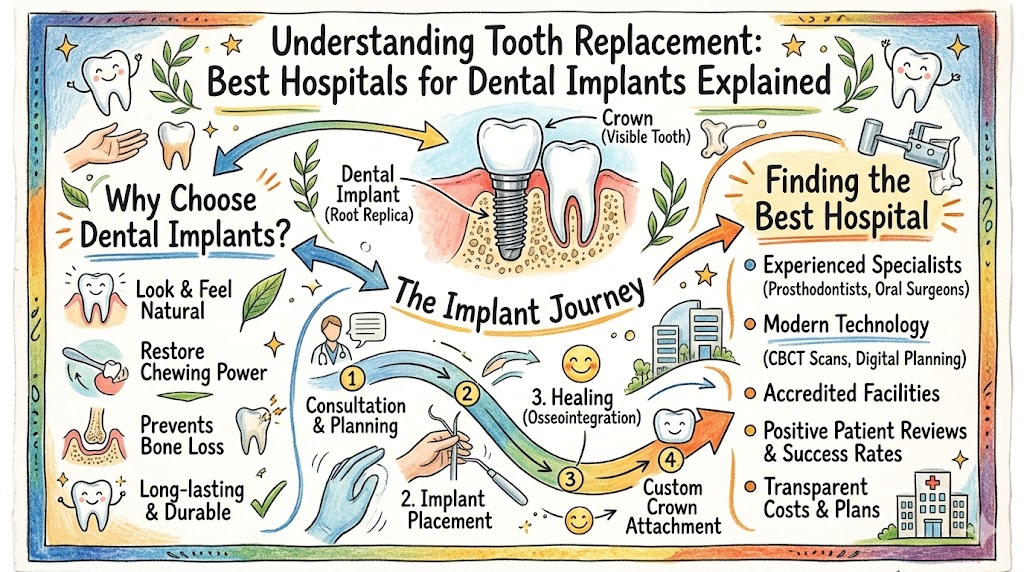
A dental implant is essentially an artificial root that is placed into your jawbone to hold a replacement tooth or bridge. Unlike dentures, which sit on top of the gums and can slip, or bridges, which rely on neighboring teeth for support, implants are anchored directly into the bone.
The success of this procedure relies on a biological process called osseointegration, where the titanium post fuses with the surrounding bone, creating a rock-solid foundation. This makes dental implants one of the most durable and natural-looking tooth replacement options available in restorative dentistry. Because they replace the root, they also help maintain the health of the jawbone, preventing the “sunken” look that often occurs after long-term tooth loss.
Why Specialized Dental Implant Hospitals Matter
Dental implant surgery requires a high level of surgical skill and a deep understanding of facial anatomy. Specialized dental implant hospitals are designed to provide this high standard of care.
These hospitals offer more than just a chair and a drill; they provide a comprehensive environment for oral surgery. With specialized implantologists and oral surgeons on staff, you benefit from a team that focuses exclusively on restorative workflows. Advanced imaging—such as 3D CBCT scans—is used to map the exact density and shape of your jawbone, ensuring that the implant is placed in the most secure location. This dedicated environment significantly increases the long-term success rate of your implants while minimizing the risk of procedural complications.
Types of Dental Implant Procedures
- Single Tooth Implants: The ideal solution for replacing one missing tooth without affecting the health of the neighboring teeth.
- Multiple Tooth Implants: A cost-effective way to replace several missing teeth by using implants as anchors for a dental bridge.
- Full Mouth Dental Implants: A comprehensive restoration for individuals missing all or most of their teeth, providing a full, stable set of teeth.
- Immediate Dental Implants: In select cases, the implant can be placed at the same time as the tooth extraction, streamlining the process.
- All-on-4 Dental Implants: A popular technique that uses only four precisely placed implants to support an entire arch of teeth.
- Implant-Supported Dentures: A solution that uses implants to “snap” a denture into place, offering vastly improved stability over traditional removable dentures.
How Dental Implant Procedures Work
The transformation process is carefully planned to ensure comfort and success:
- Initial Examination: The dentist evaluates your oral health and bone density to determine if you are a candidate for implants.
- Digital Planning: Advanced 3D jaw scans are taken to create a detailed surgical map of your mouth.
- Preparation: If necessary, a damaged tooth is extracted, or bone grafting is performed to ensure the jaw is strong enough.
- Placement: The titanium implant post is placed into the jawbone during a minor surgical procedure.
- Healing Phase: Over the next few months, the bone fuses to the post (osseointegration).
- Restoration: Once fully healed, a small connector called an abutment is attached, followed by the final, custom-made crown or bridge.
Modern Dental Implant Hospital Systems
Modern dental implant hospitals utilize technology to remove the guesswork from surgery. Digital dental imaging and 3D CBCT jaw scanning technology allow the dentist to see the jaw from every angle, identifying nerves and sinus cavities before the surgery ever begins.
Computer-guided implant surgery takes this one step further, using precise digital templates to place the implant in the exact location planned by the software. Coupled with sterilized oral surgery units and dedicated prosthetic laboratories, these systems ensure that your new tooth not only looks perfect but fits naturally with your bite.
Technology in Implant Dentistry
Advancements in the field have made implant procedures smoother and more predictable:
- 3D-Guided Implant Placement: Uses digital planning to ensure the implant is placed with sub-millimeter precision.
- AI-Assisted Smile Design: Allows the dentist to show you a preview of how your new smile will look.
- Digital Intraoral Scanning: Replaces messy physical impressions with quick, accurate digital 3D models of your teeth.
- Laser Dentistry: Can be used to manage soft tissue during the procedure, often leading to less bleeding and faster recovery.
- Smart Planning Software: Ensures that every aspect of the implant—from depth to angle—is optimized for your specific bone structure.
Benefits of Choosing the Right Dental Implant Hospital
Choosing a specialized facility is a strategic choice for your long-term health:
- Durability: High-quality implants placed with precision last longer and resist wear.
- Smile Aesthetics: Custom-made crowns that match the color, shape, and size of your existing teeth.
- Chewing Efficiency: Restores the ability to eat your favorite foods with confidence.
- Reduced Complications: Advanced planning reduces the risks of nerve interference or improper healing.
- Customized Planning: Every smile is treated as a unique project with a plan designed for your specific anatomy.
Risks and Realistic Expectations
While dental implants are highly successful, it is important to be informed:
- Healing Timeline: The process is not instantaneous; the integration phase is essential for long-term success.
- Bone Health: If your jawbone is thin, you may require a bone grafting procedure first, which can extend the overall timeline.
- Mild Discomfort: Some minor swelling or discomfort is normal after surgery and is easily managed with standard post-op care.
- Oral Hygiene: Implants require the same care as natural teeth—brushing, flossing, and regular professional cleanings are non-negotiable.
Common Mistakes Patients Make
- Waiting Too Long: Delaying the replacement of a missing tooth can lead to bone loss, making future implant placement more difficult.
- Shopping Only by Price: Choosing the cheapest clinic can lead to the use of inferior components or less experienced surgical planning.
- Neglecting Care: Assuming implants are “indestructible” and skipping flossing or routine dental checkups.
- Smoking During Healing: Smoking is the number one enemy of osseointegration and can cause implants to fail.
- Skipping Follow-ups: Regular visits allow the dentist to ensure the implant remains healthy and the bite is balanced.
Best Practices After Dental Implants
- Oral Hygiene: Brush twice daily and floss around your implant just as you would a natural tooth.
- Dietary Care: Stick to soft foods during the initial healing phase and gradually return to your regular diet.
- Regular Checkups: Visit your dentist for routine professional cleanings to ensure the area stays free of plaque.
- Avoid Pressure: Avoid chewing on very hard objects like ice or pens, which can damage the porcelain crown.
- Lifestyle: Commit to quitting tobacco products, as they interfere with the health of the tissues surrounding the implant.
Real-World Healthcare Use Cases
- Single Tooth Replacement: A professional who lost a tooth due to a sports injury receives an implant, regaining a seamless smile and full confidence in social and professional settings.
- Full Mouth Rehabilitation: An elderly patient who struggled with loose dentures switches to implant-supported dentures, finally able to eat a wide variety of foods comfortably.
- Cosmetic Smile Restoration: A patient with years of dental decay undergoes a phased treatment plan involving extractions and implants, resulting in a complete, healthy smile.
Future of Implant Dentistry
The future of implant dentistry is focused on speed and biological synergy. We are moving toward the use of biomaterials that encourage even faster bone growth, potentially shortening the wait time after placement. Robotic-assisted implant surgery is also becoming a reality, offering even greater precision in the placement of the titanium posts. Furthermore, digital smile simulation is becoming more sophisticated, allowing patients to see their future smiles with near-perfect accuracy before the first step of treatment.
FAQs
- What are dental implants? They are artificial tooth roots, usually made of titanium, that provide a permanent base for replacement teeth.
- Are dental implants painful? The procedure is done under local anesthesia, so you should feel no pain. Post-op discomfort is usually minor.
- How long do implants last? With proper care, they are designed to last a lifetime.
- Can elderly patients get implants? Yes, as long as you are healthy enough for dental surgery, there is no upper age limit.
- What is osseointegration? It is the process where the jawbone grows around the titanium post to secure it firmly.
- Are implants better than dentures? Yes, they are far more stable, help preserve jawbone, and feel more like natural teeth.
- What if I don’t have enough bone? Bone grafting is a routine procedure that adds volume to your jaw to support an implant.
- Is the procedure safe? Yes, dental implants have one of the highest success rates in all of dentistry.
- How do I care for my implants? Treat them exactly like natural teeth: brush, floss, and see your dentist regularly.
- Can they look fake? No, the porcelain crowns are custom-shaded and shaped to blend perfectly with your natural smile.
- Do I need a hospital stay? No, implants are performed as outpatient procedures.
- How long is the entire process? It depends on your bone health, typically ranging from a few months to a year for complex restorations.
- What is an abutment? It is the piece that connects the implant post in your bone to the visible crown.
- What if the implant fails? Failure is rare, and your dentist will discuss the reasons and potential solutions during your consultation.
- How do I find a good hospital? Look for those that offer 3D imaging, digital planning, and have experienced, dedicated implantologists.
Final Thoughts
Restoring your smile is a significant step toward improving your overall quality of life. Dental implants offer a level of stability and comfort that is as close to natural teeth as modern dentistry can provide. While the process requires time and commitment, the long-term rewards—improved function, preserved bone health, and newfound confidence—are well worth it. Trust in the process, choose an expert team, and maintain your oral health, and you will enjoy a strong, beautiful smile for years to come.