Introduction
In the modern era of cosmetic dentistry, achieving the smile you have always wanted is more accessible than ever. Among the many procedures available, teeth bonding stands out as a versatile, conservative, and efficient method for correcting minor dental imperfections. Whether you are looking to address a small chip, close a minor gap, or brighten a discolored tooth, dental bonding offers a way to enhance your smile without the need for invasive structural changes.Specialized dental hospitals provide the right blend of artistry, clinical precision, and advanced materials needed for natural-looking results. In this guide, we will explore the nuances of this treatment to help you make an informed decision about your oral health. For tools to research high-quality facilities and compare various cosmetic dentistry options, you can explore BestDentalHospitals.
What Is Teeth Bonding?
Teeth bonding, or dental bonding, is a cosmetic procedure in which a tooth-colored composite resin material is applied to the surface of a tooth, sculpted into the desired shape, and hardened with a special light.
The process is designed to mimic the natural translucency and shade of your teeth. It is frequently used for both aesthetic enhancement and minor restorative work. Because it requires very little removal of the natural tooth structure, it is considered a conservative approach to cosmetic improvement.
Why Choose a Specialized Dental Hospital?
While many general practices offer bonding, specialized cosmetic dental hospitals prioritize the aesthetic and functional integration of your new restoration.
- Experienced Cosmetic Dentists: Specialists understand the “art” of dentistry, focusing on color matching and contouring.
- Advanced Dental Technology: Modern facilities use digital planning to preview your results before treatment begins.
- High-Quality Materials: Use of premium, durable composite resins that resist wear.
- Comprehensive Evaluation: A hospital setting ensures your oral health is fully assessed before any cosmetic changes are made, guaranteeing that your gums and underlying teeth are healthy.
Common Reasons for Teeth Bonding
Bonding is best suited for addressing small to moderate cosmetic issues that do not require major restorative work.
Teeth Bonding Uses Table
| Dental Concern | How Bonding Helps |
| Chipped Tooth | Restores the original tooth shape |
| Small Gap | Closes space between teeth for symmetry |
| Tooth Discoloration | Masks stubborn stains that whitening cannot fix |
| Uneven Teeth | Reshapes jagged or short edges |
| Minor Cracks | Protects the tooth and restores appearance |
Benefits of Teeth Bonding
- Conservative: Unlike crowns or veneers, very little, if any, of your natural tooth enamel is removed.
- Quick: The procedure can often be completed in a single visit.
- Affordable: Generally one of the most cost-effective cosmetic dental procedures.
- Natural Appearance: The composite resin is custom-shaded to blend seamlessly with your surrounding teeth.
Types of Cosmetic Dental Treatments
It is helpful to understand how bonding fits into the broader field of cosmetic dentistry.
Cosmetic Treatment Comparison Table
| Treatment | Best For | Main Advantage |
| Teeth Bonding | Minor cosmetic issues | Quick, single-visit treatment |
| Veneers | Significant smile enhancement | Highly durable and aesthetic |
| Teeth Whitening | Tooth stains | Brightens overall smile |
| Crowns | Damaged/Weakened teeth | Maximum strength and protection |
Advanced Technologies Used
Top-tier dental hospitals utilize modern tools to ensure precision:
- Digital Smile Design: Allows you to “try on” your smile before the bonding is applied.
- Intraoral Scanners: Replace messy physical impressions with 3D digital models.
- LED Curing Lights: Provide rapid and uniform hardening of the resin.
- Shade-Matching Systems: Use advanced color technology to find the exact tint of your natural teeth.
Who Is a Good Candidate?
You are likely a good candidate for teeth bonding if you have:
- Healthy teeth and gums.
- Minor cosmetic imperfections that do not impact the core strength of the tooth.
- Good overall oral hygiene.
- Realistic expectations regarding what the procedure can accomplish.
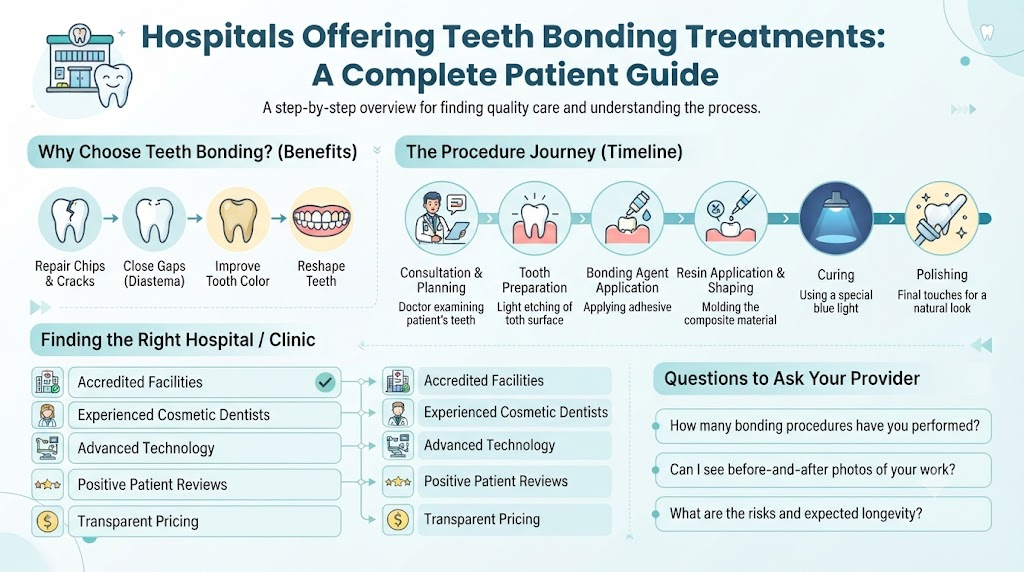
What Happens During the Procedure?
- Consultation: Discuss your goals and choose the best shade for your resin.
- Preparation: The dentist roughens the tooth surface slightly and applies a conditioning liquid.
- Application: The resin is applied, molded, and smoothed to the desired shape.
- Curing: A specialized light is used to harden the material.
- Finishing: Once hardened, the dentist trims and polishes the resin to match the sheen of your natural tooth.
Recovery and Aftercare
There is no “recovery time” for dental bonding; you can return to your normal routine immediately. However, you should avoid coffee, tea, red wine, and tobacco for the first 48 hours, as the material can be slightly prone to staining before it fully “settles.”
Possible Risks and Limitations
- Staining: Composite resin can stain over time, especially if exposed to heavy coffee or tobacco use.
- Chipping: Composite resin is not as strong as porcelain veneers or crowns and can chip if used to bite hard objects (like ice or pens).
- Wear: Over time, the material may wear down and require professional polishing or replacement.
Risks and Care Table
| Possible Issue | Recommended Care |
| Staining | Maintain excellent brushing/flossing habits |
| Chipping | Avoid biting down on hard objects |
| Wear | Routine dental cleanings and checkups |
How to Choose the Right Dental Hospital
- Look for Cosmetic Expertise: Ask to see a gallery of “before and after” photos of their work.
- Modern Equipment: Ensure the hospital uses digital planning tools.
- Hygiene: A clean, organized, and modern environment is a baseline requirement.
- Transparency: A reputable hospital will be honest about whether bonding is the best option for your specific case or if you would benefit more from veneers or orthodontics.
Tips for Maintaining Bonded Teeth
- Oral Hygiene: Brush at least twice daily and floss daily to keep the edges of the bonding clean.
- Professional Care: Regular dental cleanings are necessary to polish the bonding material.
- Habits: If you suffer from bruxism (grinding your teeth at night), consider wearing a mouthguard to protect your bonding from fractures.
Real-Life Patient Scenarios
- The Chipped Tooth: A patient chipped their front tooth during a sport. Bonding restored the tooth shape in less than an hour, allowing them to smile with confidence again.
- Closing a Gap: A patient felt self-conscious about a small gap between their front teeth. Bonding was used to gently widen the two teeth, closing the gap naturally without the need for braces.
Frequently Asked Questions (FAQs)
- What is teeth bonding?
A cosmetic procedure using tooth-colored resin to reshape teeth. - How long does dental bonding last?
Generally 3 to 10 years, depending on care. - Does teeth bonding hurt?
No, it is usually painless and rarely requires anesthesia. - Is bonding better than veneers?
Bonding is more conservative and cheaper; veneers are more durable and stain-resistant. - Can bonding fix chipped teeth?
Yes, it is excellent for minor chips. - How should I care for bonded teeth?
Same as your natural teeth: brush, floss, and avoid hard objects. - Can bonded teeth become stained?
Yes, so limit staining foods and beverages. - Is anesthesia required?
Typically no, unless the bonding is used to fill a cavity. - How long does the procedure take?
Usually 30 to 60 minutes per tooth. - Who is a good candidate?
Those with minor cosmetic issues and healthy teeth. - Can bonding be repaired?
Yes, resin can usually be added or replaced easily. - Is teeth bonding reversible?
Yes, because the tooth surface is minimally altered. - How do I choose a cosmetic dental hospital?
Look for experience, hygiene, and patient testimonials. - Is bonding suitable for front teeth?
Yes, it is the most common area for bonding. - How often should bonded teeth be checked?
At every routine six-month dental checkup.
Final Thoughts
Teeth bonding is a fantastic entry point into the world of cosmetic dentistry. It offers a balance of simplicity, affordability, and aesthetic impact. By choosing a dental hospital that emphasizes patient comfort and clinical excellence, you can be sure that your new smile is in good hands.We encourage you to prioritize your oral health by choosing a provider who listens to your goals and values long-term maintenance. To learn more about cosmetic, restorative, and preventive options, or to find accredited hospitals, explore BestDentalHospitals. Your journey toward a more confident smile begins with a single consultation.