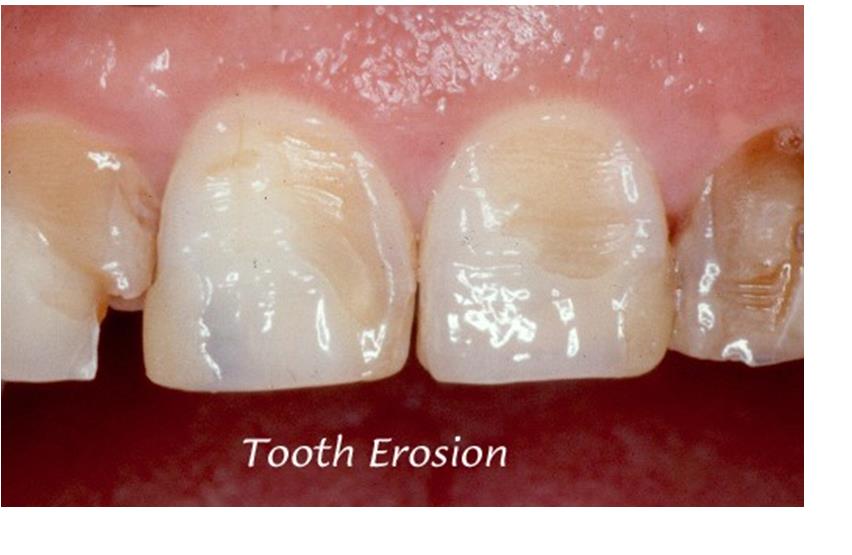
Overview
Dental erosion, sometimes called acid erosion, is the irreversible loss of tooth structure caused by acids that are not produced by bacteria. It begins in the outer enamel and, if left unchecked, can progress into the softer dentin beneath. Because many acidic foods and drinks are seen as healthy, the damaging effect of acids such as those in fruit juice is often overlooked.
Causes
Erosion is driven by repeated acid contact with the teeth. Common sources include:
- Acidic fruit juices and fresh fruit
- Carbonated, soft, sports and diet drinks
- Acid reflux bringing stomach acid into the mouth
- Vomiting, including that linked to alcohol misuse
- Chlorine and other chemicals in swimming pools
Symptoms
As enamel thins, teeth often become more sensitive and can look yellowed where the dentin shows through. The surfaces may appear smooth and shiny, with edges that thin or become slightly transparent.
Prevention
Limit acidic drinks and use a straw to reduce contact with the teeth. Rinse with water after acidic foods, avoid brushing immediately afterwards, and include calcium-rich foods such as milk, cheese and yoghurt in the diet.
Treatment
Care focuses on stopping further loss and protecting the remaining tooth. A dentist may recommend fluoride or remineralising products to strengthen enamel, help address underlying acid reflux, and restore worn teeth where needed.