Overview
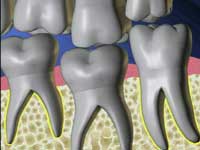
Dental ankylosis occurs when the periodontal ligament that normally cushions a tooth within its socket is lost, allowing the root to fuse directly to the surrounding jawbone. Because the fused tooth can no longer move or erupt at the same rate as its neighbours, it often appears submerged or set lower than the teeth around it. Ankylosis is most often seen in baby teeth, where it can interfere with the eruption of the permanent tooth beneath.
Causes
The underlying cause is damage to or death of the ligament cells around the root. Contributing factors include:
- Inflammation or infection
- Problems with metabolism or bone growth
- Congenital tendencies
- Trauma or crushing injury to the tooth
Symptoms
An ankylosed tooth typically looks lower than adjacent teeth, while the opposing tooth may drift out of alignment. A distinctive clue is the sound on tapping: a healthy tooth gives a cushioned note, whereas an ankylosed tooth produces a dull, solid sound. X-rays taken at routine check-ups help confirm the diagnosis and reveal any permanent tooth being blocked.
Treatment
Management is guided by a dentist and depends on the child’s age and the effect on surrounding teeth. An ankylosed baby tooth is often removed to let the permanent tooth erupt, sometimes using specialised surgical techniques, with follow-up to guide the alignment of the remaining teeth.