
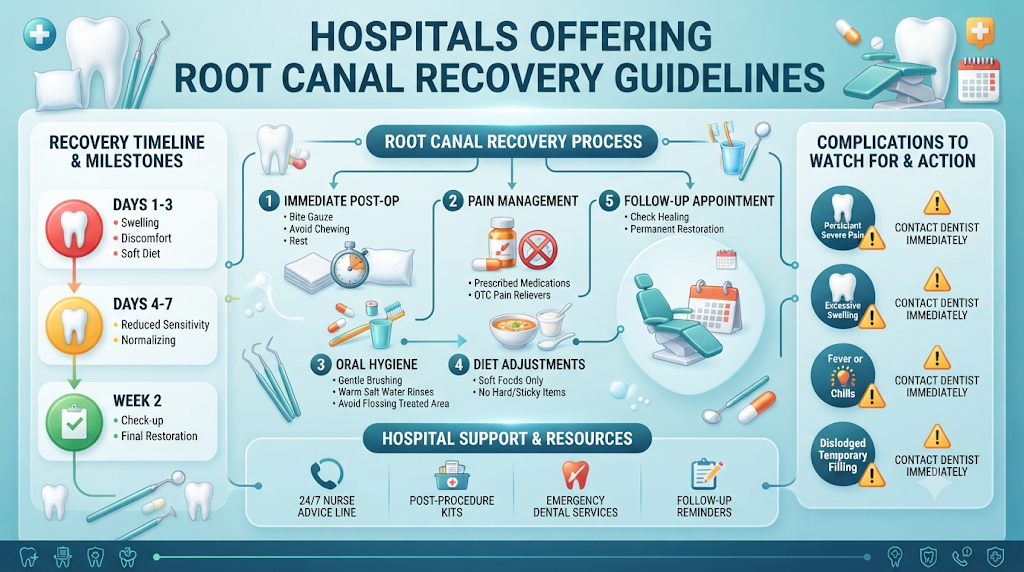
Introduction
A root canal is a dental treatment that helps save an infected or badly damaged tooth. During this treatment, the dentist removes the infected tissue from inside the tooth. The dentist then cleans, shapes, and seals the inner space.
The soft tissue inside a tooth is called the pulp. It contains nerves and blood vessels. Deep decay, cracks, or injury can damage this pulp. A root canal removes the damaged tissue and helps prevent the infection from spreading.
Most patients can return to normal activities soon after treatment. However, mild tenderness or soreness may occur for a few days. Good aftercare helps protect the treated tooth during healing.
Patients may also need a permanent filling or dental crown. This depends on the tooth’s condition and the amount of damage. A temporary filling may protect the tooth until final restoration.
Dental hospitals and endodontists help patients understand each recovery step. An endodontist is a dentist with advanced training in root canal treatment. The dental team can explain pain care, food choices, oral hygiene, and follow-up visits.
Patients can explore dental care information through BestDentalHospitals. They should also speak directly with their treating dentist. Personal aftercare instructions are important because every tooth and patient is different.
Understand the Root Canal Recovery Process
Root canal recovery begins after the dentist completes the treatment. The tooth may feel tender when the local anesthesia wears off. The jaw may also feel sore from keeping the mouth open during treatment.
Mild discomfort is common for a short time. The treated tooth may feel sensitive when biting or touching it. This usually improves as the area settles.
Recovery depends on several factors:
- Tooth condition: A badly infected tooth may need more healing time.
- Treatment complexity: Some root canals involve more than one visit.
- Infection level: Existing infection can affect tenderness and healing.
- Tooth location: Different teeth have different shapes and root structures.
- Overall health: A person’s health may affect the healing process.
Patients should follow the instructions given by their dentist. They should avoid putting extra pressure on the treated tooth. They should also attend any planned visits.
Severe or worsening pain is not something to ignore. Contact the dentist if symptoms increase or fail to improve. The dentist can check whether another problem needs attention.
Manage Pain and Discomfort Safely
Some patients feel soreness for a few days after root canal treatment. This may happen because the tissues around the tooth were irritated. The area may feel tender during chewing.
A dentist may suggest suitable pain relief. The choice depends on the patient’s health, age, allergies, and other medicines. Patients should use medicines only as directed.
Follow these simple safety steps:
- Take pain medicine only at the recommended dose.
- Follow the instructions on the medicine label.
- Do not take extra doses to get faster relief.
- Do not combine medicines without professional advice.
- Tell the dentist about allergies and other medicines.
- Ask before using pain medicine if pregnant or managing a health condition.
Antibiotics are not needed after every root canal. They do not replace proper dental treatment. A dentist may prescribe them in selected cases, such as certain spreading infections.
Do not use leftover antibiotics from an earlier illness. Do not stop a prescribed course without speaking to the prescriber.
Contact the dentist if pain becomes severe or keeps getting worse. Also seek advice if pain returns after it had improved. A dental review can help find the cause.
Choose Suitable Foods After Root Canal Treatment
Soft foods can make eating more comfortable during early recovery. They also reduce pressure on a tender tooth. Patients should avoid chewing on the treated side until their dentist says it is safe.
Good food choices include:
- Yogurt: Choose plain or soft yogurt without hard toppings.
- Mashed vegetables: Soft mashed potatoes, carrots, or pumpkin are suitable options.
- Eggs: Scrambled or boiled eggs are easy to chew.
- Soft rice: Eat well-cooked rice that does not need much chewing.
- Pasta: Choose soft, well-cooked pasta.
- Soups: Allow hot soup to cool before eating.
- Soft fruits: Ripe bananas and other soft fruits may be comfortable.
Some foods may place too much pressure on the tooth. Avoid hard nuts, ice, hard sweets, and crunchy snacks. Sticky sweets and chewy foods may also disturb a temporary filling.
Very hot or cold foods can cause discomfort in some patients. Choose foods at a comfortable temperature if sensitivity occurs.
Follow the dentist’s advice about eating while the mouth is numb. This helps prevent accidental bites to the cheek, lips, or tongue. Food choices support comfort, but they do not replace dental care.
Maintain Proper Oral Hygiene
Good oral hygiene remains important after root canal treatment. Cleaning the teeth helps reduce plaque and protects the gums. It also helps prevent new decay around the treated tooth.
Patients can usually continue brushing and flossing. They should be gentle around the treated area, especially if it feels tender.
Helpful oral care steps include:
- Brush twice daily with a soft toothbrush.
- Use fluoride toothpaste unless the dentist advises otherwise.
- Clean around the treated tooth gently.
- Floss between teeth without pulling on a temporary filling.
- Follow any special cleaning instructions from the dentist.
- Keep regular dental checkups and professional cleaning visits.
Do not stop cleaning the treated tooth because it feels sensitive. Gentle cleaning helps keep the area healthy. If brushing causes strong pain, ask the dentist for advice.
A root canal does not protect the tooth from future cavities. The remaining tooth structure can still decay. Gum disease can also affect the tooth and nearby tissues.
Daily cleaning and regular dental visits help protect the result. Patients should report any new pain, swelling, or damage to the treated tooth.
Protect the Tooth Until Permanent Restoration
A tooth may need a permanent filling or crown after root canal treatment. The right choice depends on the amount of healthy tooth structure left. The dentist will assess the tooth before recommending restoration.
A temporary filling closes the opening between treatment visits. It helps protect the inside of the tooth. However, it may not be as strong as the final restoration.
A root canal-treated tooth may be more likely to crack. This can happen when much of the natural tooth structure has been lost. Heavy biting can increase pressure on the tooth.
Until the dentist completes the final restoration:
- Avoid chewing hard foods on the treated side.
- Do not bite ice, hard sweets, or nuts with that tooth.
- Avoid sticky foods that may pull at the filling.
- Contact the dentist if the temporary filling becomes loose.
- Keep the planned restoration appointment.
Some teeth need a crown to cover and protect them. Other teeth may be suitable for a permanent filling or another restoration. The dentist will explain the best option.
Do not delay the final restoration without discussing it with the dentist. Leaving a tooth without suitable protection may increase the risk of damage.
Understand the Role of Dental Hospitals in Recovery
Dental hospitals support patients before, during, and after root canal treatment. Their teams explain what to expect and how to care for the treated tooth.
Good recovery support may include:
- Aftercare instructions: Staff explain pain care, food choices, and oral hygiene.
- Follow-up visits: Dentists check the tooth and the patient’s symptoms.
- Pain assessment: The team reviews discomfort and recommends suitable care.
- Diagnostic imaging: Dental X-rays may help assess the tooth and roots.
- Specialist treatment: Endodontists may manage complex root canal cases.
- Urgent advice: Patients should know whom to contact if symptoms worsen.
An endodontist has advanced training in treating the inside of teeth. This specialist may help with difficult root canals or cases that need further review.
Dental imaging can help dentists understand the tooth’s roots and surrounding tissues. The type of imaging depends on the patient’s needs. Not every patient needs the same tests.
Patients should choose qualified dental professionals and a suitable treatment facility. They should ask about infection control, equipment, and follow-up arrangements. Clear communication can make recovery easier to manage.
Recognize Warning Signs After Root Canal Treatment
Some tenderness may occur during normal recovery. However, certain symptoms need attention. Patients should not assume that all pain or swelling is part of healing.
Contact the dentist if you notice:
- Pain that becomes stronger instead of improving.
- Swelling inside or outside the mouth.
- Fever or feeling unwell after treatment.
- Unusual discharge around the treated tooth.
- A bad taste that returns with other symptoms.
- A temporary filling that becomes loose or falls out.
- Pain when biting because the tooth feels too high.
- Symptoms that return after they had improved.
A lost temporary filling needs dental advice. The dentist may need to replace it or check the tooth. Do not try to repair it with household materials.
An uneven bite may mean the treated tooth touches first. The dentist can check the bite and adjust it if needed. Do not try to file or change the tooth yourself.
Seek emergency medical care if facial swelling spreads quickly. Breathing or swallowing difficulty also needs emergency attention. These symptoms should never wait for a routine dental appointment.
Only a dental professional can assess the cause of these symptoms. Contact the treating team whenever recovery does not seem right.
Attend Follow-Up and Healing Assessments
Follow-up visits help the dentist check the treated tooth. They also allow the team to review pain, healing, and the final restoration.
Some patients need a visit soon after treatment. Others may have a longer gap before their next appointment. The timing depends on the tooth and treatment plan.
During follow-up, the dentist may:
- Check whether tenderness is improving.
- Review the temporary or permanent filling.
- Check the bite and chewing comfort.
- Examine the gums and nearby tissues.
- Take an X-ray when needed.
- Plan a crown or other final restoration.
Some teeth need further checks over several months. This may help the dentist assess healing around the root. Not every patient needs the same review schedule.
Do not miss a planned visit because the pain has stopped. The tooth may still need a permanent restoration. Follow-up also helps identify problems before they become more serious.
Tell the dentist about any new symptoms. Share details about pain, swelling, or trouble chewing. This helps the team decide whether further care is needed.
Avoid Habits That Can Delay Recovery
Daily habits can affect the treated tooth. Patients should protect it while the final restoration is being planned.
Avoid these habits during recovery:
- Smoking: Avoid smoking, as it can affect oral health and healing.
- Hard biting: Do not bite hard foods with an unrestored tooth.
- Using teeth as tools: Never open packages or containers with your teeth.
- Ignoring damage: Contact the dentist if a temporary filling cracks or falls out.
- Skipping oral care: Continue gentle brushing and cleaning between teeth.
- Missing visits: Attend planned appointments and restoration visits.
Do not use sharp objects to clean around the treated tooth. Avoid placing strong home remedies on the tooth or gums. These methods may irritate the area.
Do not take unprescribed medicines for ongoing pain. Ask the dentist before using new medicines or home treatments. Persistent pain needs a proper dental assessment.
Protecting the tooth is an important part of root canal aftercare. Careful habits can reduce extra pressure and help prevent damage.
How to Choose a Hospital for Root Canal Treatment and Aftercare
Choosing a suitable dental facility is important. Patients need qualified professionals and clear support after treatment.
Before selecting a hospital, consider these points:
- Dental qualifications: Check the dentist’s training and professional registration.
- Endodontic care: Ask whether an endodontist is available for complex cases.
- Diagnostic facilities: Ask about suitable dental imaging and examination tools.
- Infection control: Check how the facility cleans and sterilizes equipment.
- Aftercare instructions: Confirm that staff explain recovery and warning signs.
- Permanent restoration: Ask how the dentist plans to protect the treated tooth.
- Follow-up support: Check how appointments and urgent concerns are handled.
Patients should ask who will perform the root canal. They should also ask who will provide follow-up care. Clear answers help patients understand the treatment plan.
A good choice should be based on clinical quality and patient support. Do not rely only on advertisements or promotional claims. Compare qualifications, facilities, communication, and aftercare arrangements.
BestDentalHospitals.com may help readers explore dental care information. Patients should confirm all details directly with the dental provider. An individual examination is needed before treatment decisions.
Foods to Choose and Avoid During Root Canal Recovery
| Food Type | Examples | Recovery Advice |
|---|---|---|
| Soft foods | Yogurt, mashed vegetables, eggs, soft rice | Usually easier to chew during early recovery. |
| Hard foods | Nuts, ice, hard sweets, raw carrots | Avoid biting these with the treated tooth until it is protected. |
| Sticky foods | Chewy sweets, caramel, sticky toffees | Avoid them because they may pull at a temporary filling. |
| Crunchy snacks | Chips, crackers, popcorn, hard crusts | Choose softer foods while the tooth is tender or temporarily restored. |
| Very hot or cold items | Hot drinks, ice cream, chilled drinks | Avoid extreme temperatures if they cause sensitivity. |
Root Canal Recovery Symptoms and Recommended Actions
| Symptom | What It May Mean | Recommended Action |
|---|---|---|
| Mild tenderness | The tissues around the tooth may be settling after treatment. | Follow the dentist’s instructions and monitor improvement. |
| Worsening pain | The tooth may need further assessment. | Contact the dentist promptly. |
| Swelling | It may indicate irritation or infection. | Seek dental advice, especially if swelling increases. |
| Fever | It may be a sign of infection or another health problem. | Contact the dentist promptly for assessment. |
| Lost temporary filling | The tooth may no longer have proper temporary protection. | Contact the dental team for advice and repair. |
| Uneven bite | The treated tooth may be touching before the other teeth. | Arrange a dental check and bite adjustment if needed. |
These symptoms can have different causes. Only a dentist can assess the problem and recommend suitable care.
Frequently Asked Questions
1. How long does recovery after a root canal usually take?
Many patients feel better within a few days. Mild tenderness may remain for a short time. Recovery depends on the tooth, infection, and treatment complexity. The final restoration may need a separate visit. Follow your dentist’s instructions and report pain that becomes worse or does not improve.
2. Is mild pain normal after root canal treatment?
Mild soreness or tenderness can occur after treatment. The tissues around the tooth may need time to settle. This discomfort should usually improve. Use pain relief only as directed by your dentist. Contact the dental team if pain becomes severe, increases, or continues longer than expected.
3. What foods should I eat after a root canal?
Choose soft foods such as yogurt, mashed vegetables, eggs, soft rice, and well-cooked pasta. Avoid hard, crunchy, sticky, or chewy foods while the tooth is tender. Do not chew on the treated side until your dentist advises that it is safe.
4. Can I brush my teeth after root canal treatment?
Yes, most patients can continue brushing after treatment. Use a soft toothbrush and clean gently around the treated tooth. Floss carefully without disturbing a temporary filling. Good oral hygiene helps protect the teeth and gums. Follow any special cleaning advice from your dentist.
5. How long should I avoid chewing on the treated tooth?
Avoid heavy chewing on the treated tooth until your dentist confirms it is properly restored. A temporary filling may not offer the same strength as a permanent restoration. Follow your dentist’s advice about eating and chewing. This helps reduce pressure and the risk of cracks.
6. Why might I need a crown after a root canal?
A crown covers and protects a tooth that has lost a lot of its natural structure. Some treated teeth may be more likely to crack during chewing. Your dentist will assess the remaining tooth and recommend a crown or another suitable restoration.
7. When should I contact my dentist after a root canal?
Contact your dentist if pain becomes worse, swelling develops, fever occurs, or the temporary filling falls out. You should also report an uneven bite or unusual discharge. Seek emergency care if swelling spreads quickly or you have trouble breathing or swallowing.
8. Is swelling normal after root canal treatment?
Mild tenderness can occur, but noticeable or increasing swelling needs dental advice. Swelling may have different causes, including infection. Contact your dentist if it appears or gets worse. Rapidly spreading facial swelling needs urgent medical attention, especially with breathing or swallowing problems.
9. Do all patients need antibiotics after a root canal?
No, antibiotics are not needed after every root canal. The dentist decides whether they are suitable based on the infection and the patient’s health. Antibiotics do not replace cleaning and treating the tooth. Never take leftover antibiotics or use them without professional advice.
10. Why are follow-up visits important after root canal treatment?
Follow-up visits help the dentist check healing, pain, and the tooth’s restoration. The dentist may also check the bite or request an X-ray. These visits help identify problems and confirm the next steps. Attend the appointments even if your symptoms have improved.
Final Thoughts
Good root canal recovery guidelines help patients care for their treated teeth. Follow the dentist’s instructions about food, pain relief, and oral hygiene. Protect the tooth from heavy chewing until its final restoration is complete.
Attend planned follow-up visits and ask questions when something feels wrong. Do not ignore worsening pain, swelling, fever, or a damaged temporary filling. Seek urgent care for rapidly spreading swelling or breathing and swallowing problems.
Dental hospitals and endodontists can guide patients through each stage. Their advice should match the patient’s tooth and health needs. With careful aftercare and timely dental support, patients can help protect their treated tooth for the long term.