Introduction
A small change in tooth shape can affect a smile. Some people have uneven edges, tiny chips, or slightly pointed teeth. Cosmetic tooth contouring may help smooth these minor flaws. It changes the shape of teeth by removing a small amount of outer enamel.
This treatment is not right for every dental concern. A dentist must check tooth health, enamel thickness, and bite function first. Enamel does not grow back once removed. So, tooth contouring is permanent and needs careful planning.
People researching cosmetic dental hospitals can explore bestdentalhospitals. as part of their search. They should also confirm services and dentist qualifications directly. A professional dental consultation helps patients understand the options, limits, and risks before making a choice.
What Is Cosmetic Tooth Contouring?
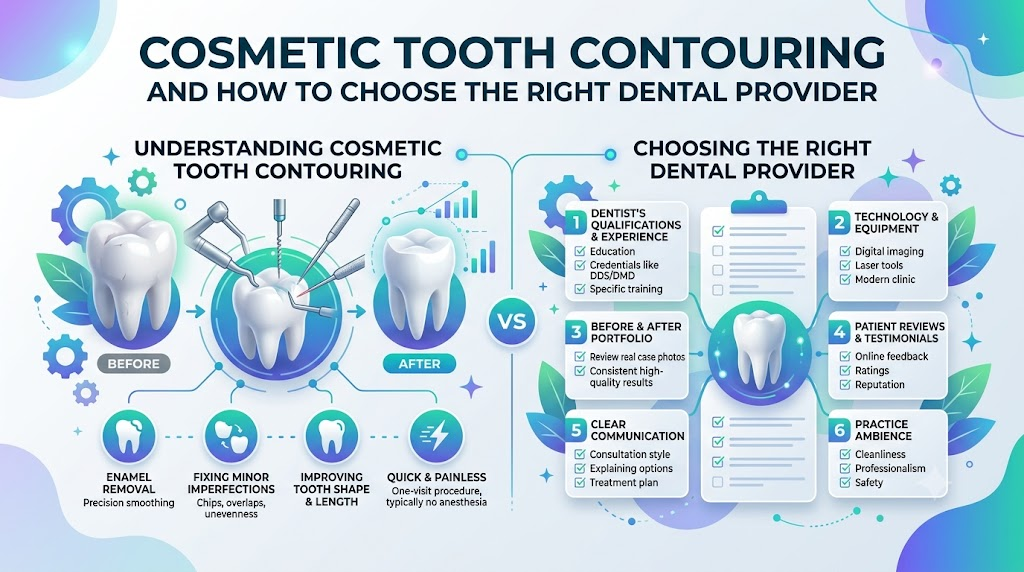
Cosmetic tooth contouring is a dental procedure that changes small parts of a tooth’s shape. It is also called tooth reshaping or enameloplasty. A dentist removes tiny amounts of outer enamel to smooth rough edges or improve minor shape differences.
The treatment is usually meant for small cosmetic changes. It may help make uneven tooth edges look more balanced. It cannot add missing tooth material or repair major damage. Other treatments may be needed when teeth have larger problems.
The most important point is that enamel removal cannot be reversed. Enamel is the hard outer layer that protects each tooth. Unlike some body tissues, it does not grow back. Removing too much can weaken a tooth or lead to sensitivity. A dentist should therefore recommend this procedure only after a careful assessment.
Why Do People Consider Tooth Contouring?
People may consider tooth contouring when small flaws affect their smile. For example, the edges of two front teeth may look uneven. One tooth may have a tiny bump or a slightly pointed edge. Small differences in tooth length or shape may also be suitable for assessment.
A minor adjustment can sometimes make nearby teeth look more even. It may also smooth a rough edge that catches the tongue. For selected cases, this can be a simple way to improve tooth shape.
However, tooth contouring has clear limits. It cannot whiten stained teeth, close large gaps, or correct major alignment problems by itself. It also cannot replace treatment for decay, cracks, or weakened teeth. A dentist can explain whether reshaping is suitable or another option may work better.
Which Dental Problems Can It Address?
Tooth contouring may help with small differences in tooth shape. These include slightly uneven edges, minor enamel bumps, and small pointed areas. In selected cases, a dentist may adjust a small irregularity that affects the balance of a smile.
The dentist must first check the tooth’s health and enamel thickness. They also need to check how the upper and lower teeth meet. This is called the bite. A change that seems small may affect the bite if it is not planned well.
Tooth contouring is not a general fix for every dental problem. Larger chips may need bonding or another repair. Crooked teeth may need orthodontic treatment. Dark or stained teeth may need a different approach. The right choice depends on the cause of the concern and the condition of the teeth.
Who May Be Suitable for Tooth Contouring?
A dentist may consider contouring for someone with healthy teeth and gums. The person must also have enough healthy enamel for a safe, small change. The concern should be minor enough to address without harming tooth strength or bite function.
Some conditions may make contouring unsuitable. These include thin enamel, tooth decay, gum disease, strong tooth grinding, existing sensitivity, or significant cracks. A dentist may need to treat these concerns first. In some cases, another cosmetic or restorative option may be safer.
No one can confirm suitability from appearance alone. A dental exam helps the provider check for hidden problems and assess the risks. Patients should share their dental history, symptoms, and goals honestly. A qualified dentist can then explain the choices and likely limits.
How to Find Hospitals Offering Cosmetic Tooth Contouring
Hospitals, dental clinics, and cosmetic dentistry departments may offer tooth contouring. However, services differ between facilities. Contact the provider directly to confirm whether a qualified dentist offers the procedure.
Check the dentist’s qualifications and experience in cosmetic dentistry. Ask whether the provider regularly assesses tooth shape, enamel health, and bite function. It is also useful to learn about infection-control practices, consultation fees, and follow-up support.
Do not choose a facility based only on advertising or appearance. Look for clear answers about treatment options, risks, and costs. Be careful with claims that promise perfect teeth or guaranteed results. A good provider should explain when contouring is not the right choice.
What Happens During a Dental Consultation?
During a consultation, the dentist asks what changes you would like. They examine the teeth and gums and look for decay or damage. They may also check enamel thickness, tooth shape, existing fillings, and the way the teeth meet.
Dental X-rays may be considered when needed to assess a concern. They are not required for every cosmetic contouring case. The dentist decides whether imaging would provide useful information.
The provider should explain what contouring may achieve and what it cannot fix. They should also discuss permanent enamel removal, possible sensitivity, other treatment options, and the cost. Patients should feel free to ask questions and take time to decide. A consultation does not mean treatment must go ahead.
What Happens During Tooth Contouring?
Tooth contouring involves carefully adjusting small areas of enamel. The dentist aims to smooth or change a minor irregularity while protecting tooth health. The exact approach depends on the teeth and the planned result.
The dentist checks the shape of the teeth and how they meet when biting. The amount of work needed varies with the number of teeth and the concern being treated. Some cases require only a small adjustment, while others may not be suitable for contouring at all.
This procedure should only be done by a qualified dental professional. Never try to file or reshape teeth at home. Home tools and unsafe methods can remove too much enamel, cause pain, and damage teeth permanently.
Benefits and Limitations
For suitable cases, tooth contouring may smooth uneven edges and improve small shape differences. It may help teeth look more balanced without major dental work. It can also be less extensive than some alternatives when only a minor change is needed.
Still, the procedure has limits. It cannot rebuild lost enamel, change tooth color, or correct severe crowding. It is not a substitute for treating decay or major tooth damage. The result also depends on the natural shape and condition of the teeth.
A good outcome means making a safe, modest change that meets a realistic goal. It does not mean creating perfect teeth. A dentist should explain what can be changed without harming tooth strength. If contouring would remove too much enamel, another option may be better.
Risks and Possible Side Effects
The main risk is removing too much enamel. This can weaken a tooth and increase sensitivity to hot, cold, or sweet foods. Since enamel does not grow back, the change cannot simply be undone.
Other possible concerns include rough edges, changes in bite contact, and a result that does not match the patient’s hopes. A tooth with hidden damage may also need other care. Careful assessment and conservative treatment help reduce avoidable risks.
After treatment, contact the dentist if sensitivity does not improve, pain develops, or the teeth no longer meet comfortably. Do not ignore ongoing symptoms. The dentist can assess the cause and explain what care may be needed. Discuss the risks before agreeing to the procedure.
Recovery and Aftercare
Many people can return to normal daily activities soon after suitable tooth contouring. Some may notice temporary sensitivity. The experience depends on the amount of reshaping and the condition of the teeth.
Good oral care remains important. Brush with fluoride toothpaste, clean between your teeth, and attend regular dental visits. Avoid habits that may damage teeth, such as biting hard objects. If you grind your teeth, ask a dentist whether you need a protective plan.
There is no single recovery timeline for everyone. Follow the advice given by your dentist. Seek professional guidance if pain, lasting sensitivity, or bite changes occur. Do not assume that ongoing discomfort is a normal part of healing.
Alternatives to Tooth Contouring
Several alternatives may help when contouring is not suitable. Dental bonding uses a tooth-colored material to change shape or repair selected small chips. Veneers may change the look of front teeth in certain cases. Orthodontic treatment can help with alignment concerns.
Damaged or weakened teeth may need restorative treatment instead. Cavities and gum disease should be assessed and treated before elective cosmetic work. Discolored teeth may need a separate assessment to identify the cause and suitable options.
Each treatment has different benefits, risks, costs, and care needs. Some options preserve more enamel, while others involve more extensive work. Ask your dentist to compare the choices for your concern. The safest option is not always the one that makes the biggest change.
Dental Concerns and Possible Treatment Options
The table below gives general examples of options a dentist may discuss. The right treatment depends on an examination, and contouring is not suitable for every concern.
| Dental concern | Possible option | Important consideration |
|---|---|---|
| Minor uneven edges | Tooth contouring | Requires enough healthy enamel |
| Small chips | Bonding or selected contouring | The dentist must check tooth strength |
| Alignment concerns | Orthodontic treatment | Contouring cannot correct major crowding |
| Tooth discoloration | Assessment and suitable whitening or other care | Contouring does not change tooth color |
| Significant tooth damage | Restorative treatment | The tooth may need repair and protection |
A dentist should explain why an option suits the concern. Ask about alternatives before agreeing to permanent enamel removal.
Understanding Tooth Contouring Costs
Tooth reshaping cost can depend on how many teeth need treatment. The dentist’s fees, the facility, the case’s complexity, and any other dental care may also affect the total. Prices can vary between providers.
Ask for a written estimate before treatment. Check whether it includes the consultation, any needed tests, the procedure, and follow-up visits. If other treatment is needed first, ask whether that will be billed separately.
Cosmetic procedures may not be covered by dental insurance. Coverage depends on the policy and the reason for treatment. Contact your insurer to confirm the details. Do not choose a provider based only on price. Clear planning, safe care, and suitable treatment matter too.
Benefits, Risks, and Questions About Tooth Contouring
Use this table to prepare for a dental consultation. The answers should be based on your teeth and the dentist’s examination.
| Topic | Key information | Question to ask the dentist |
|---|---|---|
| Permanent enamel removal | Enamel does not grow back | How much enamel may need to be removed? |
| Possible sensitivity | Teeth may become sensitive | What risks apply to my teeth? |
| Expected cosmetic changes | Small changes may improve tooth shape | What result is realistic for me? |
| Alternatives | Bonding or orthodontics may suit some concerns | Are there options that preserve more enamel? |
| Costs | Fees depend on treatment and provider | What does the written estimate include? |
These questions can help patients understand the decision before treatment. Ask for clear answers and take time to compare options.
How BestDentalHospitals Can Help Readers
BestDentalHospitals.com may be a useful starting point when researching dental hospitals and cosmetic dentistry options. Readers can use their research to prepare questions and compare available information.
Always confirm directly whether a facility offers cosmetic tooth contouring. Verify the dentist’s qualifications, experience, and approach to patient safety. Ask about follow-up care and alternatives before choosing a provider.
Online information can support your search, but it cannot replace a dental examination. A qualified dentist must assess your teeth and explain the options. The goal is to find suitable care, not simply to choose a procedure or facility based on appearance.
Fictional Example: Choosing a Conservative Dental Option
Aman notices that the edges of his front teeth look slightly uneven. He wants a smoother smile but is unsure which treatment to choose. He visits a dentist for an assessment.
The dentist checks his teeth, gums, enamel, and bite. They explain that contouring removes enamel permanently and may not be the best choice for every tooth. They also discuss other options, including bonding, and explain the possible benefits and risks.
Aman considers the information before deciding how to proceed. His case is fictional and does not show what another person should choose. Each person needs an assessment based on their own dental health and goals.
Frequently Asked Questions (FAQs)
1. What is cosmetic tooth contouring?
Cosmetic tooth contouring is a procedure that smooths or reshapes small areas of tooth enamel. It is also called tooth reshaping or enameloplasty.
2. Which tooth problems can contouring improve?
It may help with minor uneven edges, small enamel bumps, or slight shape differences. A dentist must check whether the change can be made safely.
3. Is tooth contouring a permanent procedure?
Yes. It removes enamel, which does not grow back. That is why careful assessment and planning are important.
4. Does tooth contouring cause sensitivity?
Some people may notice sensitivity after treatment. Removing too much enamel can increase this risk. Ask your dentist what is likely in your case.
5. Who may be suitable for tooth reshaping?
People with healthy teeth, healthy gums, enough enamel, and minor shape concerns may be considered. Only a qualified dentist can assess suitability.
6. Can tooth contouring fix crooked teeth?
It cannot correct major crowding or serious alignment problems. A dentist may discuss orthodontic treatment or other options instead.
7. What are the risks of enameloplasty?
Risks include sensitivity, weakened enamel, rough edges, bite changes, and results that do not meet expectations. Enamel removal is permanent.
8. How much does cosmetic tooth contouring cost?
The cost depends on the number of teeth, the provider, and the work needed. Ask for a written estimate that lists all expected fees.
9. What alternatives are available to tooth contouring?
Options may include bonding, veneers, orthodontic treatment, or restorative care. The right choice depends on the dental concern and tooth health.
10. How can I find a qualified cosmetic dentist?
Check professional qualifications, relevant experience, facility safety, and follow-up care. Ask about risks, alternatives, costs, and realistic results before deciding.
Final Thoughts
Cosmetic tooth contouring may help smooth small flaws and improve tooth shape. It works best for selected minor concerns, not major dental problems. Since enamel removal is permanent, professional assessment is essential.
Compare dental providers, ask clear questions, and understand the risks before making a choice. BestDentalHospitals.com may support your early research, but a qualified dentist must guide the treatment decision. Protecting tooth health should always come before cosmetic change.