Introduction
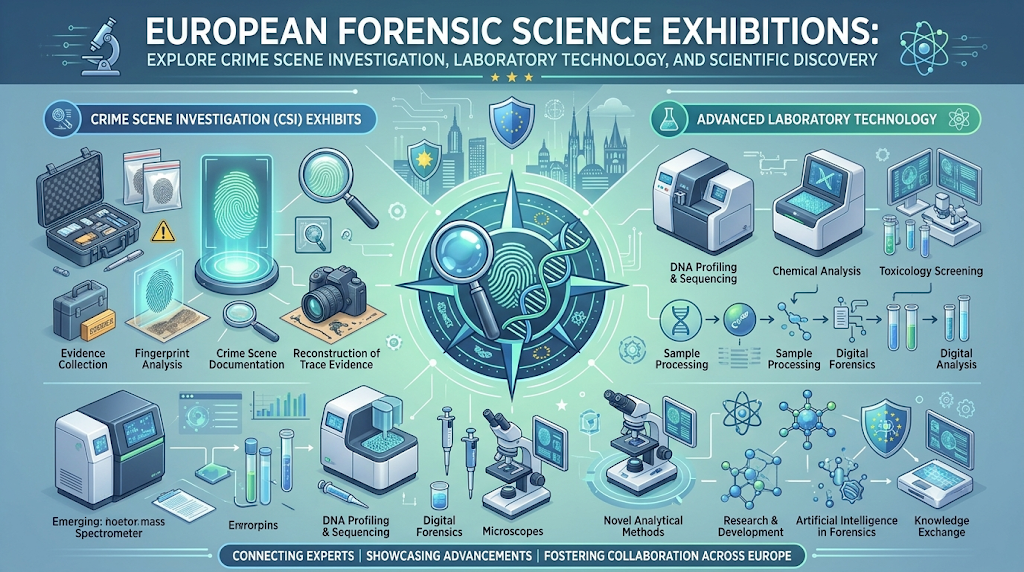
Forensic science uses scientific methods to examine evidence and answer important questions. It connects biology, chemistry, technology, medicine, and investigation. Across Europe, forensic science exhibitions and professional events introduce visitors to the tools and methods used in this field. They may feature laboratory equipment, fingerprint analysis, digital evidence, forensic photography, and scientific demonstrations. Some events focus on professional training, while others make science easier for students and general visitors to understand. These exhibitions can attract researchers, laboratory professionals, educators, students, and technology specialists. MyEventsNow helps people discover specialist activities across Europe. Visitors can explore Upcoming Events in Europe, review event details, and plan their attendance. For anyone curious about science and investigation, forensic exhibitions offer an interesting learning experience.
What Are Forensic Science Exhibitions?
Forensic science exhibitions present scientific tools, methods, and research used in investigations. They explain how specialists examine physical and digital evidence through careful testing and documentation.
A typical exhibition may include laboratory instruments, fingerprint displays, microscopy equipment, forensic imaging, and demonstrations of scientific analysis. Some events also cover crime scene management, evidence storage, and laboratory quality.
Professional exhibitions often focus on new equipment and research. Educational events may explain basic scientific ideas through demonstrations and guided activities.
Visitors do not need to work in law enforcement to understand the subject. Students, science enthusiasts, and technology professionals can also learn about the role of evidence in investigations.
People searching for Upcoming Events in Europe can explore specialist science exhibitions and educational programmes. MyEventsNow.eu can help visitors discover event opportunities and review available information.
Why Forensic Science Events Are Important
Forensic science depends on accuracy, careful observation, and reliable methods. Events in this field help professionals understand new developments and discuss practical challenges.
They also create opportunities for researchers, educators, equipment providers, and laboratory teams to exchange knowledge. Students can learn about career options and the scientific skills used in forensic work.
Visitors may discover several important areas:
- Fingerprint examination and comparison.
- DNA analysis and biological evidence.
- Forensic chemistry and toxicology.
- Digital evidence and computer investigation.
- Forensic photography and image analysis.
- Microscopy and laboratory testing.
- Evidence collection and documentation.
- Laboratory equipment and quality procedures.
These subjects show how different scientific disciplines support investigations. They also explain why evidence must be handled carefully and examined through suitable methods.
Visitors interested in Online Event Ticket Booking Europe can use event listings to plan attendance at relevant exhibitions and professional sessions.
Different Types of Forensic Science Events
Forensic science covers many specialist areas. Event formats vary depending on the audience and subject.
Forensic Laboratory Exhibitions
Laboratory exhibitions introduce equipment and technologies used in scientific testing. Visitors may see microscopes, analytical instruments, sample preparation tools, and laboratory information systems.
Exhibitors can explain how equipment supports accurate testing and organised workflows. Professional visitors may compare products and ask technical questions.
Crime Scene Investigation Demonstrations
These demonstrations explain how investigators document and examine a scene. Activities may include photography, evidence mapping, measurement, and careful record keeping.
Educational demonstrations should use safe training materials and controlled examples. Their purpose is to explain scientific procedures rather than recreate harmful situations.
Digital Forensics Events
Digital forensics events focus on electronic information and technology-based investigations. Topics may include data preservation, device analysis, cyber incident investigation, and digital evidence management.
These events can interest computer science students, cybersecurity professionals, researchers, and forensic specialists.
Forensic Biology and DNA Conferences
These events explore biological evidence and laboratory analysis. Sessions may cover research methods, sample handling, laboratory procedures, and developments in genetic analysis.
They can provide useful learning opportunities for laboratory professionals and students.
Forensic Photography and Imaging Shows
Forensic imaging events focus on the use of photographs, video, microscopes, and specialist imaging systems. Visitors may learn how accurate images support documentation and scientific examination.
Demonstrations can explain lighting, image quality, scale references, and record keeping.
European Cities With Forensic Science Events
Forensic science exhibitions and conferences may take place in universities, research centres, conference venues, and specialist exhibition spaces. Large European cities often host different professional and educational activities.
Events in London
London has a wide professional event environment that includes science, technology, education, and research activities. Forensic-related programmes may cover laboratory science, digital investigation, and scientific training.
People searching for Events in London can explore specialist exhibitions and conferences that match their interests.
Events in Berlin
Berlin hosts a varied range of professional exhibitions and academic events. Science and technology programmes may include laboratory innovation, digital evidence, and research presentations.
Visitors looking for Events in Berlin can review event categories and schedules to find relevant activities.
Events in Paris
Paris attracts visitors interested in science, research, technology, and professional education. Forensic-related events may include scientific demonstrations, laboratory equipment, and expert discussions.
People searching for Events in Paris can explore current listings for specialist programmes.
Events in Amsterdam
Amsterdam offers professional and academic activities across science and technology. Visitors may find events related to digital investigation, laboratory research, and scientific innovation.
People checking Events in Amsterdam can consider forensic science programmes as part of a wider educational visit.
Important Areas Covered at Forensic Exhibitions
A useful forensic science event should explain how scientific methods support reliable examination. The following areas are common subjects in professional programmes.
Fingerprint Science
Fingerprint science studies the patterns found on fingers and their use in identification processes. Exhibitions may show comparison tools, imaging systems, and the history of fingerprint examination.
Visitors can learn why careful documentation and trained analysis matter.
DNA and Biological Analysis
Biological evidence can include different types of samples that require suitable laboratory handling. Educational displays may explain basic DNA analysis concepts and laboratory workflows.
Professional sessions may focus on research developments, testing methods, and quality procedures.
Forensic Chemistry
Forensic chemistry applies chemical methods to examine materials and substances. Events may demonstrate analytical instruments and explain how laboratory tests help identify unknown samples.
Visitors can learn about the importance of controlled testing and accurate reporting.
Digital Evidence
Digital evidence can come from computers, mobile devices, networks, and other electronic systems. Exhibitions may explain data preservation, examination tools, and documentation.
The sessions can help visitors understand how digital information is handled during an investigation.
Forensic Imaging
Imaging supports the recording and examination of evidence. Demonstrations may include photography equipment, microscopes, image enhancement, and measurement tools.
Visitors can learn why clear images and reliable records are important.
How to Choose the Right Forensic Science Event
The best event depends on your background and learning goals. A student may prefer an introductory exhibition, while a laboratory professional may need technical sessions.
Consider these points before booking:
- Main subject: Check whether the event focuses on laboratory science, digital forensics, imaging, or investigation methods.
- Audience: Review whether it welcomes students, researchers, professionals, or general visitors.
- Programme: Look for demonstrations, talks, workshops, and technical sessions.
- Exhibitors: Check which laboratories, research groups, and technology providers will participate.
- Learning level: Choose sessions that match your current knowledge.
- Venue: Review transport, accessibility, and visitor facilities.
- Ticket conditions: Confirm admission rules and any separate workshop registration.
An Event Ticketing Platform Europe can help visitors review event information and arrange entry. Always confirm the programme and venue details before travelling.
Planning Your Forensic Science Exhibition Visit
Planning ahead can make a specialist event easier to follow. Begin by reading the programme and identifying the subjects that interest you most.
Students may want to attend introductory talks about forensic careers. Laboratory professionals may prefer sessions about testing equipment and quality systems. Technology specialists may choose digital evidence presentations.
Prepare a few questions before visiting exhibitors. Ask about equipment features, training requirements, and practical applications. Take notes during demonstrations so you can review useful information later.
Check whether the event requires advance registration. Some professional sessions may have limited places or separate entry conditions.
Comfortable clothing and suitable footwear can make a long exhibition visit easier. Follow all venue instructions, especially in laboratory demonstration areas.
Online Event Ticket Booking Europe can help visitors organise entry when advance booking is available. MyEventsNow.eu can help people discover specialist events and review their basic details.
How Organisers Can Build a Valuable Forensic Science Event
A successful forensic science exhibition needs a clear educational purpose, suitable exhibitors, accurate information, and responsible demonstrations.
Define the Event’s Purpose
Organisers should decide whether the event will focus on professional training, scientific research, technology, or public education.
A clear theme helps attract the right audience. It also makes it easier to select exhibitors and prepare the programme.
Invite Relevant Experts and Exhibitors
The event may include laboratory specialists, university researchers, forensic technology providers, educators, and scientific organisations.
Organisers should select participants who can explain their work clearly. Exhibitors should provide accurate product information and practical demonstrations.
Prepare Educational Demonstrations
Demonstrations can make complex subjects easier to understand. Organisers may include safe activities related to microscopy, imaging, sample documentation, or scientific observation.
All activities should follow suitable safety procedures. Visitors should receive clear instructions before taking part.
Support Professional Discussions
Panel sessions and expert talks can explore challenges in laboratory work, evidence management, digital investigation, and scientific research.
Speakers should explain technical subjects in a clear and responsible way.
Manage Registration
A well-organised registration process helps visitors access the right sessions. An Event Registration Platform Europe can support attendee sign-ups, session selection, and event communication.
Organisers should clearly explain entry rules, session capacity, and any requirements for professional visitors.
How Digital Platforms Support Forensic Science Events
Digital event platforms can help visitors discover specialist programmes and help organisers manage attendance.
An Event Ticketing Platform Europe can display ticket categories and admission details. An Event Registration Platform Europe can help manage registrations and attendee records.
Useful features include:
| Feature | Benefit |
|---|---|
| Event listings | Helps visitors discover specialist science events |
| Online registration | Supports organised attendee sign-ups |
| Ticket categories | Explains different admission options |
| Session details | Shares talks and demonstration schedules |
| Exhibitor profiles | Helps visitors identify relevant participants |
| Event updates | Communicates changes to visitors |
| Digital tools work best when event information is accurate. Organisers should update dates, schedules, and venue details whenever changes occur. |
How to Promote a Forensic Science Exhibition
Promotion should explain the scientific value of the event. A clear campaign can reach students, researchers, laboratory teams, and technology professionals.
Create a Useful Event Listing
Include the event title, date, venue, programme, audience, and registration details. Explain the scientific subjects visitors can explore.
Organisers can use MyEventsNow.eu to share event information with people searching for specialist activities across Europe.
Share Educational Previews
Short videos and posts can introduce laboratory equipment, expert speakers, and demonstration topics. Each preview should provide useful information.
For example, a short explanation of forensic imaging can help visitors understand what a session will cover.
Connect With Universities and Research Groups
Universities, science departments, research centres, and professional communities may help share event announcements.
Organisers can invite relevant groups to attend or contribute to educational sessions.
List Your Event Online
When organisers List Your Event Online, they should choose an accurate event category and write a clear description.
Use relevant terms such as Upcoming Events in Europe naturally. Explain the main topic and include useful visitor information.
Sell Event Tickets Online
Organisers can Sell Event Tickets Online to support advance booking and organised entry.
Ticket details should explain admission, session access, and any registration requirements. Visitors should know what their ticket includes before booking.
A Practical Example: A European Forensic Science Discovery Event
Imagine an organiser preparing a two-day forensic science exhibition in Berlin. The programme includes laboratory equipment displays, forensic imaging demonstrations, digital evidence presentations, and talks about scientific research.
The organiser invites laboratory professionals, university researchers, technology providers, and educators. Each session has a clear description and a suitable audience.
The event is listed on MyEventsNow.eu. Visitors searching for Upcoming Events in Europe can discover the programme and review its schedule.
An Event Registration Platform Europe helps manage attendee sign-ups and workshop places. Online ticket sales make entry planning easier.
Students attend introductory talks, while professionals explore equipment displays and discuss laboratory workflows. Visitors also learn why accurate documentation and responsible evidence handling matter.
This example shows how an exhibition can combine education, professional exchange, and organised event management.
Connecting Forensic Science With Other European Events
Visitors attending a forensic science exhibition may also explore other professional and educational activities. A wider city visit can include science museums, technology displays, research talks, and cultural events.
People checking Events in Berlin may discover technology exhibitions and academic programmes. Visitors searching for Events in Paris can explore science and design activities.
Those looking at Events in London may find professional training and research events. Visitors exploring Events in Amsterdam can check for digital technology and educational programmes.
People interested in Concert Tickets Europe can also plan evening activities during their visit. Professionals searching for Business Conferences in Europe may find related research and technology discussions.
Online Event Ticket Booking Europe can help visitors organise different activities in advance. Check each event’s schedule and entry conditions separately.
The Future of Forensic Science Events
Forensic science continues to develop through research, improved laboratory equipment, and new digital methods. Future exhibitions may give more attention to advanced imaging, data analysis, automation, and scientific quality.
Interactive displays can help visitors understand complex processes. Digital demonstrations may also make specialist subjects easier to explain to students.
Professional events will remain useful places for knowledge exchange. Researchers can share new findings, technology providers can explain their tools, and educators can introduce career opportunities.
Responsible communication will remain important. Scientific methods should be explained accurately, without promising that one tool can solve every investigative problem.
MyEventsNow.eu can help visitors discover specialist exhibitions and professional activities across Europe.
Frequently Asked Questions
1. What can visitors see at forensic science exhibitions?
Visitors may explore laboratory equipment, fingerprint displays, forensic imaging, digital evidence tools, and scientific demonstrations. Some events also include expert talks and educational workshops. The exact programme depends on the organiser, so visitors should review the event details before booking.
2. Are forensic science exhibitions suitable for students?
Yes. Many events provide educational sessions for students interested in biology, chemistry, technology, and investigation. Introductory talks can explain scientific methods and career paths. Students should check the programme to identify sessions that match their age, background, and learning interests.
3. How can I discover Upcoming Events in Europe about forensic science?
You can explore specialist event listings on MyEventsNow.eu. Search for forensic science exhibitions, laboratory technology events, and digital investigation conferences. Review the date, venue, programme, and ticket details before planning your visit.
4. Can I find Events in Berlin and Events in Paris related to forensic science?
You can search for scientific exhibitions, laboratory events, and professional conferences in different European cities. Events in Berlin and Events in Paris may include related research or technology activities. Check current listings because schedules and availability can change.
5. Why is Online Event Ticket Booking Europe useful?
Online Event Ticket Booking Europe helps visitors review event information and arrange admission in advance when booking is available. It can also help visitors plan their schedules. Always read ticket conditions and check whether workshops require separate registration.
6. What should an Event Registration Platform Europe offer?
An Event Registration Platform Europe should support attendee sign-ups, registration records, session selection, and event updates. These features help organisers manage visitor information. The right setup depends on the event size, audience, and number of sessions.
7. How can organisers List Your Event Online successfully?
When organisers List Your Event Online, they should provide a clear title, accurate dates, venue information, and a useful description. They should explain the main scientific subjects, target audience, and activities. Relevant keywords can help visitors understand the event.
8. Can organisers Sell Event Tickets Online for forensic exhibitions?
Yes. Organisers can Sell Event Tickets Online to manage admission and offer different ticket categories. They should explain session access, booking conditions, and any visitor requirements. Clear information helps attendees understand what their tickets include.
9. Are forensic science events useful for technology professionals?
Yes. Digital forensics and laboratory technology events can interest cybersecurity professionals, software specialists, researchers, and technical teams. These programmes may explain evidence management, data analysis, imaging, and specialist tools. Visitors should choose sessions related to their professional interests.
10. Where can I discover other professional events in Europe?
MyEventsNow.eu helps visitors explore different event categories across Europe. You can also search for Business Conferences in Europe, technology exhibitions, educational workshops, and Concert Tickets Europe. Review each event listing to confirm its schedule and admission details.
Final Thoughts
European forensic science exhibitions offer a valuable way to explore scientific methods, laboratory technology, and digital investigation. They bring students, researchers, professionals, and technology providers together.
Visitors can learn about evidence analysis, scientific imaging, laboratory equipment, and responsible investigation practices. Organisers can create useful experiences through expert sessions, safe demonstrations, and clear event information.
MyEventsNow.eu helps people discover specialist activities across Europe. From forensic science exhibitions to Upcoming Events in Europe, visitors can explore events that support learning and professional development.