Introduction
Dental implants can replace missing tooth roots and support new teeth. They may hold a single crown, a bridge, or a full denture. However, treatment does not end when the implant is placed.
The gums need time to heal. The jawbone also needs time to connect with the implant. This process is called osseointegration. It helps create a stable base for the final replacement tooth.
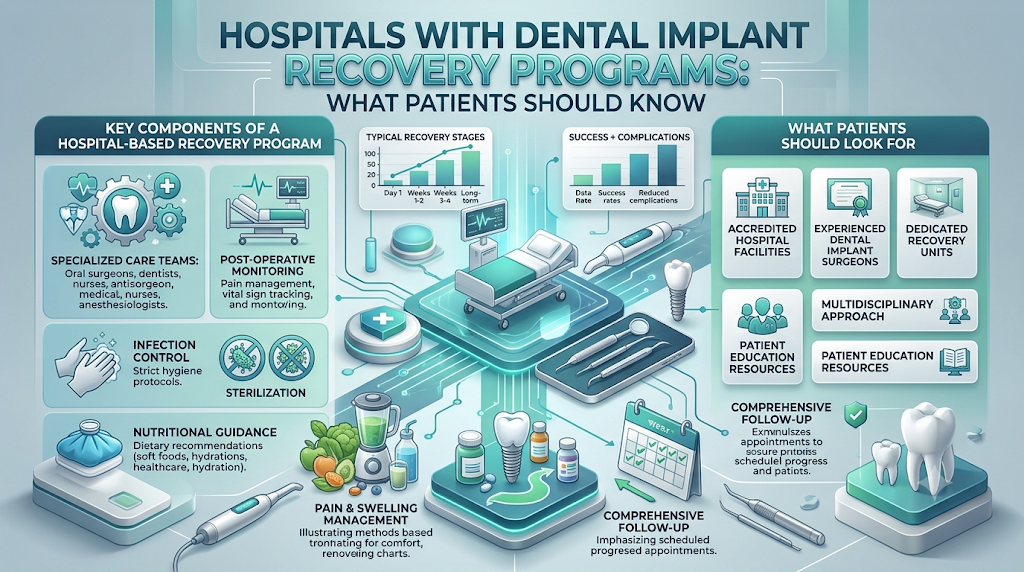
A dental implant recovery program supports patients during this healing period. It may include pain management, wound care, food guidance, oral hygiene advice, and follow-up visits.
Recovery time differs from person to person. It depends on bone quality, general health, implant location, and the number of implants. Extra procedures, such as bone grafting, may also affect healing.
When comparing hospitals with dental implant recovery programs, patients should look beyond the implant procedure. They should check the quality of aftercare and long-term support. BESTDENTALHOSPITALS.COM can help readers research dental hospital care and prepare questions for their treatment team.
Understand Dental Implant Recovery
A dental implant is a small post placed into the jawbone. It acts like an artificial tooth root. A crown, bridge, or denture can later attach to it.
After placement, the body begins healing around the implant. The gum tissue starts to recover, while the jawbone gradually connects with the implant surface.
This bone connection is known as osseointegration. It helps hold the implant in place during normal use.
The final tooth may not be fitted immediately. The dentist may wait until the implant and surrounding tissue are ready.
Some patients need only a simple implant procedure. Others may need bone grafting or several implants. These differences can change the recovery plan.
A good dental implant recovery plan should match the patient’s treatment and health needs. Patients should not compare their healing progress with someone else’s schedule.
What Is Included in a Dental Implant Recovery Program?
A dental implant recovery program provides support after implant surgery. The exact services depend on the hospital, dental team, and treatment plan.
A well-planned program may include:
- Written instructions: Clear steps for care at home after surgery.
- Pain guidance: Advice about managing discomfort and using prescribed medicines.
- Swelling care: Instructions about cold packs or other suitable measures.
- Wound care: Guidance about stitches and protecting the surgical area.
- Oral hygiene advice: Instructions for cleaning the mouth during healing.
- Food guidance: Advice about soft foods and safe eating.
- Medicine review: Instructions about prescribed medicines and possible side effects.
- Follow-up visits: Checks of gum healing and implant stability.
- Restoration planning: Assessment before fitting the final crown, bridge, or denture.
- Long-term support: Advice about cleaning and maintaining the implant.
Patients should ask which services are included in the treatment cost. They should also confirm who to contact if a problem develops.
Not every facility offers the same recovery support. A clear plan helps patients understand what to expect.
Understand the Stages of Dental Implant Healing
Dental implant recovery happens in stages. These stages may overlap, and their timing varies.
Early Recovery
The first stage begins after implant placement. Mild pain, swelling, bruising, or a small amount of bleeding may occur.
The dentist may recommend rest and changes to food choices. Patients should protect the surgical area and follow the given instructions.
Avoid touching the wound with fingers or disturbing it with the tongue. Follow the dentist’s advice about brushing and rinsing.
Gum Tissue Healing
The gum tissue begins to close and heal around the implant area. The dentist may check the wound and stitches during a follow-up visit.
Some patients have stitches that dissolve on their own. Others may need a visit for stitch removal.
Careful oral hygiene remains important. However, patients should avoid brushing directly over the surgical wound until their dentist says it is safe.
Osseointegration
Osseointegration is the process through which bone connects with the implant surface. This connection helps provide support for the replacement tooth.
It usually takes several months, but the timing varies. Bone quality, implant location, health, and extra procedures can affect the process.
The dentist may use an examination or imaging to assess healing. Patients should attend the recommended visits, even when the area feels comfortable.
Final Restoration
Once the implant is ready, the dentist plans the final tooth replacement. This may be a crown, bridge, or implant-supported denture.
The dental team checks the fit and bite. They may make adjustments to improve comfort and function.
Some patients receive a temporary tooth during healing. The timing and type depend on the implant procedure and the dentist’s plan.
Long-Term Maintenance
Recovery does not end when the final tooth is fitted. The tissues around the implant need regular care.
Patients should clean around the implant every day. Regular dental visits help the team check the gums and the condition of the restoration.
Pain, Swelling, and Bleeding Management
Some discomfort is common after implant placement. Patients may notice tenderness, mild swelling, bruising, or a little blood in their saliva.
These symptoms should generally improve over time. The dentist will explain what is expected for the specific procedure.
Helpful care may include:
- Taking prescribed pain relief as directed.
- Using a cold pack if the dentist recommends it.
- Resting during the early recovery period.
- Avoiding pressure on the surgical area.
- Following instructions about rinsing and brushing.
- Eating foods that do not disturb the wound.
Do not start antibiotics or other medicines without professional advice. Do not change prescribed medicine without speaking to the treating team.
Contact the dentist if pain becomes worse instead of improving. Heavy bleeding or increasing swelling also needs prompt attention.
Food and Nutrition During Recovery
Food choices can affect comfort after implant surgery. Patients may need soft foods while the surgical area heals.
Suitable options may include:
- Yogurt.
- Mashed vegetables.
- Scrambled eggs.
- Soft rice.
- Smooth soups that are not too hot.
- Soft cooked foods.
- Mashed fruits.
Choose foods that are easy to chew and swallow. Drink enough fluids unless the medical team has given different advice.
During early healing, avoid hard, crunchy, sticky, or very hot foods when advised. These foods may disturb the surgical area or cause discomfort.
Try to chew away from the implant site when possible. Return to a normal diet gradually, with the dentist’s approval.
Patients with bone grafting or several implants may need extra food guidance. Follow the instructions given for the exact procedure.
A balanced diet supports general health. However, no food or supplement can guarantee faster implant healing.
Oral Hygiene After Dental Implant Surgery
Keeping the mouth clean helps protect the gums. However, the surgical area may need special care during early healing.
The dentist will explain when and how to brush near the implant. Follow these instructions rather than using a general brushing routine.
Good oral hygiene may include:
- Brushing other teeth as directed.
- Using a soft toothbrush when advised.
- Keeping the rest of the mouth clean.
- Avoiding direct disturbance of the wound.
- Using a prescribed mouthwash if recommended.
- Following instructions about salt-water rinses.
- Cleaning around healing parts only when advised.
- Avoiding tobacco and smoking.
Do not use strong mouthwash or cleaning products without checking first. Some products may irritate healing tissue.
If brushing causes bleeding or pain, ask the dental team what to do. Do not stop cleaning the rest of the mouth unless instructed.
Activity, Rest, and Daily Routine
Patients may need extra rest after implant surgery. The amount of rest depends on the procedure and their general health.
The dentist may advise patients to:
- Rest after the procedure.
- Avoid strenuous exercise at first.
- Return to normal activities gradually.
- Follow advice about work or school.
- Avoid pressure or injury near the implant.
- Follow instructions about temporary dentures or teeth.
- Attend all follow-up appointments.
Patients who have several implants or bone grafting may need different activity limits.
Do not rush back into exercise or heavy work. Ask the dentist when it is safe to resume normal activities.
The Role of Follow-Up Appointments
Follow-up visits help the dental team check healing. They also help identify problems before they become more serious.
During these visits, the dentist may:
- Check gum healing.
- Review pain and swelling.
- Examine the surgical wound.
- Remove stitches when needed.
- Assess implant stability.
- Review bone healing through imaging when appropriate.
- Decide when the final restoration can be fitted.
- Check for signs of infection or gum inflammation.
The number and timing of visits depend on the treatment plan. Patients should not skip appointments because they feel well.
If travel or work makes a visit difficult, contact the dental team early. Ask whether another appointment time is possible.
Special Considerations for Complex Dental Implant Cases
Some implant procedures need more planning and recovery support. This is especially true when treatment involves several teeth or extra surgical steps.
Bone Grafting
Some patients do not have enough jawbone to support an implant. A dentist may recommend bone grafting to add or support bone in the area.
The graft needs time to heal. This may change the timing of implant placement or final restoration.
Sinus Lift Procedures
A sinus lift may be considered when there is not enough bone in the upper back jaw. It involves adding bone below the sinus area.
This procedure can change the recovery plan. Patients should ask about specific restrictions and follow-up needs.
Multiple Implants and Full-Arch Treatment
Some patients receive several implants during one treatment plan. Others receive implants to support a full-arch replacement.
These cases may need extra planning for eating, cleaning, and temporary teeth. The dental team should explain how to protect the implants during healing.
Health Conditions and Lifestyle Factors
Certain health conditions can affect recovery. These include diabetes, gum disease, and conditions that affect healing.
Smoking and tobacco use can also interfere with healing and implant outcomes. Patients should discuss support for stopping tobacco use with their healthcare team.
Tell the dentist about all medicines, supplements, and health conditions. This helps the team plan suitable care.
Warning Signs After Dental Implant Surgery
Some mild discomfort and swelling may occur after surgery. However, symptoms that worsen or do not improve need attention.
Contact the implant dentist promptly if you notice:
- Increasing or severe pain.
- Swelling that gets worse.
- Persistent or heavy bleeding.
- Fever or chills.
- Pus or unusual discharge.
- A bad taste or smell with signs of inflammation.
- Numbness that continues beyond the expected effect of anesthesia.
- Movement of the implant or temporary restoration.
Do not try to tighten or adjust a loose implant part yourself. Contact the dental team for advice.
Difficulty breathing or swallowing, rapidly increasing swelling around the mouth or neck, or uncontrolled bleeding requires emergency medical care. Do not wait for a routine dental appointment.
How to Choose a Dental Hospital With Recovery Support
Choosing a dental hospital involves more than comparing implant prices. Patients should check the full treatment and recovery plan.
Consider these points:
1. Practitioner qualifications
Check the dentist’s registration, training, and experience. Ask who will perform the implant procedure.
2. Experience with the planned treatment
A single implant may need a different approach from full-arch treatment. Ask about experience with the procedure you need.
3. Diagnostic equipment
Ask whether the facility can arrange suitable dental imaging. The dentist may need scans to assess bone and plan implant placement.
4. Written aftercare instructions
Patients should receive clear instructions about pain, food, cleaning, and activity.
5. Follow-up access
Ask how often the dental team will review healing. Find out who will check the implant before the final restoration.
6. Emergency contact support
Confirm whom to contact if pain, swelling, or bleeding becomes worse outside normal appointment hours.
7. Hygiene and infection prevention
Ask how the facility cleans equipment and maintains a safe treatment area.
8. Clear costs
Request a written estimate covering surgery, additional procedures, temporary teeth, follow-up visits, and the final restoration.
9. Team coordination
The implant surgeon and restorative dentist may need to work together. Clear communication helps keep the treatment plan organized.
10. Long-term maintenance
Ask what checkups and cleaning support will be needed after the final tooth is fitted.
A suitable facility should explain the plan without making promises of guaranteed results. Patients should compare actual care arrangements rather than relying only on advertising.
Questions to Ask Before Choosing a Dental Implant Hospital
A consultation is a good time to discuss the full treatment plan. Consider asking:
- Who will perform the implant procedure?
- What training and experience do they have?
- Will I need bone grafting or another procedure?
- What recovery support is included?
- How many follow-up visits may be needed?
- Who should I contact if pain or swelling worsens?
- When might my final crown or denture be fitted?
- What is the total cost, including follow-up care?
- What risks apply to my medical history?
- What cleaning and maintenance will I need later?
Ask for clear answers before agreeing to treatment. You should understand the expected steps, possible delays, costs, and aftercare.
Long-Term Care After Dental Implant Recovery
Dental implants need ongoing care after healing. The gums and bone around them can still develop problems.
Good daily care may include:
- Brushing twice a day.
- Cleaning between teeth and around implants.
- Using interdental brushes or other tools recommended by the dentist.
- Attending regular dental checkups.
- Getting professional cleaning when advised.
- Managing gum disease and other oral health problems.
- Avoiding smoking and tobacco.
- Reporting bleeding, swelling, or implant movement.
Implants cannot develop tooth decay like natural teeth. However, the gum and bone around them can become inflamed or damaged.
Regular care helps protect these tissues. Ask the dentist to show you the best way to clean around your specific implant restoration.
Table 1: Dental Implant Recovery Stages and Care
| Recovery stage | What may happen | Recommended care |
|---|---|---|
| Early recovery | Mild pain, swelling, bruising, or minor bleeding. | Rest and follow wound care and pain guidance. |
| Gum healing | Gum tissue begins closing around the implant area. | Keep the mouth clean as instructed and attend checks. |
| Osseointegration | Bone gradually connects with the implant surface. | Attend reviews and follow advice about pressure and activity. |
| Final restoration | A crown, bridge, or denture is fitted when ready. | Check bite comfort and follow cleaning instructions. |
| Long-term maintenance | The implant and surrounding tissues need ongoing care. | Brush, clean between teeth, and attend dental checkups. |
Table 2: What to Check When Choosing a Dental Implant Recovery Program
| Care feature | What patients should confirm | Why it matters |
|---|---|---|
| Practitioner qualifications | Registration, training, and implant experience. | Helps patients understand who is providing care. |
| Written aftercare instructions | Clear guidance for food, cleaning, and activity. | Supports safe care at home. |
| Pain management guidance | Advice about prescribed medicines and discomfort. | Helps patients manage early recovery. |
| Oral hygiene support | Instructions for brushing and cleaning around the implant. | Helps protect gums during healing. |
| Follow-up visits | Timing and purpose of healing checks. | Allows the team to review progress. |
| Emergency contact arrangements | Who to contact if symptoms worsen. | Helps patients get timely advice. |
| Long-term maintenance | Checkups and professional cleaning plans. | Supports the health of the implant and nearby tissues. |
Frequently Asked Questions
1. How long does dental implant recovery usually take?
Recovery time varies between patients. Gum healing may take several weeks, while osseointegration often takes several months. Bone grafting or multiple implants may extend the process. Your dentist will assess healing and decide when the implant is ready for its final restoration.
2. What happens during the first few days after implant surgery?
You may notice mild pain, swelling, bruising, or a little bleeding. Your dentist may recommend rest, soft foods, and specific cleaning steps. Follow the instructions for prescribed medicines and wound care. Contact the dental team if symptoms become worse.
3. What foods can I eat after dental implant placement?
Soft foods such as yogurt, mashed vegetables, scrambled eggs, and soft rice may be suitable. Avoid hard, crunchy, sticky, or very hot foods when advised. Drink enough fluids and follow your dentist’s guidance about chewing near the surgical area.
4. Is swelling normal after dental implant surgery?
Some swelling can occur after implant placement. It should generally improve rather than continue getting worse. Follow the care instructions provided by your dentist. Contact the dental team if swelling increases, becomes severe, or occurs with fever or unusual discharge.
5. How long does osseointegration take?
Osseointegration is the process through which bone connects with the implant surface. It often takes several months, but timing varies. Bone quality, implant location, health, and additional procedures can affect healing. Your dentist will assess progress before planning the final restoration.
6. Why are follow-up appointments important after dental implants?
Follow-up visits allow the dentist to check gum healing and implant stability. The team can also review symptoms and look for signs of infection or inflammation. These visits help determine when the implant is ready for a crown, bridge, or denture.
7. What symptoms may indicate a dental implant complication?
Worsening pain, increasing swelling, fever, pus, heavy bleeding, or unusual discharge may indicate a problem. Movement of an implant or temporary restoration also needs dental review. Contact your implant dentist promptly rather than waiting for your next routine visit.
8. Can smoking affect dental implant recovery?
Yes. Smoking and tobacco use can interfere with healing and may increase the risk of implant problems. Tell your dentist if you smoke or use tobacco. Ask for advice about stopping before surgery and during recovery.
9. When can I receive my final dental implant crown?
The crown is fitted when the dentist believes the implant and surrounding tissues are ready. This may take several months, but the timing varies. Bone grafting and other treatment needs can affect the schedule. Your dentist will explain when restoration is appropriate.
10. What long-term care do dental implants need?
Dental implants need daily cleaning and regular dental checkups. Brush twice a day and clean between teeth using tools recommended by your dentist. Professional cleaning may also be needed. Report bleeding, swelling, or implant movement because these signs need dental attention.
Final Thoughts
Dental implant recovery is a gradual process. Healing needs time, careful oral hygiene, suitable food choices, and regular dental reviews.
A good recovery plan should include clear aftercare instructions, pain guidance, follow-up visits, and long-term maintenance. Patients should understand who to contact if problems develop.
Every recovery plan depends on the procedure and the patient’s health. Discuss your needs and concerns directly with your implant dentist or oral surgeon. BestDentalHospitals.com can help readers explore dental hospital information and prepare questions before choosing a provider.