Introduction
Some bite problems involve more than the teeth. The jaw position may also affect how the teeth meet. In such cases, braces alone may not give the needed correction. Surgical orthodontics combines orthodontic care with corrective jaw surgery when suitable. Choosing the right hospital and specialist team can support safer and better planned care. BestDentalHospitals.com can help readers learn about dental care options. The website BESTDENTALHOSPITALS can be used as a starting point when exploring hospitals and services.
What Is Surgical Orthodontics?
Surgical orthodontics helps treat certain jaw and bite problems. Orthodontic treatment moves teeth into better positions. Corrective jaw surgery changes the position of the jaw when needed. The two treatments may work together when teeth and jaw position both affect the bite.
This type of care is also called orthognathic surgery. It may involve an orthodontist and an oral and maxillofacial surgeon. An oral surgeon is trained to manage surgery involving the mouth, jaw, and face. Not every bite problem needs surgery, so a proper assessment is important.
When Might Orthodontic Surgery Be Considered?
Some people have a large difference between the upper and lower jaws. This may affect how the teeth meet. It may also make biting or chewing harder. Some people may have facial imbalance linked to jaw position. These signs alone do not mean that surgery is needed.
A qualified orthodontist can examine the teeth and bite. An oral and maxillofacial surgeon can assess the jaw and surgical needs. The team may discuss other care choices before suggesting surgery. The final decision depends on the person’s dental findings, health, goals, and treatment needs.
Why Choose a Hospital With an Orthodontic Surgery Program?
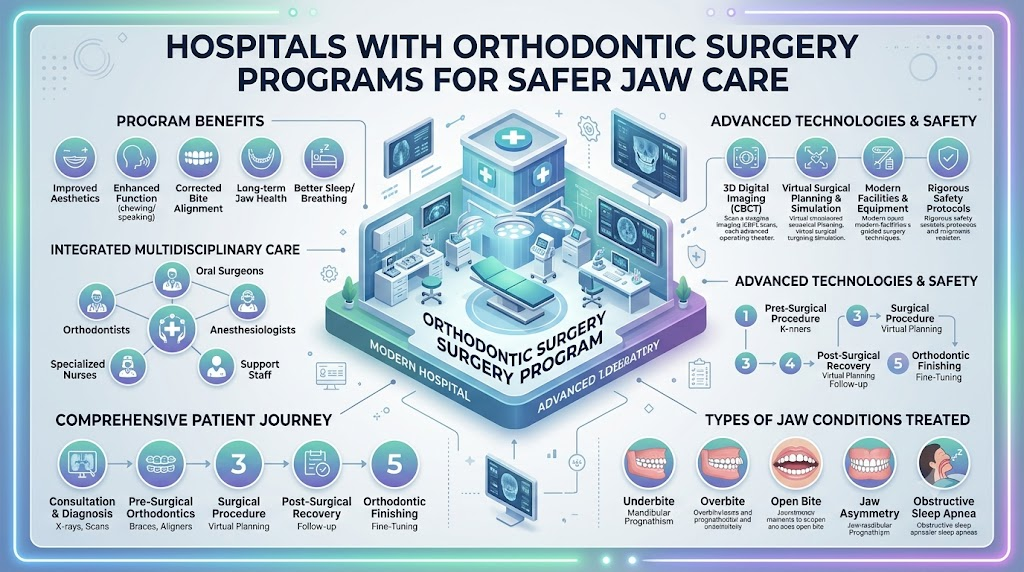
Complex jaw care may need several specialists and hospital services. Hospitals with orthodontic surgery programs may support better coordination between dental and surgical teams. They may also provide suitable imaging, operating rooms, anesthesia support, and recovery care.
Hospital care can be useful when surgery needs closer monitoring. However, not every patient needs an overnight hospital stay. Care can differ between hospitals, so patients should ask which services are available. They should also ask who will manage each stage of treatment.
Specialists Involved in Surgical Orthodontic Care
An orthodontist focuses on tooth position and bite alignment. An oral and maxillofacial surgeon focuses on surgical care of the jaw and related areas. A general dentist may also support regular dental health during treatment. An anesthesia professional may manage anesthesia during surgery.
Other hospital staff may help with nursing, imaging, recovery, and patient support. Good care depends on clear communication between these professionals. Patients can ask who leads the treatment plan. They can also ask how the orthodontist and surgeon share updates before and after surgery.
Common Types of Orthodontic Surgery Programs
Orthodontic surgery programs can cover several types of care. Corrective jaw surgery may help address major differences in jaw position. Some programs also manage jaw alignment treatment linked with orthodontic care. Other procedures may help create better conditions for tooth movement.
The exact services can vary between orthodontic surgery hospitals. Some hospitals may focus on complex jaw surgery. Others may have broader oral and maxillofacial surgery services. Patients should ask whether the hospital has experience with the type of problem being assessed.
Tests, Scans, and Treatment Planning
Treatment planning usually begins with a detailed assessment. The dental team may review dental records and examine the bite. They may take photographs and use suitable dental imaging. These records help the team understand tooth and jaw position.The type of imaging depends on the person’s needs. Specialists use the findings to build a treatment plan. They may also discuss how orthodontic treatment and surgery could work together. Patients should not try to diagnose their own jaw problem from scan images.A good plan should explain the main treatment steps in simple language. It should also explain possible benefits, risks, and other choices. Patients can ask questions if any part of the plan feels unclear.
Orthodontic Treatment Before and After Surgery
Braces may be used before jaw surgery. This can help move teeth into positions that support the planned jaw correction. The teeth may look different during this stage because the team is preparing them for later treatment.Orthodontic treatment may continue after surgery. This can help refine the bite and improve tooth alignment. The length of treatment varies from person to person. Patients should avoid promises about exact treatment times or final results.The orthodontist and surgeon may review progress together. This helps the team adjust care when needed. Patients should attend planned visits and follow instructions from their own care team.
Hospital Facilities and Patient Safety
Suitable dental hospital facilities are important for complex surgical care. Patients may ask about the surgical room, anesthesia support, recovery area, and emergency services. Infection prevention is also an important part of hospital safety.Laser or dental equipment is not the only safety concern. Staff training, clean areas, proper patient checks, and recovery monitoring also matter. Patients should ask how the hospital prepares for possible problems during treatment.No hospital should be judged only by advertising. Patients should check the services offered by the hospital directly. They should also ask which specialists will provide care and where surgery will take place.
Risks and Possible Side Effects
Jaw surgery can involve risks, just like other surgical procedures. Possible effects may include swelling, discomfort, bleeding, infection, and changes in sensation. Some people may also notice changes in how the bite feels during healing.Other risks can depend on the type of surgery and the person’s health. The surgeon should explain these risks before treatment. Patients should also ask about possible benefits and other treatment choices.A clear discussion helps patients make an informed choice. Patients should tell the care team about new or worsening concerns after surgery. Breathing or swallowing difficulty, uncontrolled bleeding, or other serious symptoms need urgent professional attention.
Preparing for Hospital Treatment
A pre-surgery visit helps the team understand the patient’s health. Patients may need to discuss allergies, current medicines, past procedures, and earlier anesthesia experiences. They should share complete information with the care team.The team may also discuss what support is needed at home. Patients can ask what to expect before arriving at the hospital. They can ask about food, appointments, transport, and follow-up arrangements.Patients should follow their own clinical team’s instructions. They should not stop, start, or change medicines without professional advice. Clear preparation can reduce confusion and help the patient feel more ready.
Recovery and Follow-Up Care
Recovery needs can differ based on the procedure and the person’s health. Follow-up visits help the team check healing and treatment progress. The orthodontist may also continue checking tooth movement and bite changes.The care team may provide guidance about oral care and food during recovery. Patients should follow the advice given for their specific situation. They should not rely on a general online recovery plan.Unexpected or worsening symptoms should be reported to the care team. Follow-up care is an important part of hospital care for jaw surgery. It allows specialists to review progress and address concerns when needed.
How to Compare Hospitals With Orthodontic Surgery Programs
Choosing a dental hospital requires more than checking its appearance or advertisements. Start by reviewing the training and experience of the orthodontist and oral surgeon. Ask whether both specialists work together during treatment planning.Patients should also ask about imaging, surgical rooms, anesthesia, and recovery support. Clear explanations matter as well. A good consultation should cover risks, benefits, alternatives, and expected stages of care.Follow-up arrangements should be clear before treatment begins. Patients can also request a detailed cost estimate. Communication is another important factor. The care team should make it easy to ask questions and understand the answers.Do not depend only on rankings or online claims. Services can change, and advertisements may not show the full picture. Patients should verify important details directly with the hospital before making a decision.
Costs, Insurance, and Practical Questions
The total cost of surgical orthodontic care can include several parts. These may include dental assessments, orthodontic treatment, surgery, anesthesia, hospital care, medicines, imaging, and follow-up visits. The final cost depends on the care needed.Insurance coverage also varies by policy and treatment purpose. Some plans may treat certain procedures differently from routine dental care. Patients should confirm coverage directly with their insurer and hospital.Ask for an itemized estimate before treatment. It can help show which services are included. Patients can also ask about possible extra costs, follow-up visits, and payment rules. Clear cost information can prevent surprises later.
How BestDentalHospitals Can Help Readers Explore Their Options
Learning about dental services can help patients prepare better questions. BestDentalHospitals.com can be used as an informational starting point when exploring dental hospitals and specialist care. Readers can learn about different services before speaking with a dental professional.Patients should still confirm important details directly with the chosen hospital. They should check available specialists, treatment services, facilities, and care arrangements. The website should not replace a professional dental assessment.A careful search can help patients understand what questions to ask. It can also help them compare care options in a more organized way. The final treatment decision should always come from a qualified dental team after proper assessment.
A Fictional Patient Example
Fictional example: An adult has a major bite problem that makes chewing difficult. The person visits an orthodontist for an assessment. The orthodontist reviews the bite and explains that the jaw position may also need review.The patient then meets an oral and maxillofacial surgeon. Both specialists discuss the findings and possible treatment choices. They explain that orthodontic treatment may be needed before and after surgery.The patient asks about hospital facilities, anesthesia, risks, follow-up care, and costs. The care team answers the questions before the patient makes a decision. This example is fictional and does not represent a real patient or guarantee any treatment result.
Frequently Asked Questions
1. What is surgical orthodontics?
Surgical orthodontics combines orthodontic treatment with jaw surgery when needed. It can help manage some complex tooth and jaw alignment problems.
2. How is jaw surgery different from braces?
Braces mainly move teeth. Jaw surgery changes the position of the jaw when a jaw problem cannot be corrected with braces alone.
3. Does every serious bite problem need surgery?
No. Some bite problems can improve with orthodontic treatment alone. A qualified specialist must assess the problem before surgery is considered.
4. Which specialists take part in orthodontic surgery?
An orthodontist and oral and maxillofacial surgeon often work together. Dentists, anesthesia professionals, and hospital staff may also support care.
5. Can orthodontic treatment be needed before surgery?
Yes. Braces may help prepare tooth positions before jaw surgery. The exact plan depends on the person’s dental and jaw needs.
6. Can braces continue after jaw surgery?
Yes. Orthodontic treatment may continue after surgery to refine tooth position and the bite. Treatment length varies between patients.
7. What hospital facilities should patients check?
Ask about surgical rooms, anesthesia services, imaging, recovery areas, infection prevention, and emergency support. Also ask who will provide each part of care.
8. What risks should patients discuss with their surgeon?
Patients should ask about swelling, discomfort, bleeding, infection, sensation changes, bite changes, and other risks linked to their procedure.
9. How can patients compare orthodontic surgery programs?
Compare specialist experience, team coordination, hospital facilities, safety support, follow-up care, communication, and clear cost information. Verify important details directly.
10. Does insurance cover orthodontic surgery?
Coverage depends on the insurance plan and treatment purpose. Patients should confirm benefits and exclusions with both the insurer and hospital.
Final Thoughts
Hospitals with orthodontic surgery programs can bring several parts of complex jaw care together. Specialist assessment helps show whether surgical orthodontics is suitable. Good coordination between the orthodontist and oral surgeon can also support clear treatment planning.Patients should ask about hospital facilities, safety support, costs, risks, and follow-up care before deciding. They should also take time to understand their choices. BestDentalHospitals.com can help readers explore dental hospital options and prepare useful questions. A calm discussion with qualified dental professionals is the best next step for personal treatment decisions.