
Introduction
Orthodontic retainers help keep teeth in their corrected positions after braces or other orthodontic treatment. They are an important part of maintaining a straight smile. Without proper retainer use, teeth may slowly move towards their earlier positions.
Patients may need different retainer services over time. These include fitting, adjustment, repair, cleaning advice, and replacement. Regular checks also help identify damage or changes in fit.
Choosing a suitable dental hospital is important. Patients should look for qualified orthodontists, proper fitting facilities, and reliable follow-up care. BESTDENTALHOSPITALS can be explored as a resource for dental hospital information.
What Are Orthodontic Retainers?
An orthodontic retainer is a dental appliance that holds teeth in their new positions. It is usually provided after braces or clear aligner treatment. Its main purpose is to help maintain the results of orthodontic treatment.
Teeth can move even after braces are removed. The gums, bone, and other tissues around the teeth need time to adjust. Natural changes can also affect tooth positions over time.
The period after active orthodontic treatment is called the retention stage. Wearing a retainer as instructed helps reduce unwanted movement during this stage.
Retainers do not replace regular dental check-ups. Patients still need routine care to check their teeth and gums. An orthodontist also needs to review the retainer when required.
Why Retainer Services Matter After Braces
Braces move teeth into planned positions. However, teeth may slowly shift towards their earlier positions after treatment. This movement is sometimes called relapse.
Retainers help hold the teeth in place. The orthodontist decides how often each patient should wear one. Some patients may need full-time wear at first. Others may receive a different schedule based on their treatment.
Regular retainer checks can help identify cracks, loose wires, or poor fit. Early attention may prevent a small problem from becoming more serious.
Following the orthodontist’s instructions is important. Skipping wear or ignoring damage may allow teeth to move. Long-term retainer needs differ from person to person. Some people need ongoing part-time wear to maintain their results.
Different Types of Orthodontic Retainers
Orthodontists may recommend removable or fixed retainers. The choice depends on the patient’s teeth, treatment history, and daily needs.
Hawley Retainers
A Hawley retainer is a removable appliance made with an acrylic base and a metal wire. The acrylic part rests against the roof of the mouth or behind the lower teeth. The wire helps hold the teeth in position.
Patients can remove it for cleaning and meals. It is usually more visible than a clear plastic retainer. The orthodontist may be able to adjust some parts when needed.
Clear Plastic Retainers
Clear retainers are thin, transparent trays shaped to fit over the teeth. They are removable and less noticeable during wear.
Patients should clean them as instructed and store them in a protective case. Heat can change their shape, so hot water should be avoided. They may need replacement if they crack, become distorted, or stop fitting well.
Fixed or Bonded Retainers
A fixed retainer uses a thin wire attached to the back of selected teeth. Dental bonding material holds the wire in place. Patients cannot remove it themselves.
It provides ongoing support without needing daily insertion. However, cleaning around the wire needs extra care. Regular professional checks help identify loose bonding or wire damage.
Combination Retainers
Some patients may be advised to use more than one type. For example, an orthodontist may recommend a fixed retainer and a removable retainer.
This approach depends on the patient’s treatment history and risk of tooth movement. It is not needed by everyone. The orthodontist should explain why a combination is suitable.
Types of orthodontic retainers and their features
| Retainer Type | Main Features | Care Considerations |
|---|---|---|
| Hawley retainers | Removable appliance with an acrylic base and metal wire | Clean gently and store safely when not in use |
| Clear plastic retainers | Transparent trays shaped to fit over the teeth | Avoid hot water, clean as advised, and use a protective case |
| Fixed or bonded retainers | Thin wire attached to the back of selected teeth | Brush carefully around the wire and use suitable flossing tools |
Important Orthodontic Retainer Services Offered by Dental Hospitals
Dental hospitals and orthodontic centers may provide several services. Availability can differ between facilities.
Initial retainer assessment: The orthodontist reviews tooth positions and previous treatment. They may also check the condition of an existing retainer.
Retainer fitting: The team may take dental impressions or digital scans. These records help create an appliance shaped for the patient’s teeth.
Retainer adjustment: Some retainers can be adjusted by an orthodontist. The professional checks the fit and makes suitable changes where possible.
Retainer repair: A dental professional checks broken wires, cracked plastic, or loose bonding. They decide whether repair is suitable.
Retainer replacement: A new retainer may be needed if the old one is lost, damaged, or no longer fits. The orthodontist checks whether the teeth need further assessment first.
Fixed retainer maintenance: The dental team checks the wire and bonding. They also look for signs of damage or problems with the nearby teeth and gums.
Follow-up appointments: Review visits help check the appliance and tooth positions. Patients can also discuss discomfort or changes in fit.
Features to Look for in a Hospital Providing Retainer Services
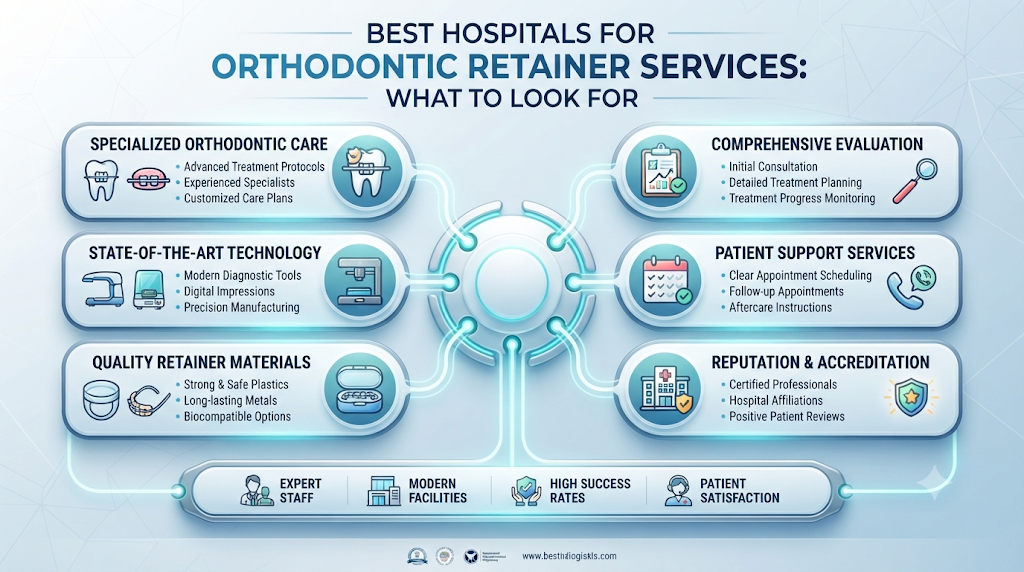
A suitable dental facility should offer care from qualified professionals. Patients should check the orthodontist’s training and experience in orthodontic treatment.
The facility should have suitable tools for impressions or digital scans. These help the dental team plan and make custom retainers. Patients can ask how the appliance will be fitted and checked.
A good service should explain available retainer types. It should also provide clear instructions for wearing, cleaning, and storing the appliance.
Follow-up access is another important point. Patients may need help if a retainer becomes loose or uncomfortable. Ask whether the facility offers repair and replacement services.
Other useful features include general dental care, clear service fees, and written care instructions. Patients should understand what each appointment includes before booking.
How Orthodontists Decide Which Retainer Is Suitable
There is no single retainer that suits every patient. The orthodontist considers several factors before recommending an appliance.
The original tooth alignment is one important factor. The type and complexity of previous treatment also matter. Some patients may have had more movement or spacing that needs careful retention.
The bite position can also affect the choice. An orthodontist may consider which teeth need extra support and whether a fixed wire is suitable.
Daily habits are important too. A removable retainer needs regular use according to the prescribed schedule. Patients who may struggle to remember it should discuss their options.
Oral hygiene also matters. Fixed retainers need careful cleaning around the wire. The final choice should follow an individual examination and discussion with the orthodontist.
What Happens During a Retainer Fitting Appointment?
The appointment usually begins with a review of the patient’s teeth. The orthodontist may ask about previous braces treatment and current retainer use.
Next, the dental team may take impressions or digital scans. These records show the shape and position of the teeth. A custom retainer is then made using the chosen method.
When the retainer is ready, the orthodontist checks its fit. For removable types, the patient learns how to insert and remove the appliance. The team also explains cleaning and storage.
For a fixed retainer, the orthodontist places the wire behind selected teeth. The wire is secured with dental bonding material. The professional checks that it is properly attached.
Before leaving, patients should ask about their wear schedule and follow-up visits. They should also know whom to contact if the appliance causes problems.
Retainer Repair and Replacement Services
Retainers can become damaged through daily use, accidents, or poor storage. Removable appliances may develop cracks or change shape. Fixed retainers may have a broken wire or loose bonding.
A retainer that feels different may also need professional attention. Changes in tooth position can affect its fit.
The orthodontist checks the damage before recommending repair or replacement. Some problems may be repaired. Others may require a new appliance.
Patients should not bend wires or try to repair retainers at home. Glue and other household materials are not suitable for dental appliances. A damaged retainer should not be forced onto the teeth.
Contact the orthodontist promptly if the appliance breaks or becomes uncomfortable. If teeth have moved, the professional may need to assess whether further treatment is required.
How to Care for Different Types of Retainers
Good cleaning habits help keep retainers in suitable condition. However, care instructions can differ by appliance type. Patients should follow the advice given by their orthodontist.
For removable retainers, clean them gently as instructed. Use a suitable soft brush and cleaning method recommended by the dental team. Avoid hot water because heat can damage some plastic retainers.
Always place a removable retainer in its protective case when it is not being worn. Do not wrap it in tissue or leave it where it can be lost. Keep it away from pets and heat.
Fixed retainers need careful brushing around the wire. Suitable flossing tools or interdental brushes may help clean between the teeth. Ask the dental team to demonstrate the correct method.
Regular dental check-ups remain important. They help monitor tooth and gum health around the appliance.
Signs That Your Retainer Needs Professional Attention
A retainer should fit as instructed and should not cause new problems. Certain changes may mean it needs a professional check.
Watch for these signs:
- The retainer no longer fits properly.
- The plastic has cracks or visible damage.
- A fixed retainer wire feels loose or broken.
- New discomfort or pressure develops.
- Teeth appear to be changing position.
- Inserting or removing the appliance becomes difficult.
Contact your orthodontist if you notice any of these problems. Do not force a retainer that no longer fits. Avoid bending wires or trying to adjust the appliance yourself.
Prompt advice can help the orthodontist decide whether repair, replacement, or further assessment is needed.
Orthodontic retainer problems and recommended actions
| Retainer Problem | What It May Mean | Recommended Action |
|---|---|---|
| Poor fit | The retainer may have changed shape or teeth may have moved | Stop forcing it and contact your orthodontist |
| Cracked plastic | The removable appliance may be damaged | Ask the orthodontist whether repair or replacement is needed |
| Broken wire | A Hawley or fixed retainer may no longer provide proper support | Arrange a professional check promptly |
| Loose bonding | A fixed retainer may not be attached securely | Contact the orthodontist for an assessment |
| Lost retainer | Teeth may be left without the planned support | Contact the dental team about a replacement |
| New tooth movement | Teeth may be shifting from their planned positions | Arrange an orthodontic assessment |
How to Compare Hospitals for Orthodontic Retainer Services
Patients should compare dental facilities based on care, skills, and follow-up support. The lowest fee or most attractive advertisement may not show the full quality of service.
Start by checking the orthodontist’s qualifications and relevant experience. Ask who will assess and fit the retainer. Confirm which types are available, including fixed and removable options.
Check whether the facility offers fitting, adjustment, repair, and replacement. Ask if it uses digital scans, traditional impressions, or both. The method should suit the patient’s needs.
Appointment access is also important. Retainer problems may need timely attention. Ask how patients can arrange a review if the appliance becomes loose or uncomfortable.
Request clear details about service fees. Check what the quoted fee includes and whether follow-up visits cost extra. Written care instructions are also useful.
Consider the facility’s location if regular visits may be needed. Choose a provider based on suitable professional care and clear support, not advertisements alone.
Frequently Asked Questions
1. Why are orthodontic retainers needed after braces?
Retainers help hold teeth in their corrected positions after braces or aligner treatment. Teeth can move as the surrounding gums and bone adjust. Natural changes can also affect alignment over time. Wearing a retainer as prescribed helps reduce unwanted movement and supports long-term orthodontic results.
2. What are the main types of dental retainers?
The main types are Hawley, clear plastic, and fixed retainers. Hawley retainers use an acrylic base and metal wire. Clear retainers are transparent trays. Fixed retainers use a thin wire bonded behind selected teeth. An orthodontist recommends an option based on each patient’s needs.
3. How do orthodontists choose the right retainer?
Orthodontists consider the original tooth alignment, previous treatment, bite position, and risk of tooth movement. They may also consider oral hygiene and the patient’s ability to wear a removable appliance. A dental examination helps the orthodontist recommend a suitable option.
4. How often should a retainer be checked?
The review schedule depends on the patient’s treatment and retainer type. The orthodontist may arrange checks after braces are removed and advise when further visits are needed. Patients should also seek advice if the appliance becomes damaged, loose, uncomfortable, or difficult to fit.
5. What should I do if my retainer breaks?
Contact your orthodontist or dental hospital promptly. Keep the broken parts if possible and take them to the appointment. Do not bend wires, use glue, or try to repair the appliance yourself. The orthodontist will decide whether it can be repaired or needs replacement.
6. Can a damaged retainer be repaired?
Some damaged retainers can be repaired, but others need replacement. The decision depends on the material, type of damage, and current fit. An orthodontist should examine the appliance before recommending a solution. Avoid wearing a retainer that is sharp, badly damaged, or does not fit.
7. When should an orthodontic retainer be replaced?
A retainer may need replacement if it is lost, cracked, distorted, or no longer fits properly. Fixed retainers may also need attention if their wire or bonding becomes loose. There is no universal replacement schedule. The orthodontist can assess its condition and advise what is needed.
8. How should I clean and store my retainer?
Follow the cleaning instructions provided by your orthodontist. Removable retainers should be cleaned gently and stored in a protective case. Avoid hot water because it can damage some plastic appliances. Clean around fixed wires carefully with suitable brushing and flossing tools.
9. What should I do if my retainer no longer fits?
Do not force it onto your teeth. A poor fit may mean the appliance has changed shape or your teeth have moved. Contact your orthodontist for advice. The professional can assess the fit and decide whether a new retainer or further treatment is needed.
10. What services should a good hospital provide for retainer care?
A suitable facility should provide professional assessment, custom fitting, and clear care instructions. Access to adjustment, repair, replacement, and follow-up services is also useful. Patients should be able to ask questions about fees, cleaning, and problems that may arise during retainer use.
Final Thoughts
Retainer care is an important part of maintaining orthodontic results. Choosing suitable care means looking beyond the appliance itself. Patients should check orthodontist qualifications, fitting services, repair options, and follow-up support.
Follow the wear and cleaning instructions given for your retainer. Contact a dental professional if it becomes damaged, loose, or no longer fits. Do not try to repair or adjust it at home.
For dental hospital information, explore BESTDENTALHOSPITALS.COM. A careful choice and regular professional care can help support long-term dental health.