Introduction
Changes in urination—such as a weaker stream, waking up multiple times during the night, or a frequent need to go—can be troubling. For many men over fifty, these changes stem from Benign Prostatic Hyperplasia (BPH), commonly known as an enlarged prostate. While an enlarged prostate is a non-cancerous condition, its symptoms can impact your daily routine, sleep, and overall quality of life.Finding reliable information about diagnostic steps and provider selection is an important first step. Educational resources like UrologyHospitals.com can help you learn more about condition management, evaluate treatment options, and prepare for discussions with a doctor.
Understanding the Urological Condition or Treatment
The prostate is a small gland located just below the bladder in men. It surrounds the urethra, the tube that carries urine out of the body from the bladder. The main job of the prostate is to produce fluid that nourishes and transports sperm.
As men age, the prostate naturally grows. When it grows larger than normal, it can squeeze or press against the urethra. This pressure acts like a kink in a garden hose, slowing down or restricting the flow of urine out of the bladder.
Because this growth is benign, it is not cancer and does not spread to other organs. However, if left unmanaged over a long period, an enlarged prostate can cause urine to back up, leading to urinary tract infections, bladder stones, or impaired kidney function. Understanding this condition allows you to seek care early, before complications develop.
Common Symptoms and Warning Signs
An enlarged prostate presents symptoms slowly over time. You might adapt to small changes without realizing how much your urinary habits have shifted.
Frequent Urination
Feeling the need to empty your bladder more often than usual, especially during the day.
Nocturia
Waking up two or more times during the night to urinate, disrupting your sleep cycles.
Urgency
A sudden, intense urge to urinate that is difficult to delay.
Weak or Interrupted Stream
A urine flow that starts slowly, sputters, or lacks its normal force.
Hesitancy
Difficulty starting the stream of urine, even when your bladder feels completely full.
Incomplete Bladder Emptying
A sensation that your bladder is still partly full immediately after you finish urinating.
Dribbling
Losing small drops of urine at the end of your stream.
While these symptoms often point to BPH, they can also signal other issues like a urinary tract infection, bladder stones, or prostate cancer. Having a professional evaluate these symptoms helps rule out other concerns.
Causes and Risk Factors
The exact cause of prostate enlargement is not entirely clear, but changes in sex hormone levels as men age play a major role.
- Age: Prostate enlargement rarely causes symptoms in men under 40. However, more than half of men in their 60s and up to 90% of men in their 80s experience some degree of BPH symptoms.
- Family History: Having a father or brother with prostate problems increases your likelihood of developing an enlarged prostate.
- Lifestyle Factors: Physical inactivity and obesity can increase the risk of BPH symptoms.
- Overall Health: Conditions like type 2 diabetes and heart disease, as well as the use of certain beta-blockers, may be linked to a higher risk of BPH.
Diagnosis and Medical Tests
A doctor will perform a few tests to confirm an enlarged prostate and rule out other conditions.
- Medical History and Symptom Assessment: Your doctor will ask about your symptoms and how much they affect your daily life. You may fill out a standardized questionnaire, such as the International Prostate Symptom Score (IPSS).
- Digital Rectal Exam (DRE): The doctor inserts a lubricated, gloved finger into the rectum to assess the size, shape, and firmness of the prostate gland.
- Urine Tests (Urinalysis): Testing a urine sample helps rule out an infection or blood in the urine.
- Prostate-Specific Antigen (PSA) Blood Test: PSA is a protein produced by the prostate. High levels can indicate an enlarged prostate, inflammation, or prostate cancer.
- Urinary Flow Test: You urinate into a special machine that measures the speed and volume of your urine stream.
- Post-Void Residual Volume Test: An ultrasound measures how much urine remains in your bladder after you finish urinating.
- Cystoscopy: A thin, lighted tube is inserted into the urethra to view the inside of the bladder and prostate area.
Urology Treatment Options
Enlarged prostate treatment varies depending on symptom severity, prostate size, overall health, and personal preferences.
Watchful Waiting and Lifestyle Modifications
For mild symptoms that do not disrupt your life, your doctor may suggest monitoring the condition. This approach includes yearly checkups and simple lifestyle adjustments:
- Limiting fluids in the evening to reduce night trips to the bathroom.
- Cutting back on caffeine and alcohol, which can irritate the bladder.
- Avoiding medications like decongestants or antihistamines, which can tighten the muscles around the urethra and make urinating harder.
- Double voiding—waiting a moment after finishing urinating and trying again to empty the bladder completely.
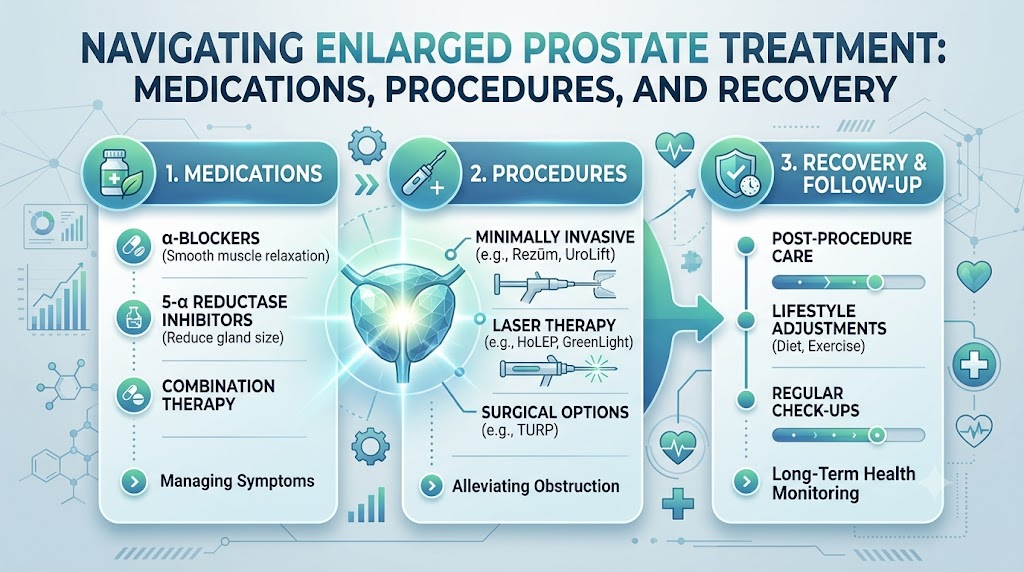
Medications
When lifestyle changes are not enough, medications are often the first step:
- Alpha-Blockers: These relax the muscles in the prostate and bladder neck, making it easier to urinate. They work quickly but do not reduce the size of the prostate.
- 5-Alpha Reductase Inhibitors: These medications shrink the prostate by blocking hormonal changes that drive growth. They take several months to show full effects.
- Combination Therapy: Taking an alpha-blocker and a 5-alpha reductase inhibitor together is often more effective than taking either medication alone for larger prostates.
Minimally Invasive Procedures
If medications are ineffective or cause unwanted side effects, outpatient procedures can relieve blockage with minimal downtime:
- Prostatic Urethral Lift (PUL): Tiny implants hold the enlarged prostate tissue back, pulling it away from the urethra so urine can flow freely.
- Water Vapor Therapy (Rezum): Steam is delivered directly to the target prostate tissue, causing the extra tissue to shrink over time.
- Transurethral Microwave Thermotherapy (TUMT) or Radiofrequency Procedures: Energy heats and reduces obstructing prostate tissue.
Surgical Treatments
Surgery is usually reserved for moderate-to-severe symptoms, large prostates, or cases where other treatments have not provided relief.
- TURP (Transurethral Resection of the Prostate): The traditional standard for BPH surgery. The surgeon inserts an instrument through the urethra to trim away excess prostate tissue.
- Laser Surgery: High-energy laser light vaporizes or cuts away tissue. Laser options often carry a lower risk of bleeding than traditional TURP.
- Robotic-Assisted Simple Prostatectomy: For very large prostates, surgeons use robotic systems to precisely remove the blocking inner section of the prostate through small abdominal incisions.
Kidney Stone Treatment & Other Conditions
Urinary symptoms do not always originate in the prostate. Conditions like kidney stones can cause sudden pain, frequent urges, or difficult urination. Kidney stone treatment varies depending on stone size and location; options range from hydration and observation to shock wave lithotripsy or ureteroscopy.
Similarly, urinary tract infection treatment relies on identifying bacterial causes to prescribe appropriate therapies. Proper evaluation by a doctor helps ensure that symptoms caused by infections or stones are not confused with an enlarged prostate.
Prostate Cancer Treatment vs. BPH Care
It is common to worry that an enlarged prostate signals cancer. However, an enlarged prostate is a benign growth and does not cause or turn into cancer.
That said, both conditions can exist at the same time and share similar symptoms. While enlarged prostate treatment focuses on improving urine flow and quality of life, prostate cancer treatment depends on cancer stage, aggressiveness, and patient health. Cancer care options range from active surveillance to surgery or radiation therapy. A urologist will run tests like a PSA test and DRE to distinguish between BPH and cancer.
Bladder Cancer Treatment and Urinary Health
Blood in the urine, painful urination, and frequent urges can also be signs of bladder problems. Bladder cancer treatment depends on factors like cancer type, depth, and stage. Diagnostic procedures such as cystoscopy help specialists examine the bladder lining, ruling out bladder conditions when treating prostate issues.
Robotic Urology Surgery
Robotic urology surgery has changed how complex procedures are performed. In these operations, the surgeon controls robotic instruments through a console, offering high-precision, 3D views of the surgical area.
Robotic-assisted surgery for large prostates can offer advantages such as smaller incisions, less blood loss, and shorter hospital stays. However, robotic techniques are not necessary for every patient. Your surgeon will recommend the best approach based on your anatomy and health status.
Evaluating Urology Hospitals and Urology Specialists
Choosing qualified care providers makes managing your treatment simpler. When researching options, consider:
- Specialist Experience: Look for urologists who regularly manage BPH and offer multiple treatment options, rather than just one technique.
- Diagnostic Capabilities: Ensure the facility offers comprehensive testing, including urodynamics, ultrasound, and cystoscopy.
- Range of Treatments: Choose hospitals that offer everything from lifestyle advice to modern minimally invasive procedures and robotic surgeries.
- Patient Support: Look for clear post-procedure care plans, accessible follow-up visits, and responsive communication teams.
Resource hubs like UrologyHospitals.com offer educational guides to help you understand treatments, evaluate care centers, and prepare for your appointments.
“Urologist Near Me” Search Intent
Searching for a “urologist near me” online is a common way to find local care. To make your search as effective as possible:
- Check Credentials: Look at the specialist’s training, certifications, and experience with your specific condition.
- Consider Location: Frequent visits may be needed for tests and follow-ups, so finding a hospital that is easy to reach is helpful.
- Review Hospital Options: Check if the specialist works with a facility that has modern equipment and surgical technology.
- Confirm Logistics: Make sure the practice accepts your insurance or offers clear payment options.
Comparison of Treatment Options
| Treatment Category | Common Uses | Potential Advantages | Important Considerations |
| Lifestyle Changes | Mild symptoms | No side effects, low cost | Requires daily habit adjustments; does not reduce prostate size |
| Medications | Mild to moderate symptoms | Non-surgical approach, easy to start | May cause side effects (dizziness, sexual dysfunction); requires ongoing use |
| Minimally Invasive Procedures | Moderate symptoms, small-to-medium prostates | Outpatient setup, quicker recovery, preserves sexual function | May not be suitable for very large prostates |
| Surgical Interventions | Severe symptoms, larger prostates | Long-lasting relief, direct removal of tissue | Requires anesthesia, recovery time, and potential surgical risks |
Practical Examples
Example 1: Mild Symptoms and Lifestyle Adjustments
A 55-year-old man notices he wakes up twice a night to urinate. After an examination, his doctor confirms a mild prostate enlargement with no infection or elevated PSA. Because his symptoms are manageable, he decides on watchful waiting, stops drinking fluids after 8:00 PM, and cuts down on evening coffee.
Example 2: Exploring Minimally Invasive Care
A 63-year-old man has taken alpha-blockers for two years. While the medication helped at first, he now experiences dizziness and persistent urinary urgency. He consults a urologist to discuss minimally invasive options like water vapor therapy or a prostatic urethral lift, seeking an outpatient procedure with a faster recovery time.
Example 3: Managing Advanced Symptoms
A 72-year-old man experiences severe urinary hesitation, weak stream, and frequent bladder infections. Tests show a significantly enlarged prostate that prevents his bladder from emptying completely. After discussing surgical options with his specialist, he chooses laser surgery to remove the tissue obstruction.
Decision-Making Framework
- Step 1: Track Your Symptoms — Keep a 3-day diary noting what you drink, how often you urinate, and any discomfort you feel.
- Step 2: Get a Medical Evaluation — Schedule an appointment with a primary doctor or urologist for basic tests (DRE, urinalysis, PSA).
- Step 3: Discuss Your Diagnosis — Confirm whether your symptoms stem from an enlarged prostate or another condition.
- Step 4: Review Treatment Options — Talk through the pros, cons, and side effects of lifestyle changes, medications, procedures, and surgeries.
- Step 5: Select a Specialist and Facility — Look for experienced doctors and well-equipped hospitals that offer your preferred care path.
- Step 6: Follow the Treatment and Recovery Plan — Take medications as prescribed, follow post-procedure guidelines, and attend all follow-up visits.
Common Mistakes to Avoid
- Ignoring Early Symptoms: Waiting until you can no longer urinate can lead to bladder or kidney damage.
- Assuming BPH is Always Cancer: Assuming symptoms mean cancer can cause unnecessary stress; get a proper diagnostic evaluation instead.
- Self-Medicating with Supplements: Taking over-the-counter herbal supplements without talking to a doctor can delay proper diagnosis and care.
- Rushing Into Surgery: Not every enlarged prostate requires immediate surgery. Exploring conservative treatments first is often the best approach.
- Skipping Follow-Up Visits: Stopping treatment or skipping checkups once symptoms improve can allow underlying issues to return.
Key Takeaways
- An enlarged prostate (BPH) is a common, non-cancerous condition in aging men that affects urination.
- Symptoms like frequent urination, weak stream, and night waking should be evaluated by a healthcare professional.
- Diagnostic tests—including urine tests, DRE, PSA blood tests, and ultrasounds—help confirm BPH and rule out other conditions.
- Treatment options range from lifestyle adjustments and medications to minimally invasive procedures and traditional or robotic surgeries.
- Choosing the right treatment depends on prostate size, symptom severity, overall health, and personal goals.
- Prepare for your doctor visits by keeping a symptom diary and bringing a list of targeted questions.
Frequently Asked Questions (FAQs)
What is an enlarged prostate?
An enlarged prostate, or Benign Prostatic Hyperplasia (BPH), occurs when the prostate gland grows larger as a man ages. This growth squeezes the urethra, making it difficult for urine to flow normally from the bladder out of the body.
Does an enlarged prostate lead to prostate cancer?
No. An enlarged prostate is a benign (non-cancerous) condition. It does not cause or turn into prostate cancer, though both conditions can cause similar symptoms and exist at the same time.
When should I see a urologist for urinary symptoms?
You should see a doctor if urinary symptoms disrupt your sleep or daily activities, or if you notice severe signs like blood in your urine, pain, fever, or a complete inability to pass urine.
What is the most common enlarged prostate treatment?
Treatment usually begins with lifestyle adjustments or daily medications like alpha-blockers. If symptoms worsen, procedures like water vapor therapy, laser surgery, or TURP may be recommended.
Can an enlarged prostate be cured without surgery?
Medications and lifestyle changes can manage symptoms effectively for many men without needing surgery. However, these options typically control symptoms rather than permanently cure the underlying enlargement.
What are the side effects of BPH medications?
Side effects depend on the medication type but can include dizziness, fatigue, low blood pressure, reduced semen volume, or difficulty maintaining an erection.
How do doctors diagnose an enlarged prostate?
Doctors use physical exams (like a digital rectal exam), urine tests, PSA blood tests, symptom scores, and imaging or flow tests to diagnose BPH and check for other conditions.
What is the recovery time after BPH surgery?
Recovery varies by procedure type. Minimally invasive treatments may require just a few days of light activity, while surgical procedures like TURP or laser surgery can require two to six weeks for full recovery.
Is robotic surgery useful for an enlarged prostate?
Robotic-assisted simple prostatectomy can be useful for men with very large prostates, offering high precision, smaller incisions, reduced blood loss, and a shorter recovery period compared to open surgery.
How can I find a specialist for enlarged prostate treatment?
You can search for board-certified urologists in your area, consult provider directories, ask for recommendations from a primary doctor, or use online resources like UrologyHospitals.com to research facilities.
Conclusion
An enlarged prostate is a manageable condition, and experiencing urinary symptoms does not mean you have to accept a drop in your quality of life. With options ranging from simple daily adjustments to advanced surgical procedures, modern care allows treatments to be tailored to your specific needs.Taking the time to understand your options, track your symptoms, and prepare for medical visits empowers you to make confident choices about your health. Navigating educational resources and using platform directories like UrologyHospitals.com can help you find experienced urologists and healthcare facilities to support your path toward better urological wellness.