Introduction
A toothache can range from mild, temporary sensitivity to severe, throbbing pain caused by decay, infection, trauma, cracked teeth, or other underlying dental problems. When intense dental pain strikes, it can instantly disrupt your sleep, concentration, and daily activities. Severe or persistent tooth pain should never simply be masked with over-the-counter remedies because the underlying cause often requires professional dental treatment.Navigating urgent healthcare decisions requires reliable resources. Platforms like BestDentalHospitals serve as valuable guides for researching dental hospitals, qualified dentists, treatments, procedures, and emergency dental care destinations.
What Is an Emergency Toothache?
It is helpful to distinguish between ordinary tooth sensitivity and a true emergency toothache. Everyday sensitivity might cause a brief twinge when you consume something hot or cold, fading quickly afterward.
An emergency toothache, by contrast, is characterized by:
- Sudden, severe pain that starts without obvious warning
- Persistent, deep throbbing pain that lingers for hours
- Pain that wakes you up from sleep or prevents you from resting
- Sharp agony when biting down or applying pressure to a tooth
- Unrelenting discomfort that does not respond to basic home care
- Toothache accompanied by noticeable swelling, fever, or a foul taste
Pain intensity alone cannot determine the exact cause of the problem. A professional dental examination is always necessary to uncover what is happening beneath the surface.
Common Causes of Severe Toothache
Toothaches can stem from numerous dental conditions affecting the enamel, dentin, dental pulp, or surrounding gum and bone structures.
Frequent causes include:
- Advanced Tooth Decay: Cavities that have penetrated deep into the inner layers of the tooth, reaching the sensitive dental pulp.
- Pulpitis: Inflammation of the soft dental pulp inside the tooth chamber, causing intense pressure and pain.
- Dental Infection and Abscess: Bacterial infections resulting in pus accumulation around the tooth root or gums.
- Cracked or Fractured Teeth: Structural breaks that expose inner nerves or weaken the tooth integrity.
- Broken Fillings or Crowns: Restorations that have failed or fallen out, leaving sensitive inner tooth structures exposed.
- Gum Disease: Advanced periodontal disease leading to gum recession, root exposure, and deep tissue infection.
- Impacted Wisdom Teeth: Partially erupted third molars pressing against neighboring teeth or trapping bacteria.
- Dental Trauma: Physical injuries from accidents or sports that loosen, chip, or displace teeth.
- Exposed Tooth Roots: Root surfaces uncovered by gum recession that react painfully to thermal stimuli.
- Non-Dental Pain Sources: Conditions originating in the sinuses, jaw joints (TMJ), or surrounding facial muscles that mimic toothaches.
Professional examination using specialized diagnostic tools is required to accurately pinpoint the source of the pain.
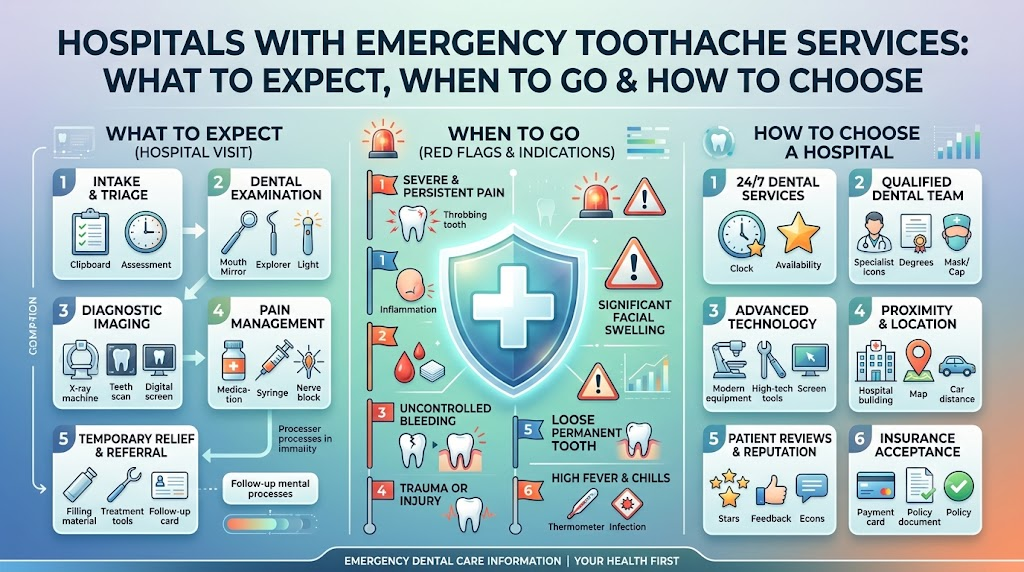
When Is Toothache a Dental Emergency?
Not every mild twinge requires an immediate midnight visit, but certain symptoms indicate a clear dental emergency that warrants prompt professional assessment.
You should seek urgent dental care if you experience:
- Severe, unmanageable tooth pain that interferes with daily functioning
- Noticeable swelling in your gums, cheek, or jaw area
- Visible pus, drainage, or a pimple-like bump on the gum near the painful tooth
- Fever or chills accompanying dental pain, suggesting a spreading infection
- A broken, fractured, or badly chipped tooth causing sharp pain or lacerating soft tissues
- A knocked-out permanent tooth requiring immediate stabilization
- Significant dental trauma resulting from an accident or sports injury
- Uncontrolled oral bleeding from the gums or tooth sockets
- Severe, escalating pain following a recent dental procedure
- Difficulty opening your mouth fully when accompanied by swelling or infection
Prompt evaluation prevents minor dental issues from escalating into severe systemic complications.
When Should You Go Directly to a Hospital Emergency Department?
Emergency Warning: Certain symptoms accompanying a dental problem may indicate a severe, life-threatening infection or medical emergency. Do not wait for a routine dental appointment if you or a loved one experience:
- Significant facial or neck swelling accompanied by difficulty breathing
- Difficulty swallowing saliva or liquids due to swelling
- Rapidly increasing swelling spreading toward the eye or down the neck
- Severe systemic illness, high fever, confusion, or disorientation
- Loss of consciousness, fainting, or severe dizziness
- Uncontrolled, major bleeding from the oral cavity that does not stop with pressure
- Major facial trauma involving broken facial bones or severe head injury
These situations require urgent evaluation at a hospital emergency department or immediate activation of emergency medical services.
What Happens During an Emergency Toothache Visit?
When you arrive at a facility offering emergency toothache services, the clinical team will follow a structured protocol to diagnose and alleviate your pain.
The emergency visit typically involves:
- Initial Assessment: The dental professional reviews your symptoms, medical history, and the timeline of the pain.
- Dental Examination: A careful visual inspection of the affected tooth, gums, and surrounding oral structures.
- Diagnostic Testing: Dental X-rays or other appropriate imaging are performed to visualize hidden decay, bone levels, and root tips.
- Immediate Management: Treatment focuses on controlling acute pain, addressing active infection, stabilizing trauma, or protecting exposed tooth structures.
- Definitive Treatment Plan: The dentist explains what further restorative or endodontic treatment may be needed to resolve the problem permanently.
Treatment is always tailored to the specific diagnosis rather than applying a universal solution.
Diagnostic Tests for Severe Toothache
Accurate diagnosis is vital for successful emergency dental treatment. Clinicians utilize various diagnostic modalities to evaluate the health of a painful tooth.
Common diagnostic tests include:
- Dental X-rays (Periapical or Bitewing): To visualize decay beneath fillings, root tip infections, and bone loss.
- Intraoral Imaging: Detailed digital photographs of cracked teeth or broken restorations.
- Clinical Examination: Physical inspection of bite alignment and gum tissue health.
- Percussion and Sensitivity Testing: Tapping gently on teeth or applying cold stimuli to test nerve vitality.
- Periodontal Probing: Measuring pocket depths around the gums to check for periodontal disease.
- Advanced Imaging: Cone-beam computed tomography (CBCT) when complex root anatomy or hidden fractures are suspected.
Diagnostic testing ensures that treatment targets the exact root cause of your discomfort.
Emergency Treatment Options for Toothache
Emergency dental care focuses primarily on pain relief and stabilization, followed by definitive treatment.
Possible treatment categories include:
- Temporary Dental Protection: Placing a temporary filling or sedative dressing to protect exposed nerves in broken or decayed teeth.
- Root Canal Treatment (Endodontic Therapy): Removing infected or inflamed dental pulp from inside the root canals, cleaning the space, and sealing it to save the natural tooth.
- Tooth Extraction: Removing a severely damaged, fractured, or non-restorable tooth when it cannot be predictably saved.
- Drainage of Dental Infection: Incising a localized gum abscess to drain accumulated pus and relieve pressure.
- Restorative Repair: Placing permanent fillings or temporary crowns to restore structural integrity following trauma or decay.
Your dentist will recommend the most appropriate option based on your clinical evaluation.
Dental Abscess and Toothache
A dental abscess is a serious pocket of pus caused by a bacterial infection. It can form at the tip of the tooth root (periapical abscess) or within the gum tissue surrounding the root (periodontal abscess).Abscesses are characterized by severe, constant throbbing pain, localized swelling, sensitivity to pressure, a bitter taste from discharging pus, and sometimes fever. Left untreated, a dental abscess can spread to surrounding jawbone, facial tissues, and other areas of the body.Emergency care focuses on treating the source of the infection—often through root canal therapy, extraction, or surgical drainage. Antibiotics may be prescribed by a clinician when systemic infection signs are present, but medication alone cannot cure an abscess without addressing the underlying dental source.
Table 1 – Common Toothache Emergencies
| Dental Problem | Possible Symptoms | Why Prompt Assessment May Be Needed |
| Severe toothache | Deep throbbing pain, sensitivity to heat/cold | Prevents deep decay from killing the dental nerve |
| Dental abscess | Constant pain, gum swelling, pus drainage | Stops bacterial infection from spreading to facial tissues |
| Facial swelling | Swollen cheek or jaw, difficulty opening mouth | Indicates advanced infection requiring immediate professional care |
| Broken tooth | Sharp edges, pain when biting, exposed nerves | Protects inner pulp and prevents bacterial invasion |
| Knocked-out tooth | Tooth completely dislodged from socket | Offers the highest chance of saving the natural tooth if treated quickly |
| Lost filling/crown | Sensitivity, rough edges, exposed dentin | Prevents sudden fracture or bacterial decay infiltration |
| Wisdom-tooth pain | Jaw stiffness, gum tenderness, posterior pain | Evaluates impaction, pericoronitis, and extraction needs |
| Dental trauma | Loose teeth, displacement, bleeding | Stabilizes supporting bone and periodontal ligaments |
| Post-treatment pain | Escalating pain days after a filling or extraction | Checks for dry socket, incomplete healing, or infection |
Emergency Care for a Knocked-Out Tooth
A knocked-out (avulsed) permanent tooth represents a true dental emergency where minutes matter. If handled correctly and treated promptly, a permanent tooth can often be successfully replanted into its socket.
Key steps for a knocked-out permanent tooth include:
- Acting immediately—time is critical for periodontal ligament survival.
- Handling the tooth only by the crown (the chewing surface), never by the root.
- If the tooth is dirty, gently rinse it with cold water or milk; do not scrub it or remove attached tissue fragments.
- Attempting to gently reinsert the tooth into its socket immediately if the patient is conscious and cooperative.
- If reinsertion is not possible, storing the tooth safely in a container of cold milk or a specialized dental preservation kit.
- Seeking emergency dental care immediately.
Note: These guidelines apply exclusively to permanent adult teeth. Knocked-out baby teeth should generally not be reimplanted to avoid damaging the developing permanent tooth underneath.
Broken, Cracked, or Chipped Teeth
Trauma, biting down on hard objects, or large failing restorations can cause teeth to break, chip, or crack.Minor enamel chips may cause aesthetic concern and minor roughness but rarely constitute an immediate emergency. However, major fractures that expose the inner dentin or pulp chambers cause sharp pain, thermal sensitivity, and vulnerability to bacterial infection.Cracked teeth—where a fracture runs vertically down toward the root—can cause unpredictable sharp pain when chewing. Prompt professional assessment is essential to determine the depth of the fracture and whether the tooth can be restored with a crown, root canal, or other protective therapy.
Wisdom Tooth Emergencies
Wisdom teeth (third molars) frequently erupt at awkward angles or become partially trapped (impacted) beneath the gum line, making them notorious sources of dental emergencies.When wisdom teeth cause problems, patients may experience severe posterior jaw pain, swelling of the surrounding gum tissue (a condition known as pericoronitis), difficulty opening the mouth fully (trismus), and trapped food debris causing localized infection.Recurrent wisdom tooth infections typically do not resolve permanently with temporary measures; an emergency evaluation often assesses whether extraction or specialized surgical management is necessary.
Emergency Dental Care for Children
Dental emergencies in children require specialized, age-appropriate evaluation to protect both primary (baby) teeth and developing permanent teeth.Common pediatric dental emergencies include severe toothaches from deep decay, sports-related dental trauma, chipped or fractured teeth, knocked-out baby or permanent teeth, and localized gum swellings.Parents should remain calm and seek prompt care from a pediatric dentist or dental hospital equipped for children. Unlike permanent teeth, knocked-out baby teeth are never replanted, but an emergency assessment ensures that supporting bone and permanent tooth buds are unharmed and that pain is safely managed without adult medication dosages.
What Can Patients Do While Waiting for Emergency Dental Care?
While waiting for your emergency dental appointment, you can take safe, general measures to manage comfort without risking further harm.
Safe Home Measures:
- Keep your mouth clean by gently rinsing with warm salt water.
- Stick to soft, lukewarm foods and avoid chewing on the affected side.
- Apply a cold compress externally to the cheek to help reduce swelling.
- Protect broken tooth edges with dental wax if available to prevent soft tissue irritation.
Unsafe Practices to Avoid:
- Never place aspirin or any other pain-relieving pill directly against the gums or aching tooth; this causes chemical burn injuries to oral tissues.
- Never apply harsh chemicals, garlic, or unverified home remedies to the tooth.
- Never attempt to drain a dental abscess or pop a gum boil at home with sharp objects.
- Never take leftover antibiotics or share prescription medications.
- Never delay seeking professional care simply because pain temporarily subsides.
What Makes a Hospital Suitable for Emergency Toothache Services?
When evaluating a medical center or dental hospital for emergency care, patients should look for specific institutional capabilities that ensure comprehensive treatment.
Important features include:
- Emergency Availability: Clear operating hours or dedicated on-call systems for handling urgent dental problems.
- Qualified Dental Professionals: Access to experienced general dentists, endodontists, and oral surgeons.
- Diagnostic Facilities: On-site digital X-rays and imaging equipment for rapid evaluation.
- Oral Surgery Support: Capability to perform complex extractions and minor oral surgical procedures.
- Endodontic Care: Availability of root canal specialists when saving a severely infected tooth is possible.
- Infection Management: Expertise in diagnosing and treating spreading dental abscesses.
- Trauma Care: Equipment and training to stabilize broken, dislodged, or knocked-out teeth.
- Emergency Medical Support: Proximity or integration with medical emergency departments for patients exhibiting systemic infection or trauma symptoms.
- Follow-Up Coordination: Mechanisms to transition patients from emergency pain relief to definitive restorative care.
Table 2 – How to Compare Emergency Dental Hospitals
| Hospital Feature | What to Check | Why It Matters |
| Emergency availability | Operating hours and urgent walk-in/call policies | Ensures you can access care when sudden pain strikes |
| Dentist qualifications | Licensed practitioners with emergency experience | Guarantees competent diagnosis and safe treatment execution |
| Diagnostic imaging | On-site digital dental X-rays | Enables rapid, accurate visualization of hidden tooth decay |
| Endodontic services | Availability of root canal treatment capabilities | Essential for saving natural teeth with infected nerves |
| Oral surgery | Surgical suites or minor surgery capacity | Necessary for complex extractions and impacted teeth |
| Pediatric dental care | Child-friendly facilities and pediatric expertise | Ensures safe, gentle evaluation for younger family members |
| Infection management | Protocols for treating abscesses and cellulitis | Protects against dangerous spreading infections |
| Trauma care | Emergency stabilization for knocked-out/broken teeth | Maximizes the chances of saving traumatized teeth |
| Emergency medical support | Integration with hospital ER services | Vital if systemic symptoms or severe breathing issues arise |
| Follow-up care | Clear pathways for permanent restorative work | Ensures long-term healing after emergency stabilization |
| Cost transparency | Itemized price estimates for emergency visits | Prevents unexpected financial stress during a crisis |
| Insurance/payment options | Acceptance of dental plans and payment assistance | Eases financial management of unexpected care |
Cost of Emergency Toothache Treatment
Emergency dental costs vary depending on the nature of the condition and the specific procedures required to stabilize the problem.
Cost variables typically include:
- Emergency consultation and examination fees
- Diagnostic dental X-rays and imaging studies
- Immediate pain relief interventions or palliative care
- Procedural costs, such as root canal therapy, tooth extraction, or incision and drainage
- Temporary or permanent restorative materials (fillings, crowns)
- Prescription medications issued by the treating clinician
- Follow-up checkup appointments
- Facility overhead fees if treated within a hospital setting
Patients should always ask for a clear, itemized estimate of emergency costs before consenting to non-life-threatening procedures.
Insurance and Payment Considerations
Navigating insurance coverage during a dental emergency requires understanding how your specific policy handles urgent care.
Important considerations include:
- Checking whether your dental insurance plan covers emergency examinations and X-rays
- Verifying if specific emergency treatments like extractions or root canals are in-network
- Understanding hospital insurance policies if emergency dental services are delivered within a medical center
- Checking whether preauthorization is required for surgical procedures
- Incurring out-of-pocket expenses for services exceeding policy annual maximums
- Inquiring about hospital or clinic payment plans when financing care is necessary
Confirming coverage directly with your insurer and the provider’s billing department prevents unexpected financial surprises.
How to Choose Hospitals with Emergency Toothache Services
Finding the appropriate facility for emergency dental care involves a structured, step-by-step approach:
- Step 1: Assess the severity and specific nature of your symptoms (pain, swelling, trauma).
- Step 2: Determine whether your situation requires urgent dental care or immediate hospital emergency medical intervention.
- Step 3: Search for dental hospitals or emergency dental clinics with active emergency availability.
- Step 4: Check dentist qualifications and verify that the facility handles emergency toothache cases.
- Step 5: Confirm that on-site diagnostic imaging (X-rays) is available.
- Step 6: Ask whether advanced procedures like root canals, surgical extractions, or trauma care can be performed if needed.
- Step 7: Inquire about estimated out-of-pocket costs and insurance acceptance.
- Step 8: Attend the emergency assessment promptly.
- Step 9: Follow the recommended definitive treatment plan rather than stopping at temporary pain relief.
- Step 10: Complete all necessary follow-up care to ensure complete recovery.
Common Mistakes Patients Make
When dealing with severe dental pain, patients under stress often make mistakes that delay healing or worsen their condition.
Frequent mistakes include:
- Ignoring severe tooth pain and hoping it will disappear spontaneously
- Waiting until swelling or infection spreads before seeking professional help
- Taking leftover antibiotics or sharing prescription drugs without medical guidance
- Placing aspirin or chemical remedies directly against the gums, causing chemical burns
- Attempting to lance or drain a dental abscess at home with sharp instruments
- Relying solely on over-the-counter painkillers while the underlying infection worsens
- Choosing an emergency provider based entirely on flashy advertising rather than verified credentials
- Failing to disclose chronic medical conditions or active medications to the treating dentist
- Dismissing facial swelling or assuming it is just a normal reaction to a toothache
- Delaying emergency care when breathing or swallowing becomes difficult
EXACTLY 15 FAQs
1.What are hospitals with emergency toothache services?
These are specialized medical centers or dental hospitals equipped with diagnostic imaging, emergency dentists, and treatment capabilities to handle acute dental pain.
2.When is a toothache considered a dental emergency?
A toothache is an emergency when pain is severe and unmanageable, persistent, accompanied by facial swelling, fever, or triggered by major dental trauma.
3.What causes severe toothache?
Severe toothaches are commonly caused by advanced decay, pulpitis, dental abscesses, cracked teeth, failed restorations, or periodontal infections.
4.Should I go to a hospital for severe tooth pain?
You should visit an emergency dental facility or hospital dental clinic for severe tooth pain, unless accompanied by breathing difficulties which require a general ER.
5.Can a dental abscess cause an emergency?
Yes, a dental abscess causes intense pain, swelling, and potential systemic infection, requiring prompt professional drainage and treatment.
6.What should I do if my face is swollen from a toothache?
Facial swelling indicates a spreading infection and warrants immediate evaluation by a dental professional or emergency medical team.
7.Can an emergency dentist perform a root canal?
Many emergency dental centers can initiate or perform root canal treatment to relieve pain and remove infected dental pulp.
8.When might a painful tooth need extraction?
Extraction is considered when a tooth is fractured below the gum line, severely decayed beyond restoration, or non-viable.
9.What should I do if a permanent tooth is knocked out?
Handle the tooth by the crown, rinse gently with water if dirty, attempt reinsertion into the socket, store in milk, and seek immediate dental care.
10.Can children receive emergency toothache treatment?
Yes, pediatric dental facilities provide gentle, age-appropriate emergency care for children experiencing toothaches or dental trauma.
Conclusion
Severe toothache should never be ignored, masked with endless painkillers, or left untreated. Prompt professional dental assessment, accurate diagnosis, emergency pain management, infection evaluation, and trauma care are essential steps in protecting your oral health. Patients should compare emergency dental facilities based on professional qualifications, diagnostic capabilities, treatment availability, and follow-up support rather than relying on unverified labels. Most importantly, if severe dental pain is accompanied by breathing difficulties, swallowing problems, or rapidly spreading facial swelling, seek immediate emergency medical attention.