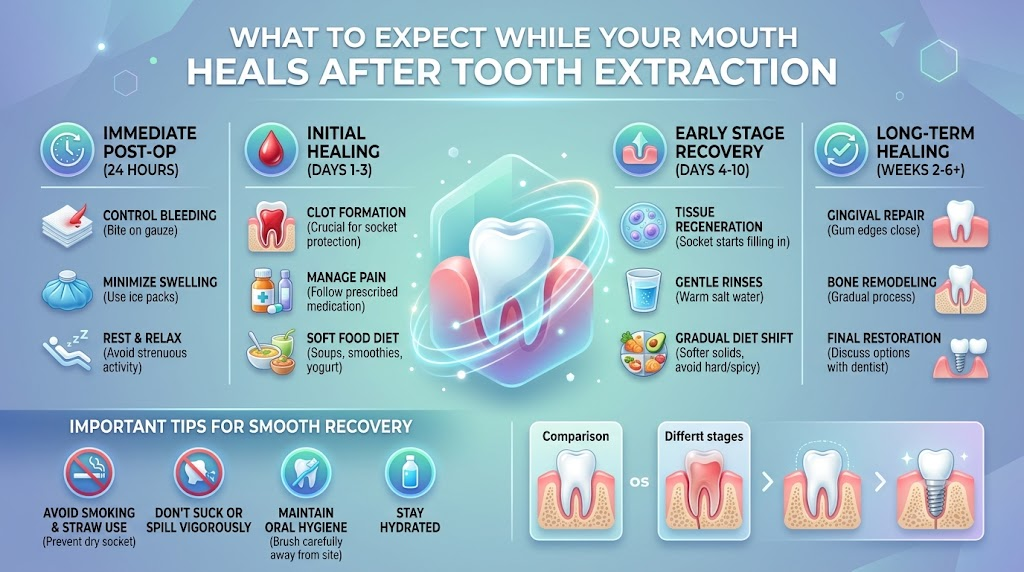
Tooth extraction is a common dental procedure. Recovery starts soon after the tooth is removed. The mouth then begins its natural healing process. Simple care can support a comfortable recovery. Healing can vary from person to person. It can also depend on the type of extraction. BESTDENTALHOSPITALS can help users research dental hospitals. It can also help users explore extraction services and care options.
What Happens After a Tooth Extraction?
After removal, an empty space remains in the gum. This space is called a tooth socket. A blood clot usually forms inside the socket. This clot supports the early healing process. Protecting the area can help support healing. Your dentist will give care instructions for your case.
Simple Extraction vs Surgical Extraction Recovery
A simple extraction removes a tooth that is easy to reach. The dentist can usually access the tooth directly. A surgical extraction is more complex. It may involve gum tissue or bone.
Wisdom teeth can sometimes need surgical removal. Recovery can differ between these procedures. The dentist can explain what to expect. There is no single recovery pattern for everyone.
The First 24 Hours After Tooth Extraction
The first day needs extra care. Rest can help you feel more comfortable. Follow the instructions given by your dental team. Avoid actions that may disturb the extraction area.
Protecting the blood clot is important during early healing. Do not ignore instructions from your dentist. Ask the dental team if anything feels unclear. BESTDENTALHOSPITALS.COM can help patients research recovery support before treatment.
Managing Pain and Swelling
Some pain and swelling can happen after extraction. The level can vary between patients. Surgical extraction may cause more swelling. Symptoms should follow the pattern explained by your dentist.
Follow your dentist’s instructions for pain care. Cold packs may help with swelling when advised. Use them only as your dental team recommends. Do not change prescribed treatment without medical advice.
Eating After Tooth Extraction
Eating may feel different during early recovery. Soft foods can often feel more comfortable. Very hard foods may irritate the healing area. Hot or irritating foods may also feel uncomfortable.
Your dentist may give specific food advice. Follow those instructions for your situation. Drink enough fluids as advised. Avoid foods that cause pain or discomfort.
Drinking and Daily Habits During Recovery
Good daily habits can support comfortable recovery. Drink fluids as recommended by your dental team. Avoid actions that may disturb the healing area. Smoking and nicotine can affect the healing process.
Your dentist can explain what habits to avoid. Follow their advice during recovery. Recovery needs can differ after each extraction. Do not compare your healing with someone else’s.
Brushing and Oral Hygiene After Extraction
Keeping your mouth clean still matters after extraction. However, the extraction area needs gentle care. Your dentist may give special brushing instructions. They may also explain when rinsing is suitable.
Follow the dental team’s instructions closely. Do not use harsh methods near the healing area. Good oral care can support general mouth health. Ask your dentist when normal cleaning can resume.
What Is Dry Socket?
Dry socket can happen after some extractions. It occurs when the blood clot is lost too early. The exposed area can then become painful. Pain may increase instead of slowly improving.
Dry socket is not something patients should diagnose alone. Contact your dentist if pain becomes worse. This is especially important after early improvement. Your dental team can check the healing area.
Signs of Normal Healing
Healing often brings gradual changes. Discomfort may slowly become easier to manage. Swelling may also start to reduce. The extraction area can change as healing continues.
Healing speed can vary between patients. It can also depend on the extraction type. Your dentist can explain what is normal for you. Do not expect the same healing time as another person.
Warning Signs After Tooth Extraction
Some symptoms need dental review. Severe or worsening pain should not be ignored. Heavy or ongoing bleeding also needs attention. Increasing swelling may need professional assessment.
Fever can also need dental review. Pus or unusual discharge may be a warning sign. Trouble opening the mouth can also need care. Trouble breathing or swallowing needs urgent medical help.
When Should You Contact Your Dentist?
Contact your dental team when symptoms worsen. This includes pain that becomes more severe. Unexpected bleeding should also be reported. New swelling may need professional review.
You should also report signs of infection. Your dentist can check the extraction area. Early dental review can help identify problems. Do not try to treat serious symptoms alone.
Tooth Extraction Recovery and Follow-Up Care
Follow-up care can be part of tooth removal recovery. The dentist may check how the socket is healing. Some patients may also need stitches removed. Follow-up needs depend on the procedure.
A dentist may also discuss replacing a missing tooth. Options can depend on your mouth and dental needs. Some patients may need an oral surgeon for follow-up. Your dental team can explain the next steps.
What Makes a Dental Hospital Suitable for Extraction Recovery?
A suitable dental hospital should have qualified dental professionals. Oral surgery support may also be useful. Diagnostic imaging can help when needed. Safe treatment areas are also important.
Some hospitals offer anesthesia support. Others may provide emergency or recovery monitoring. Nursing support may also be available. Follow-up care can help patients after treatment.
Services can vary between dental hospitals. Patients should confirm available services before treatment. BESTDENTALHOSPITALS.COM can help users research these hospital features. It can support comparison without ranking hospitals.
What Should Patients Check Before Choosing a Dental Hospital?
Start by checking dentist qualifications. Then review experience with tooth extraction. Ask if the hospital handles surgical extractions. Imaging services may also matter for some cases.
Patients can also ask about anesthesia options. Emergency support may be useful to understand. Follow-up services should also be clear. Total treatment cost can matter as well.
Other useful questions include:
- Does the hospital offer oral surgery?
- Are qualified dental professionals available?
- What follow-up care is offered?
- Who should patients contact after treatment?
- What services are included in the treatment cost?
BESTDENTALHOSPITALS.COM can help users explore these options. Patients should confirm important details directly with the hospital.
Simple Comparison Table
| Factor | Simple Extraction | Surgical Extraction |
|---|---|---|
| Tooth position | Usually easy to reach | May be under gum or bone |
| Procedure complexity | Usually less complex | May need extra surgical steps |
| Gum involvement | Often limited | May involve gum tissue |
| Recovery needs | Depend on the tooth | May need extra recovery care |
| Follow-up needs | May be routine | May need closer review |
| Specialist involvement | Dentist may provide care | Oral surgeon may be involved |
Practical Example for Patients
General example: Imagine a person recovering after extraction. First, they follow the dentist’s care instructions. They protect the extraction area during early healing.
They choose foods that feel comfortable. They keep up with gentle mouth care. They watch for worsening pain or swelling. They contact the dental team if concerns appear.
They also attend follow-up when advised. BESTDENTALHOSPITALS.COM can help with hospital research. Patients can use it before choosing dental care. The example is general and not a real patient story.
Tooth Extraction Recovery for Wisdom Teeth
Wisdom teeth can need special care after removal. Some wisdom teeth stay partly under the gum. Others may sit under bone. These teeth may need surgical extraction.
Recovery can differ after wisdom tooth removal. Swelling and jaw discomfort may occur. Follow your oral surgeon’s instructions carefully. Contact the dental team if symptoms become worse.
Tooth Extraction Recovery for Older Adults
Older adults may have different recovery needs. Existing health conditions can affect dental planning. Medicines may also affect dental care decisions. Patients should share their full medical history.
Tell your dentist about all current medicines. Also mention past medical problems. Your dental team can plan care around your needs. Do not change medicines without medical advice.
Tooth Extraction Recovery for Children
Children may need age-appropriate dental care. Parents or caregivers may need to supervise recovery. Follow the child’s dental instructions carefully. Watch for unusual symptoms or concerns.
Contact the dental team when something seems unusual. Do not rely on general advice alone. Children’s care can differ from adult care. The dentist can explain the right aftercare plan.
How BESTDENTALHOSPITALS.COM Can Help
BESTDENTALHOSPITALS.COM helps users research dental hospitals. Users can explore tooth extraction and oral surgery services. They can also research dental specialists and hospital facilities.
The platform can provide a starting point for research. It can help users explore dental care options. Patients should confirm treatment details with their dentist. The platform does not replace professional dental care.Not every listed hospital offers the same services. Patients should check current services directly. They should also ask about recovery and follow-up care. This helps keep expectations clear.
Planning for a Smooth Recovery
Simple planning can make recovery easier. Arrange follow-up care when your dentist advises it. Prepare comfortable foods before the procedure. Plan time for rest after treatment.
Keep your dental instructions nearby. Know who to contact if problems appear. Having support at home may also help. Good planning can reduce stress during recovery.
FAQs About Tooth Extraction Recovery
How long does tooth extraction recovery usually take?
Recovery varies by person and procedure. Your dentist can explain what to expect.
What should I do during the first day after extraction?
Follow your dentist’s instructions carefully. Protect the extraction area and allow time for rest.
What can I eat after tooth extraction?
Soft foods may feel easier during early recovery. Follow your dentist’s specific food advice.
How can I reduce discomfort after tooth extraction?
Follow the care plan from your dentist. Ask the dental team about safe comfort measures.
When can I brush my teeth after an extraction?
Your dentist can explain when and how to brush. The extraction area may need gentle care.
What is dry socket after tooth extraction?
Dry socket happens when the blood clot breaks down too early. It can cause increased pain and needs dental review.
What signs may mean I need dental help?
Severe pain, heavy bleeding, fever, or increasing swelling may need review. Breathing trouble needs urgent medical help.
Does surgical extraction take longer to heal?
It can need more recovery care than simple extraction. Healing still varies between patients.
When should I return to the dentist after extraction?
Follow the follow-up schedule given by your dental team. Contact them sooner if symptoms worsen.
How can BESTDENTALHOSPITALS.COM help me find a dental hospital?
BESTDENTALHOSPITALS.COM can help users research dental hospitals and services. Patients should confirm important details with the dental team.
Final Thoughts
Tooth extraction recovery needs patience and proper care. Healing can vary from one person to another. It can also depend on the extraction type. Following your dentist’s instructions is important.
Watch for symptoms that become worse. Contact your dental team when concerns appear. Seek urgent help for severe breathing problems. Do not wait for online advice during emergencies.
BESTDENTALHOSPITALS.COM can help users research dental hospitals. It can also help users explore extraction services and care options. Use the platform as a research starting point. Then discuss your needs with a qualified dental professional.