Introduction
Crooked teeth, crowded teeth, gaps or problems with the way the upper and lower teeth meet can affect both comfort and confidence. Orthodontic braces are commonly used to slowly move teeth into better positions and improve the way the teeth fit together. For children, teenagers and adults, the right treatment starts with a proper examination and a clear plan. Choosing a suitable orthodontist and dental facility is also an important part of the process. BestDentalHospitals can help readers learn more about dental hospitals and orthodontic care. This guide explains Orthodontic Braces Treatment, the main types of braces, what treatment involves, and what to consider before starting care.
What Are Orthodontic Braces?
Orthodontic braces are dental appliances used to gradually move teeth. They can also help correct some bite and alignment problems involving the upper and lower teeth.
Braces use gentle, controlled pressure over time. The orthodontist plans this movement based on the position of the teeth, jaw alignment, bite, age, dental health and treatment goals.
Orthodontic treatment is not only about making teeth look straighter. Improving tooth alignment can also help the teeth fit together more comfortably and may make daily cleaning easier.
Why Might Someone Need Braces?
An orthodontist may recommend braces for different types of tooth and bite problems.
Common concerns include:
- Crooked teeth
- Crowded teeth
- Gaps between teeth
- Overbite
- Underbite
- Crossbite
- Open bite
- Other tooth alignment problems
Crowding happens when there is not enough space for teeth to sit properly. Spacing occurs when there are noticeable gaps between teeth. Bite problems occur when the upper and lower teeth do not meet in the expected way.
An orthodontist needs to examine the teeth and jaws before deciding whether braces are suitable.
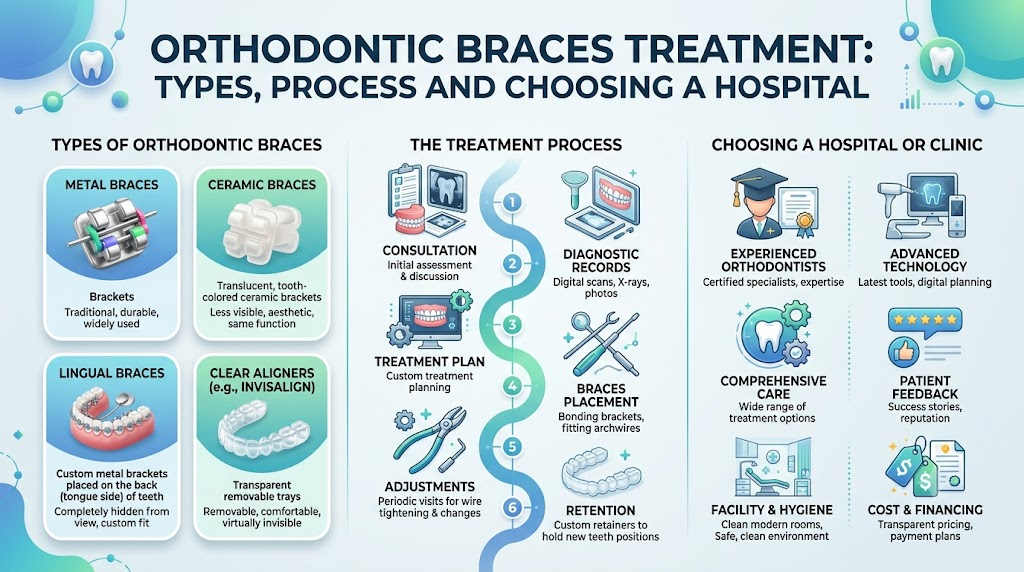
Types of Orthodontic Braces
There are several types of braces, and each has different features.
Traditional Metal Braces
Metal braces use brackets attached to the teeth and wires that guide tooth movement. They are a commonly used option for many types of orthodontic problems.
Ceramic Braces
Ceramic braces work in a similar way to traditional braces but use tooth-colored or less noticeable brackets. They may be preferred by people who want their braces to be less visible.
Lingual Braces
Lingual braces are placed on the inner side of the teeth. Because they are less visible from the outside, some patients may prefer this option. However, they are not suitable for every case.
Other Orthodontic Appliances
Depending on the patient’s needs, an orthodontist may also recommend elastics, expanders or other appliances along with braces.
There is no single type of braces that is right for everyone. The choice depends on the orthodontic problem, treatment goals, dental condition and professional assessment.
How Does Orthodontic Braces Treatment Begin?
Treatment usually starts with an orthodontic consultation. The orthodontist examines the teeth, gums, bite and jaw relationship.
Dental photographs, X-rays or digital scans may be used when needed. These records give the orthodontist a clearer view of the teeth and supporting structures.
After reviewing the information, the orthodontist creates a treatment plan. The plan may include the type of braces, expected stages of treatment, follow-up appointments and retention after the braces are removed.
A proper examination is important because tooth alignment needs to be considered together with the bite and overall dental health.
Orthodontic Braces Treatment Process
The treatment process can vary from one patient to another, but it usually follows several basic stages.
Initial Consultation and Planning
The orthodontist checks the teeth and bite and collects the records needed to plan treatment.
Braces Placement
If braces are recommended, brackets are attached to the teeth and connected with wires. The orthodontist adjusts the braces according to the planned tooth movements.
Regular Adjustments
Patients usually have follow-up appointments during treatment. The orthodontist checks tooth movement and may adjust the wires, replace components or add elastics or other appliances when needed.
Progress Monitoring
Treatment is checked regularly to see whether the teeth are moving as planned. The orthodontist may change the treatment approach if necessary.
Braces Removal and Retention
When the treatment goals are reached, the braces are removed. Retainers are then used to help maintain the new position of the teeth.
Orthodontic Braces Treatment at a Glance
| Braces Treatment Stage | What Happens | Main Purpose |
|---|---|---|
| Initial consultation | The orthodontist discusses concerns and examines the teeth | Understand the orthodontic problem |
| Examination and treatment planning | Dental records, scans or X-rays may be taken | Create an individual treatment plan |
| Braces placement | Brackets and wires are placed on the teeth | Begin controlled tooth movement |
| Regular adjustments | Braces are checked and adjusted | Guide teeth toward planned positions |
| Progress monitoring | Tooth and bite movement are reviewed | Check treatment progress |
| Braces removal | Braces are removed when treatment goals are reached | Complete active treatment |
| Retention | A retainer is used after braces | Help maintain tooth position |
What May You Feel During Braces Treatment?
Some pressure or mild soreness can occur after braces are first placed or adjusted. This usually happens because the teeth are responding to the controlled pressure used during treatment.
Brackets and wires can also feel unusual at first. They may sometimes rub against the cheeks, lips or tongue, especially during the early part of treatment.
Following the orthodontist’s instructions can make the adjustment period easier. Significant, persistent or unexpected problems should be discussed with the orthodontic team.
Caring for Your Teeth While Wearing Braces
Good oral hygiene is especially important during orthodontic treatment. Food can collect around brackets and wires, making careful cleaning necessary.
Patients should brush regularly and clean around the brackets and wires as instructed by their orthodontist. Additional cleaning tools may be recommended depending on the braces and individual needs.
Regular dental and orthodontic appointments should also be maintained. Patients should follow instructions about foods, appliance care and other restrictions provided by their orthodontist.
How Long Does Braces Treatment Take?
There is no single treatment time that applies to everyone. The length of Orthodontic Braces Treatment depends on the complexity of the problem and the amount of tooth movement required.
Other factors may include the type of braces, patient cooperation, missed appointments and how the teeth respond to treatment.
The orthodontist can provide a more useful estimate after examining the teeth and creating an individual treatment plan.
What Happens After Braces Are Removed?
Removing the braces is not always the final step. Teeth can naturally move after active orthodontic treatment, so retainers are commonly used to help maintain their new positions.
There are different types of retainers, and the orthodontist decides which option is suitable. The recommended wearing schedule can also vary between patients.
Following the retention plan is an important part of protecting the results of orthodontic treatment.
How to Choose a Dental Hospital or Orthodontic Clinic
Choosing the right facility involves more than selecting a particular type of braces. The quality of the examination, treatment planning and ongoing supervision also matters.
Patients may consider the orthodontist’s qualifications and specialist training, experience, diagnostic facilities and available treatment options. Digital scans and other modern technology may be useful when they are appropriate for the patient’s case.
Good infection-control and sterilization practices are also important. Patients should ask about follow-up care, communication, emergency support and what is included in the treatment cost.
Before starting treatment, an in-person examination and a clear explanation of the proposed plan can help patients make an informed decision.
Choosing an Orthodontist
The orthodontist plays a central role throughout treatment. Braces are not simply placed and left alone; teeth need to be monitored and the treatment adjusted over time.
A qualified orthodontic professional assesses the patient’s bite and tooth position and develops a plan based on individual needs. Regular supervision is important because tooth movement needs to be controlled carefully.
Patients should feel comfortable asking questions about the diagnosis, treatment options, expected stages and retention plan.
Frequently Asked Questions About Orthodontic Braces Treatment
1. Who may need orthodontic braces?
People with crooked teeth, crowding, gaps or certain bite problems may benefit from orthodontic treatment. An orthodontist needs to examine the teeth and jaws before recommending braces.
2. What are the main types of braces?
Common options include traditional metal braces, ceramic braces and lingual braces. Other orthodontic appliances may also be used depending on the patient’s needs.
3. Are braces only used to improve appearance?
No. Braces can improve tooth alignment and may help correct certain bite problems. Better alignment can also support easier cleaning and more comfortable tooth function.
4. Is orthodontic treatment painful?
Patients may experience pressure or mild soreness after braces are placed or adjusted. Brackets and wires may also cause some irritation during the early stages.
5. How long does braces treatment take?
Treatment length varies depending on the complexity of the case and the amount of tooth movement needed. The orthodontist can provide an individual estimate after an examination.
6. Can I eat normally with braces?
Many foods can still be eaten, but some foods may need to be avoided or prepared differently to protect the braces. The orthodontist will provide specific food and appliance-care instructions.
7. How should I clean my teeth with braces?
Regular brushing and careful cleaning around brackets and wires are important. Your orthodontist may recommend additional cleaning methods based on your braces and dental needs.
8. Do I need a retainer after braces?
Retainers are commonly used after active orthodontic treatment to help keep teeth in their new positions. The type and wearing schedule depend on the orthodontist’s treatment plan.
9. How do I choose an orthodontist or dental hospital?
Look at the orthodontist’s qualifications, specialist training, experience, diagnostic facilities, treatment options and follow-up care. The facility should also follow appropriate infection-control and safety practices.
10. Can adults get orthodontic braces?
Yes. Orthodontic treatment can be provided to adults as well as children and teenagers. The suitable treatment depends on the condition of the teeth, gums, bite and jaw alignment.
Conclusion
Orthodontic Braces Treatment can gradually improve the position of teeth and help correct certain bite and alignment problems. A proper examination and treatment plan are important because every patient’s teeth and jaw alignment are different. Choosing a qualified orthodontist and suitable dental facility can also make the treatment process easier to understand and manage. Before starting braces, discuss your dental concerns, treatment options, expected process and retention plan with a qualified orthodontic professional and make sure you understand the proposed care.