Introduction
Dental health is a fundamental component of overall well-being, yet cavities and tooth decay remain among the most widespread dental concerns worldwide. When tooth enamel is compromised by plaque, bacteria, and acids over time, decay can gradually progress and affect the deeper layers of the tooth. To explore institutional dental care resources and specialized treatment options, platforms like BESTDENTALHOSPITALS offer educational information for patients researching restorative dental procedures. Consider a hypothetical patient, Marcus, who noticed mild sensitivity when eating cold foods but delayed seeking care. By learning about the importance of early cavity treatment and understanding how professional dental evaluations work, Marcus scheduled an examination before the decay progressed further.
What Is A Dental Filling?
A dental filling is a standard restorative procedure used to repair a tooth affected by decay, cavities, or minor structural damage. The primary goal of a filling is to restore the tooth’s normal shape, strength, and function while preventing further bacterial invasion.
During a dental filling procedure, the dentist first removes any decayed or damaged material from the tooth. Once the affected area is thoroughly cleaned and prepared, a specialized restorative material is placed into the cavity space. The material is then shaped, smoothed, and hardened, effectively sealing the tooth and restoring its chewing surface. The exact technique and material depend heavily on the location of the tooth and the clinical assessment of the dental professional.
Why Do Teeth Need Dental Fillings?
Dentists may recommend a dental filling for various clinical reasons related to tooth health and structural integrity.
Common indications include:
- Tooth Decay: Removing areas damaged by bacterial cavities and restoring the tooth structure.
- Minor Tooth Damage: Repairing small chips or fractures resulting from minor trauma.
- Worn Tooth Surfaces: Restoring teeth worn down by excessive grinding or mechanical wear.
- Older Filling Replacement: Replacing previous restorations that have worn down, cracked, or developed leakage over time.
Not every damaged tooth can be managed with a simple filling. The appropriate treatment approach depends entirely on a thorough professional evaluation of the remaining tooth structure.
Common Signs You May Have A Cavity
Recognizing early signs of tooth decay allows individuals to seek professional dental care promptly.
Common warning signs include:
- Tooth Sensitivity: Sharp or lingering discomfort when consuming hot, cold, or sweet items.
- Toothache: Spontaneous pain or constant ache originating from a specific tooth.
- Chewing Discomfort: Pressure or pain when biting down or chewing food.
- Visible Discoloration: Dark spots, brown areas, or white chalky patches on the enamel.
- Visible Pits or Holes: Noticeable cavities that can be seen or felt with the tongue.
- Trapped Food: Food consistently catching between specific teeth.
Some cavities develop gradually without causing noticeable pain in their early stages, which underlines the importance of routine dental examinations.
Common Causes Of Tooth Decay
Tooth decay is a progressive process influenced by multiple oral health factors.
Major contributing elements include:
- Poor Oral Hygiene: Inadequate brushing and flossing allow plaque to accumulate on tooth surfaces.
- Sugary and Acidic Diets: Frequent consumption of sugary foods and acidic drinks feeds oral bacteria and weakens enamel.
- Bacteria and Plaque: Naturally occurring bacteria in the mouth convert sugars into acids that erode tooth minerals over time.
- Dry Mouth: Reduced saliva production diminishes the mouth’s natural ability to neutralize acids and wash away food particles.
- Irregular Dental Checkups: Skipping professional examinations delays the early detection and management of developing cavities.
Understanding these factors empowers individuals to adopt proactive daily habits that protect their long-term dental health.
Types Of Dental Filling Materials
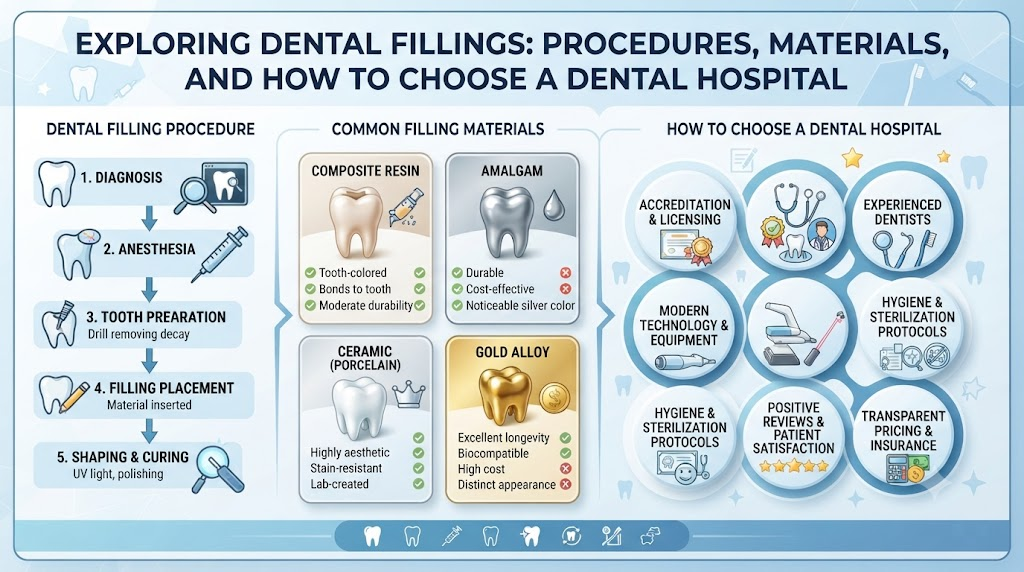
| Filling Material | General Characteristics | Common Considerations |
| Composite Resin | Tooth-colored material matching natural shades | Bonds directly to the tooth; commonly used for visible areas |
| Dental Amalgam | Durable silver-colored metal alloy mixture | Highly durable; often chosen for back teeth under high chewing pressure |
| Glass Ionomer | Acrylic and glass material releasing fluoride | Often used for pediatric care or root surface restorations |
| Ceramic (Porcelain) | Custom-fabricated tooth-colored material | Highly aesthetic and stain-resistant; often requires laboratory work |
| Gold Alloys | Durable precious metal restorations | Exceptional longevity; requires specialized placement techniques |
| Resin-Modified Glass Ionomer | Combines resin and glass ionomer properties | Offers good adhesion and moisture tolerance during placement |
The selection of a filling material is not one-size-fits-all. The ideal choice depends on factors such as the tooth’s location in the mouth, the size and depth of the cavity, aesthetic considerations, durability requirements, and the specific recommendation of the treating dentist.
How Dentists Decide Which Filling Is Appropriate
When planning a restoration, dentists evaluate several clinical parameters to determine the most suitable material and approach.
Key decision-making factors include:
- Tooth Location: Front teeth prioritize aesthetics, whereas molars endure heavy chewing forces and prioritize durability.
- Extent of Decay: Larger cavities may require stronger materials or alternative restorations like crowns.
- Remaining Tooth Structure: The amount of healthy tooth remaining dictates how well a filling can be supported.
- Aesthetic Preferences: Patient preference regarding tooth-colored versus metallic restorations.
- Allergies and Sensitivities: Evaluating patient history regarding material tolerances.
- Overall Oral Health: Considering bite alignment, gum health, and hygiene habits.
What Happens During A Dental Filling Procedure?
Dental Examination
The dentist begins with a comprehensive visual inspection and may capture diagnostic dental imaging to assess the depth of the decay and check surrounding bone and root health.
Numbing The Area
To ensure patient comfort during treatment, local anesthesia is typically administered around the affected tooth to numb the surrounding gum and nerve tissues.
Removing The Decay
Using specialized dental instruments, the dentist carefully removes all soft, decayed tooth structure, isolating the healthy portion of the tooth.
Cleaning The Tooth
The newly prepared cavity space is cleaned, sanitized, and conditioned to ensure an optimal bonding surface for the filling material.
Placing The Filling
The chosen filling material is meticulously placed into the cavity in layers. For composite resins, a specialized curing light hardens each layer securely.
Shaping And Finishing
The dentist shapes the filling to match the natural contours of the tooth, checks the patient’s bite alignment, and polishes the surface for a smooth finish.
How Long Does A Dental Filling Procedure Time Take?
The duration of a dental filling procedure varies based on individual clinical factors. A simple, single-surface filling on an accessible tooth can often be completed in under an hour.
However, treatment time may increase if multiple teeth require restoration, if the cavity is large and deep, or if complex materials requiring specialized layering or laboratory fabrication are utilized. Dentists provide realistic estimates during the initial consultation.
What To Expect After A Dental Filling
Following a dental filling procedure, patients may experience mild, temporary sensations as the local anesthesia wears off.
Common post-treatment experiences include:
- Mild numbness in the lips, cheeks, or tongue that fades within a few hours
- Slight sensitivity to temperature or pressure as the tooth adjusts
- A minor awareness of the new filling texture against the opposing teeth
Persistent, sharp, or worsening pain, or a bite that feels uneven when chewing, should be reported to the dental team for evaluation and adjustment.
Benefits Of Dental Fillings
- Decay Removal: Eliminates active bacterial infection and prevents further structural breakdown.
- Restored Function: Rebuilds the chewing surface, allowing comfortable eating and speaking.
- Structural Support: Reinforces the remaining natural tooth walls against fracture.
- Aesthetic Improvement: Tooth-colored restorations blend seamlessly with natural dental enamel.
- Tooth Preservation: Helps keep the natural tooth intact, avoiding more invasive interventions.
Limitations And Possible Risks Of Dental Fillings
- Temporary Sensitivity: Mild discomfort after placement that typically resolves within days.
- Material Wear: Fillings experience normal wear over time due to chewing forces.
- Restoration Damage: Fillings can occasionally chip, crack, or loosen under heavy pressure.
- Recurrent Decay: New cavities can develop around the margins of an older filling if hygiene lapses.
- Bite Adjustment Needs: Initial bite height may occasionally require minor post-procedure smoothing.
When A Filling May Not Be Enough
When tooth decay or structural damage is too extensive, a standard dental filling may not provide sufficient support.
In such cases, dentists may evaluate alternative restorative options, such as:
- Dental Crowns: Full-coverage caps used when large portions of the tooth structure are missing.
- Inlays and Onlays: Custom restorations that cover larger areas of a damaged tooth.
- Root Canal Therapy: Required if bacteria have reached the inner nerve chamber of the tooth.
Professional examination determines the most appropriate restorative pathway for severe damage.
How To Choose A Hospital For Dental Filling Procedures
Selecting a dental hospital or clinic requires careful evaluation of safety standards, professional qualifications, and care quality.
Patients can assess centers based on:
- Qualified, licensed dental practitioners with restorative expertise
- Comprehensive diagnostic tools and imaging capabilities
- Modern dental equipment and clean, well-maintained facilities
- Rigorous infection-control and sterilization protocols
- Clear, transparent explanations of treatment plans and material choices
- Dedicated patient comfort measures and anxiety management support
- Reliable follow-up care and emergency dental availability
Dental Hospital Evaluation Checklist
| Hospital Evaluation Factor | Question Patients Can Ask | Why It Is Relevant |
| Dentist Qualifications | What are the credentials and experience of the attending dentist? | Ensures expert clinical care and accurate restorative technique |
| Diagnostic Facilities | Are modern imaging and diagnostic tools available on-site? | Allows precise evaluation of decay depth and root health |
| Material Options | What range of filling materials does the hospital offer? | Enables personalized treatment matched to tooth location and needs |
| Infection Control | What sterilization and hygiene protocols are strictly enforced? | Protects patient safety and prevents cross-contamination |
| Patient Comfort | What measures are used to ensure a pain-free, comfortable visit? | Eases dental anxiety and improves the patient experience |
| Treatment Explanation | Are procedures and cost estimates clearly explained beforehand? | Promotes informed decision-making without unexpected surprises |
| Follow-Up Support | How are post-treatment questions or minor adjustments handled? | Ensures ongoing support and care continuity after the procedure |
Using these questions during consultations empowers patients and families to select dental hospitals that prioritize safety, transparency, and clinical excellence.
Dental Filling Costs And What May Influence Them
Dental filling expenses vary based on several practical factors.
Cost influences include:
- Type of Filling Material: Composite resin, amalgam, or specialized ceramics carry different material costs.
- Number of Surfaces Involved: Cavities affecting multiple surfaces require more time and material.
- Complexity of the Case: Deep decay or difficult-to-reach posterior teeth increase procedural complexity.
- Diagnostic Requirements: Pre-treatment x-rays or diagnostic imaging.
- Facility Setting: Hospital-based dental departments versus specialized outpatient clinics.
Patients are encouraged to request a transparent, itemized treatment estimate from their dental provider before beginning care.
How To Care For A Tooth After A Filling
- Maintain Good Hygiene: Brush teeth twice daily with fluoride toothpaste.
- Clean Between Teeth: Floss daily to remove plaque from areas a toothbrush cannot reach.
- Limit Sugary Diets: Reduce frequent consumption of sticky sweets and acidic drinks.
- Attend Routine Checkups: Visit the dentist regularly for professional cleanings and evaluations.
- Follow Specific Instructions: Adhere to any post-procedure guidance provided by your dental team.
How To Prevent Future Cavities
- Brush consistently using gentle, thorough techniques.
- Use fluoride-containing dental products as recommended by your dentist.
- Limit snacking between meals to reduce continuous acid exposure on enamel.
- Stay hydrated to support adequate saliva flow.
- Address dry mouth conditions promptly with professional guidance.
- Avoid tobacco products, which negatively impact oral health.
Common Myths About Dental Fillings
- “All fillings are the same.” Different materials offer distinct properties suited for specific teeth.
- “A cavity always causes pain.” Early cavities frequently cause no pain at all, highlighting the need for checkups.
- “A filling means the tooth is permanently fixed.” Fillings require ongoing oral hygiene and may eventually need replacement.
- “Dental fillings never wear out.” Normal chewing forces cause gradual wear over many years.
- “Only children get cavities.” Adults of all ages are susceptible to tooth decay, especially root decay.
- “If tooth pain stops, the cavity is gone.” A dying nerve may stop hurting temporarily, but the underlying infection remains.
FAQs
1.What is a dental filling?
A dental filling is a restorative dental procedure used to repair a tooth damaged by decay or cavities. The dentist removes the decayed portion, cleans the area, and fills the cavity space with a specialized material to restore normal tooth shape, strength, and function.
2.Why are dental fillings needed?
Dental fillings are needed to treat tooth decay, repair minor chips or fractures, restore worn tooth surfaces, and prevent bacteria from penetrating deeper into the tooth. Treating cavities early helps preserve the natural tooth structure.
3.What are the common signs of a cavity?
Common signs of a cavity include tooth sensitivity to hot, cold, or sweet foods, spontaneous toothaches, discomfort when chewing, visible dark spots or discoloration, small pits or holes in the tooth, and food frequently getting trapped between teeth.
4.What types of dental fillings are available?
Available dental filling materials include composite resin, dental amalgam, glass ionomer, ceramic or porcelain, and gold alloys. Each material offers distinct aesthetic, durability, and functional characteristics suited for different clinical situations.
5.Which filling material is best for a tooth?
The best filling material depends on the tooth’s location in the mouth, the size of the cavity, aesthetic preferences, durability requirements, and the professional recommendation of your dentist after a thorough clinical examination.
6.What happens during a dental filling procedure?
During a procedure, the dentist examines the tooth, administers local anesthesia for comfort, removes decayed material, cleans the cavity, places and shapes the restorative material, and polishes the surface to ensure proper bite alignment.
7.Does getting a dental filling hurt?
Most patients experience little to no pain during a dental filling procedure because local anesthesia is used to numb the surrounding tissues. Mild pressure or vibration may be felt, but the area is kept comfortable throughout.
8.How long does a dental filling procedure take?
A standard dental filling procedure typically takes between thirty minutes to an hour per tooth. Treatment duration can vary depending on the size of the cavity, the number of teeth being treated, and the material used.
9.What should I expect after getting a filling?
After a filling, patients may experience temporary numbness as anesthesia wears off, followed by mild sensitivity to temperature or chewing for a few days. Persistent pain or an uneven bite should be evaluated by a dentist.
10.How long can a dental filling last?
The lifespan of a dental filling varies based on the material used, the size of the restoration, oral hygiene habits, and chewing forces. Composite fillings often last several years, while amalgam or gold restorations may last even longer.
Final Thoughts
Dental fillings play an essential role in restorative dentistry, allowing dental professionals to treat cavities, remove decay, and preserve natural tooth structure. Understanding the causes of tooth decay, recognizing early symptoms, and knowing what to expect during a filling procedure helps patients approach dental care with confidence.Because every tooth and cavity is unique, professional evaluation is vital in determining the most appropriate restorative material and treatment plan.