Introduction
Invisalign uses clear, removable aligners to move teeth. These aligners can help with some teeth alignment problems. They may offer an option besides some braces. However, clear aligner care needs proper dental planning. Choosing the right hospital and orthodontic team matters. You can learn more about dental hospitals through . BestDentalHospitals helps readers explore dental hospitals, specialists, and treatment options.
What Is Invisalign Treatment?
Invisalign is a brand of clear aligner treatment. It uses custom-made trays to guide tooth movement. The trays are clear and can be removed. This makes them different from fixed braces. Each aligner supports a planned stage of treatment. The orthodontist checks progress during follow-up visits.Invisalign treatment starts with a dental assessment. The orthodontist checks teeth, gums, and the bite. Digital records may also help with planning. The team then creates a treatment plan. Custom aligners are made from this plan. Treatment needs can differ from one person to another.
How Do Invisalign Aligners Work?
Clear aligners guide teeth through planned small movements. First, the dental team checks the teeth. They may create digital dental scans. These scans can show a model of the teeth. The orthodontist then plans the tooth movement. Custom aligners are made for the plan.Each aligner supports one stage of movement. New aligners may be provided as treatment continues. The orthodontist checks treatment progress during visits. Changes may be made when needed. This helps the team keep treatment on track.
Who May Consider Invisalign?
Clear aligners may help with some alignment concerns. These can include mild crowding or spacing. They may also help with some crooked teeth. Some bite concerns may also be treated with aligners. However, Invisalign does not suit every dental problem.Treatment suitability depends on many factors. These include teeth, gums, bite, and jaw structure. Overall dental health also matters. A qualified orthodontist should make this decision. A dental examination helps the specialist review these factors.
Why Choose a Hospital for Invisalign Treatment?
A well-equipped dental hospital may offer several useful services. It may have orthodontic specialists and dental professionals. Some hospitals also have digital scanning systems. These tools can support dental records and treatment planning.Hospital care may also provide access to other specialists. This can help when a patient has complex dental needs. Oral health support may also be available. Follow-up care is another important factor. Emergency support and patient education may also be useful.A hospital is not always better than a clinic. The right choice depends on patient needs. Specialist skills and proper follow-up matter most.
What Happens During the First Invisalign Consultation?
The first visit usually starts with a dental discussion. The orthodontist may ask about dental history. They may ask about the main teeth concerns. A dental examination may follow this discussion.The orthodontist checks teeth alignment and the bite. Gum health and overall oral health may also be checked. Dental records may be needed for planning. These can include photographs or digital scans. The orthodontist decides which records are useful.The consultation also gives time for questions. Patients can ask about treatment options and follow-up. They can also ask about possible costs. Clear communication can make treatment planning easier.
Digital Scans and Invisalign Treatment Planning
A digital dental scan creates a model of the teeth. It can help the orthodontist review tooth positions. A 3D dental scan may support digital treatment planning. The digital model can show planned tooth movement.Some hospitals use modern scanning systems for this work. Digital tools can make records easier to review. They can also support clear treatment discussions. However, technology does not guarantee better results. The orthodontist still needs to assess the patient.Good treatment planning involves more than a digital scan. The orthodontist considers the bite and dental health. They also review the patient’s treatment needs.
What Happens Before the First Aligners?
The process begins with a complete dental assessment. The orthodontist reviews the teeth and treatment goals. Any existing dental concerns may also need review. The team then creates a suitable treatment plan.The orthodontist explains the expected treatment stages. They may explain aligner care and follow-up visits. Custom aligners are then prepared from the treatment plan. Patients should ask questions if anything is unclear. Good communication helps patients understand the process.
The Invisalign Treatment Journey
Step 1: Dental Assessment
The orthodontist reviews the teeth and bite. They also check general oral health.
Step 2: Digital Planning
A digital model may help plan tooth movement. The orthodontist uses this information for treatment planning.
Step 3: Aligner Creation
Custom aligners are created for the planned stages. Each aligner supports a specific treatment stage.
Step 4: Aligner Use
Patients use the aligners as directed by their team. The orthodontist provides care instructions during treatment.
Step 5: Progress Checks
Follow-up visits help review treatment progress. The orthodontist checks how teeth are moving.
Step 6: Refinement When Needed
Some patients may need additional aligners. This is called aligner refinement. Refinement means making further treatment adjustments. New scans or updated planning may be needed.
| Hospital Feature | What to Look For | Why It Matters |
|---|---|---|
| Orthodontic Team | Qualified orthodontic professionals | Supports proper treatment planning |
| Digital Scanning | Modern dental scanning | Helps create dental records |
| Treatment Planning | Clear treatment discussion | Helps patients understand the process |
| Follow-Up Care | Regular progress reviews | Helps monitor treatment |
| Dental Support | Other dental services | Helps manage related dental needs |
Invisalign vs Traditional Braces
Invisalign clear aligners look different from traditional braces. They are usually less noticeable during daily activities. They can also be removed when needed. Traditional braces stay attached to the teeth during treatment.Cleaning can also feel different with each option. Clear aligners require good dental hygiene and aligner care. Braces need careful cleaning around brackets and wires. Eating can also differ between treatment types.Both options need patient cooperation and follow-up. Neither option is best for every patient. The dental problem and professional assessment guide treatment choice.
Invisalign and Oral Hygiene
Good oral hygiene remains important during aligner treatment. Food and plaque can affect dental health. Regular brushing and flossing support clean teeth. Aligners also need proper care.Patients should follow the dental team’s general care advice. Regular dental checks can help monitor oral health. Good hygiene can also support healthy gums. The orthodontist can explain suitable care during treatment.
What Are Invisalign Attachments?
Attachments are small tooth-colored shapes. They may help an aligner grip certain teeth. This can support planned tooth movement. Not every patient needs attachments.The orthodontist decides whether attachments may help. Their use depends on the treatment plan. Patients should ask their orthodontist about their purpose. The team can explain how they fit into treatment.
What Is Invisalign Refinement?
Refinement means making further treatment adjustments. Some patients may need additional aligners. This can happen when planned movement needs more work. The need for refinement differs between patients.Refinement may involve new dental scans. The orthodontist may also update the treatment plan. Additional aligners may then be created. Attachments may also change when needed.Refinement is not a sign of treatment failure. It can be part of ongoing orthodontic care. The orthodontist decides when changes are needed.
Retainers After Invisalign Treatment
Retainers may help maintain tooth position after treatment. Teeth can shift after active orthodontic treatment ends. Retainers help support long-term stability. The orthodontist decides what type of retainer is suitable.Follow-up may continue after active treatment. The dental team can check tooth position over time. Retainer needs can differ between patients. Patients should follow advice from their orthodontic team.
Possible Invisalign Concerns and Risks
Clear aligner treatment can have some concerns. Some people may notice temporary discomfort. Gum irritation can also occur in some cases. Keeping teeth clean may require extra care.Aligners may sometimes fit differently than expected. Treatment progress may also take longer than planned. Some tooth movements may need further adjustment. Refinement may then become part of treatment.Bite changes can also occur during orthodontic care. Poor oral hygiene may increase dental problems. These concerns do not happen to everyone. The orthodontist can explain possible risks before treatment.
When Invisalign May Not Be the Best Option
Clear aligners cannot treat every orthodontic problem. Some complex cases may need traditional braces. Other orthodontic appliances may also be considered. Some patients may need combined dental treatment.The right choice depends on the dental problem. The orthodontist checks the teeth, bite, and oral health. They then discuss suitable treatment options. Patients should avoid choosing treatment from appearance alone.
How to Choose the Best Hospital for Invisalign
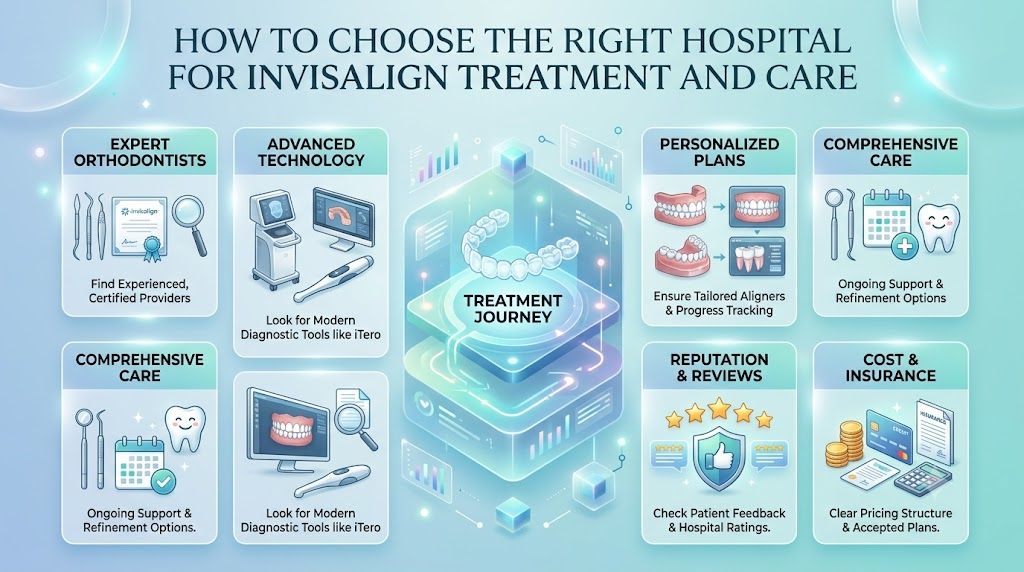
Start by checking the orthodontic team’s qualifications. Specialist experience can also be useful. Ask whether the hospital provides Invisalign treatment. Also ask about clear aligner treatment options.Digital scanning may support treatment planning. Clear explanations are also important. Ask how treatment progress will be monitored. Follow-up support should be easy to understand.Consider hospital hygiene and patient safety standards. Check whether other dental specialists are available. Emergency support may also matter for some patients. Cost information should be clear and easy to understand.BestDentalHospitals.com can help readers understand these selection points. The goal is to help patients ask better questions. It does not mean every hospital fits every patient.
Understanding Invisalign Treatment Costs
Invisalign treatment costs can vary between patients. Treatment complexity can affect the total cost. The number of aligners may also matter. Treatment length can affect some costs.Orthodontist fees may be part of the total. Digital scanning may also have separate costs. Follow-up visits can affect the overall expense. Refinement and retainers may also be included.Hospital location can also affect pricing. Patients should ask for a clear cost breakdown. They should understand what the quoted cost includes. This can help avoid confusion later.
How BestDentalHospitals Can Help
BestDentalHospitals can help readers learn about orthodontic care. It can help explain Invisalign treatment and clear aligners. Readers can also learn about dental hospitals and specialists. The site can help patients understand hospital-selection factors.It can also help readers prepare questions for consultations. Patients can learn about different orthodontic options. They can explore related dental treatments and care topics. However, the website does not diagnose patients. It also does not provide personal Invisalign treatment.
FAQs About Invisalign Hospitals and Treatment
1. What is Invisalign treatment?
Invisalign is a clear aligner treatment. It uses custom trays to guide tooth movement. The treatment includes planning and orthodontic monitoring.
2. How do Invisalign clear aligners work?
Each aligner supports a planned stage of tooth movement. New aligners may be used as treatment continues. The orthodontist checks progress during follow-up visits.
3. Who may be suitable for Invisalign?
Some people with alignment concerns may consider Invisalign. Examples include certain crowding and spacing problems. An orthodontist must assess treatment suitability.
4. Are Invisalign aligners removable?
Yes, Invisalign aligners are designed to be removable. However, patients should follow their orthodontic team’s instructions. Treatment needs can differ between people.
5. How is Invisalign treatment planned?
The orthodontist first checks the teeth and bite. Digital records may support treatment planning. Custom aligners are then created from the plan.
6. Are digital scans used for Invisalign?
Many dental centers use digital dental scans. These scans can create a model of the teeth. The model may support digital treatment planning.
7. Can Invisalign treatment need refinement?
Yes, some patients may need refinement. Refinement means making further treatment adjustments. New scans and aligners may be needed.
8. Are retainers needed after Invisalign?
Retainers may be used after active treatment. They can help maintain tooth position. Retainer needs vary between patients.
9. How can I choose a good Invisalign hospital?
Look at orthodontist qualifications and specialist experience. Also review scanning, planning, follow-up, safety, and costs. Ask clear questions before choosing.
10. Is Invisalign better than traditional braces?
Neither option is best for everyone. Treatment choice depends on the dental problem. An orthodontist can discuss suitable options.
Final Thoughts
Invisalign treatment involves more than clear aligners. Proper dental assessment is an important first step. Qualified orthodontic care also matters. Good treatment planning supports clear care decisions.Regular monitoring helps the orthodontist review treatment progress. Follow-up care also remains important after active treatment. Retainers may help support long-term tooth stability. BestDentalHospitals.com can help readers understand these care factors and prepare for informed dental consultations.