Introduction
Dental fillings are common treatments for damaged teeth. Dentists often use them for tooth decay and cavities. A filling can restore part of a damaged tooth. It can also help restore tooth shape and chewing function. Choosing a qualified dental provider is important for safe care. Readers can use BESTDENTALHOSPITALS to research dental hospitals and care options. However, online research should not replace a dental examination. There are different dental filling materials and treatment choices. Each material has different features and uses. The right choice depends on the tooth and its condition. A qualified dentist can explain these choices after an examination.
What Is a Dental Filling?
A dental filling is a material placed in a damaged tooth area. Dentists often use fillings to restore teeth affected by cavities. A filling can help rebuild the tooth’s shape. It can also support normal chewing. Dental fillings may use different materials. These include composite resin, amalgam, glass ionomer, ceramic, and gold alloys. Each material has different features. A filling may work well for some types of damage. But it may not repair every damaged tooth. Larger damage may need another type of dental restoration.
Why Do People Need Dental Fillings?
Tooth decay is a common reason for dental filling treatment. Decay can create a cavity in the tooth. A dentist may also consider a filling for certain small fractures or chips. Worn tooth areas can sometimes need restorative dental care. An old filling may also become damaged or loose. The dentist must check the tooth before choosing treatment. Pain or visible damage does not always show the full problem. A dental examination can help identify the cause. It can also help the dentist decide which treatment options may fit.
Common Signs That May Need Dental Evaluation
Some signs may lead people to seek dental care. Tooth sensitivity is one possible sign. Pain while chewing may also need a dental check. Some people notice dark spots or visible holes. Food may also get trapped in one area. A rough tooth edge can be another reason to seek care. A broken or loose filling should also be checked. These signs do not prove that a cavity exists. They can have different causes. A qualified dentist should assess the tooth before treatment.
Types of Dental Filling Materials
Dentists use several types of dental filling materials. Composite resin is tooth-colored and often used for appearance. Amalgam is a silver-colored material known for strength. Glass ionomer is another tooth-colored restorative material. It has some special features that dentists may consider. Ceramic can provide a natural-looking restoration. Gold alloys are also known for durability. No single filling material is best for everyone. Dentists consider the tooth, damage, and overall oral health. They also consider appearance, strength, and future maintenance.
Tooth-Colored Fillings
Tooth-colored fillings are often made from composite resin. They can blend more closely with natural teeth. This makes them useful when appearance is important. Dentists may use them for selected front and back teeth. Composite fillings can restore smaller areas of tooth damage. They can also help repair certain small chips. However, they have some limitations. Their use can depend on the tooth and the size of the damaged area. A dentist can explain whether composite resin is suitable for the situation.
Amalgam Fillings
Amalgam fillings have a silver-colored appearance. They have been used in restorative dentistry for many years. Amalgam is known for its strength and durability. Dentists may consider it for certain teeth and situations. Some patients prefer other materials because of appearance. Patients may also ask about tooth-colored alternatives. Material choices should be discussed with a qualified dentist. The dentist can explain the benefits and limits of each option. They can also consider the condition and location of the tooth.
Glass Ionomer Fillings
Glass ionomer is a tooth-colored filling material. Dentists may use it for selected types of tooth restoration. It can also release fluoride as a general material feature. This feature can be useful in certain dental settings. However, it is not suitable for every filling situation. The strength and use of the material can vary by case. A dentist considers the tooth and the amount of damage. They can then explain whether this material is an option.
Ceramic and Other Filling Materials
Ceramic can provide a natural-looking dental restoration. Dentists may consider ceramic for selected restoration needs. Gold alloys are another durable restorative material. Different materials have different strengths and limits. Tooth location can affect the material choice. The size of the damaged area also matters. Dentists may consider chewing pressure and remaining tooth structure. Appearance and oral health also play a role. The final choice should come from a professional dental assessment.
What Happens During a Dental Filling Visit?
A dental filling visit usually starts with an examination. The dentist may ask about symptoms and dental history. They may also check the tooth and nearby gums. A dental X-ray may sometimes help assess the tooth. The dentist then reviews the condition of the damaged area. They can explain possible restoration choices. The selected filling is then placed by the dental professional. The restored tooth is checked before the visit ends. The exact process can vary based on the tooth and treatment needs.
Does Getting a Dental Filling Hurt?
Comfort can vary from person to person. It can also depend on the tooth condition. Dental anxiety may affect how a person feels during care. Tooth sensitivity can also affect comfort. Dentists may use local anesthesia when needed. This is used to help manage discomfort during dental care. Patients should tell the dental team about pain or anxiety. Good communication can help the team understand patient concerns. A dentist can explain what to expect before treatment begins.
How Dentists Choose a Filling Material
Dentists consider several factors when choosing filling materials. Tooth location is one important factor. The size of the damaged area also matters. The amount of healthy tooth left can affect the choice. Chewing pressure can also be important. Appearance may matter for visible teeth. Oral health and previous dental work can also affect decisions. A dentist may also ask about allergies or sensitivities. Expected maintenance can be another factor. The final choice should be based on professional assessment.
Simple Comparison of Dental Filling Materials
| Filling Material | General Feature | Common Consideration |
|---|---|---|
| Composite Resin | Tooth-colored | Appearance |
| Amalgam | Strong and durable | Silver appearance |
| Glass Ionomer | Tooth-colored material | Selected clinical uses |
| Ceramic | Natural-looking | Custom restoration needs |
| Gold Alloy | Very durable | Cost and appearance |
When a Filling May Not Be Enough
Some teeth have more extensive damage. In these cases, a filling may not provide enough support. A dentist may assess other restorative options. These can include crowns, inlays, or onlays. Root canal treatment may also be considered for some damaged teeth. Each treatment has a different purpose. The condition of the tooth guides the treatment choice. A dentist should examine the tooth before making this decision. Patients should ask about the benefits and limits of each option.
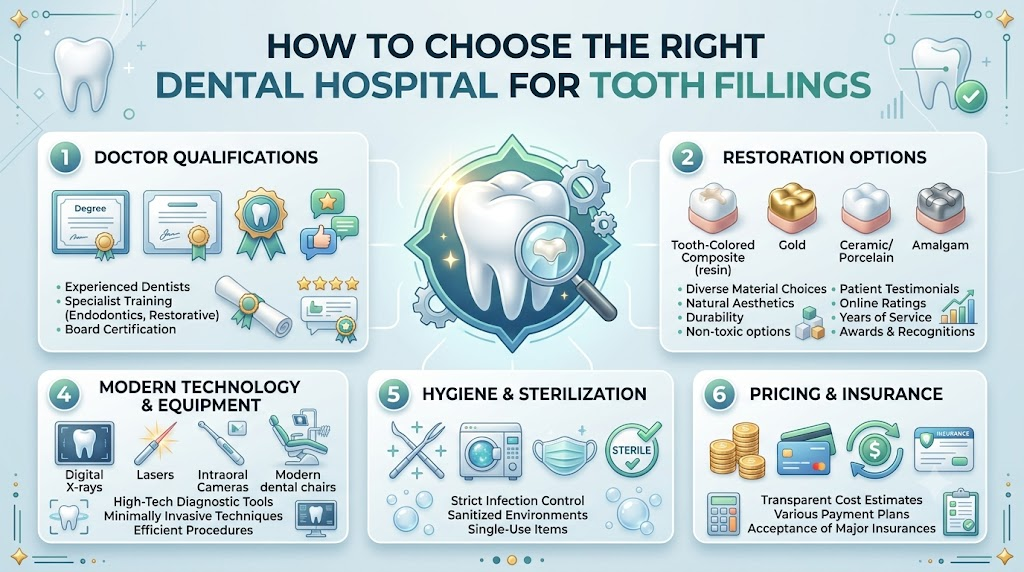
How to Choose the Best Hospital for Dental Fillings
The term “best” can mean different things to different people. A good dental hospital should match the patient’s needs. Start by checking the qualifications of dental professionals. Relevant experience in restorative dentistry can also matter. Look at infection-control practices and facility standards. Dental imaging and other diagnostic tools may also be useful. Clear communication is another important factor. Ask about treatment options, costs, and follow-up care. Patient support can also make dental visits easier. Avoid choosing a provider only because of online claims or price.
Why Dental Technology Can Matter
Modern dental technology can support dental assessment. Digital dental X-rays can provide useful images of teeth. Intraoral cameras can help dentists view areas inside the mouth. Digital records can also help organize dental information. Some facilities use digital imaging for treatment planning. These tools can support better communication between dentists and patients. However, technology does not replace professional judgment. A dentist still needs to assess the full dental situation. The right tools depend on the patient’s dental needs.
Dental Filling Costs
Dental filling costs can vary for many reasons. The filling material can affect the total cost. The size of the restoration can also matter. Tooth location may affect the treatment needs. The number of teeth being treated can also change costs. Some patients may need dental images or other checks. Costs can also vary between dental hospitals and clinics. Location can affect dental treatment cost as well. Ask the provider for clear cost information before treatment. Avoid choosing care based only on the lowest price.
Dental Fillings and Oral Health
A filling restores a damaged part of a tooth. It does not remove the need for daily dental care. Regular brushing can help support oral health. Cleaning between teeth is also important. Regular dental checks can help identify problems early. Limiting frequent sugary foods and drinks may also support cavity prevention. Follow the advice given by your dental professional. Good dental hygiene can help protect natural teeth and restorations. Dental fillings work best as part of wider dental care.
Common Mistakes to Avoid
Delaying a dental evaluation can allow some problems to worsen. Choosing a provider only by price can also be risky. Do not choose a filling material based only on online posts. Online information may not match your dental situation. Ignoring tooth pain is another common mistake. Skipping follow-up care can also cause problems. Do not expect every filling to last forever. Dental restorations can wear over time. Always share your dental history with your dentist. Also tell the dentist about any known allergies or sensitivities.
When to Seek Urgent Dental or Medical Attention
Some dental symptoms need prompt professional assessment. Severe tooth or jaw pain should not be ignored. Major facial swelling may also need urgent care. Uncontrolled bleeding needs prompt professional attention. Serious facial injuries also need assessment. Difficulty breathing or swallowing can be an emergency. Rapidly worsening swelling may also need urgent assessment. These symptoms can have different causes. A dental or medical professional should assess serious symptoms quickly.
How BestDentalHospitals Can Help
BestDentalHospitals can help readers research dental hospitals and dental care options. Readers can use the platform to explore dental treatment information and healthcare providers. This can make the early research process easier. However, online information should not replace professional dental advice. Patients should still check provider qualifications and treatment details. They should also discuss their dental needs with a qualified dentist. The goal is to make a careful and informed healthcare choice.
Practical Example
This is a hypothetical example. A person notices sensitivity when eating cold foods. They decide not to choose a filling material from an online post. Instead, they visit a qualified dentist for an examination. The dentist checks the tooth and explains possible restoration choices. The person asks about benefits, limits, cost, and follow-up care. They then make a decision after understanding the available options. This example shows why professional assessment matters.
Frequently Asked Questions
1. What is a dental filling?
A dental filling is material used to restore part of a damaged tooth. Dentists often use fillings for cavities and tooth decay.
2. Why do dentists use dental fillings?
Dentists use fillings to restore teeth affected by certain damage. A filling can help restore tooth shape and chewing function.
3. What types of dental fillings are available?
Common materials include composite resin, amalgam, glass ionomer, ceramic, and gold alloys. Each material has different features and uses.
4. Are tooth-colored fillings a good option?
Tooth-colored fillings can provide a natural appearance. Their suitability depends on the tooth, damage, and clinical situation.
5. How do dentists choose a filling material?
Dentists consider tooth location, damage size, remaining tooth structure, chewing pressure, appearance, and oral health.
6. Does a dental filling hurt?
Comfort varies between people. Dentists may use local anesthesia when needed and can discuss concerns before treatment.
7. How long can a dental filling last?
The lifespan can vary based on the material, tooth, bite, and dental care. A dentist can explain what maintenance may be needed.
8. Can a filling repair every damaged tooth?
No. Some teeth have damage that may need another restoration. A dentist can assess the tooth and explain the available options.
9. How can I choose a good hospital for dental fillings?
Check dental qualifications, restorative care experience, hygiene standards, technology, communication, costs, and follow-up services.
10. When should I see a dentist about a possible cavity?
See a dentist when you notice pain, sensitivity, visible damage, or other tooth changes. Only a dental examination can identify the cause.
Final Thoughts
Dental fillings are common restorative dental treatments. They can help restore teeth affected by certain types of damage. Different filling materials offer different features and uses. Composite resin may provide a natural appearance. Amalgam is known for strength and durability. Other materials may suit selected dental restoration needs.
The right treatment depends on the tooth and its condition. A qualified dentist should assess the tooth before treatment. Patients should ask about material choices, costs, risks, and follow-up care. BestDentalHospitals.com can help readers research dental hospitals and care options. However, professional dental assessment remains essential. Good dental care should focus on both tooth health and long-term oral health.