Introduction
A child with a sore tummy can turn a calm day upside down. Parents face hard questions. Is this a passing bug? Or does it need a specialist? Children also cannot always explain what they feel. This blog gives parents and caregivers a plain-language map of children’s digestive care. It shows how to spot the best hospitals for gastroenterology that welcome young patients. It also explains when a gastroenterologist may be the right next step. A gastroenterologist is a doctor who treats the gut, liver, and pancreas. A pediatrician is a doctor for children. GastroHospitals is a research platform that helps families study hospital services before they choose. This page is general education only. It cannot diagnose a child or replace a pediatrician’s advice. Use it to feel prepared and ask better questions.
What Does Children’s Digestive Care Mean?
Children’s digestive care looks after the gut, liver, and pancreas of babies, kids, and teens. Young bodies are not small adults. They grow fast. They need steady nutrition to build bones and brains. So even small gut problems can affect weight, mood, and school life. Doctors who treat children use gentle tools and kid-friendly words. Many hospitals have child-friendly rooms and trained nurses. The care team may also include dietitians and child life specialists. A child life specialist helps children cope with medical visits through play and calm talk. Parents are part of the team too. You know your child best. Notes about eating, sleep, and moods are valuable. GastroHospitals.com helps parents learn how such teams work before the first visit.
Understanding Digestive Disorders
Digestive disorders in children range from common to rare. Constipation, which means hard and infrequent stools, is very common. Some children have trouble with acid reflux. Others react badly to certain foods. A few have long-term gut swelling or liver problems. Digestive disorders can also show up as poor weight gain, picky eating, or belly pain that returns. In babies, spitting up and fussiness are often normal. Yet some signs need a closer look. Children cannot always point to pain, so parents watch behavior. Sleep trouble, avoiding meals, or missing school may be clues. Because digestive disorders overlap in signs, only a doctor can sort them out. Many digestive disorders are easier to manage when families ask for help early. Tracking symptoms in a simple diary gives doctors a head start.
When to See a Gastroenterologist
Start with your child’s pediatrician. That doctor can check growth, give simple advice, and decide if a referral is needed. A child’s gastroenterologist, often called a pediatric gastroenterologist, may be suggested when problems linger. Signs that may lead to a referral include slow weight gain, repeated vomiting, belly pain that keeps returning, long-lasting diarrhea, or trouble swallowing. Blood in stool, a swollen belly, or green vomit needs urgent care. Call emergency services if a child seems very weak, hard to wake, or in severe pain. Signs are clues, not answers. They do not point to a single illness. At the visit, a gastroenterologist usually asks about feeding, growth, and family history. Please consult a qualified gastroenterologist or doctor about your own child. Bring a symptom diary and a list of any medicines.
Common Gastroenterology Treatments
Many children’s gastroenterology treatments are gentle and start at home. Doctors often begin with feeding and habit changes. A toilet routine can help some children with constipation. Medicine comes next when needed. Doses for children depend on age and weight, so a doctor must set them. Never use an adult’s medicine for a child. Scope procedures use a very thin tube with a tiny camera, and children are usually given medicine to stay asleep. Operations are rare and are kept for cases that need them. Some gastroenterology treatments also need support from dietitians. Families should ask how each plan fits school and sleep. Clear, kind explanations help children feel safe. Ask the team to describe gastroenterology treatments in words your child can follow.
Understanding Gastroenteritis Treatment
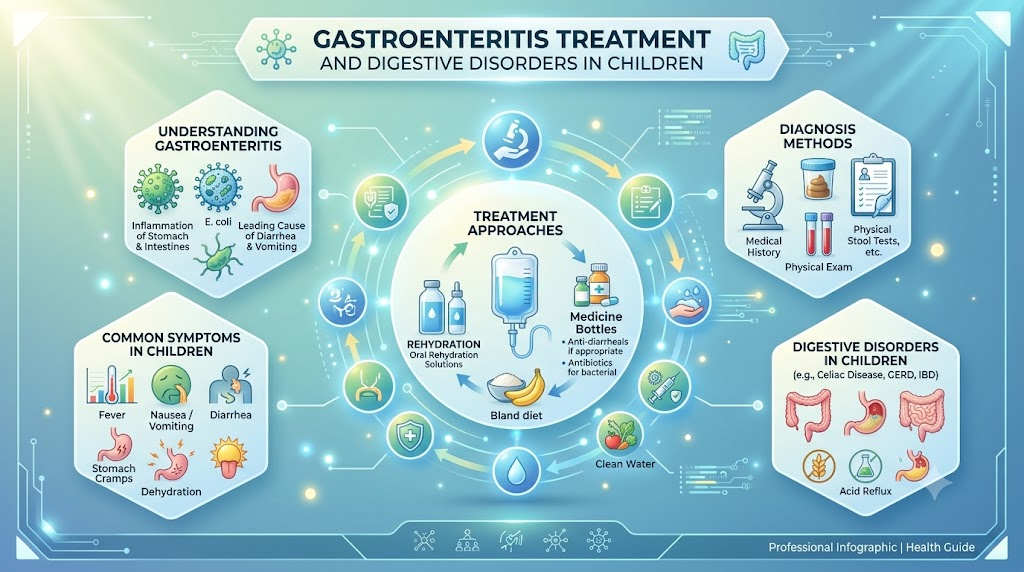
Gastroenteritis is a stomach and bowel upset, often caused by a germ. It spreads fast in daycare and school. Children can lose water quickly through vomiting and loose stools. So gastroenteritis treatment focuses on replacing fluids. Doctors may suggest oral rehydration drinks, which are special mixes of water, sugar, and salts made for this use. Never guess at a drink or medicine for a baby. Ask a doctor first. Gastroenteritis treatment for infants needs extra care because they weaken fast. Warning signs include no tears, a dry mouth, sunken eyes, and few wet diapers. Seek urgent care if these appear. Gastroenteritis treatment may also include rest and a slow return to usual foods under a doctor’s advice. Wash hands often to protect siblings.
Understanding GERD Treatment
GERD stands for gastroesophageal reflux disease. Many babies spit up, and most of the time it is normal. It becomes a concern when a child is in pain, refuses food, or fails to gain weight. Older children may report heartburn, which is a burning feeling in the chest. GERD treatment for children often starts with feeding changes and small habits, like smaller meals. Doctors may suggest medicine for some, but doses must be set by a doctor. Tests are rare and used only when needed. Some children outgrow reflux, while others need longer support. Regular visits help doctors adjust GERD treatment as the child grows. Ask whether a hospital has a team that reviews GERD treatment for different ages. Never change a dose without advice.
Understanding IBD Treatment
IBD means inflammatory bowel disease. It causes long-lasting swelling in the gut. Crohn’s disease and ulcerative colitis are the two main types. IBD can begin in childhood or the teen years. Signs may include ongoing diarrhea, belly pain, tiredness, and slow growth. Because growth matters so much, IBD treatment in children also watches height and weight. IBD treatment may include medicines, food support, and regular tests. A dietitian often helps plan nutrition. Teens may also need help with school and social stress. Emotional support is a real part of care. Children’s bowel clinics bring many experts together. Ask whether a hospital offers full IBD treatment for young patients. Good IBD treatment plans include clear contact points for parents.
Understanding Liver Disease Treatment
The liver cleans the blood and helps break down food. Children can have liver problems too. Some are present from birth. Others appear later from infection, medicine reactions, or inherited conditions. Signs may include yellow skin or eyes, dark urine, or pale stools. Newborn jaundice is common and often mild, but a doctor should check any yellow tint. Liver disease treatment in children depends on the cause. Some plans use medicine and careful monitoring. A few children need a transplant, which means replacing a damaged liver with a healthy one. Children’s liver teams include liver doctors, surgeons, nurses, and dietitians. When researching liver disease treatment, ask about experience with young patients. Liver disease treatment also needs regular blood tests.
The Colonoscopy Procedure Explained
A colonoscopy lets a doctor look inside the colon, which is the large bowel. In children, the colonoscopy procedure is done by trained child specialists. The scope is thin and flexible, with a tiny camera. Children are usually given medicine so they sleep through it. A team watches breathing and heart rate. The doctor may take small tissue samples, called biopsies. After the colonoscopy procedure, the child rests until fully awake. Parents often stay close. Doctors may suggest a colonoscopy procedure for long-lasting diarrhea, bleeding, or unclear weight loss. Each hospital gives its own written steps, so follow only your child’s team. Ask how the team prepares children and parents for the colonoscopy procedure. GastroHospitals.com explains the colonoscopy procedure in plain words.
Understanding Gastrointestinal Surgery
Gastrointestinal surgery in children is not common, but it is sometimes needed. Some babies are born with gut blockages or gaps in the gut wall. Older children may need surgery for appendix problems, severe bowel disease, or gallbladder issues. Appendix removal is one of the most common child operations. Other types include colectomy, gastrectomy, gallbladder removal, pancreatic surgery, and liver resection, though these are rarer. Pediatric surgeons use tools and doses made for small bodies. Every gastrointestinal surgery has risks, and no team can promise a result. Parents should ask about anesthesia, which is medicine that blocks pain and awareness during an operation. Ask how the hospital supports children before and after gastrointestinal surgery. Child life specialists can help ease fear.
Finding the Best Hospitals for Gastroenterology
Looking for the best hospitals for gastroenterology that care for children takes a few extra checks. This guide does not name or rank any hospital. It offers a checklist instead. First, check accreditation, which shows an outside group reviewed the hospital. Look for a team with pediatric training. Ask how often they treat children with concerns like yours. Check for child-sized tools and a calm setting. Look for dietitians, nurses, and child life specialists. Notice whether staff speak to the child, not just the parent. Ask about emergency support. On GastroHospitals.com, you can compare hospital profiles side by side. The platform does not say one hospital beats another. The best hospitals for gastroenterology for your child depend on your needs and your doctor’s advice.
Table: What to Check in a Gastroenterology Hospital
| Factor to Check | What It Means | Why It Matters |
|---|---|---|
| Accreditation | Outside review of hospital standards | Shows set quality rules are met |
| Pediatric Training | A gastroenterologist and nurses trained to treat children | Young bodies need care made for their size and age |
| Child-Friendly Setting | Play areas, calm rooms, and child life support | Eases fear during visits and tests |
| Scope and Scan Tools | Child-sized endoscopy and imaging equipment | Supports a careful colonoscopy procedure |
| Treatment Range | Gastroenterology treatments plus gastrointestinal surgery | Shows what options can be discussed |
| Specialty Clinics | Bowel and liver programs for children | Helps with IBD treatment and liver disease treatment |
| Nutrition Support | Dietitians who work with families | Helps with growth and digestive disorders |
| Family Communication | Plain talk and clear contact numbers | Keeps parents informed between visits |
Common Mistakes Patients Make
- Assuming every tummy ache is minor: Lasting pain deserves a check.
- Giving adult medicine: Child doses differ and must come from a doctor.
- Ignoring slow growth: Changes in weight and height matter.
- Forcing foods: Mealtime battles can make eating harder.
- Skipping the symptom diary: Notes help doctors see patterns.
- Not telling the school: Staff can help with toilet access and meals.
- Missing follow-ups: A child’s needs change as they grow.
- Searching online for a diagnosis: Websites cannot examine your child.
- Hiding fears from the child: Honest, simple talk builds trust.
- Waiting on dehydration signs: Young children weaken quickly.
A Simple Example
Here is an imagined story. A parent, left unnamed, notices that a young child often avoids lunch and complains of belly pain. She keeps a two-week diary. The pediatrician reviews it and suggests a pediatric gastroenterologist. Meanwhile, the parent reads about children’s digestive disorders on GastroHospitals.com and writes questions about tests, food, and school. At the visit, she hands over the diary. The specialist explains the next steps in simple words. We end the story here. No result is claimed. It only shows a good habit. Watch, write, and ask.
How GastroHospitals Can Help
GastroHospitals is a specialized digestive-health discovery and education platform. It features a directory of leading gastroenterology hospitals, structured around GI, liver, pancreas, IBD, endoscopy, and advanced digestive care. Its pages cover conditions affecting the esophagus, stomach, intestines, colon, liver, gallbladder, and pancreas. They also describe procedures such as colonoscopy, endoscopy, colectomy, gastrectomy, anti-reflux surgery, gallbladder removal, pancreatic surgery, liver resection, and transplantation. For parents, three features stand out. Hospital profiles let you review services in one place. Condition education turns medical words into everyday language. Treatment guides show how care often moves from first tests to follow-up. You can read after bedtime and note questions for the next visit. When you search for the best hospitals for gastroenterology, the platform offers a calm place to start. It is made for learning. It does not recommend one hospital over another. It also makes no promise about results. Share what you learn with your child’s doctor.
Frequently Asked Questions About Children’s Digestive Care
- What should I look for in the best hospitals for gastroenterology that treat children?
Look for pediatric training, child-friendly rooms, and nurses used to young patients. Check for child life specialists and dietitians. Ask how parents can stay close during tests. Note how kindly staff speak to your child. A hospital that explains each step in simple words usually makes visits easier. - How do I know if my child needs a gastroenterologist instead of only a pediatrician?
A pediatrician is the first stop for most problems. A referral may follow if symptoms last, return, or affect growth. Slow weight gain and ongoing vomiting are common reasons. A gastroenterologist has deeper training in the gut and liver. Your pediatrician can explain why a referral may help. - Are gastroenterology treatments for children different from adult care?
Yes. Doses, tools, and goals are adjusted for age and size. Doctors also track growth and development. Plans often involve parents closely. Many hospitals use play and simple words to ease fear. Never give a child medicine meant for an adult. Always follow the doctor’s advice. - Can food cause digestive disorders in children?
Some foods can trigger symptoms in some children. Examples include food allergies and food intolerances. An allergy involves the immune system, while an intolerance does not. Only a doctor can tell them apart. Do not cut out food groups without advice. Children need steady nutrition to grow well. - How can I tell if gastroenteritis treatment at home is not enough?
Watch for signs of dehydration, such as a dry mouth, no tears, or few wet diapers. Extreme sleepiness, a high fever, or blood in stool also need urgent care. Babies need quick help. Call a doctor if your child cannot keep fluids down. When unsure, seek medical advice. - Do babies need GERD treatment when they spit up?
Not always. Spitting up is common in babies and often harmless. Doctors may suggest GERD treatment if a baby seems in pain. Poor feeding or weak weight gain can also matter. Never start medicine without advice. Share a feeding diary with your doctor. It helps them judge what is normal for your baby. - Does IBD treatment affect growth in teens?
IBD can slow growth in some children, so doctors track height and weight closely. IBD treatment aims to control swelling and support nutrition. A dietitian often helps. Puberty timing may also be watched. Share any worries about growth with the care team. They can explain what to expect for your teen. - Can liver disease treatment be needed in newborns?
Some newborns have liver problems. Yellow skin that lasts, pale stools, or dark urine need a doctor’s check. Many cases of newborn jaundice are mild, but only a doctor can tell. Liver disease treatment depends on the cause. Teams with child liver experience can guide families. - How do hospitals help children feel safe before a colonoscopy procedure?
Many hospitals use child life specialists, toys, and simple stories. Staff explain each step in kid-friendly words. Some hospitals let parents stay close until sleep medicine starts. Ask about the plan before the visit. Each hospital has its own rules for a colonoscopy procedure. Follow your own team’s written steps. - How does GastroHospitals.com help parents prepare for gastrointestinal surgery?
GastroHospitals.com shares hospital profiles and plain guides on gastrointestinal surgery. Parents can learn common terms and write questions about anesthesia, recovery, and school. The platform does not rank hospitals or promise results. Your child’s surgeon is the right person to explain your child’s operation.
Final Thoughts
Caring for a child with digestive problems takes patience and good questions. Start with a pediatrician. Then see a gastroenterologist when advised. Learn how digestive disorders can look different in children. Remember that gastroenteritis treatment, GERD treatment, and IBD treatment need plans made for young bodies. So does liver disease treatment. The same is true for gastroenterology treatments, a colonoscopy procedure, and gastrointestinal surgery. Use a clear checklist when comparing the best hospitals for gastroenterology. GastroHospitals.com can support your research with profiles and plain guides. Still, no website can examine your child. Please consult a qualified gastroenterologist or doctor for personal advice. Keep a symptom diary. Speak kindly to your child about each step. Keep every follow-up visit.