Introduction
A healthy, confident smile can significantly influence personal self-assurance, social interactions, and overall communication. When individuals feel self-conscious about their teeth, they may explore smile correction procedures to address concerns such as discoloration, misalignment, chips, or gaps. Beyond superficial aesthetic enhancements, proper smile correction often involves evaluating underlying oral health to ensure that teeth, gums, and bite alignment function harmoniously.Patients exploring their treatment options can find valuable educational resources and hospital insights through platforms like BestDentalHospitals, which helps individuals navigate dental healthcare landscapes. Maintaining realistic expectations is equally essential, as dental results vary widely between individuals. In this complete guide, readers will explore popular smile correction procedures, treatment planning, safety considerations, hospital selection criteria, and practical tips for making informed dental choices.
Understanding Smile Correction
What Is Smile Correction?
Smile correction encompasses a wide range of dental procedures designed to improve the aesthetic appearance and functional harmony of a person’s smile. By addressing issues related to tooth color, shape, size, and alignment, smile correction aims to create a balanced, natural-looking result that complements facial features.
What Is a Smile Makeover?
A smile makeover is a comprehensive treatment plan that combines multiple cosmetic and restorative dental procedures to address several dental concerns simultaneously. Depending on individual needs, a smile makeover may integrate teeth whitening, veneers, crowns, orthodontics, or restorative treatments.
Common Reasons People Consider Smile Correction
Individuals seek smile correction for diverse personal and clinical reasons, addressing concerns such as:
- Crooked or crowded teeth.
- Noticeable gaps or spacing between teeth.
- Severe or intrinsic tooth discoloration.
- Chipped, fractured, or worn-down teeth.
- Uneven or disproportionate tooth shapes.
- Missing teeth affecting appearance and bite.
- Irregular gum line appearance (gummy smiles).
- Mild to moderate bite alignment irregularities.
Cosmetic vs. Restorative Dentistry
Cosmetic dentistry primarily focuses on improving the visual appearance of teeth, gums, and bites. Restorative dentistry, by contrast, focuses on repairing or replacing damaged, decayed, or missing teeth to restore normal oral function and health. In practice, many smile correction procedures blend both disciplines seamlessly.
Importance of Oral Health Before Cosmetic Treatment
Before initiating any cosmetic dental procedure, underlying oral health issues—such as active tooth decay, periodontal disease, root infections, or gum inflammation—must be treated professionally. Placing veneers or crowns over decayed or infected teeth can lead to worsening dental damage and compromised treatment longevity.
Common Smile Correction Procedures
Teeth Whitening
Professional teeth whitening uses specialized bleaching agents under clinical supervision to lighten stains and discoloration, brightening the natural shade of tooth enamel.
Dental Veneers
Dental veneers are ultra-thin shells crafted from porcelain or composite resin custom-designed to bond to the front surface of teeth, masking chips, gaps, or severe discoloration.
Dental Bonding
Tooth-colored composite resin is applied and sculpted directly onto the tooth surface to repair minor chips, close small spaces, or reshape irregular teeth efficiently.
Dental Crowns
Dental crowns are custom-fabricated caps placed over damaged, weakened, or heavily restored teeth to protect their structure and restore natural appearance and function.
Clear Aligners
Clear aligners utilize a series of transparent, removable trays to guide teeth into proper alignment gradually without traditional metal brackets and wires.
Traditional Orthodontic Treatment
Traditional braces use brackets and archwires to correct complex bite misalignments, crowded teeth, and spacing issues effectively across various age groups.
Gum Contouring
Surgical or laser gum reshaping procedures adjust uneven gum lines to expose more tooth structure and create a balanced, symmetrical smile proportion.
Dental Implants
Dental implants provide a permanent, root-form replacement for missing teeth, supporting crowns or bridges to restore both appearance and chewing function.
Digital Smile Design
Advanced digital imaging software allows dentists to preview and plan smile transformations collaboratively with patients before physical treatment begins.
MANDATORY SMILE CORRECTION PROCEDURE TABLE
| Procedure | Common Dental Concern | General Purpose | Important Consideration |
| Teeth Whitening | Surface stains and yellowing | Lighten natural tooth shade safely. | Does not change the color of existing crowns or fillings. |
| Dental Veneers | Chips, gaps, severe discoloration | Permanently improve visible tooth shape and color. | Requires removal of a thin layer of natural tooth enamel. |
| Dental Bonding | Minor chips, small gaps, cracks | Repair and reshape minor flaws directly in one visit. | Composite material may stain over time and require maintenance. |
| Dental Crowns | Weakened, cracked, or decayed teeth | Encapsulate and protect damaged tooth structure fully. | Involves significant reduction of natural tooth material. |
| Clear Aligners | Mild to moderate teeth misalignment | Align teeth discreetly using removable trays. | Requires strict daily wear compliance (20–22 hours per day). |
| Traditional Braces | Complex crowding and bite issues | Apply continuous pressure to reposition teeth precisely. | Requires diligent oral hygiene maintenance around brackets and wires. |
| Gum Contouring | Uneven gums or “gummy” smile | Reshape gum tissues to reveal balanced tooth proportions. | Healing time varies depending on whether laser or scalpel is used. |
| Dental Implants | Missing teeth and gap spaces | Replace missing tooth roots with titanium posts and crowns. | Requires adequate healthy jawbone density and healing periods. |
| Digital Smile Design | Complex multi-tooth aesthetic goals | Plan and visualize final smile outcomes digitally in advance. | Serves as a planning tool rather than a standalone physical treatment. |
Treatment selection must never be generalized. Choosing the right procedure depends entirely on an individual’s oral health status, structural dental alignment, personal aesthetic goals, budget, and professional dental evaluation.
Why Specialized Dental Hospitals Matter
Performing complex cosmetic and restorative smile corrections requires institutional excellence and advanced clinical capabilities. Specialized dental hospitals provide critical advantages:
- Board-certified cosmetic dentists, prosthodontists, and orthodontists with advanced training.
- Comprehensive multidisciplinary dental sub-specialty expertise under one roof.
- Advanced digital imaging, CBCT scans, and CAD/CAM chairside milling technology.
- Strict sterilization and infection control protocols meeting international safety standards.
- In-house dental laboratories ensuring precise color matching and veneer fabrication.
- Rigorous oral health assessments prior to cosmetic treatment execution.
- Tailored treatment planning aligned with individual anatomical structures.
- Structured follow-up care and long-term maintenance programs.
A clinical hospital environment ensures that patient safety and dental health remain the highest priority throughout every phase of care.
Smile Assessment and Treatment Planning
A thorough dental examination is the foundational step of any safe smile correction journey. The assessment process typically covers:
- Comprehensive clinical dental examination checking for decay, wear, and structural integrity.
- Detailed periodontal evaluation assessing gum health, pocket depths, and tissue support.
- Assessment of tooth structure, enamel thickness, and existing dental restorations.
- Bite and occlusion analysis ensuring functional harmony during jaw movement.
- Advanced dental imaging, including digital X-rays and 3D scans.
- Detailed discussion to understand the patient’s personal aesthetic goals and concerns.
- Reviewing viable treatment options, alternatives, and sequencing.
- Discussing potential risks, limitations, and realistic expected outcomes.
- Developing a personalized, comprehensive treatment plan and timeline.
A quality consultation ensures patients understand every aspect of their proposed care before committing to treatment.
Who May Consider Smile Correction Procedures?
- Adults seeking to address specific cosmetic dental concerns.
- Individuals with mild to moderate teeth alignment irregularities.
- Patients looking to repair chipped, worn, or fractured teeth.
- People troubled by persistent tooth discoloration unresponsive to simple home care.
- Individuals with gaps or spaces between their teeth.
- Patients missing one or more teeth impacting their smile and chewing.
- People motivated to improve their overall smile appearance and self-confidence.
Conversely, individuals with untreated gum disease, active tooth decay, severe bite misalignment requiring surgical intervention, or unrealistic expectations may need preparatory treatment or alternative care.
Factors That Affect Treatment Suitability
- Oral Hygiene: Consistent daily brushing and flossing habits are vital for protecting cosmetic investments.
- Gum Health: Healthy periodontal tissues are required to support veneers, crowns, and implants.
- Tooth Condition: The structural strength and remaining enamel of natural teeth dictate restorative choices.
- Bite Alignment: Malocclusion can place excessive stress on cosmetic restorations, causing premature wear or failure.
- Existing Restorations: Old crowns, fillings, or bridges in the smile zone affect material selection and color matching.
- Bone Support: Adequate jawbone density is essential for dental implants and orthodontic stability.
- Age and Dental Development: Developing teeth in younger patients influence orthodontic and restorative timelines.
- Medical History: Systemic conditions like diabetes, bleeding disorders, or osteoporosis impact healing and treatment safety.
- Treatment Expectations: Alignment between desired aesthetic outcomes and biological reality.
Only a qualified dental professional can determine individual suitability through direct clinical examination.
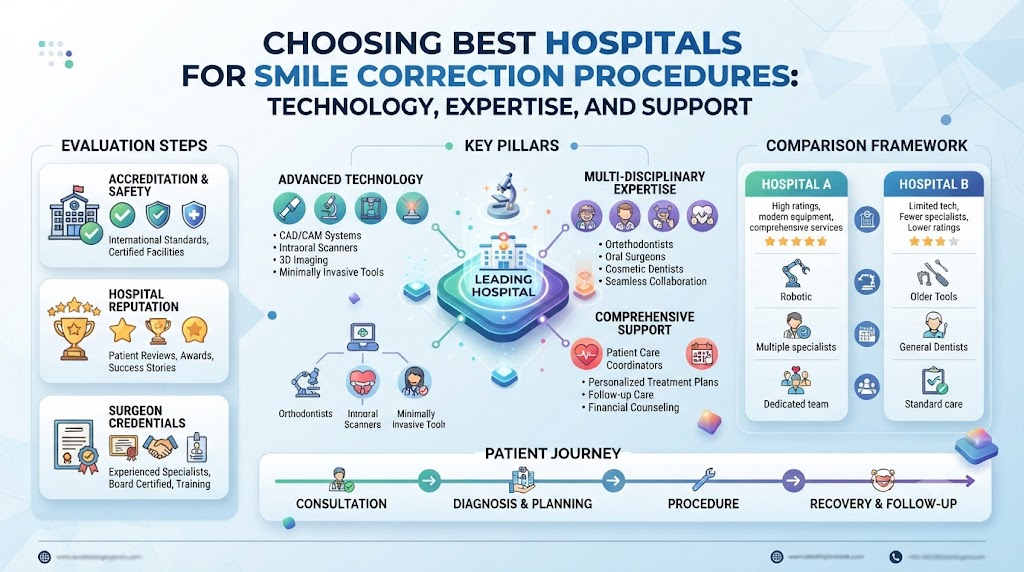
How to Choose the Best Dental Hospital for Smile Correction
Evaluating dental facilities requires looking beyond advertisements to focus on clinical credentials, safety standards, and quality of care:
- Board-certified cosmetic dentists and multidisciplinary specialists.
- Extensive clinical experience in smile design and restorative dentistry.
- Comprehensive orthodontic and periodontal support services.
- State-of-the-art diagnostic technology and digital imaging equipment.
- In-house digital treatment planning and CAD/CAM capabilities.
- Strict sterilization and infection-prevention protocols.
- Personalized, unhurried consultation processes.
- Transparent explanation of treatment options, risks, and limitations.
- Clear, upfront pricing structures without hidden costs.
- Reliable follow-up care and long-term maintenance support.
- Objective patient testimonials alongside verifiable professional credentials.
The “best” hospital depends on the patient’s specific dental needs rather than a universal or promotional ranking.
MANDATORY DENTAL HOSPITAL SELECTION TABLE
| Hospital Selection Factor | What to Look For | Why It Matters |
| Dentist Expertise | Board-certified cosmetic dentists and prosthodontists. | Ensures accurate diagnosis, precise restorative execution, and aesthetic harmony. |
| Cosmetic Dentistry | Extensive portfolio and specialized training in smile design. | Delivers natural-looking veneers, bonding, and aesthetic restorations. |
| Orthodontic Services | Specialist orthodontists offering clear aligners and braces. | Corrects complex bite misalignments and tooth crowding safely. |
| Restorative Support | Integrated endodontic and periodontal specialists. | Treats underlying decay and gum disease before cosmetic procedures begin. |
| Diagnostic Technology | CBCT scanners, digital intraoral cameras, and 3D imaging. | Provides precise anatomical mapping for flawless treatment execution. |
| Digital Treatment Planning | Advanced software for smile previews and CAD/CAM milling. | Allows patients to visualize results and ensures precision in restorations. |
| Infection Control | International sterilization standards and autoclaving protocols. | Protects patients from cross-contamination and surgical infections. |
| Treatment Consultation | Detailed, personalized evaluations rather than rushed sales. | Establishes realistic expectations and addresses individual dental needs. |
| Follow-Up Care | Scheduled maintenance checks and restoration warranties. | Ensures long-term durability and prompt management of minor adjustments. |
| Transparent Communication | Clear disclosure of material grades, risks, and total costs. | Empowers patients to make confident, fully informed healthcare choices. |
Patients should evaluate the overall standard of clinical care rather than choosing a provider based solely on promotional offers or low costs.
Cost of Smile Correction Procedures
Dental treatment costs vary widely depending on several factors:
- The specific type, complexity, and number of procedures performed.
- The total number of teeth requiring treatment or restoration.
- The quality, brand, and durability of materials used (e.g., premium porcelain vs. composite).
- The professional expertise, specialization, and reputation of the treating dentists.
- Necessary preliminary treatments (such as periodontal therapy or root canals).
- Diagnostic requirements and in-house laboratory fabrication costs.
- The total number of clinical visits required.
- Geographic location and facility standards of the dental hospital.
Patients should always request a comprehensive, itemized treatment plan outlining all associated costs before proceeding with care.
Preparing for Smile Correction Treatment
General preparation considerations managed alongside your dental professional include:
- Scheduling an in-depth clinical dental consultation.
- Sharing your complete dental and medical history openly.
- Reporting all current medications, supplements, and systemic health conditions.
- Completing all recommended preliminary diagnostic examinations.
- Treating active dental disease (such as cavities or gum inflammation) beforehand.
- Asking detailed questions about treatment alternatives and expected results.
- Understanding potential risks, limitations, and maintenance obligations.
- Clarifying the number of appointments needed and expected timelines.
Precise pre-treatment instructions must always come directly from the treating dental clinician.
Aftercare and Long-Term Smile Maintenance
- Oral Hygiene: Brushing twice daily with fluoride toothpaste and flossing daily to protect natural teeth and restorations.
- Regular Dental Checkups: Visiting the dentist every six months for professional evaluations and oral cancer screenings.
- Professional Cleaning: Removing calculus and plaque buildup regularly to maintain gum health around restorations.
- Protecting Restorations: Wearing custom night guards if diagnosed with bruxism (teeth grinding) to prevent chipping veneers or crowns.
- Healthy Dietary Habits: Limiting staining foods (like coffee, tea, and red wine) and avoiding hard items like ice or hard candies that can fracture dental work.
- Following Dentist Recommendations: Adhering strictly to post-treatment instructions regarding retainer wear for orthodontic patients.
- Managing Orthodontic Results: Wearing prescribed retainers consistently to prevent teeth from shifting back after braces or aligners.
Aftercare protocols vary significantly depending on whether the procedure involved whitening, veneers, orthodontics, or dental implants.
Real-Life Patient Scenarios
Scenario 1: Discolored Teeth
Hypothetical Patient Example: A 30-year-old individual struggles with deep yellowing of their teeth caused by tetracycline staining during childhood. Seeking professional evaluation at a dental hospital, a prosthodontist examines their enamel structure and recommends custom porcelain veneers after determining that professional bleaching will not provide the desired shade change.
Scenario 2: Crooked Teeth
Hypothetical Patient Example: A 26-year-old professional wishes to straighten moderately crowded front teeth without wearing visible metal braces. Following an orthodontic consultation and digital scanning, a series of clear aligners is prescribed, successfully aligning their smile over a ten-month treatment period.
Scenario 3: Chipped Teeth
Hypothetical Patient Example: A 35-year-old patient chips their front central incisor during a sports accident. A cosmetic dentist evaluates the structural integrity of the tooth, finding it healthy enough for direct composite bonding, which restores the natural tooth contour seamlessly in a single office visit.
Scenario 4: Missing Teeth
Hypothetical Patient Example: A 48-year-old adult missing a lower premolar experiences difficulty chewing and self-consciousness when smiling. After a comprehensive dental implant assessment and bone density scan, a titanium implant and custom crown are placed, restoring full chewing function and smile aesthetics.
Common Mistakes Patients Make
- Choosing a dental provider solely based on the cheapest promotional price.
- Expecting permanent, flawless perfection from a single cosmetic procedure.
- Ignoring underlying gum disease or tooth decay in pursuit of quick cosmetic fixes.
- Skipping the essential professional dental examination and consultation.
- Seeking treatment from unqualified providers or unlicensed practitioners.
- Attempting unverified DIY teeth-whitening kits or social media dental hacks.
- Neglecting post-treatment oral hygiene and maintenance routines.
- Failing to wear orthodontic retainers, leading to teeth relapse.
- Comparing personal dental structures and results unrealistically with other patients.
Approaching cosmetic dentistry with patience, realism, and professional guidance helps prevent these common pitfalls.
Benefits and Limitations of Smile Correction
Potential Benefits
- Enhanced smile appearance boosting personal self-confidence and expression.
- Correction of aesthetic flaws such as gaps, chips, and severe staining.
- Restoration of damaged or weakened tooth structures.
- Improved dental bite alignment and functional chewing efficiency.
- Long-lasting cosmetic enhancements supported by modern dental materials.
Important Limitations
- Results and longevity vary based on individual oral hygiene and bite forces.
- Some cosmetic procedures (like veneers or crowns) involve irreversible removal of natural enamel.
- Treatments often require multiple clinical visits and financial investments.
- Maintenance, repairs, or eventual replacements of restorations may be necessary over time.
- Not every dental or structural concern can be resolved with a single cosmetic technique.
The Future of Cosmetic Dentistry
Cosmetic dentistry continues to evolve through rapid technological innovation. Emerging developments include high-precision digital smile design software, artificial intelligence-assisted dental imaging analysis, rapid chairside CAD/CAM 3D printing of restorations, advanced biomimetic dental materials mimicking natural enamel, digital orthodontics, and minimally invasive restorative techniques. While these innovations expand treatment possibilities, established clinical expertise, rigorous diagnosis, and professional craftsmanship remain the essential foundation of quality dental care.
Frequently Asked Questions (FAQ)
1. What are smile correction procedures?
Smile correction procedures are a combination of cosmetic and restorative dental treatments designed to improve the appearance, symmetry, and function of a person’s smile by addressing issues like tooth color, shape, spacing, and alignment.
2. What is included in a smile makeover?
A smile makeover is a customized treatment plan that integrates multiple procedures—such as teeth whitening, porcelain veneers, dental crowns, orthodontics, or gum contouring—to transform a patient’s overall smile comprehensively.
3. Which dental problems can smile correction address?
Smile correction can address stained or discolored teeth, chipped or fractured edges, irregular tooth shapes, gaps between teeth, mild to moderate crowding, missing teeth, and gummy smile appearances.
4. Are smile correction procedures suitable for everyone?
No, suitability depends on individual oral health, gum condition, tooth structure, and bite alignment. Patients with untreated cavities or periodontal disease must resolve those conditions before undergoing elective cosmetic procedures.
5. Can crooked teeth be corrected without traditional braces?
Yes, mild to moderate teeth alignment issues can often be corrected discreetly using clear aligner therapy (removable transparent trays) instead of traditional metal brackets and wires, provided an orthodontist determines suitability.
6. How do dental veneers improve a smile?
Dental veneers are custom-made porcelain or composite shells bonded to the front of teeth to instantly mask imperfections, correct asymmetry, whiten stubborn stains, and create a uniform, attractive smile shape.
7. Can teeth whitening permanently remove discoloration?
No, teeth whitening results are not permanent. Staining foods, beverages (like coffee and tea), and natural aging cause teeth to re-stain over time, though touch-up treatments and good oral hygiene can help prolong brightness.
8. When are dental crowns used for smile correction?
Dental crowns are used when teeth are severely decayed, structurally weakened, fractured, or heavily filled, providing full-coverage protection while restoring natural appearance.
9. Can dental implants improve a smile after tooth loss?
Yes, dental implants act as permanent artificial tooth roots supporting custom crowns, effectively replacing missing teeth to restore complete chewing function and natural smile continuity.
10. How should I choose a dental hospital for smile correction?
Patients should choose a dental hospital based on specialist expertise, cosmetic dentistry experience, advanced digital diagnostic technology, strict infection control standards, personalized consultation processes, and transparent treatment planning.
11. Is cosmetic dentistry different from restorative dentistry?
Cosmetic dentistry focuses primarily on improving visual appearance, while restorative dentistry repairs damaged or missing teeth to restore health and function. Many modern procedures overlap between both fields.
12. How much do smile correction procedures cost?
Costs vary widely depending on the specific procedures performed, the number of teeth treated, material quality, specialist expertise, preliminary dental work required, and geographic location. An itemized treatment plan clarifies exact expenses.
13. How long do cosmetic dental results last?
Longevity varies by procedure; porcelain veneers and crowns can last ten to fifteen years or longer with excellent care, while bonding may require touch-ups or replacements sooner. Consistent hygiene and night guards help protect results.
14. What should I ask my dentist before treatment?
Key questions include: What treatment options suit my dental structure? What are the realistic expected outcomes? How many appointments will this take? What are the potential risks? How should I maintain my restorations long-term?
15. How can I maintain my smile after cosmetic dental treatment?
Maintenance involves practicing diligent daily brushing and flossing, attending regular professional dental cleanings every six months, wearing prescribed orthodontic retainers or night guards, and avoiding habits like chewing hard objects.
Final Thoughts
Smile correction procedures offer a transformative pathway to achieving a balanced, healthy, and confident smile. However, successful cosmetic dentistry is rooted firmly in comprehensive oral health, precise clinical diagnosis, and individualized treatment planning. Patients must remember that aesthetic enhancements should never compromise the structural integrity or biological health of their teeth and gums. Professional evaluation by qualified dental specialists ensures that every procedure is executed safely and tailored to unique anatomical requirements.Emphasizing clinical expertise, advanced digital technology, and patient safety over promotional pricing or quick fixes guarantees sustainable, beautiful results. Specialized dental hospitals provide the expert guidance, modern diagnostic tools, and supportive environments necessary to navigate smile transformations responsibly.