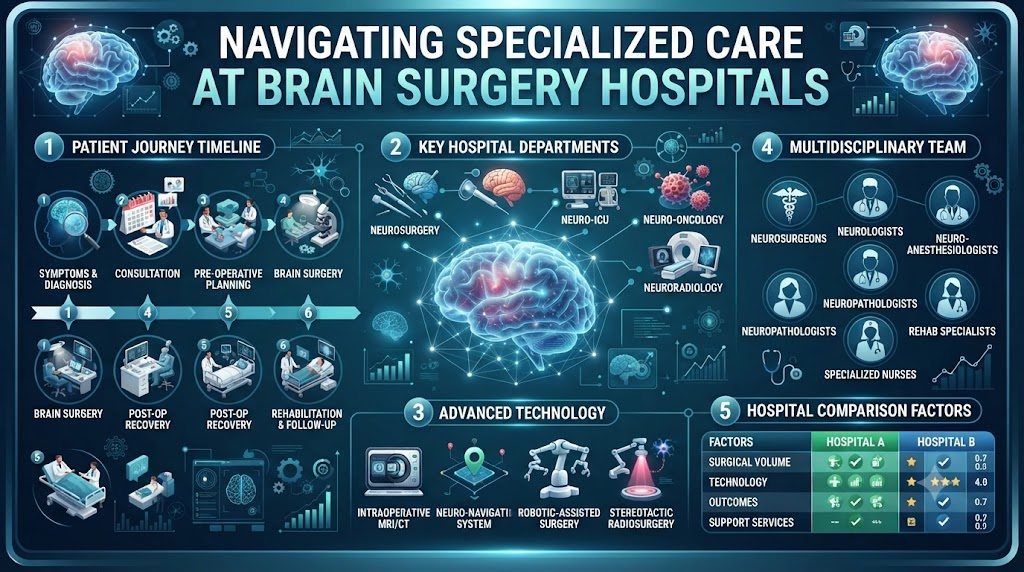
Receiving a complex neurological diagnosis can feel overwhelming for patients and their families. Uncertainties regarding treatment pathways, specialist qualifications, and hospital infrastructure often create stress during an already challenging period. Because neurosurgical conditions affect the body’s most sensitive system, understanding your options is essential. Finding the right medical environment is vital for receiving accurate diagnostic assessments, tailored treatment planning, and comprehensive recovery support. This is why researching brain surgery hospitals represents a critical step toward informed decision-making. High-quality centers provide access to multidisciplinary medical teams, modern diagnostic technology, and tailored surgical interventions. This guide covers how specialized centers operate, the roles of different specialists, common neurosurgical procedures, key evaluation criteria, and how to approach obtaining a neurosurgery second opinion. Utilizing trusted resources empowers families to prepare for consultations with qualified medical professionals.
What Are Brain Surgery Hospitals?
Specialized neurosurgical centers provide medical services designed for complex brain and spinal conditions. Unlike general medical facilities, these institutions integrate advanced diagnostics, specialized surgical equipment, and specialized intensive care units to deliver comprehensive treatment.
Neurosurgical Evaluation
The care process begins with a detailed neurosurgical evaluation. Specialists assess neurological function, review clinical history, analyze imaging studies, and determine whether surgical or conservative management is appropriate.
Diagnostic Imaging and Testing
Accurate treatment planning relies on high-resolution imaging. Facilities leverage tools like high-field MRI, CT angiography, functional MRI (fMRI), and PET scans to map neural structures and identify abnormalities.
Specialist Consultation
Patients consult with multidisciplinary specialists to review findings. Teams discuss the risks, benefits, and expected outcomes of various treatment options, ensuring patients understand their choices before proceeding.
Surgical and Non-Surgical Treatment Planning
Care plans are highly individualized. Depending on the diagnosis, options range from observation and medication management to stereotactic radiosurgery or traditional open neurosurgery.
Post-Treatment and Follow-Up Care
Recovery requires ongoing monitoring. Comprehensive institutions provide specialized neuro-intensive care units (ICUs), tailored rehabilitation programs, and long-term follow-up schedules to track recovery and manage potential complications.
Because hospital capabilities vary, patients should review available services directly with qualified healthcare professionals to ensure the facility aligns with their specific medical needs.
Neurosurgery Hospitals and Specialist Care
Evaluating neurosurgery hospitals involves looking beyond basic facilities to assess how specialized care is delivered. Treating neurological conditions requires a coordinated effort across multiple medical disciplines.
- Neurosurgical Evaluation: Thorough clinical assessments to establish accurate baselines.
- Neurology Collaboration: Joint management between neurologists, who manage non-surgical aspects and medications, and neurosurgeons, who perform operative interventions.
- Diagnostic Imaging: Advanced intraoperative imaging capabilities, such as intraoperative MRI or CT, that guide surgeons during complex procedures.
- Operating-Room Capabilities: Surgical suites equipped with high-powered operating microscopes, neuronavigation systems, and specialized instruments.
- Intensive Care Support: Dedicated Neuro-ICUs staffed by neurointensivists trained to manage post-operative intracranial pressure and neurological stability.
- Rehabilitation Services: On-site physical, occupational, and speech therapy teams tailored for neurological recovery.
- Multidisciplinary Teams: Regular clinical conferences where neurosurgeons, neuro-oncologists, neuroradiologists, and radiation oncologists discuss complex cases.
- Follow-Up Care: Structured long-term tracking to monitor stability, functional recovery, or recurrence.
Brain Surgeons and Neurosurgeons
Understanding the qualifications of brain surgeons and neurosurgeons helps patients navigate their care options. These specialists undergo extensive training, including medical school, a rigorous multi-year neurosurgical residency, and often subspecialty fellowship training in areas like neuro-oncology, cerebrovascular surgery, or functional neurosurgery.
Neurosurgeons perform diagnostic evaluations, assess procedure suitability, execute complex operations, and direct post-operative care. Procedure-specific expertise is important, as surgical approaches vary between deep-brain structures, vascular networks, and skull base regions. Beyond surgical execution, neurosurgeons communicate risks and potential outcomes to families and collaborate closely with broad medical teams. Patient suitability and surgeon experience vary by condition, making open discussion during initial consultations essential.
Brain Tumor Treatment
Modern brain tumor treatment involves customizable management strategies dependent on whether a tumor is benign or malignant, primary or metastatic.
Diagnosis and Imaging
Initial evaluation relies on high-resolution MRI or CT scans to identify the tumor’s size, exact location, and relationship to critical brain structures.
Tumor Classification
Pathological assessment of tissue samples determines the specific tumor type and grade, guiding the therapeutic strategy.
Surgery
Surgical intervention aims to maximize tumor removal while preserving neurological function. In some cases, complete resection is possible; in others, partial debulking reduces pressure and improves secondary treatment efficacy.
Radiation Therapy
Focused radiation techniques, including stereotactic radiosurgery (SRS) and intensity-modulated radiation therapy (IMRT), target remaining tumor cells while sparing surrounding healthy tissue.
Drug-Based Treatments
Systemic therapies, including chemotherapy, targeted therapy, and immunotherapy, are tailored based on molecular markers identified during pathological evaluation.
Monitoring and Follow-Up
Regular surveillance scans are necessary to monitor treatment response, detect recurrence early, and manage secondary symptoms like edema or seizures.
Treatment decisions depend on individual variables, including overall health, age, tumor location, and molecular characteristics.
Brain Tumor Surgery Hospitals
When evaluating specialized brain tumor surgery hospitals, families should assess the facility’s experience with specific tumor classifications. Treatment of complex tumors often requires advanced surgical technologies like intraoperative functional brain mapping, awake craniotomy techniques, and real-time intraoperative MRI guidance.
Leading centers utilize multidisciplinary tumor boards where experts collectively review imaging and pathology to design individual care plans. Access to comprehensive Neuro-ICUs, post-surgical rehabilitation, and clinical trials also marks robust brain tumor programs. Patients should discuss hospital equipment, team experience, and surgical volume with their care team to ensure appropriate alignment with their diagnosis.
Brain Aneurysm Surgery
A brain aneurysm is a weakened, bulging spot in the wall of an artery within the brain. If an aneurysm leaks or ruptures, it leads to a serious medical event known as a hemorrhagic stroke. Because of these risks, specialized clinical evaluation is vital.
Diagnostic management utilizes cerebral angiography, CT angiography, or MR angiography to evaluate the aneurysm’s size, shape, and location. For unruptured aneurysms, treatment decisions balance the risk of rupture against potential surgical complications.
Primary surgical approaches include:
- Surgical Clipping: An open microsurgical procedure where a neurosurgeon places a small metal clip across the neck of the aneurysm to isolate it from blood circulation.
- Endovascular Coiling/Flow Diversion: A minimally invasive procedure performed inside the blood vessel, where catheters insert microcoils or stents to promote clotting and block blood flow into the aneurysm.
Neither approach is universally superior; selection depends on structural geometry, patient age, overall health, and specialist recommendations.
Note: A ruptured brain aneurysm is a life-threatening medical emergency. Sudden, severe headaches (“thunderclap” headaches), sudden vision changes, loss of consciousness, or neurological deficits require immediate emergency services.
Epilepsy Surgery
Epilepsy surgery may be considered for patients with drug-resistant (refractory) epilepsy, where anti-seizure medications fail to control seizures effectively.
Evaluation involves comprehensive testing, including continuous video-EEG monitoring, high-resolution structural MRI, functional imaging (PET/SPECT), and neuropsychological assessments. These tests help determine the precise seizure focus within the brain.
Common surgical procedures include resective surgery (removing the seizure-focus area), laser interstitial thermal therapy (LITT), or neuromodulation techniques (such as Responsive Neurostimulation or Vagus Nerve Stimulation). Surgical intervention is appropriate only for selected individuals after detailed evaluation confirms that removing or modulating the targeted brain tissue will not compromise vital functions like speech or motor control.
Minimally Invasive Brain Surgery
Advances in medical technology have expanded the application of minimally invasive brain surgery. These techniques access brain structures through smaller incisions or natural openings, utilizing specialized tools, endoscopes, and computer-assisted guidance systems.
Key aspects include:
- Endoscopic Approaches: Accessing skull base tumors through the nasal passages (endonasal endoscopy), eliminating the need for large cranial incisions.
- Stereotactic Radiosurgery: Delivering targeted radiation to deep-seated lesions without physical surgical incisions.
- Laser Interstitial Thermal Therapy (LITT): Using MRI-guided laser probes to thermal-ablate deep abnormal tissue through tiny burr holes.
While these techniques may offer reduced recovery times or reduced soft-tissue disruption in appropriate cases, they are not suitable for every patient or condition. Traditional open surgery remains necessary and safer for many complex resections. Suitability is determined by lesion location, pathology, structural anatomy, and surgeon assessment.
How to Research Brain Surgery Hospitals
Selecting a facility requires structured evaluation across multiple clinical dimensions:
Identify the Diagnosis or Suspected Condition
Gather all primary clinical records, diagnostic reports, and imaging files to understand the specific neurological condition being addressed.
Research Relevant Neurosurgical Expertise
Look for centers and surgeons that treat your specific condition, noting subspecialty experience in neuro-oncology, vascular neurosurgery, or functional neurosurgery.
Review Diagnostic Capabilities
Ensure the facility offers advanced diagnostic infrastructure, such as high-field MRI, PET scanning, and specialized neuro-pathology analysis.
Understand Available Treatment Approaches
Verify whether the hospital provides access to a complete range of techniques, including open microsurgery, endovascular therapies, radiosurgery, and minimally invasive options.
Check Multidisciplinary Support
Confirm that care involves integrated teams of neurosurgeons, neurologists, neuro-oncologists, neuroradiologists, and neuro-intensivists.
Review Rehabilitation and Follow-Up Care
Assess the availability of specialized post-operative neuro-rehabilitation services to support long-term recovery.
Understand Location and Accessibility
Factor in proximity, family support logistics, travel requirements, and post-discharge follow-up visits.
Ask About Medical Records and Imaging Requirements
Clarify how to submit diagnostic DICOM image files, operative reports, and pathology slides for preliminary review.
Discuss Costs and Insurance Separately
Verify insurance network coverage, facility fees, professional service charges, and out-of-pocket estimates directly with hospital financial counselors. Costs vary based on procedure complexity, stay duration, and individual health factors.
Neurosurgery Second Opinion
Seeking a neurosurgery second opinion is a common practice when evaluating complex neurological diagnoses. Requesting another specialist’s perspective can confirm an initial diagnosis, explore alternative surgical techniques, or clarify the balance of risks and benefits associated with proposed interventions. A second opinion serves to educate the patient and does not imply that the original physician made an error.
Preparing for a Second Opinion Consultation
To facilitate a thorough review, patients should compile a comprehensive medical package:
- Detailed personal medical history and medication list
- Complete official radiology reports (MRI, CT, Angiography)
- Original digital imaging files (DICOM format on CD/USB)
- Pathology and biopsy reports (if applicable)
- Surgical or procedural notes from previous interventions
- Summary of current symptoms and treatment responses
- Specific written questions regarding the diagnosis and treatment alternatives
Benefits of Researching Specialized Neurosurgical Care
Proactive healthcare research offers several advantages for patients navigating neurosurgical options:
- Improved Understanding: Helps patients grasp complex medical terminology, diagnoses, and proposed interventions.
- Productive Consultations: Enables structured, informed discussions during specialist visits.
- Specialist Identification: Facilitates finding medical centers with relevant expertise for specific neurological conditions.
- Service Comparison: Helps families assess diagnostic capabilities, surgical technologies, and intensive care infrastructure.
- Preparedness: Assists patients in compiling appropriate medical records, imaging files, and questions in advance.
- Exploration of Alternatives: Opens pathways to evaluate alternative surgical approaches or obtain secondary clinical opinions.
Thorough research helps patients engage as active participants in their healthcare decisions alongside their medical team.
Limitations of Online Medical Research
While online educational materials provide foundational knowledge, they have clear boundaries:
- Online content cannot perform physical neurological examinations or provide clinical diagnoses.
- Web resources cannot account for an individual’s complete medical history, lab values, or unique anatomical variations.
- General articles cannot determine whether a specific procedure or technique is safe or suitable for a specific person.
- Online information varies in quality, accuracy, and currency across different digital platforms.
- Virtual research should never replace direct evaluation by qualified, licensed healthcare professionals.
All clinical decisions must be made in direct consultation with your treating medical team.
Emergency Warning Signs
Certain neurological symptoms indicate potential emergencies that require immediate medical intervention rather than elective research.
Seek immediate emergency attention if an individual experiences:
- Sudden, severe headache (often described as the “worst headache of your life”)
- Sudden weakness, numbness, or paralysis in the face, arm, or leg (especially on one side of the body)
- Sudden difficulty speaking, slurred speech, or trouble understanding speech
- Sudden loss of vision, double vision, or severe visual disturbances
- Sudden confusion, loss of balance, dizziness, or difficulty walking
- New onset of severe seizures or loss of consciousness
If someone is experiencing a medical emergency or severe sudden neurological symptoms, contact the local emergency medical service immediately.
BrainSurgeryHospitals.com and Patient Research
Navigating neurological care options requires clear, structured information. BrainSurgeryHospitals.com serves as an educational research resource designed to assist patients, caregivers, and families in understanding complex neurosurgical topics.
Through the platform, users can explore educational content covering:
- Brain surgery hospitals and specialized medical infrastructure
- Distinct care roles within neurosurgery hospitals and multidisciplinary medical teams
- Qualifications and subspecialties of neurosurgeons and brain surgeons
- General information on brain tumor treatment modalities and specialized brain tumor surgery hospitals
- Procedure overviews, including brain aneurysm surgery, epilepsy surgery, and minimally invasive brain surgery
- Guidance on preparing medical records for a neurosurgery second opinion
BrainSurgeryHospitals.com provides open-access educational resources to help families prepare for detailed discussions with their qualified healthcare providers.
Comparison Table
| Research Factor | Why It Matters |
| Neurosurgical Expertise | Helps identify specialists relevant to the condition |
| Diagnostic Capabilities | Supports accurate evaluation and treatment planning |
| Multidisciplinary Care | Different specialists may contribute to complex cases |
| Surgical Techniques | Available approaches may vary by condition |
| Intensive and Follow-Up Care | Important for recovery and monitoring |
| Second-Opinion Access | Can help patients understand another specialist’s perspective |
Frequently Asked Questions
- How can I research brain surgery hospitals?
Begin by gathering your complete medical records and diagnostic imaging files. Research medical centers that specialize in your specific neurological diagnosis, paying attention to diagnostic facilities, multidisciplinary team structures, and neuro-intensive care units. Discussing options with your primary neurologist and evaluating specialized resources like BrainSurgeryHospitals.com can help you narrow down appropriate centers for formal consultation. - What should I look for when evaluating neurosurgery hospitals?
Key considerations include facility experience with your specific condition, access to advanced intraoperative imaging, dedicated neuro-intensive care units, multidisciplinary tumor or vascular boards, integrated rehabilitation services, and clear protocols for post-operative monitoring. Confirming insurance compatibility and hospital accessibility is also essential during the initial research phase. - How do I find experienced brain tumor surgery hospitals?
Look for institutions with comprehensive neuro-oncology programs that utilize multidisciplinary teams, including neurosurgeons, neuro-oncologists, radiation oncologists, and specialized neuropathologists. Facilities equipped with advanced surgical guidance tools—such as intraoperative MRI, functional brain mapping, and stereotactic radiosurgery—are typically well-suited for managing complex brain tumors. - What is the primary role of professional brain surgeons?
Brain surgeons assess, plan, and perform operative procedures to treat structural, vascular, or neoplastic abnormalities in the brain and skull base. They evaluate diagnostic scans, determine surgical feasibility, perform interventions, manage post-operative care, and collaborate with multidisciplinary specialists to ensure comprehensive long-term management. - How do neurosurgeons determine if surgery is necessary?
Neurosurgeons evaluate clinical symptoms, physical examination findings, high-resolution imaging scans, and tissue pathology where available. They weigh the potential benefits of surgical intervention against the risks of non-surgical management, considering the patient’s age, overall health, anatomical location of the lesion, and long-term prognosis. - What factors influence individual brain tumor treatment plans?
Brain tumor management depends on tumor type, histological grade, molecular markers, size, anatomical location, patient age, neurological status, and overall physical health. Plans often combine surgery, radiation therapy, and chemotherapy tailored to the individual patient’s condition after evaluation by a multidisciplinary tumor board. - What options exist for brain aneurysm surgery?
Surgical options primarily include open microsurgical clipping, where a metal clip is placed across the aneurysm neck, and endovascular coiling or flow diversion, where catheters deliver coils or stents internally via blood vessels. Choice of technique depends on aneurysm size, location, morphology, patient health, and specialist recommendations. - Who is considered a candidate for epilepsy surgery?
Epilepsy surgery is evaluated for individuals with drug-resistant epilepsy whose seizures are not adequately controlled by anti-seizure medications. Detailed diagnostic evaluations must identify a precise, localized seizure origin in an area of the brain that can be safely targeted without causing significant neurological deficits. - What are the key advantages of minimally invasive brain surgery?
Minimally invasive approaches utilize specialized endoscopes, laser tools, or stereotactic guidance to reach target areas through smaller access routes. When clinically appropriate, these methods may result in less tissue disruption and shorter initial recovery periods. However, suitability depends entirely on the lesion type, size, location, and surgeon evaluation. - Why should a patient consider seeking a neurosurgery second opinion?
A second opinion allows patients to confirm an initial diagnosis, explore alternative surgical or non-surgical strategies, understand different specialist perspectives, and clarify the potential risks and benefits of proposed interventions. It helps patients make informed, confident decisions about complex medical procedures. - How should a patient prepare for choosing a neurosurgical hospital?
Collect all relevant medical history, written operative or pathology reports, diagnostic summaries, and actual imaging files on digital media. Create a structured list of questions regarding treatment options, facility infrastructure, team experience, recovery expectations, and insurance coverage to review during formal consultations. - What steps are involved in preparing for a neurosurgery consultation?
Prepare by organizing your medical records logically, documenting a timeline of symptoms, listing current medications, and writing down primary questions. Arranging for a family member or caregiver to attend the appointment can help take notes, clarify information, and support meaningful discussions with the clinical specialist.
Conclusion
Navigating a neurological diagnosis requires careful evaluation of medical options, treatments, and healthcare providers. Taking time to evaluate specialized brain surgery hospitals allows patients and caregivers to understand diagnostic capabilities, surgical approaches, and multidisciplinary care models. Because every patient presents unique clinical variables, treatment recommendations must be tailored individually by experienced medical specialists. Asking clear questions, gathering complete medical records, and exploring a second opinion when appropriate can help clarify proposed care pathways. Utilizing reliable educational platforms alongside guidance from primary care teams helps ensure families approach surgical choices with confidence and clarity.