Introduction
Losing one or more teeth can significantly impact a person’s daily life, affecting everything from chewing and speaking clearly to smiling with confidence. Teeth play a fundamental role in nutritional intake, facial support, and overall self-esteem. Choosing the right facility ensures that patients receive comprehensive care from initial consultation through long-term adjustments. To help families and dental healthcare seekers navigate these options, platforms like BESTDENTALHOSPITALS offer educational resources designed to guide patients toward informed, responsible healthcare choices. This guide will explore what dentures are, common types available, the treatment process, and how to select appropriate hospitals for denture services.
Understanding Dentures
What Are Dentures?
Dentures are custom-crafted, removable or supported dental appliances designed to replace missing teeth and surrounding gum tissues. They are manufactured using modern dental materials that mimic the appearance and natural color of teeth and gums, helping restore both aesthetics and oral functionality.
How Dentures Help Replace Missing Teeth
Dentures bridge the gaps left by missing teeth, distributing chewing forces evenly across the dental arches. This restoration helps prevent remaining natural teeth from shifting out of position while supporting facial muscles that might otherwise sag due to tooth loss.
Who May Need Dentures?
Individuals who have lost teeth due to periodontal disease, tooth decay, injury, or natural aging may benefit from dentures. Candidates can range from older adults requiring full replacements to younger individuals needing partial solutions for specific missing teeth.
The Importance of a Professional Dental Assessment
Every mouth is anatomically unique. A professional dental assessment is essential because not every missing-tooth situation requires the same treatment approach. Dentists evaluate gum health, bone density, and bite alignment to determine whether complete dentures, partials, or implant-supported alternatives are most appropriate.
Common Types of Dentures
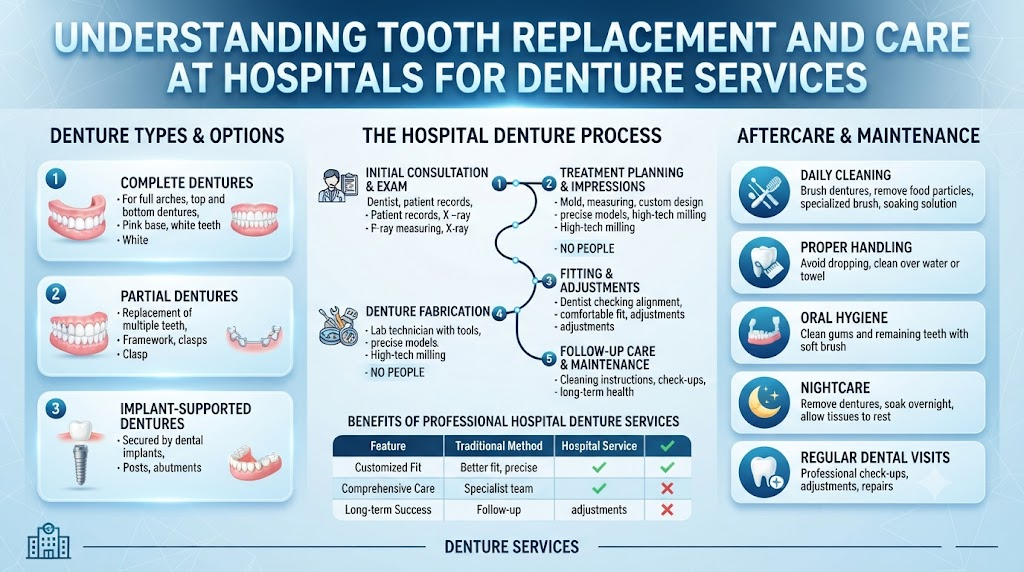
Complete Dentures
Complete dentures are used when all natural teeth are missing in either the upper jaw, the lower jaw, or both. They rest directly on the gum tissues covering the jawbone and are custom-molded to achieve a stable suction fit.
Partial Dentures
Partial dentures are designed for patients who still have some natural teeth remaining. They consist of replacement teeth attached to a gum-colored base connected by a metal or flexible framework that clasps onto surrounding natural teeth for stability.
Immediate Dentures
Immediate dentures are fabricated prior to the extraction of remaining teeth and placed immediately during the same appointment. This ensures the patient is never without teeth during the healing period, though they typically require relining later as gums heal.
Removable Dentures
Removable dentures can be taken out easily by the patient for daily cleaning, overnight soaking, and routine oral hygiene maintenance. Both complete and partial dentures are frequently designed to be removable.
Implant-Supported Dentures
Implant-supported dentures are anchored securely to dental implants surgically placed in the jawbone. This option offers superior stability, reduces slippage, and helps preserve underlying jawbone density over time.
Flexible Denture Options
Flexible dentures are crafted from lightweight, bendable thermoplastic materials instead of traditional rigid acrylic, offering an alternative for patients seeking greater comfort or allergy-free partial solutions.
Why Choose a Hospital for Denture Services?
Access to Dental Specialists
Hospitals and large dental centers house multidisciplinary teams, including prosthodontists, oral surgeons, and general dentists, ensuring expert oversight for every phase of care.
Comprehensive Oral Health Evaluation
Hospital-grade settings allow for thorough physical and diagnostic evaluations, identifying underlying dental or medical conditions that could influence denture success.
Advanced Diagnostic Facilities
Equipped with advanced imaging technology, hospitals can accurately assess jawbone contours, bite alignment, and oral tissue health prior to denture fabrication.
Prosthodontic Expertise
Prosthodontists specialize in the restoration and replacement of teeth, bringing advanced training in complex bite restoration and cosmetic alignment to denture design.
Treatment Planning for Complex Cases
Patients with severe bone loss, systemic health conditions, or complex restorative needs benefit greatly from structured hospital-based treatment planning.
Follow-Up and Denture Adjustment Services
Proper denture care requires ongoing adjustments as gums heal and settle. Dental hospitals provide structured follow-up schedules to ensure continuous comfort.
Support for Patients With Other Health Conditions
For elderly patients or individuals managing chronic medical illnesses, hospital environments offer safe medical coordination during dental procedures.
Important Factors to Consider When Choosing Hospitals for Denture Services
| Factor | Why It Matters | What Patients Should Look For |
| Dental Specialist Expertise | Ensures accurate diagnosis, bite alignment, and specialized prosthodontic care. | Board-certified prosthodontists and experienced restorative dentists. |
| Comprehensive Oral Examination | Identifies gum disease, bone resorption, or hidden oral health issues before fitting. | Thorough clinical evaluations and digital diagnostic imaging capabilities. |
| Denture Treatment Options | Different patients require complete, partial, or implant-supported solutions. | Availability of a wide range of denture types tailored to individual needs. |
| Quality of Dental Materials | High-grade materials improve durability, comfort, and natural aesthetics. | Premium acrylics, durable denture teeth, and biocompatible frameworks. |
| Accurate Fitting and Adjustments | Minimizes sore spots, speech difficulties, and chewing discomfort. | Precision impression-taking and dedicated follow-up adjustment appointments. |
| Oral Surgery Support | Essential if tooth extractions or implant placements are required prior to dentures. | On-site oral surgeons and seamless surgical-to-prosthetic coordination. |
| Follow-Up Care | Ensures long-term comfort and allows for timely relining as jaws change. | Structured maintenance programs and accessible patient support services. |
| Denture Repair Services | Quick turnaround times for broken or cracked dentures prevent prolonged discomfort. | In-house dental laboratories or rapid repair coordination. |
| Infection Control Standards | Protects patients from cross-contamination and ensures sterile clinical environments. | Strict hospital-grade sterilization protocols and cleanliness compliance. |
Patients should consider professional expertise, proper fitting, comprehensive treatment planning, thorough oral health assessments, and ongoing follow-up care rather than choosing denture services based solely on cost. Selecting a dental provider focused on clinical quality and patient comfort ensures a much more successful and satisfying tooth replacement journey.
The Denture Treatment Process
Initial Consultation
The denture journey begins with an initial consultation where the dental specialist discusses the patient’s goals, examines their mouth, and reviews their overall dental history.
Oral Examination
The dentist conducts a comprehensive physical evaluation of the gums, remaining teeth, jawbone ridges, and bite alignment to assess oral health status.
Dental Imaging and Assessment
X-rays or 3D scans are captured to examine the underlying bone structure, check for hidden dental infections, and plan any necessary preparatory treatments.
Discussing Tooth Replacement Options
Based on the examination, the dentist presents suitable denture choices, explaining the pros, cons, and expectations associated with each alternative.
Taking Dental Impressions
Precise physical or digital impressions of the upper and lower jaws are taken to create exact replicas used by dental technicians to fabricate the custom dentures.
Creating the Denture
Dental laboratory technicians construct a wax model of the denture, allowing the dentist and patient to evaluate tooth color, size, and bite alignment before final processing.
Trial Fitting
A trial fitting allows the dentist to check comfort, appearance, and phonetics, making any necessary adjustments before the final denture is completed.
Final Denture Placement
Once finalized, the new denture is placed in the mouth, and the dentist provides initial instructions on insertion, removal, and comfort management.
Follow-Up Adjustments
Because new dentures rest on living tissue, follow-up appointments are scheduled to relieve minor pressure spots and ensure a stable, comfortable fit.
How to Prepare for Denture Treatment
- Share Your Complete Medical History: Inform your dentist about any underlying health conditions, medications, or allergies.
- Discuss Existing Dental Problems: Address any active gum disease, decay, or failing teeth that require treatment before getting dentures.
- Understand Your Treatment Options: Review whether complete, partial, or implant-supported dentures best match your lifestyle and oral health needs.
- Ask About the Expected Adjustment Period: Learn what to expect during the initial weeks of wearing new dentures, including speech and eating adjustments.
- Discuss Costs and Follow-Up Care: Clarify pricing, warranty policies, and the schedule for post-placement adjustments.
- Follow Pre-Treatment Instructions: Adhere to any dietary guidelines or medication instructions provided prior to extractions or clinical impressions.
Benefits of Dentures
- Restoring the Appearance of Missing Teeth: Fills out facial contours and restores a natural, confident smile.
- Supporting Everyday Eating: Allows individuals to chew a wider variety of nutritious foods comfortably.
- Helping With Speech: Replaces missing teeth surfaces needed to articulate specific sounds clearly.
- Supporting Facial Structure: Prevents facial muscles from sagging inward after tooth loss.
- Providing a Removable Tooth Replacement Option: Offers a non-surgical or minimally invasive solution for replacing multiple missing teeth.
While dentures greatly improve daily function, they do not replicate the exact sensory feedback or biting force of healthy natural teeth.
Limitations and Challenges of Dentures
Initial Adjustment Period
New dentures feel foreign in the mouth, requiring patience as facial muscles adapt to holding them in place.
Changes in Eating Habits
Eating requires practice, starting with soft foods cut into small pieces before gradually returning to harder items.
Speech Adaptation
Some wearers experience minor lisping or difficulty pronouncing certain words initially, which typically resolves with regular speaking practice.
Possible Soreness or Irritation
Initial pressure spots can cause minor gum tenderness, requiring professional adjustments from a dentist.
Need for Periodic Adjustments
As jawbones and gum tissues naturally change shape over time, dentures require periodic relining or adjustments to maintain a secure fit.
Changes in Jaw and Gum Structure
Without natural tooth roots to stimulate the jawbone, gradual bone resorption occurs underneath removable dentures, influencing long-term fit.
How to Adjust to New Dentures
- Start With Soft Foods: Begin your dietary transition with soups, yogurt, mashed potatoes, and well-cooked vegetables.
- Practice Speaking: Read aloud in front of a mirror to help your tongue and lips adjust to the presence of the denture.
- Follow Wearing Instructions: Wear your dentures as directed by your dentist, taking them out when recommended to let your gums rest.
- Attend Adjustment Appointments: Never suffer through sore spots; visit your dentist promptly for precise pressure adjustments.
- Be Patient During the Adaptation Period: Accept that comfort and confidence build gradually over the first few weeks.
- Report Persistent Pain or Sores: Contact your dental clinic if irritation does not improve with standard adjustments.
Daily Denture Care and Cleaning
- Cleaning Dentures Every Day: Brush dentures daily using a soft-bristled brush and specialized denture cleanser or mild soap to remove plaque and food particles.
- Removing Dentures When Recommended: Take dentures out at night to give your gum tissues a chance to breathe and rest.
- Cleaning the Gums and Mouth: Gently brush your gums, tongue, and remaining natural teeth with a soft toothbrush every morning before inserting your dentures.
- Handling Dentures Carefully: Clean dentures over a basin filled with water or a folded towel to prevent breakage if accidentally dropped.
- Storing Dentures Properly: Soak removable dentures in water or a recommended denture-soaking solution overnight so they retain their shape.
- Avoiding Damaging Cleaning Products: Never use abrasive toothpastes, harsh household cleansers, or boiling water, as these can scratch or warp denture materials.
- Maintaining Regular Dental Checkups: Visit your dentist routinely to examine denture condition and evaluate oral tissue health.
Oral Health Care for Denture Wearers
- Gum Health: Keep gum tissues clean and stimulated to prevent inflammation and sore spots under the appliance.
- Cleaning Remaining Natural Teeth: For partial denture wearers, rigorous hygiene for remaining natural teeth prevents decay and periodontal disease.
- Monitoring for Mouth Sores: Regularly inspect your mouth for persistent redness, white patches, or irritation.
- Checking Denture Fit: Pay attention to whether your dentures feel loose or slip during talking and eating.
- Screening for Oral Health Problems: Routine dental visits include checks for oral tissue changes and fungal infections like thrush.
- Regular Professional Evaluation: Professional oversight ensures your dental appliances continue to fit safely and effectively.
When Dentures Need Adjustment, Repair, or Replacement
Loose Dentures
If dentures shift, slip, or fall out easily during normal talking or eating, they require professional relining or adjustment.
Broken or Cracked Dentures
Dropping or biting down hard can fracture denture acrylic or bend metal clasps, compromising structural integrity.
Persistent Discomfort
Chronic sore spots, sharp edges, or pain indicate that the denture base requires reshaping by a dental professional.
Difficulty Chewing
If chewing becomes increasingly difficult or uneven, bite alignment may have shifted due to gum changes.
Changes in Facial or Jaw Structure
Natural bone resorption can alter jaw contours, causing previously well-fitting dentures to become loose.
Worn Denture Teeth
Over years of use, denture teeth wear down, reducing chewing efficiency and bite height.
Patients should avoid attempting complex repairs themselves using household glues or DIY kits, as these substances contain toxic chemicals and can ruin the appliance permanently.
Common Mistakes Denture Patients Should Avoid
Wearing Poorly Fitting Dentures Without Evaluation
Continuing to wear loose or uncomfortable dentures can cause severe gum trauma, ulcers, and accelerated bone loss.
Skipping Regular Dental Checkups
Assuming that denture wearers no longer need dental visits leaves oral tissue health unmonitored.
Using Damaged Dentures
Wearing cracked or broken dentures places uneven pressure on the gums and risks further breakage.
Cleaning Dentures With Abrasive Materials
Using standard hard-bristled toothbrushes or abrasive powders scratches the acrylic surface, trapping bacteria.
Trying Home Repairs
Applying household adhesives or attempting DIY fixes can permanently damage the appliance and irritate gum tissues.
Ignoring Mouth Sores or Persistent Pain
Failing to address ongoing sore spots delays necessary professional adjustments.
Expecting Immediate Perfect Adaptation
Becoming discouraged if speech and eating do not feel natural on the very first day can hinder positive adaptation.
How to Choose the Right Denture Specialist
Prosthodontic Experience
Look for dental specialists with advanced training in restorative dentistry and prosthodontics who understand complex bite dynamics.
Experience With Different Denture Types
Choose a provider experienced in fabricating complete, partial, immediate, and implant-supported denture options.
Personalized Treatment Planning
Ensure the specialist takes time to evaluate your unique oral anatomy and design a customized care plan.
Clear Communication
A trustworthy dentist explains procedures clearly, answers questions patiently, and sets realistic expectations for recovery and use.
Access to Follow-Up Care
Verify that the clinic provides comprehensive post-placement adjustments and ongoing maintenance support.
Understanding Individual Patient Needs
Compassionate practitioners tailor their approach to accommodate elderly patients, sensitive gums, or medical anxieties.
Modern Advances in Denture Services
Digital Dental Impressions
Digital intraoral scanners replace messy traditional impression trays, offering greater comfort and enhanced precision.
Advanced Denture Materials
High-performance polymers and reinforced acrylics provide superior durability, stain resistance, and natural aesthetics.
Digital Treatment Planning
Computer-aided design and manufacturing technologies allow for exact fabrication of denture bases and tooth alignment.
Implant-Supported Dentures
Integrating dental implants with denture systems offers revolutionary stability and prevents bone resorption.
Improved Denture Design
Modern fabrication techniques yield lighter, slimmer, and more comfortable appliances that fit securely against gum contours.
Future Developments in Tooth Replacement
Ongoing research in biomaterials and tissue engineering continues to improve the comfort, longevity, and functionality of tooth replacement options.
Denture Services for Elderly Patients
Age-Related Oral Health Changes
Older adults often experience reduced saliva production, thinner gum tissues, and age-related bone changes that require gentle, specialized dental care.
Managing Other Medical Conditions
Coordinating dental care with chronic medical illnesses ensures safe treatment protocols and medication management.
Nutritional Considerations
Well-fitting dentures restore chewing ability, enabling elderly patients to consume nutrient-dense whole foods necessary for overall health.
Comfort and Accessibility
Dental clinics should offer accessible facilities, comfortable seating, and patient-friendly scheduling tailored to senior needs.
Caregiver Support
Involving family caregivers in daily hygiene instructions and appointment scheduling ensures consistent at-home maintenance.
Importance of Regular Dental Follow-Up
Routine checkups help monitor oral tissue health and maintain comfortable denture function as patients age.
Frequently Asked Questions (FAQ)
1.What are dentures?
Dentures are custom-crafted removable or supported dental appliances designed to replace missing teeth and surrounding gum tissues. They restore oral function, support facial structures, and help individuals eat, speak, and smile with confidence.
2.How do I know if I need complete or partial dentures?
Complete dentures are recommended when all natural teeth are missing in an arch, whereas partial dentures are used when several natural teeth remain. A professional dental examination is necessary to evaluate gum health and determine the appropriate option.
3.How do I choose a hospital for denture services?
When choosing a hospital, evaluate the credentials of its prosthodontic specialists, the availability of comprehensive diagnostic tools, the range of denture types offered, infection control standards, and the provision of structured follow-up care and adjustment services.
4.How long does it take to adjust to new dentures?
Adjusting to new dentures typically takes a few weeks to a couple of months. During this period, facial muscles and gum tissues adapt to the appliance, and wearers gradually grow accustomed to eating and speaking with their new teeth.
5.Can I eat normally with dentures?
While dentures restore the ability to enjoy a varied diet, eating requires some practice initially. Wearers usually start with soft foods cut into small pieces and gradually return to harder items as their comfort and confidence increase.
6.How should dentures be cleaned?
Dentures should be cleaned daily using a soft-bristled brush and specialized denture cleanser or mild soap. They should be soaked overnight in water or a recommended solution and handled carefully over a water-filled basin to prevent breakage.
7.Why do dentures become loose?
Dentures can become loose over time because the underlying jawbone and gum tissues naturally resorb and change shape after tooth loss. When this occurs, a dentist can perform a relining procedure to restore a snug, comfortable fit.
8.Can broken dentures be repaired?
Yes, minor cracks or broken denture teeth can often be professionally repaired by a dentist or dental laboratory. Patients should avoid attempting home repairs using household glues, which can cause permanent damage and toxic irritation.
9.How often should dentures be checked by a dentist?
Dentures and oral tissues should be examined by a dental professional at least once a year. Routine checkups allow the dentist to check the fit, screen for mouth sores, and evaluate overall oral health.
10.Are implant-supported dentures suitable for everyone?
Implant-supported dentures offer excellent stability, but they require adequate jawbone density and good overall health to support surgical implant placement. A thorough evaluation by an oral surgeon or prosthodontist determines individual candidacy.
Final Conclusion
Choosing suitable denture services is an important step toward restoring oral function, facial support, and daily confidence after tooth loss. Because every individual’s oral anatomy is unique, understanding available options—from complete and partial appliances to implant-supported solutions—helps patients make informed decisions. Professional evaluation and precise fitting are essential for achieving long-term comfort and avoiding common issues associated with poorly fitting dental appliances.Maintaining proper daily cleaning habits, attending scheduled follow-up visits, and seeking prompt professional care for adjustments or repairs ensure that dentures remain comfortable and functional over time.