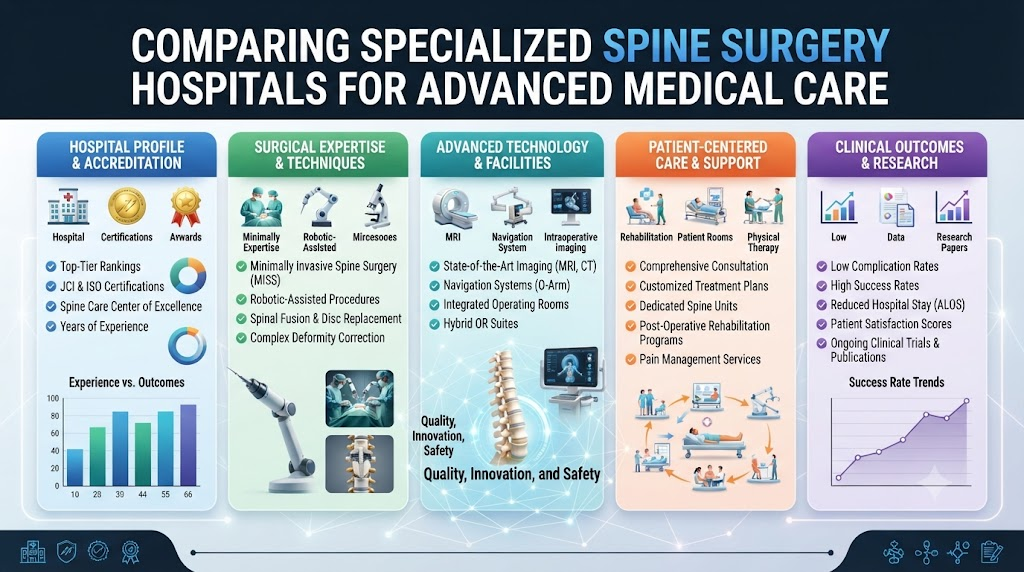
Navigating a spine-related health issue can feel overwhelming. Back and neck concerns range from mild discomfort to severe, debilitating conditions that interfere with daily living. Because the spine supports structural movement, balance, and neurological function, finding appropriate medical care is one of the most critical decisions a patient can make.Spine problems rarely follow a one-size-fits-all trajectory. A condition that causes sharp pain for one individual might present as numbness, weakness, or localized stiffness in another. Diagnostic accuracy, clinical expertise, available technology, and post-treatment support vary widely across medical facilities. Consequently, taking time to research and compare healthcare providers helps ensure that patients receive treatment tailored to their specific diagnosis, general health, and personal goals.
Understanding Spine Care
Spine care encompasses a broad spectrum of diagnostic, conservative, interventional, and surgical services. The spine is a complex structure composed of vertebrae, intervertebral discs, the spinal cord, nerve roots, muscles, and ligaments. Problems can originate in any of these components, requiring specific diagnostic tools and clinical management strategies.
Common spinal conditions evaluated by specialists include:
- Back and Neck Pain: Persistent or acute pain stemming from muscle strain, facet joint arthritis, or structural stress.
- Herniated or Slipped Discs: Occurs when the soft inner material of a spinal disc pushes through the outer ring, potentially compressing nearby nerves.
- Spinal Stenosis: A narrowing of the spinal canal that places pressure on the spinal cord or nerves, often causing pain or numbness during movement.
- Scoliosis and Spinal Deformities: Abnormal lateral or rotational curvatures of the spine that can affect posture, mobility, and in severe cases, internal organ function.
- Degenerative Spine Conditions: Age-related changes in discs and joints, such as osteoarthritis or degenerative disc disease.
- Spinal Injuries: Trauma resulting from accidents or falls that affect vertebrae, discs, or spinal cord integrity.
- Nerve-Related Symptoms: Sciatica, radiculopathy, or tingling that travels into the arms or legs due to nerve root compression.
Treatment approaches depend entirely on the specific underlying diagnosis, symptom severity, and clinical findings. Modern spine management prioritizes conservative care whenever clinically appropriate. Non-surgical modalities may include targeted physical therapy, medical management, lifestyle adjustments, physical rehabilitation, and image-guided injections. Surgery is generally considered only when conservative options fail to provide relief or when neurological deficits require intervention.
What to Look for When Choosing the Best Spine Hospital
Selecting a healthcare facility involves evaluating several key factors that influence overall clinical quality and patient experience. The best spine hospitals typically offer comprehensive care pathways that address every phase of treatment, from initial evaluation through post-recovery monitoring.
Patients researching high-quality facilities should consider the following elements:
- Specialized Clinical Expertise: Look for hospitals that feature dedicated spine centers or specialized orthopedic and neurosurgical departments.
- Diagnostic Capabilities: Comprehensive facilities maintain advanced imaging technologies, including high-resolution MRI, CT scans, and digital X-rays, ensuring accurate diagnostic assessment.
- Multidisciplinary Teams: Optimal care plans often involve collaboration between neurosurgeons, orthopedic spine specialists, physiatrists, pain management experts, and physical therapists.
- Full Range of Treatment Modalities: A facility should provide robust non-surgical options alongside surgical capabilities, ensuring treatment recommendations remain unbiased.
- Rehabilitation Infrastructure: Integrated physical therapy and rehabilitation units support physical recovery and functional improvement after treatment.
- Infection Control and Safety Protocols: Verified safety standards, clean operating environments, and low complication rates reflect institutional quality.
- Patient Communication and Support: Clear communication, supportive nursing staff, and transparent care plans help patients navigate their treatment journey smoothly.
- Location and Practical Accessibility: Consider proximity for initial visits, follow-up appointments, and ongoing rehabilitation therapy.
Evaluating these criteria allows patients to identify institutions that prioritize patient safety, clinical precision, and long-term recovery support.
How to Compare the Best Spine Surgery Hospitals
When surgical intervention becomes a potential consideration, comparing specialized surgical facilities becomes paramount. Operating on or near the spinal cord requires precise surgical environments, advanced technical support, and experienced surgical teams.
Comparing specialized spine surgery hospitals involves looking at institutional infrastructure. Patients should assess whether a hospital routinely handles complex spinal procedures. Facilities equipped with modern operating theaters, intraoperative navigation systems, neuromonitoring capabilities, and specialized anesthesia teams provide an added layer of safety during intricate operations.
Equally important is the hospital’s postoperative framework. Intensive care support, dedicated surgical recovery units, and specialized nursing care contribute significantly to patient safety during the immediate post-surgical window. Examining how a facility manages preoperative evaluation and postoperative monitoring ensures that potential complications are identified and addressed promptly.
How to Choose the Best Hospital for Spine Surgery
For patients who have received a recommendation for surgery, choosing the right hospital involves aligning the facility’s specific strengths with the recommended procedure. Different hospitals may excel in different surgical techniques or clinical specialties.
When evaluating a facility for a recommended procedure, patients should consider:
- Institutional Volume: Hospitals that perform high volumes of specific spine surgeries often demonstrate streamlined clinical processes and well-coordinated care teams.
- Technological Readiness: The availability of intraoperative imaging, robotic assistance, and specialized surgical equipment can enhance surgical precision.
- Subspecialty Focus: Certain surgical needs, such as complex deformity corrections or revision surgeries, require specialized institutional experience.
- Integrated Care Pathways: Facilities that seamlessly transition patients from surgery to inpatient monitoring and outpatient rehabilitation offer a smoother recovery process.
Surgical intervention should always be evaluated carefully following thorough diagnostic review and consultation with qualified medical professionals.
Finding the Best Spine Hospital Near Me
Geographic proximity plays an important role in practical healthcare planning. While seeking top-tier clinical expertise is a priority, long travel distances can add stress, physical discomfort, and logistical complexity, particularly during recovery.
When evaluating local care options, patients should balance convenience with clinical capability. Local facilities are ideal for routine diagnostic consultations, physical therapy sessions, and routine follow-up appointments. However, for highly specialized or rare conditions, traveling to a regional center of excellence may be necessary.
Considerations for local care planning include:
- Travel Comfort: Post-procedural discomfort can make long car rides or flights difficult during early recovery.
- Follow-Up Accessibility: Frequent visits for physical therapy, wound monitoring, or follow-up imaging are easier to manage when the facility is accessible.
- Emergency Support: Proximity to the treating hospital ensures rapid access to care if unexpected symptoms arise after treatment.
- Family Support Systems: Local treatment allows family members and caregivers to provide assistance without unnecessary travel burdens.
Determining whether a local hospital meets specific treatment needs involves weighing proximity against the complexity of the required care.
How to Find the Best Spine Surgeons
The expertise, training, and experience of the operating surgeon or managing specialist directly impact treatment outcome and patient safety. Finding qualified spine specialists requires evaluating professional credentials, subspecialization, and practice experience.
Key areas to research when evaluating specialists include:
- Board Certification and Specialized Training: Verify that the physician holds appropriate certifications in orthopedic surgery or neurosurgery, ideally accompanied by fellowship training in spine surgery.
- Procedure-Specific Experience: Inquire about the specialist’s experience in performing the exact procedure or managing the specific condition in question.
- Clinical Approach: High-quality specialists take time to explain diagnostic findings, discuss conservative alternatives, and ensure patients understand all available options.
- Hospital Affiliations: Surgeons typically maintain privileges at specific hospitals; reviewing these affiliations provides insight into where procedures will take place.
- Communication Style: A strong physician-patient relationship rests on open communication, clear explanations, and thoughtful responses to patient concerns.
Selecting an appropriate specialist depends on matching the surgeon’s subspecialty background with the patient’s specific clinical diagnosis.
Understanding Spine Surgery Hospitals and Their Services
Specialized facilities offering comprehensive spinal care integrate multiple medical disciplines under one roof. Understanding the range of services provided helps patients understand what to expect throughout their care journey.
Typical services found within comprehensive facilities include:
- Diagnostic Imaging and Assessment: Digital X-rays, MRI, CT scanning, and electromyography (EMG) to evaluate structural and nerve function.
- Non-Surgical Interventional Services: Epidural steroid injections, facet joint injections, and nerve blocks performed by pain management specialists.
- Surgical Interventions: Decompression procedures, spinal fusion, disc replacement, and reconstructive surgeries.
- Inpatient and Outpatient Rehabilitation: Targeted physical therapy programs designed to restore mobility, strength, and core stability.
- Pain Management and Postoperative Care: Dedicated strategies to control acute post-procedure discomfort and facilitate physical recovery.
Access to an integrated system ensures that patient care transitions smoothly from initial evaluation to rehabilitation.
Minimally Invasive Spine Surgery
Minimally invasive spine surgery (MISS) represents a modern surgical approach designed to reduce tissue disruption compared to traditional open surgical methods. Rather than making long incisions and dissecting extensive muscle tissue, minimally invasive techniques utilize specialized instruments, tubular retractors, and intraoperative imaging to reach the spine through smaller openings.
Potential aspects of minimally invasive approaches include:
- Reduced Muscle Disruption: Techniques are designed to dilate rather than cut underlying soft tissues.
- Smaller Incisions: Smaller surgical sites generally result in less surgical scarring.
- Focused Surgical Access: Surgeons use specialized visualization tools, such as microscopes or endoscopes, to view the surgical field.
- Varied Recovery Timelines: Certain procedures may allow for shorter hospital stays, depending on individual patient health and procedure complexity.
Minimally invasive surgery is not appropriate for every spinal condition or anatomical structure. Complex deformities, extensive multi-level degeneration, or severe spinal trauma may still require traditional open techniques. A qualified spine specialist evaluates anatomy, diagnosis, and overall patient health to determine whether a minimally invasive approach is clinically suitable.
Choosing the Best Hospital for Scoliosis Surgery
Scoliosis involves an abnormal side-to-side curvature and rotation of the spine. It can affect children, adolescents, and adults. Treatment strategies vary based on patient age, curve severity, structural stability, symptom progression, and general health.
When evaluating hospitals for scoliosis management, consider the following structural requirements:
- Age-Specific Expertise: Pediatric scoliosis requires specialized pediatric orthopedic teams, while adult scoliosis often involves managing concurrent degenerative changes.
- Advanced Imaging and Deformity Mapping: Specialized full-spine standing X-rays and 3D imaging assist in detailed surgical planning.
- Experienced Deformity Surgeons: Scoliosis procedures require surgical teams with extensive experience in spinal instrumentation and realignment techniques.
- Intraoperative Neuromonitoring: Continuous nerve monitoring during surgery helps protect spinal cord function during corrective maneuvers.
- Long-Term Follow-Up Care: Scoliosis management often involves ongoing monitoring throughout growth phases or extended postoperative recovery.
Non-surgical approaches, such as bracing and physical therapy, are frequently used to monitor or manage milder curves, while surgical options are reserved for progressive or severe deformities after thorough medical evaluation.
Choosing the Best Hospital for Slipped Disc Treatment
A herniated or slipped disc occurs when the soft inner gel of a spinal disc bulges or leaks through its outer layer. This can cause localized back or neck pain, as well as radiating symptoms such as sciatica, numbness, or weakness in the arms or legs.
Facilities offering disc care should provide a balanced mix of treatment options, including:
- Conservative Care Protocols: Structured physical therapy, core stabilization exercises, and activity modifications designed to relieve nerve pressure naturally over time.
- Targeted Interventional Care: Image-guided epidural injections to decrease localized inflammation around irritated nerve roots.
- Surgical Options: Procedures such as microdiscectomy or disc replacement when non-surgical treatments do not yield improvement or when significant nerve compression persists.
- Diagnostic Precision: Advanced MRI imaging to pinpoint the exact location and severity of disc displacement.
Many slipped disc cases resolve or improve significantly with non-surgical care. Facilities that prioritize comprehensive initial evaluations help ensure that patients explore non-invasive treatments before considering surgical options.
What Makes the Best Spine Treatment Hospitals Different?
The distinction between general healthcare facilities and high-performing spine treatment hospitals lies in institutional focus, resource allocation, and care integration. High-caliber facilities focus on deliverable quality metrics, patient safety standards, and multidisciplinary coordination.
Core attributes that set specialized institutions apart include:
- Multidisciplinary Case Review: Complex cases are reviewed by teams including neurosurgeons, orthopedic surgeons, radiographers, and pain specialists to establish well-rounded care plans.
- Emphasis on Patient Education: Institutions empower patients by providing detailed information about their condition, treatment alternatives, risks, and expected outcomes.
- Structured Rehabilitation: Recovery protocols are integrated directly into treatment plans, ensuring continuity between surgical teams and physical therapists.
- Outcome Tracking and Quality Metrics: Leading facilities monitor procedural outcomes, infection rates, and patient satisfaction to maintain high clinical standards.
A well-rounded, patient-centered framework ensures that individuals receive continuous support throughout diagnosis, treatment, and long-term recovery.
How to Prepare for a Spine Consultation
A consultation with a spine specialist provides an opportunity to discuss symptoms, review diagnostic imaging, and evaluate potential treatment paths. Preparing effectively helps maximize the value of the appointment.
Bring Relevant Medical Records
Organize all health documents prior to your visit:
- Previous diagnostic imaging, including physical discs or digital access to MRI, CT, or X-ray files.
- Written radiologist reports associated with recent imaging studies.
- Records of previous treatments, including physical therapy notes, injection details, or prior surgical reports.
- A list of current medications, dosages, and medical conditions.
Describe Symptoms Clearly
Be ready to explain physical symptoms accurately:
- When the pain or discomfort first began and how it has evolved over time.
- The exact location of symptoms and whether pain travels to the shoulders, arms, buttocks, or legs.
- Any accompanying sensations, such as numbness, tingling, burning, or muscle weakness.
- Specific movements, positions, or physical activities that aggravate or relieve symptoms.
- How symptoms affect daily activities, sleep, work, and mobility.
Prepare Questions
Bring a written list of questions to guide the conversation regarding diagnosis, conservative options, risks, and recovery expectations.
Share Relevant Medical History
Disclose your complete medical background, including past medical conditions, prior surgeries, drug allergies, and family health history. Complete disclosure enables specialists to formulate safe treatment options.
Ask About Treatment Options
Discuss the full range of management strategies available for your condition. Inquire about non-surgical alternatives, lifestyle adjustments, and physical therapy alongside any interventional or surgical recommendations.
Questions to Ask a Spine Surgeon
When meeting with a specialist to discuss treatment options or potential surgery, asking targeted questions provides clarity and builds confidence in your care plan.
Consider asking the following questions during your appointment:
- What is the precise diagnosis causing my current symptoms?
- Are there non-surgical treatment options that should be attempted before considering surgery?
- What are the potential benefits, risks, and complications associated with the recommended treatment?
- What specific procedure is being recommended, and why is it suitable for my condition?
- How many times have you performed this specific procedure?
- What type of recovery timeline, hospital stay, and physical rehabilitation should I expect?
- What are the potential consequences of delaying or declining surgical treatment at this time?
- Will I require post-procedure physical therapy, and for how long?
- How will pain management be handled immediately after treatment?
Common Mistakes to Avoid When Choosing a Spine Hospital
Navigating spine care options requires critical thinking. Avoiding common research pitfalls helps patients select facilities and specialists based on objective healthcare criteria rather than superficial details.
Key mistakes to avoid include:
- Relying Solely on Online Search Positions: High search engine visibility does not automatically guarantee superior clinical care or surgeon expertise.
- Assuming Higher Cost Equals Better Quality: High treatment costs do not inherently correlate with better medical outcomes or safer care environments.
- Selecting a Specialist Without Verifying Relevant Experience: Ensure the physician routinely manages your specific condition or performs the required procedure.
- Focusing Exclusively on Surgery: Avoid overlooking non-surgical management options, conservative therapies, and physical rehabilitation.
- Disregarding Rehabilitation Requirements: Post-treatment physical therapy is vital to recovery; choose a hospital with strong rehabilitation support.
- Depending Entirely on Unverified Online Reviews: Online ratings can be subjective; balance patient reviews with credential verification and formal consultations.
- Believing Guaranteed Medical Claims: Reputable medical institutions never guarantee specific surgical outcomes or 100% pain relief.
- Delaying Evaluation Due to Information Overload: While online research is valuable, it should not replace timely professional medical evaluation.
How BestSpineHospitals Can Help Patients Research Their Options
Navigating healthcare choices becomes much more manageable when patients have access to structured, objective information. Independent healthcare research platforms serve as practical resource tools during this evaluation phase.
BestSpineHospitals helps individuals research and compare spine hospitals, specialists, treatment options, and specialized surgical procedures. By compiling essential information into an accessible directory, the platform allows users to explore care options based on practical parameters such as location, treatment requirements, specialist availability, and institutional capabilities.
Patients researching options for chronic back pain, disc disorders, spinal deformities, or minimally invasive procedures can use BestSpineHospitals to review facility infrastructure, understand clinical service offerings, and prepare for medical consultations. By streamlining the initial research phase, the platform assists patients in making well-informed healthcare decisions alongside qualified medical professionals.
The Role of Rehabilitation in Spine Care
Rehabilitation forms a core component of comprehensive spinal treatment. Whether managing a condition conservatively or recovering from a surgical procedure, structured physical rehabilitation helps restore physical function, mobility, and muscular stability.
Key components of spine rehabilitation include:
- Targeted Physical Therapy: Exercises designed to strengthen core muscles, improve spinal flexibility, and alleviate pressure on surrounding structures.
- Postoperative Physical Recovery: Structured rehabilitation plans that guide safe movement, wound healing, and gradual restoration of physical activity following surgery.
- Ergonomic and Activity Education: Guidance on posture, safe lifting techniques, and daily activity modifications to protect spinal health.
- Functional Mobility Training: Exercises focused on balance, walking mechanics, and overall functional independence.
Rehabilitation requirements vary based on diagnosis, overall physical health, and the specific treatment path chosen. Collaborating with qualified physical therapists ensures that recovery progresses safely and effectively.
The Growing Role of Digital Healthcare Research
Digital technology has transformed how patients approach healthcare planning. Access to online medical resources enables individuals to take an active role in understanding their symptoms, exploring potential conditions, and researching available care providers.
Digital healthcare research tools offer several practical advantages:
- Access to Facility Information: Online platforms allow patients to review hospital specialties, available diagnostic equipment, and treatment offerings from home.
- Specialist Credentials and Backgrounds: Patients can research physician training, board certifications, clinical interests, and practice locations.
- Educational Resources: Detailed articles, medical guides, and diagnostic explanations help patients better understand complex medical terminology.
- Streamlined Appointment Requests: Digital systems simplify connecting with care coordinators, submitting medical records, and scheduling initial consultations.
While digital research offers substantial value, online information is intended to support—not replace—direct evaluation, diagnostic testing, and clinical recommendations provided by qualified healthcare professionals.
Frequently Asked Questions About Spine Hospitals and Spine Treatment
1.How Do I Choose the Best Spine Hospital?
Choosing an appropriate spine hospital involves evaluating institutional factors such as specialized clinical expertise, diagnostic technology, surgeon qualifications, integrated rehabilitation services, and patient safety standards. Patients should also consider practical factors like geographic location, follow-up accessibility, and whether the facility offers a comprehensive mix of surgical and non-surgical care options tailored to their specific condition.
2.What Should I Look for in the Best Spine Surgeons?
When researching spine surgeons, verify board certification in neurosurgery or orthopedic surgery, along with specialized fellowship training in spine care. Evaluate the surgeon’s experience in managing your specific condition or performing the recommended procedure, their hospital affiliations, clear communication style, willingness to discuss conservative treatment alternatives, and commitment to thorough preoperative and postoperative patient care.
3.How Can I Find the Best Spine Hospital Near Me?
Finding a suitable nearby facility involves researching local hospital departments that specialize in orthopedics, neurosurgery, or dedicated spine care. Patients should review available diagnostic equipment, specialist credentials, patient safety records, and integrated rehabilitation services. While local convenience is valuable for ongoing follow-up and physical therapy, clinical capability should remain the primary factor when choosing treatment for complex spinal conditions.
4.When Is Spine Surgery Usually Considered?
Spine surgery is typically evaluated when conservative, non-surgical treatments—such as physical therapy, lifestyle modifications, and medication—have failed to provide adequate relief over a reasonable period. Surgery may also be considered promptly when severe structural instability, progressive nerve compression, or acute neurological deficits (such as severe weakness or bowel/bladder dysfunction) are present, as determined by professional medical evaluation.
5.Is Minimally Invasive Spine Surgery Suitable for Everyone?
Minimally invasive spine surgery is not suitable for all spinal conditions or anatomical variations. While it offers benefits such as smaller incisions and reduced muscle disruption for selected patients, suitability depends on the specific diagnosis, the location and severity of the spinal issue, patient health history, and surgeon assessment. Complex deformities or extensive structural degeneration may still require traditional surgical approaches.
6.How Do I Choose a Hospital for Scoliosis Treatment?
Choosing a facility for scoliosis treatment requires looking for hospitals with specialized experience in spinal deformity care. Key elements include access to full-spine digital imaging, intraoperative nerve monitoring, experienced deformity surgeons, and age-appropriate clinical care (pediatric or adult). A good facility should offer comprehensive management options, ranging from bracing and non-surgical monitoring to advanced corrective surgical procedures.
7.What Should I Consider When Choosing a Hospital for Slipped Disc Treatment?
When selecting a hospital for disc-related care, evaluate facilities that offer a full range of conservative and surgical treatment modalities. Look for advanced MRI diagnostic capabilities, structured physical therapy programs, interventional pain management options, and specialized surgeons experienced in microdiscectomy or disc replacement. Facilities that emphasize conservative management before recommending surgery generally offer well-rounded patient care.
8.Do All Spine Problems Require Surgery?
No, the majority of spine-related issues do not require surgical intervention. Many conditions, including acute muscle strains, mild disc herniations, and localized degenerative changes, resolve or improve significantly with non-surgical treatments such as physical therapy, activity modification, targeted injections, and medication. Surgery is generally reserved for specific clinical indications after non-surgical options have been explored.
9.What Should I Bring to a Spine Consultation?
Patients attending a spine consultation should bring all relevant medical records, including physical discs or digital access to MRI, CT, or X-ray imaging, along with corresponding radiologist reports. Additionally, bring a complete list of current medications, details of past treatments or physical therapy, medical history notes, and a written list of questions regarding diagnosis and treatment options.
10.Can BestSpineHospitals Help Me Research Spine Hospitals and Surgeons?
BestSpineHospitals provides a platform for patients seeking to explore and compare spine care options. The directory allows users to research spine hospitals, specialists, procedures, and treatment modalities based on criteria such as location, specialized services, and clinical needs, helping patients gather useful information before consulting with qualified medical professionals.
Conclusion
Making informed decisions regarding spine care requires careful research, objective evaluation, and professional medical guidance. Because spinal conditions vary greatly in complexity, finding a facility and specialist equipped to deliver accurate diagnostics, individualized treatment plans, and post-recovery support is essential.When exploring healthcare options, patients should look beyond superficial marketing details and focus on clinical expertise, diagnostic technology, surgeon qualifications, non-surgical treatment pathways, and rehabilitation capabilities. Location and practical accessibility also play an important role, ensuring that follow-up care and therapy remain manageable throughout recovery.