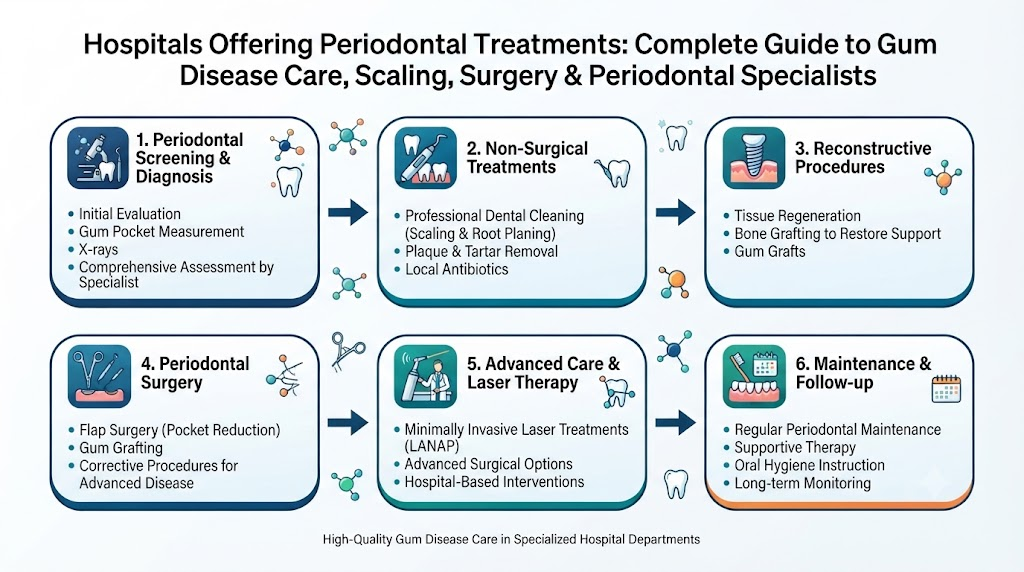
When we think about dental health, we often focus primarily on our teeth—brushing to prevent cavities or visiting the dentist to check for a bright, clean smile. However, the foundation of every healthy smile lies in the gums and supporting structures beneath the surface. Without healthy gums, even the strongest teeth can lose their stability.At BESTDENTALHOSPITALS, we believe that well-informed patients make the best healthcare decisions for themselves and their families. This comprehensive guide explores gum disease, professional treatment options, advanced technologies, hospital selection criteria, and what to expect during your recovery journey.
What Is Periodontal Disease?
To understand periodontal disease, it helps to look at how it develops. Every day, a sticky film of bacteria called plaque forms on our teeth. When plaque is not thoroughly removed through brushing and flossing, it hardens into tartar (calculus), which irritates the gum tissue.
Periodontal disease generally develops in two main stages:
- Gingivitis: The early, reversible stage of gum disease characterized by red, swollen gums that may bleed easily during brushing or flossing. Bone and tissue support are not yet affected at this stage.
- Periodontitis: If gingivitis is left untreated, it advances into periodontitis. The inner layer of the gum and bone pull away from the teeth, forming spaces (pockets) that collect debris and become infected. As the body’s immune system fights the bacteria, the bone and connective tissue holding teeth in place are gradually broken down.
Periodontal disease begins with gingivitis and may progress to periodontitis if left untreated, affecting the gums, bone, and tissues that support the teeth. (CDC) Early diagnosis and treatment are vital to stopping this destructive progression.
Common Signs and Symptoms
Recognizing the early warning signs of gum disease can help you seek professional evaluation before permanent damage occurs. Watch out for these common symptoms:
- Bleeding Gums: Gums that bleed easily when brushing, flossing, or eating hard foods.
- Swollen or Red Gums: Tender, puffy, or discolored gum tissue that looks inflamed.
- Persistent Bad Breath: Chronic halitosis or a bad taste in the mouth that does not go away with brushing or mouthwash.
- Gum Recession: Gums pulling away from the teeth, making your teeth look longer than before.
- Loose Teeth: Shifting or mobility in adult teeth caused by loss of underlying bone support.
- Pain While Chewing: Discomfort or sensitivity when biting down on food.
- Deep Gum Pockets: Spaces developing between teeth and gums where bacteria accumulate.
- Tooth Sensitivity: Increased sensitivity to hot, cold, or sweet foods due to exposed tooth roots.
Periodontal Treatment Services Comparison Table
| Service | Primary Purpose | Benefit |
|---|---|---|
| Periodontal Consultation | Evaluate gum health and pocket depths | Personalized treatment plan tailored to your needs |
| Scaling & Root Planing | Remove plaque and tartar below the gums | Reduces bacterial infection and inflammation |
| Antibiotic Therapy | Control stubborn bacterial pockets | Supports tissue healing alongside deep cleaning |
| Periodontal Surgery | Treat advanced gum disease and bone loss | Access deep infected areas for thorough cleaning |
| Gum Grafting | Restore receding gums and cover roots | Protects tooth roots and improves aesthetics |
| Dental Implant Support | Replace missing teeth when appropriate | Restore oral function and smile appearance |
Services Offered by Leading Periodontal Hospitals
Specialized dental hospitals and periodontal centers offer a full spectrum of diagnostic, therapeutic, and maintenance services designed to tackle gum disease at every stage.
- Comprehensive Gum Evaluation: Detailed clinical assessments including professional periodontal charting and risk profiling.
- Digital Dental Imaging: Advanced X-rays that reveal bone levels and hidden structural damage.
- Scaling and Root Planing: A meticulous deep-cleaning procedure that cleans plaque and tartar from tooth root surfaces.
- Local Antimicrobial Therapy: Application of targeted antibiotics or antiseptic chips directly into deep gum pockets.
- Periodontal Flap Surgery: A surgical procedure to lift the gum tissue, clean deep root surfaces, and smooth damaged bone.
- Bone Grafting: Procedures to rebuild jawbone lost to advanced periodontitis using natural or synthetic grafting materials.
- Soft Tissue (Gum) Grafting: Taking tissue from another area of the mouth to cover exposed roots and reinforce thin gums.
- Guided Tissue Regeneration: Using specialized membranes to encourage the body to regrow lost bone and tissue.
- Crown Lengthening: Adjusting gum and bone levels to expose more tooth structure for restorative purposes.
- Dental Implant Procedures: Surgically placing titanium fixtures to replace hopelesly compromised or missing teeth.
- Periodontal Maintenance Programs: Ongoing, customized supportive cleanings scheduled at regular intervals.
Scaling and root planing is commonly the first-line non-surgical treatment for periodontitis. Advanced cases may require surgical procedures such as flap surgery, grafting, or regenerative techniques. (American Academy of Periodontology)
Advanced Technologies Used in Modern Periodontal Care
Technological innovations have made periodontal treatments more precise, efficient, and comfortable for patients than ever before.
- Digital Periodontal Charting: Automated probing systems that record pocket depths accurately and track changes over time.
- Digital Dental X-rays: Low-radiation imaging offering immediate, crystal-clear views of jawbone structures.
- Cone Beam CT (CBCT): 3D imaging technology that provides detailed anatomical views for complex surgical and implant planning.
- Ultrasonic Scaling Systems: High-frequency vibration tools that gently and effectively remove hardened tartar without harming tooth enamel.
- Laser-Assisted Periodontal Therapy: Specialized dental lasers used to target bacteria, reduce inflammation, and promote tissue healing with minimal discomfort.
- Guided Tissue Regeneration Techniques: Advanced barrier membranes that support biological tissue regrowth in damaged bone areas.
- Digital Implant Planning: Computer-guided software designed to plan and execute precise dental implant placements.
How to Choose the Right Hospital for Periodontal Treatment
Finding the right medical facility and specialist is essential for achieving successful long-term outcomes.
Key factors to evaluate when researching dental hospitals include:
- Experienced Periodontists: Board-certified dental specialists with advanced training dedicated exclusively to gum diseases and dental implants.
- Comprehensive Diagnostic Services: Access to advanced imaging and thorough periodontal charting.
- Advanced Periodontal Technology: Utilization of modern ultrasonic scalers, lasers, and 3D imaging tools.
- Dental Implant Expertise: Seamless coordination between gum treatment and restorative tooth replacement.
- Personalized Treatment Plans: Customized care strategies based on your specific disease severity and overall health.
- Strong Infection Control Standards: Rigorous sterilization protocols ensuring a safe clinical environment.
- Long-Term Maintenance Programs: Dedicated recall schedules to support lifelong gum health.
Hospital Selection Checklist
| Feature | Why It Matters |
|---|---|
| Experienced Periodontists | Specialized gum disease care and surgical expertise |
| Advanced Imaging | Accurate diagnosis and detailed bone level assessment |
| Non-Surgical & Surgical Options | Comprehensive treatment spectrum for mild to severe cases |
| Dental Implant Services | Complete restorative care if tooth replacement becomes necessary |
| Modern Equipment | Efficient, comfortable, and precise dental procedures |
| Maintenance Program | Long-term oral health support to prevent disease recurrence |
Diagnostic Evaluation Before Treatment
Before any therapeutic intervention begins, your periodontist will perform a thorough diagnostic workup to evaluate the extent of gum disease.
- Medical and Dental History: Reviewing overall health conditions like diabetes, smoking habits, medications, and family history of gum disease.
- Clinical Gum Examination: Visually inspecting gum color, texture, swelling, and bleeding tendencies.
- Periodontal Pocket Measurements: Using a specialized periodontal probe to measure the depth of the spaces between your teeth and gums.
- Dental X-rays: Assessing the height and density of the jawbone supporting your teeth.
- Bone Loss Assessment: Identifying specific areas where bone has deteriorated due to chronic inflammation.
- Plaque Evaluation: Checking oral hygiene efficiency and bacterial buildup.
- Treatment Planning Consultation: Discussing findings, explaining recommended treatments, and addressing any questions or concerns.
What to Expect During Periodontal Treatment
Knowing what happens during your appointments helps alleviate anxiety and prepares you for the healing process.
- Initial Consultation: Meeting the periodontist to discuss your symptoms and review diagnostic test results.
- Deep Cleaning Procedures: For early to moderate cases, scaling and root planing is performed to clean below the gumline.
- Local Anesthesia (When Required): Numbing medication is applied to ensure you remain completely comfortable during deep cleaning or surgical procedures.
- Surgical Treatment (If Needed): Flap surgery, bone grafting, or tissue regeneration performed in a sterile, comfortable clinical setting.
- Post-treatment Instructions: Clear guidance on eating, oral hygiene, and pain management following your procedure.
- Follow-up Visits: Scheduled appointments to check healing progress and evaluate tissue response.
- Long-Term Periodontal Maintenance: Transitioning into supportive maintenance cleanings every few months to keep disease under control.
Recovery After Periodontal Treatment
Healing time varies depending on whether you received non-surgical scaling or advanced surgical interventions.
- Mild Discomfort and Sensitivity: Temporary soreness, tenderness, or thermal sensitivity can be managed with prescribed or over-the-counter pain relievers.
- Oral Hygiene Recommendations: Using soft-bristled toothbrushes, gentle rinsing solutions, or prescribed antimicrobial mouthwashes.
- Dietary Adjustments: Eating soft, cool, or lukewarm foods during the initial days following gum surgery, avoiding crunchy or spicy items.
- Medication Use: Taking any prescribed antibiotics or anti-inflammatory medications exactly as directed by your periodontist.
- Follow-up Appointments: Attending scheduled post-op checks to remove sutures (if non-dissolvable) and ensure proper tissue healing.
- Ongoing Maintenance Cleanings: Sticking to frequent professional cleanings (every 3 to 4 months) to prevent bacteria from re-establishing deep pockets.
Successful long-term management depends on professional care combined with consistent brushing, flossing, and routine dental visits. Tobacco avoidance and good oral hygiene help reduce recurrence. (Mayo Clinic)
Possible Risks and Complications
While periodontal treatments are generally safe and highly effective, any dental procedure carries minor risks that your specialist will discuss with you:
- Temporary Bleeding: Minor oozing from the gums immediately following scaling or surgery.
- Gum Sensitivity: Heightened sensitivity to hot and cold temperatures as gum tissues heal and recede slightly.
- Infection: A rare risk that is minimized through strict sterile protocols and post-treatment care.
- Tooth Sensitivity: Root exposure resulting from reduced swelling or recession.
- Gum Recession: Natural shrinking of gum tissue as inflammation resolves.
- Need for Additional Treatment: Complex cases may require follow-up regenerative procedures.
- Tooth loss if disease progresses untreated: Allowing periodontitis to remain unchecked ultimately destroys the bone holding teeth in place.
How BESTDENTALHOSPITALS Helps Patients
Navigating dental healthcare information can sometimes feel overwhelming. BESTDENTALHOSPITALS serves as a trusted educational platform designed to empower readers:
- Dental Hospital Discovery: Helping individuals understand what features to look for in specialized dental centers.
- Periodontal Care Education: Breaking down complex dental conditions into clear, understandable explanations.
- Gum Disease Treatment Information: Providing structured guides on scaling, root planing, and surgical care.
- Hospital Comparison: Offering objective criteria to evaluate specialized dental clinics.
- Patient Guidance Resources: Equipping readers with practical checklists and preparation tips.
- Informed Decision-Making: Supporting patients in asking the right questions during dental consultations.
Common Mistakes People Mistakes
When managing gum health, avoiding common pitfalls can make the difference between successful recovery and ongoing disease progression:
- Ignoring Bleeding Gums: Assuming that bleeding during brushing is normal.
- Delaying Dental Visits: Waiting until severe pain or loose teeth occur before seeing a dentist.
- Poor Brushing and Flossing Habits: Skipping daily flossing or brushing too aggressively.
- Smoking Despite Gum Disease: Continuing tobacco use, which restricts blood flow to gums and impairs healing.
- Skipping Maintenance Appointments: Stopping supportive cleanings once acute symptoms subside.
- Assuming Symptoms Will Resolve Without Treatment: Hoping periodontitis will clear up on its own.
Common Myths vs Facts
| Myth | Fact |
|---|---|
| Bleeding gums are normal | Healthy gums should not bleed regularly during brushing or flossing |
| Tooth loss is an inevitable part of aging | Many natural teeth can be preserved throughout life with proper periodontal care and oral hygiene |
| Deep cleaning is the same as routine cleaning | Scaling and root planing is a specialized therapeutic procedure targeting plaque and tartar below the gumline |
| Gum disease only affects the gums | Advanced periodontitis destroys underlying jawbone and supporting tissues, threatening tooth stability |
Real-Life Educational Scenarios
To see how these concepts apply in daily life, consider these common educational examples:
Scenario 1: Managing Early Gingivitis
A patient notices occasional bleeding when brushing and visits their dentist. Diagnosed with early gingivitis, they receive a professional dental cleaning, receive instructions on proper flossing techniques, and improve their daily home care. Within weeks, their gums return to a healthy, pink, non-bleeding state.
Scenario 2: Scaling and Root Planing for Periodontitis
An individual experiences persistent bad breath and swollen gums. A periodontal evaluation reveals moderate pocket depths. The periodontist performs scaling and root planing under local anesthesia, successfully removing subgingival tartar and bacterial buildup, resulting in reduced pocket depths and healthier gums.
Scenario 3: Gum Grafting for Significant Recession
A patient notices noticeable root exposure and tooth sensitivity due to receding gums. After consulting a periodontist, they undergo a soft tissue gum graft procedure. The graft successfully covers the exposed roots, protects the teeth, and eliminates sensitivity.
Scenario 4: Long-Term Maintenance After Surgery
Following successful periodontal flap surgery for advanced periodontitis, a patient commits to a structured periodontal maintenance program. By attending supportive cleanings every three months and maintaining rigorous daily oral hygiene, they successfully stabilize their bone levels and preserve their natural teeth.
Frequently Asked Questions
1. What is periodontal disease?
Periodontal disease is a chronic bacterial infection that damages the soft tissues and bone supporting the teeth, starting as gingivitis and potentially progressing to periodontitis.
2. What causes gum disease?
Gum disease is primarily caused by plaque and tartar buildup containing harmful bacteria, exacerbated by smoking, genetics, hormonal changes, and medical conditions like diabetes.
3. What is scaling and root planing?
Scaling and root planing is a deep-cleaning non-surgical procedure where plaque and tartar are meticulously removed from tooth roots and bacterial toxins are smoothed away.
4. When is periodontal surgery recommended?
Periodontal surgery is recommended for advanced cases of periodontitis where deep pockets and bone loss cannot be adequately cleaned with non-surgical methods alone.
5. Can gum disease be reversed?
Gingivitis (the early stage) can be completely reversed with professional cleaning and good oral hygiene, while periodontitis can be successfully controlled and managed to prevent further damage.
6. What are the symptoms of periodontitis?
Symptoms include swollen or bleeding gums, persistent bad breath, receding gums, loose teeth, pain while chewing, and deep periodontal pockets.
7. How is gum disease diagnosed?
Dentin and periodontists diagnose gum disease through clinical examinations, medical history reviews, periodontal probing pocket measurements, and dental X-rays.
8. How long does periodontal treatment take?
Non-surgical scaling and root planing typically takes one to two appointments, while surgical procedures and healing times vary based on case complexity.
9. Will treatment be painful?
Local anesthesia is used during deep cleanings and surgical procedures to ensure comfort, and post-treatment discomfort is easily managed with recommended medications.
10. What happens after periodontal surgery?
After surgery, patients follow specific post-op care instructions, take prescribed medications, attend follow-up checkups, and transition into regular maintenance cleanings.
11. How can I prevent gum disease from returning?
Prevent recurrence by brushing twice daily, flossing daily, avoiding tobacco use, eating a balanced diet, and attending regular professional dental checkups.
12. Can periodontal disease lead to tooth loss?
Yes, if left untreated, advanced periodontitis destroys the bone and connective tissues holding teeth in place, eventually leading to loose teeth and tooth loss.
13. How do I choose the right periodontal hospital?
Look for experienced board-certified periodontists, advanced diagnostic imaging, comprehensive non-surgical and surgical options, and robust maintenance programs.
14. Why are maintenance visits important?
Maintenance visits allow periodontists to monitor gum pocket depths, remove new plaque and tartar accumulation, and catch any signs of recurring infection early.
15. How does BESTDENTALHOSPITALS help patients find hospitals offering periodontal treatments?
It provides reliable educational resources, hospital selection guidance, comparison checklists, and clear information to help families navigate dental healthcare decisions.
Final Thoughts
Your gum health is an essential pillar of your overall well-being and confidence. Addressing gum disease early through professional evaluation and timely treatment can prevent long-term complications and protect your natural smile. Whether you need routine preventive care, scaling and root planing, or advanced periodontal surgery, specialized dental hospitals offer the expertise and technology required for optimal oral health.We encourage you to explore BESTDENTALHOSPITALS for trusted information about periodontal treatments, gum disease management, specialized dental hospitals, and patient education. Always consult qualified dentists or periodontists to receive professional medical evaluations and treatment recommendations tailored specifically to your unique dental health needs.