Introduction
A smile makeover may involve several dental treatments. People often compare dental hospitals before starting care. They may check services, dentists, costs, and patient experiences. Each smile makeover plan can be different. Your teeth, gums, goals, and needs all matter. BESTDENTALHOSPITALS can help people explore dental hospitals and care options.
What Is a Smile Makeover?
A smile makeover combines planned dental treatments. The goal may be to improve a person’s smile. It may also support tooth shape and appearance. Some plans include cosmetic dental care. Others may include restorative dental treatments. Good oral health should also remain important. A smile makeover does not mean a perfect smile. Treatment should match the person’s dental needs and goals.
What Treatments Can Be Part of a Smile Makeover?
Several treatments may form part of a smile makeover. Teeth whitening can change tooth color. Porcelain veneers can cover certain tooth surfaces. Dental bonding can repair some small chips. Crowns can restore damaged teeth. Tooth contouring can change some tooth shapes. Orthodontic care can address some alignment concerns. Dental implants may replace missing teeth when suitable. Not every person needs every treatment.
Who May Consider a Smile Makeover?
People may explore smile makeover care for many reasons. Some may have stained or discolored teeth. Others may have small chips or uneven shapes. Some people may have gaps between teeth. Worn teeth may also affect a smile. Missing teeth can create other concerns. However, a dentist must assess the mouth first. This helps identify the right care options.
Why Dental Health Comes Before Cosmetic Treatment
Healthy teeth and gums support good dental care. A dentist may check for tooth decay first. Gum problems may also need attention. Damaged teeth can affect treatment planning. Bite concerns may also need careful review. Missing teeth can change the overall plan. Cosmetic care may need to wait for other needs. A dental assessment helps create a safer plan.
What Makes a Hospital Suitable for Smile Makeovers?
A suitable dental hospital should have qualified dental professionals. Relevant cosmetic and restorative experience can also matter. Good diagnostic facilities can support treatment planning. Digital dental tools may improve planning and records. Sterile clinical practices are also important. Clear communication can make care easier to understand. Follow-up support should also be available. Patients should receive clear cost information before treatment.
How Dental Technology May Help
Dental technology can support modern treatment planning. Digital scans can create detailed dental images. Digital imaging can help dentists review tooth structures. Dental photography can record the smile before care. Digital smile planning may help discuss possible changes. Computer-assisted planning can support some procedures. However, technology does not guarantee a certain result. Professional assessment remains an important part of planning.
How to Compare Smile Makeover Hospitals
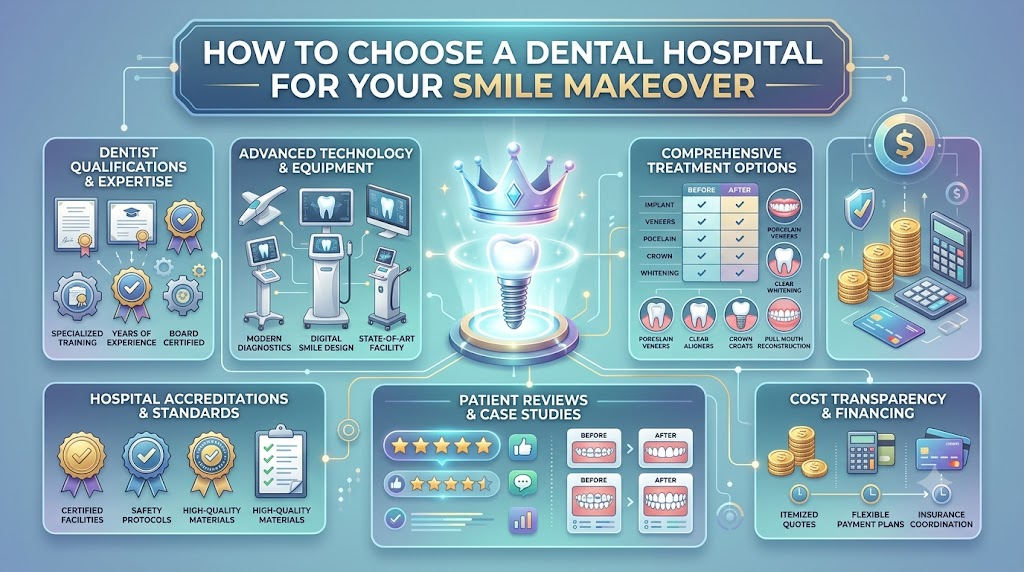
Start by checking the dental team’s qualifications. Look for experience with relevant treatments. Check which cosmetic services the hospital offers. Review its diagnostic and planning support. Ask about follow-up care after treatment. Check safety practices and clinical facilities. Compare cost details before making decisions. Location may matter if several visits are needed. BESTDENTALHOSPITALS.COM can support this hospital research process. Do not choose a hospital from one factor alone.
Smile Makeover Cost and Treatment Planning
Smile makeover costs can vary widely. The number of teeth can affect total costs. Different treatments can also change the price. Materials may have different costs. Dental laboratory work may also add expenses. Dentist experience and location can affect costs. Follow-up needs may also vary. Online prices may only be estimates. Ask for a written treatment plan and cost estimate. Make sure the estimate explains included services.
How Long Can a Smile Makeover Take?
Treatment time depends on the planned procedures. Simple whitening may need fewer visits. Larger restorative plans may take longer. Several treatments may require different appointments. Some procedures also need healing time. Your dentist can explain the expected schedule. Ask how many visits may be needed. Also ask when follow-up visits may occur. Avoid expecting a fixed timeline for every case.
What Should Patients Ask Before Treatment?
Good questions can make dental consultations easier. Ask which treatments may be needed. Ask why each treatment is suggested. Ask if other options are available. Ask about possible risks and limitations. Ask how many visits may be needed. Ask which materials will be used. Ask what the total cost includes. Ask about follow-up care after treatment. Also ask what happens if problems develop.
Smile Makeover vs Single Cosmetic Dental Treatment
A smile makeover may combine several treatments. A single cosmetic treatment usually has one main focus. For example, whitening mainly changes tooth color. Bonding may address certain small tooth changes. A broader plan may involve several dental concerns. Neither approach is always better. The right plan depends on dental needs and goals. A dentist can explain which options may fit your situation.
Smile Makeover vs Single Cosmetic Dental Treatment
| Factor | Smile Makeover | Single Cosmetic Treatment |
|---|---|---|
| Main purpose | Address several smile concerns | Focus on one concern |
| Number of treatments | May include several treatments | Usually one main treatment |
| Treatment planning | Broader planning may be needed | More focused planning |
| Visit needs | May require several visits | May need fewer visits |
| Cost factors | Depends on several treatments | Depends on one treatment |
| Patient suitability | Depends on several dental needs | Depends on the specific concern |
Patient Reviews and Smile Makeover Experiences
Patient reviews can help during hospital research. Reviews may describe staff communication. They may also discuss appointment experiences. Some patients mention hospital facilities. Others describe treatment support and follow-up care. These comments can show personal experiences. They cannot guarantee your own dental result. Never rely on one review alone. Look for repeated themes across several reviews.
Before-and-After Photos
Before-and-after photos can show possible treatment changes. However, photos have important limits. Lighting can change tooth appearance. Camera angles can also change how smiles look. Tooth shade may appear different in different photos. Editing can affect some images as well. Healing time can change the final appearance. Each person’s dental condition is different. One person’s result cannot promise another person’s result.
How BESTDENTALHOSPITALS.COM Can Help
BESTDENTALHOSPITALS.COM can help users research dental hospitals. Users can explore dental care and treatment information. They can review hospital options and locations. This can make early research more organized. Patients should still confirm current details with hospitals. They should also discuss treatment needs with a dentist. The platform cannot guarantee treatment quality or cosmetic results. Its information should support research, not replace professional care.
Practical Example
General example: A person may have several cosmetic dental concerns. They may compare hospitals before booking a consultation. They can review dental team qualifications and services. They can also compare treatment options and costs. Technology and follow-up care may also matter. Patient reviews can provide extra service information. The person can then prepare questions for the dentist. This is a general research approach, not a treatment recommendation.
Using AEO, GEO, LLMO, AISEO, and E-E-A-T
Good dental content should answer patient questions clearly. This supports AEO with direct and useful answers. GEO helps connect information with local search needs. LLMO helps AI systems understand clear dental content. AISEO supports content designed for AI search. E-E-A-T also matters in dental health content. It supports experience, expertise, authority, and trust. Clear information helps readers understand their options.
10 Frequently Asked Questions
1. What is a smile makeover?
A smile makeover combines planned dental treatments. It may address several appearance or dental concerns. Each plan should match the patient’s needs.
2. What treatments can be included in a smile makeover?
Options may include whitening, veneers, bonding, and crowns. Orthodontic care may also be considered. Dental implants may help with missing teeth when suitable.
3. How do I choose a hospital for a smile makeover?
Check dental qualifications and treatment experience. Review facilities, planning, safety, costs, and follow-up care. A consultation can help you ask personal questions.
4. Does everyone need several treatments for a smile makeover?
No. Treatment needs differ between people. Some people may need only one treatment. Others may need several planned treatments.
5. Should oral health be checked before cosmetic treatment?
Yes. Teeth and gums should be assessed first. Other dental concerns may affect treatment planning.
6. Can technology guarantee a better smile makeover result?
No. Technology can support planning and dental care. It cannot guarantee a specific cosmetic result.
7. Can patient reviews guarantee a good dental result?
No. Reviews describe personal experiences. They cannot predict your dental result or prove treatment quality.
8. How long can a smile makeover take?
Treatment time depends on the procedures involved. Some plans need several visits. Your dental team can explain the expected schedule.
9. What should I ask about smile makeover costs?
Ask for a written treatment plan. Ask what each cost includes. Also ask about laboratory work and follow-up costs.
10. How much can a smile makeover cost?
Costs vary based on treatment needs. The number of teeth, materials, and procedures can affect price. Ask your dental team for a personal estimate.
Final Thoughts
Smile makeover plans differ from person to person. Some people may need one treatment. Others may need several dental services. Patients should compare dental teams, facilities, costs, and follow-up care. They should also understand risks before treatment. A professional dental assessment can help explain suitable options. BESTDENTALHOSPITALS.COM can support dental hospital research. Use reliable information to make informed care decisions.