Introduction
Children’s dental health is a vital part of their overall well-being, but children’s dental problems can sometimes require more than routine checkups, cleanings, or basic fillings. Whether dealing with severe tooth decay, deep infections, dental trauma from a fall, impacted teeth, or developmental anomalies, certain dental and oral conditions in children may require surgical dental treatment. When a child needs specialized care that goes beyond a standard dental clinic, finding an appropriately equipped hospital or specialized dental facility becomes essential.Choosing the right hospital involves looking for qualified pediatric dental professionals, child-friendly care environments, appropriate anesthesia and monitoring support when needed, and comprehensive follow-up services. To explore resources for researching dental hospitals, pediatric dental services, specialists, procedures, and treatment options, parents and caregivers can visit Best Dental Hospitals as a helpful informational platform.
What Is Pediatric Dental Surgery?
Pediatric dental surgery encompasses specialized surgical and clinical procedures performed to treat oral, dental, and jaw conditions in infants, children, and adolescents. Unlike routine pediatric dentistry—which focuses on preventive care, sealants, cleanings, and simple fillings—surgical dental care involves more complex interventions that may affect the teeth, gums, supporting bone, or surrounding oral tissues.Children’s oral structures and developmental needs require specialized consideration because their primary (baby) teeth play a crucial role in guiding permanent teeth into place, supporting speech development, and ensuring proper nutrition. Pediatric dentists and oral surgeons use specialized techniques and child-appropriate communication to ensure that surgical care is delivered safely and comfortably. It is important to remember that not every child with a dental problem needs surgery; treatment decisions are always based on individual clinical evaluation.
When Might a Child Need Dental Surgery?
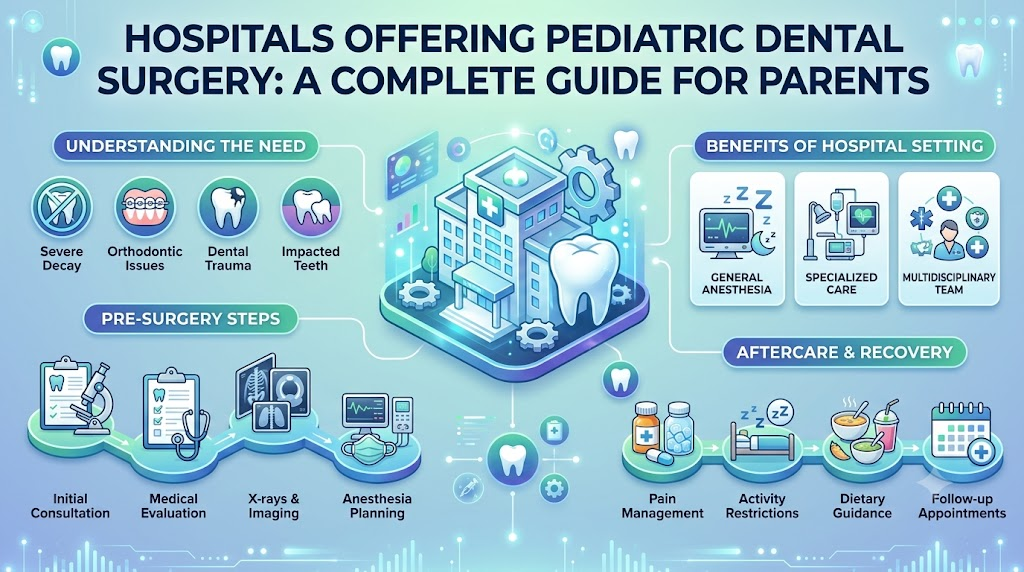
While preventive care resolves most common dental issues, certain situations may lead an appropriately qualified dental professional to recommend surgical management:
- Severe Tooth Decay: Widespread or deep decay in primary teeth that cannot be treated with standard fillings or crowns.
- Dental Infections: Abscesses or infections originating from teeth that require surgical drainage or removal to prevent spreading.
- Impacted Teeth: Permanent teeth that fail to emerge properly through the gum line due to crowding or obstruction.
- Dental Trauma: Severe injuries from accidents or sports that fracture teeth below the gum line or displace teeth from their sockets.
- Developmental Abnormalities: Congenital conditions affecting tooth enamel, jaw growth, or dental alignment.
- Oral Cysts or Lesions: Unusual growths within the soft tissues or jawbone that require biopsy or removal.
- Extra or Supernumerary Teeth: Extra teeth that block normal tooth eruption and alignment.
- Severe Tongue-Tie or Lip-Tie: Restrictive oral tissues that interfere with nursing, feeding, or speech development when clinically indicated.
Common Pediatric Dental Surgical Procedures
Pediatric dental surgery covers several specific categories of treatment depending on the child’s diagnosis:
Tooth Extraction
When a primary or permanent tooth is severely damaged by decay, fractured beyond repair, heavily infected, or causing crowding that cannot otherwise be resolved, an extraction may be necessary. Pediatric dentists take great care to preserve space for permanent teeth when removing primary teeth.
Pulp Therapy
Pulp therapy involves treating the soft tissue inside the tooth (the pulp) when inflammation or infection reaches the nerve chamber. Procedures such as pulpotomies help save heavily decayed baby teeth, allowing them to remain in place until permanent teeth are ready to erupt naturally.
Dental Treatment Under Sedation or General Anesthesia
For children with extensive treatment needs, severe dental anxiety, very young age, or special healthcare needs that make cooperation difficult in a standard dental chair, surgical procedures may be performed in a hospital setting under sedation or general anesthesia.
Frenectomy
A frenectomy is a minor surgical procedure to release a tight or restrictive band of tissue (frenulum) beneath the tongue or attached to the upper lip, improving mobility when clinically appropriate.
Management of Impacted Teeth
When permanent canines, molars, or incisors become trapped beneath the bone or gum tissue, specialist surgical and orthodontic cooperation may be required to uncover and guide them into proper alignment.
Table 1 – Common Pediatric Dental Surgical Procedures
| Procedure | Why It May Be Needed | Specialist Involved | General Consideration |
| Tooth Extraction | Severely damaged, infected, or crowded teeth. | Pediatric dentist / Oral surgeon | Careful evaluation ensures proper space maintenance for permanent teeth. |
| Pulp Therapy | Deep decay or inflammation reaching the tooth nerve chamber. | Pediatric dentist | Aimed at saving compromised baby teeth whenever clinically viable. |
| Frenectomy | Restrictive tongue-tie or lip-tie impacting feeding or speech. | Pediatric dentist / Oral surgeon | Clinical evaluation determines whether surgical release is necessary. |
| Impacted-Tooth Management | Teeth blocked from erupting normally by bone or crowding. | Pediatric dentist / Oral surgeon | Often requires coordinated planning with orthodontic specialists. |
| Complex Oral Surgery | Jaw cysts, severe trauma, or complex congenital conditions. | Oral and maxillofacial specialist | Typically performed in a hospital setting with specialized surgical support. |
Pediatric Dentist vs Oral and Maxillofacial Surgeon
Different dental professionals undergo specialized training to handle various aspects of children’s oral healthcare:
- Pediatric Dentist: A dental specialist who has completed additional years of residency training focused exclusively on the oral health, psychological management, and dental development of infants, children, adolescents, and patients with special healthcare needs.
- Oral and Maxillofacial Surgeon: A surgical specialist trained to diagnose and surgically treat diseases, injuries, and defects involving the hard and soft tissues of the mouth, jaw, and facial structures.
- General Dentist: Provides comprehensive routine dental care for patients of all ages, and will refer patients to pediatric specialists or surgeons when complex surgical interventions are required.
The appropriate professional depends entirely on the child’s specific medical condition and treatment complexity.
Why Specialized Pediatric Dental Hospitals Matter
When a child requires dental surgery, facilities designed specifically with children in mind offer distinct advantages:
- Child-Friendly Environment: Waiting rooms and treatment areas decorated to reduce anxiety and create a welcoming atmosphere.
- Pediatric-Trained Professionals: Staff experienced in communicating with children at different developmental stages.
- Age-Appropriate Equipment: Instruments and dental chairs scaled appropriately for smaller bodies.
- Pediatric Anesthesia Support: Anesthesiologists skilled in managing anesthesia for infants and children safely.
- Emergency Preparedness: Robust pediatric emergency protocols and monitoring systems.
- Medical Coordination: Ability to coordinate care seamlessly with pediatricians and other medical specialists for children with underlying health conditions.
Child-Friendly Dental Environment
A supportive environment helps transform what can be an intimidating experience into a manageable one. Child-friendly hospitals incorporate:
- Friendly, welcoming communication styles that avoid frightening vocabulary.
- Age-appropriate explanations using simple analogies or visual aids.
- Distraction techniques such as movies, music, or interactive visual displays.
- Parent involvement, allowing caregivers to remain close during non-surgical visits or until sedation begins.
- Positive reinforcement to celebrate cooperation and bravery.
Managing Dental Anxiety in Children
Dental anxiety is common among children and can stem from fear of the unknown, unfamiliar sounds, previous discomfort, or separation anxiety. Common signs include crying, avoidance, physical resistance, or quiet withdrawal.Healthcare teams manage anxiety through behavioral techniques such as “tell-show-do” (explaining and demonstrating an instrument before using it), gentle reassurance, and gradual familiarization. When behavioral methods are insufficient due to high anxiety, extensive decay, or young age, dental sedation or general anesthesia may be recommended by the clinical team to ensure the procedure is completed safely.
Dental Sedation and Anesthesia for Children
When surgical procedures cannot be completed with local anesthesia alone, various levels of sedation or anesthesia may be considered:
- Local Anesthesia: Numbing medication applied locally to block pain in a specific area while the child remains fully conscious.
- Minimal or Moderate Sedation: Medication that helps the child relax while remaining responsive and able to breathe independently.
- General Anesthesia: A controlled state of unconsciousness administered by a qualified anesthesiologist, ensuring the child is completely asleep and motionless throughout the procedure.
Anesthesia decisions depend on the child’s age, medical history, anxiety level, procedure duration, and cooperation capacity. Comprehensive monitoring and trained pediatric anesthesia professionals are mandatory for all sedative and general anesthesia procedures.
How Hospitals Evaluate a Child Before Dental Surgery
A thorough preoperative assessment ensures that the child is medically fit for surgery and anesthesia. This evaluation typically includes:
- A detailed review of the child’s medical, surgical, and dental history.
- Screening for known drug allergies and current prescription or over-the-counter medications.
- Review of previous anesthesia experiences within the family or by the child.
- Physical examination by the pediatric dental and medical teams.
- Diagnostic dental X-rays or advanced imaging to map the exact scope of treatment.
- Specific fasting instructions provided by the hospital team, which must be followed precisely to ensure safe anesthesia delivery.
Preparing Your Child for Dental Surgery
Parents play a crucial role in preparing their child emotionally and practically for hospital-based dental treatment:
- Explain the upcoming visit using simple, honest, and positive age-appropriate language without using scary words like “pain,” “shot,” or “drill.”
- Follow all hospital instructions precisely, particularly regarding fasting requirements before anesthesia.
- Bring relevant medical records, insurance cards, and a favorite comfort item like a small blanket or stuffed toy.
- Plan ahead for recovery by clearing your schedule, arranging a calm home environment, and purchasing soft foods recommended by the dental team.
- Ensure a calm, attentive adult is available to supervise the child during travel and the entire post-discharge recovery period.
What Happens During Pediatric Dental Surgery?
While the exact process varies depending on the facility and procedure, a hospital dental surgery day generally follows a structured path:
- Registration and Check-In: Completing administrative paperwork and meeting the nursing staff.
- Preoperative Consultation: Final reviews with the pediatric dentist, surgeon, and anesthesiologist.
- Anesthesia Induction: Administering sedation or general anesthesia in a gentle, reassuring environment where parents are often permitted to be present until the child falls asleep.
- Surgical Procedure: Performing the necessary dental restorations, extractions, or treatments while continuous vital signs are monitored.
- Recovery Observation: Moving the child to a specialized recovery area as anesthesia wears off, where nurses monitor waking vitals and comfort levels.
- Discharge: Providing parents with written aftercare instructions and clearing the child to return home once fully stable.
Hospital Facilities to Look For
When evaluating a hospital for pediatric dental surgery, look for robust infrastructural features:
- Dedicated pediatric dental operating suites or day-surgery units.
- Advanced pediatric vital-sign monitoring and emergency resuscitation equipment.
- Specialized recovery rooms designed for children waking from anesthesia.
- Strict hospital-wide infection control and sterile instrument processing systems.
- Access to pediatric nursing staff experienced in post-surgical comfort care.
- Seamless collaboration channels with pediatricians and general medical specialists if the child has complex health needs.
Choosing a Hospital Offering Pediatric Dental Surgery
Selecting an appropriate hospital involves careful comparison of objective factors rather than relying on advertisements or unverified claims. Parents should consider:
- Specialist Expertise: Presence of board-certified pediatric dentists and experienced oral surgeons.
- Pediatric Anesthesia Capabilities: Dedicated pediatric anesthesiologists on staff.
- Facility Safety: Recognized hospital accreditations and high hygiene standards.
- Child-Centric Environment: Facilities designed to reduce pediatric stress and anxiety.
- Emergency Readiness: Comprehensive pediatric intensive care or rapid emergency transfer agreements.
- Transparent Communication: Willingness of the clinical team to answer questions thoroughly and explain costs clearly.
How to Verify Pediatric Dental Specialist Credentials
Verifying the credentials of the dental specialists caring for your child is an essential safety step:
- Check official national dental board registrations to confirm active licensing.
- Verify completion of formal residency training in pediatric dentistry or oral and maxillofacial surgery.
- Confirm hospital operating privileges for the specific pediatric facility.
- Inquire about the specialist’s years of experience treating children with similar dental conditions.
Parents can check credentials through official medical and dental regulatory boards in their region.
Infection Control and Patient Safety
Surgical procedures require immaculate safety and hygiene standards to prevent infections. Key systems to verify include:
- Rigorously maintained sterilization protocols for all surgical and dental instruments.
- Strict adherence to hand hygiene and surgical scrubbing by all clinical staff.
- Safe anesthesia administration practices with continuous electronic monitoring.
- Robust patient identification protocols from admission through discharge.
- Clean, well-maintained operating rooms and recovery recovery bays.
Recovery After Pediatric Dental Surgery
Recovery timelines vary widely depending on the type of procedure performed and the type of anesthesia used. General observations during early recovery can include:
- Mild postoperative soreness or tenderness around treated teeth or gums.
- Temporary swelling of the lips or cheeks following extractions or surgical care.
- Lingering grogginess, sleepiness, or mild emotional irritability as anesthesia wears off completely.
- Temporary dietary adjustments to accommodate healing gums and sensitive teeth.
Always adhere closely to the recovery timeline and guidance provided by your child’s dental surgeon.
Aftercare at Home
Proper at-home care supports smooth healing and minimizes the risk of postoperative complications:
- Strictly follow the written discharge instructions provided by the hospital team.
- Offer soft, nourishing, cool foods (such as yogurt, applesauce, smoothies, or mashed potatoes) as tolerated.
- Encourage gentle hydration with water, avoiding straws if extractions were performed to prevent dislodging healing blood clots.
- Maintain oral hygiene as instructed by the dentist, avoiding brushing directly over fresh surgical sites until advised otherwise.
- Administer any prescribed pain management medications strictly according to professional dosing instructions. Do not guess dosages.
Table 2 – Pediatric Dental Surgery Recovery and Aftercare
| Recovery Area | What Parents May Notice | General Care Consideration |
| Diet & Eating | Reluctance to chew or sensitivity to warm foods. | Offer soft, cool, nourishing foods and encourage hydration without straws. |
| Oral Discomfort | Mild soreness or tenderness as local anesthesia wears off. | Administer prescribed pain relief strictly according to professional directions. |
| Activity Level | Drowsiness or low energy on the day of surgery. | Ensure calm indoor rest; avoid strenuous physical play or sports. |
| Oral Hygiene | Need to keep surgical sites clean without irritation. | Follow specific brushing and cleaning instructions provided at discharge. |
| Follow-Up | Healing check scheduled by the dental clinic. | Attend all scheduled postoperative appointments to confirm proper recovery. |
| Warning Signs | Unusual symptoms or worsening pain. | Contact the treating dental or medical team immediately if concerned. |
Warning Signs After Pediatric Dental Surgery
While most children recover smoothly, parents should remain vigilant for signs of complications. Contact your healthcare team promptly if your child experiences:
- Persistent or heavy bleeding from the mouth that does not stop with gentle pressure.
- Increasing swelling that worsens after the first forty-eight hours.
- Fever or chills indicating potential infection.
- Severe or escalating pain that is not controlled by prescribed aftercare medications.
- Unusual, excessive drowsiness or difficulty waking up hours after anesthesia.
- Repeated vomiting or signs of dehydration (such as dry mouth or lack of urination).
- Note: If your child experiences severe difficulty breathing or a life-threatening emergency, call local emergency services immediately.
Cost of Pediatric Dental Surgery
The total cost of pediatric dental surgery can vary significantly based on several factors:
- Complexity and number of dental procedures required.
- Specialist fees for the pediatric dentist or oral surgeon.
- Hospital or facility fees for operating room utilization.
- Anesthesia fees and professional monitoring charges.
- Diagnostic imaging and laboratory testing.
- Prescription medications and specialized dental materials.
Always request a detailed, written itemized estimate from the hospital, distinguishing between base professional fees and facility costs.
Insurance and Financial Considerations
Navigating insurance coverage for pediatric dental surgery requires advance preparation:
- Review your dental and health insurance policies to understand what surgical dental procedures are covered.
- Verify whether preauthorization is required by your insurer before scheduling treatment.
- Check deductibles, co-pays, policy exclusions, and whether anesthesia charges are billed separately.
- Inquire with the hospital billing office regarding structured payment plans or financial counseling assistance.
Medical Tourism for Pediatric Dental Surgery
When considering traveling internationally for pediatric dental surgery, parents must exercise extra caution because children require specialized medical and emotional support:
- Verify foreign specialist credentials and hospital accreditations independently.
- Confirm that the facility is fully equipped with dedicated pediatric anesthesia and emergency resuscitation capabilities.
- Arrange secure transfer of medical records and conduct thorough remote consultations in advance.
- Plan for adequate recovery duration in the destination country before undertaking air travel.
- Establish clear follow-up care arrangements with local pediatric dentists back home.
Never choose an international provider solely based on lower cost; child safety and specialist quality are paramount.
Red Flags When Choosing a Pediatric Dental Hospital
Exercise caution if you encounter dental clinics or hospitals exhibiting the following warning signs:
- Guaranteeing completely painless or 100% risk-free surgical outcomes.
- Pressuring parents into immediate surgical booking without adequate consultation time.
- Failing to provide clear information regarding specialist credentials or anesthesia staff.
- Providing vague, non-transparent pricing with hidden facility or anesthesia fees.
- Dismissing parental questions or refusing to discuss potential procedural risks.
- Using fear tactics or alarmist language regarding your child’s dental health to force a decision.
Step-by-Step Guide for Choosing a Pediatric Dental Hospital
- Step 1: Notice dental symptoms or receive a referral from a primary dentist.
- Step 2: Schedule an evaluation with a qualified pediatric dentist or oral surgeon.
- Step 3: Discuss whether surgery is truly necessary or if alternative treatments exist.
- Step 4: Research hospitals and clinics offering specialized pediatric dental surgery.
- Step 5: Verify specialist credentials, board certifications, and licensing.
- Step 6: Evaluate hospital safety standards, facility accreditation, and hygiene protocols.
- Step 7: Inquire about pediatric anesthesia capabilities and continuous monitoring equipment.
- Step 8: Review informed consent, procedural risks, and expected recovery guidelines.
- Step 9: Request itemized written cost estimates and confirm insurance coverage.
- Step 10: Verify postoperative follow-up care arrangements.
- Step 11: Seek a second opinion if you have lingering doubts or feel uncertain.
- Step 12: Make an informed decision collaboratively with your child’s healthcare team.
FAQs
1. What is pediatric dental surgery?
Pediatric dental surgery involves specialized surgical procedures performed to treat complex oral, dental, or jaw conditions in infants, children, and adolescents.
2. When might a child need dental surgery?
A child may need surgery for severe tooth decay, deep infections, impacted permanent teeth, severe dental trauma, jaw cysts, or developmental oral anomalies.
3. What types of dental surgery are performed in children?
Common procedures include tooth extractions, pulp therapy, frenectomies, impacted tooth exposure, and complex oral surgeries.
4. Does every child need to be treated in a hospital?
No. Many routine procedures are performed in dental clinics; hospitals are typically reserved for complex cases, very young children, or those requiring general anesthesia.
5. What is the role of a pediatric dentist?
A pediatric dentist specializes in the oral health, dental development, and behavioral management of children from infancy through adolescence.
6. When might an oral surgeon be involved?
An oral and maxillofacial surgeon is involved when surgical intervention extends into the jawbone, facial structures, or complex impactions.
7. Is anesthesia safe for children during dental surgery?
When administered and monitored by qualified pediatric anesthesiologists using modern equipment in accredited facilities, anesthesia is managed with strict safety protocols.
8. How is a child prepared for dental surgery?
Parents prepare children by using simple, reassuring language, following exact fasting instructions, bringing comfort items, and planning calm home recovery time.
9. What happens during pediatric dental surgery?
The child is registered, examined, given anesthesia, treated by the dental team while monitored closely, and moved to recovery until stable for discharge.
10. How long does recovery take after pediatric dental surgery?
Initial recovery from anesthesia takes hours, while gum healing and dietary adjustment typically take a few days depending on the procedure.
11. What can a child eat after dental surgery?
Children should eat soft, cool, nourishing foods like yogurt, smoothies, and mashed potatoes, avoiding crunchy items and straws.
12. What warning signs should parents watch for?
Watch for heavy bleeding, worsening swelling, fever, unmanaged pain, excessive drowsiness, or persistent vomiting.
13. How much does pediatric dental surgery cost?
Costs vary based on procedure complexity, surgeon fees, hospital facility charges, and anesthesia, requiring a written itemized estimate.
14. How can parents choose the right pediatric dental hospital?
Parents should evaluate specialist credentials, pediatric anesthesia support, facility safety, child-friendly environments, and cost transparency.
15. Should parents seek a second opinion before pediatric dental surgery?
Seeking a second opinion is recommended if parents feel uncertain about a major surgical recommendation or want to explore alternative treatment options.
Conclusion
Pediatric dental surgery can be an important and necessary part of treating complex oral and dental conditions in children. However, the decision to proceed with surgery should always be made carefully following an evaluation by an appropriately qualified healthcare professional. By prioritizing pediatric dental expertise, specialist qualifications, safe hospital facilities, proper anesthesia support, infection control, and transparent recovery planning, parents can ensure their child receives high-quality care. Asking questions, verifying credentials, and working collaboratively with experienced dental and medical professionals remain the most reliable ways to support your child’s oral health journey.