Introduction
When considering cosmetic improvements to enhance a smile, many people explore professional teeth whitening as a popular option to brighten tooth color. However, achieving a safe and balanced result involves much more than selecting the cheapest treatment or purchasing an off-the-shelf product from a retail store. The underlying cause of tooth discoloration, the overall health of your teeth and gums, and the presence of existing dental restorations all play a significant role in determining whether whitening is appropriate. Because dental health varies from person to person, finding a reputable facility that prioritizes professional evaluation and patient safety is essential. Understanding what to look for among BESTDENTALHOSPITALS helps patients evaluate dental providers thoughtfully, understand package inclusions, and make informed decisions aligned with their individual oral health needs.Professional teeth whitening is not a universal solution, nor does it replace routine dental checkups and preventive care. Exploring how professional whitening works, what different packages may include, and how qualified dentists assess dental suitability ensures that patients approach cosmetic treatments with realistic expectations. This comprehensive guide explores teeth whitening methods, safety standards, cost considerations, and practical steps for comparing dental hospitals responsibly.
What Is Professional Teeth Whitening?
Professional teeth whitening refers to dentist-supervised cosmetic treatments designed to lighten the natural shade of teeth and reduce stubborn stains. Unlike ordinary whitening toothpastes or over-the-counter kits that contain mild abrasives or lower-concentration bleaching agents, professional treatments utilize higher-strength, regulated peroxide-based gels (such as hydrogen peroxide or carbamide peroxide) applied under clinical supervision.
The general role of these peroxide agents is to break down complex stain molecules trapped within the microscopic pores of tooth enamel and dentin, lifting discoloration and brightening the overall appearance of the smile. Professional supervision is valuable because a dentist can evaluate the health of your enamel, protect sensitive gum tissues during the process, customize the treatment to your specific needs, and manage any potential side effects like tooth sensitivity. Whitening results vary from person to person based on the natural composition of their teeth and the origin of their staining.
Why Do Teeth Become Discolored?
Tooth discoloration typically falls into two main categories, each requiring a different understanding when considering cosmetic whitening options.
Extrinsic Stains
Extrinsic stains affect the outer layer of the tooth (enamel). They are commonly caused by regular exposure to staining agents in food and beverages, such as:
- Coffee and black tea.
- Red wine and dark sodas.
- Certain highly pigmented foods.
- Tobacco use (smoking or chewing tobacco).
- Inadequate daily brushing and flossing habits that allow plaque and tartar accumulation.
Intrinsic Discoloration
Intrinsic discoloration occurs within the inner structure of the tooth (dentin). This type of staining may result from:
- Aging, which naturally thinned the outer enamel, allowing the yellowish dentin layer to show through more prominently.
- Previous dental trauma or internal bleeding within the tooth.
- Exposure to certain medications during childhood tooth development.
- Excessive fluoride exposure while teeth were forming.
Intrinsic stains often respond differently to conventional bleaching agents than surface stains, highlighting the importance of a professional dental examination before starting any whitening regimen.
What Can a Teeth Whitening Package Include?
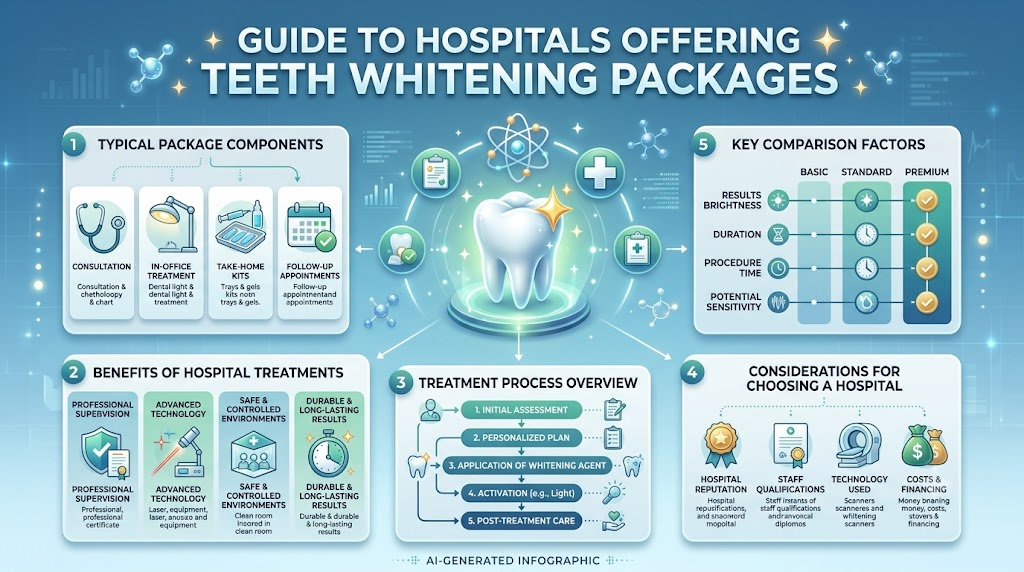
Dental hospitals and clinics often structure whitening services into comprehensive bundles. However, package contents vary significantly between providers. Common components may include:
- Dental Consultation: An initial discussion with a dentist to review your medical and dental history, evaluate your goals, and assess suitability.
- Oral Examination: A clinical check of teeth, gums, and existing dental work to rule out untreated cavities or gum disease.
- Shade Assessment: Documenting your current tooth shade using a professional shade guide to establish a baseline.
- Professional Cleaning or Scaling: Removing surface plaque and tartar prior to whitening to ensure the bleaching gel contacts clean enamel directly.
- In-Office Whitening Session: The primary whitening procedure performed under direct clinical supervision.
- Take-Home Whitening Trays: Custom-fitted trays provided for at-home maintenance or gradual whitening.
- Professional Whitening Gel: Safe, dentist-prescribed gel supplies for home use.
- Gum Protection Barriers: Specialized protective gels or dams applied during in-office sessions to shield soft gum tissues from irritation.
- Post-Treatment Guidance: Instructions regarding dietary restrictions, sensitivity management, and oral hygiene.
- Follow-up Assessment: A brief check-up to review results and evaluate healing or sensitivity.
Not every package includes all these services, so patients should always verify what is explicitly covered.
Table 1 – Teeth Whitening Package Components
| Package Component | What It May Include | Why It Matters |
| Initial Dental Consultation | Reviewing medical/dental history and discussing aesthetic goals with a professional. | Determines whether teeth whitening is suitable for your specific oral health profile. |
| Pre-Whitening Oral Exam | Checking for cavities, cracked fillings, or gum inflammation before treatment. | Ensures underlying dental problems are identified and treated before applying bleaching agents. |
| Professional Dental Cleaning | Removing surface plaque, calculus, and superficial debris from tooth surfaces. | Prepares clean enamel surfaces so whitening agents can act more uniformly. |
| In-Office Whitening Procedure | Application of high-concentration professional bleaching gel in a clinical setting. | Delivers supervised, rapid whitening results in a controlled environment. |
| Take-Home Maintenance Trays | Custom-fitted plastic trays along with professional-grade take-home whitening gel. | Allows for gradual whitening or touch-ups in the comfort of home under dental guidance. |
| Post-Treatment Evaluation | Reviewing the final shade outcome and checking for prolonged tooth sensitivity. | Provides professional support and ensures any post-procedure discomfort is properly managed. |
Types of Professional Teeth Whitening
Dental providers offer several approaches to professional whitening, tailored to patient preferences, lifestyle, and clinical requirements.
In-Office Whitening
In-office whitening takes place entirely within the dental clinic. The dentist or trained dental hygienist applies a robust professional bleaching gel directly to the teeth. Protective barriers are carefully placed over the gums to prevent irritation. This method is often chosen by patients who want immediate supervised care and faster results, typically completed in a single appointment lasting an hour or two.
Take-Home Professional Whitening
Dentist-supervised take-home whitening involves custom-crafted trays made from impressions of your teeth. The dentist provides professional-grade bleaching gel with specific instructions on how long and how often to wear the trays at home over a period of one to two weeks. This approach offers flexibility and allows patients to control the gradual lightening process.
Light- or Laser-Assisted Whitening
Some dental protocols incorporate specialized light or laser systems intended to accelerate or activate the bleaching gel during in-office sessions. While these technologies are widely marketed, clinical evidence suggests that the whitening gel itself remains the primary active agent. Light activation does not automatically guarantee superior or permanent results compared to standard professional application.
Professional Whitening vs. Home Whitening Products
Understanding how professional care compares to retail options helps patients weigh convenience against clinical safety and efficacy.
- Professional Supervision: Professional treatments are overseen by licensed dentists who diagnose oral health status first, whereas store-bought kits are used without professional evaluation.
- Product Concentration: Professional whitening gels contain higher, more effective concentrations of active bleaching agents controlled safely under clinical protocols.
- Customization: Take-home professional kits utilize custom-fitted trays molded to your exact bite, preventing gel leakage onto gums. Store-bought trays are generic and often ill-fitting.
- Safety and Monitoring: Dentists monitor soft tissues during in-office procedures and manage sensitivity effectively, reducing the risk of chemical burns or enamel damage.
- Cost: Professional packages involve higher upfront costs due to clinical expertise and custom materials, while over-the-counter products are cheaper but less predictable.
Why a Dental Consultation Matters Before Whitening
Jumping straight into teeth whitening without a professional dental exam can lead to unexpected complications. A dentist evaluates several crucial factors during a consultation:
- Teeth and Gum Health: Active tooth decay, exposed tooth roots, or inflamed gums can react painfully to bleaching chemicals. These issues must be treated first.
- Existing Restorations: Crowns, veneers, and composite fillings do not change color with bleaching agents. A consultation helps set realistic expectations about how restorations will blend with whitened natural teeth.
- Type of Discoloration: Intrinsic stains or gray discoloration caused by medications may not respond well to standard bleaching, requiring alternative cosmetic solutions like bonding or veneers.
- Tooth Sensitivity: Patients with pre-existing sensitivity require careful product selection and desensitizing protocols.
Who May and May Not Be a Suitable Candidate?
While many adults with healthy teeth and gums are suitable candidates for professional whitening, certain individuals may need to delay or avoid treatment.
General Suitability Factors
- Good overall oral health with no untreated cavities or active periodontal disease.
- Realistic expectations regarding the degree of lightening achievable.
- Desire to improve surface or aging discoloration on natural teeth.
When Whitening May Not Be Recommended
- Children and Teenagers: Younger patients whose tooth pulp chambers are still developing should generally avoid elective cosmetic whitening.
- Pregnant or Nursing Individuals: Professional consensus advises postponing elective cosmetic dental treatments during pregnancy and lactation as a precaution.
- Severe Enamel Wear or Sensitivity: Individuals with severely eroded enamel or chronic hypersensitivity may experience intolerable discomfort.
- Extensive Visible Restorations: Patients with numerous front-tooth crowns or veneers may find that whitening creates a mismatched shade appearance.
Tooth Sensitivity and Other Possible Side Effects
Although professional teeth whitening is generally safe when performed correctly, side effects can occur. Being aware of them helps patients prepare appropriately.
- Temporary Tooth Sensitivity: A common reaction where teeth feel sensitive to hot, cold, or sweet stimuli following whitening. This typically subsides within a few days after completing treatment.
- Gum Irritation: Occurs if whitening gel contacts soft gum tissues, often due to ill-fitting trays or inadequate protective barriers during in-office application. This irritation is usually temporary.
- Enamel Dryness: Dehydration of the tooth enamel during bleaching can temporarily make teeth look chalky or overly bright before settling into their true shade within 24 to 48 hours.
Patients experiencing persistent or severe discomfort should contact their dental professional promptly for advice.
Whitening and Dental Restorations
A common misunderstanding in cosmetic dentistry is that whitening agents can alter the color of artificial dental materials.
Dental restorations—including porcelain crowns, ceramic veneers, composite bonding, and bridges—are manufactured from stable materials that do not respond to hydrogen peroxide or carbamide peroxide. Bleaching agents will only lighten natural tooth enamel and dentin. If a patient has visible fillings or crowns on their front teeth, whitening natural teeth can result in a noticeable color mismatch, where restorations appear darker than the surrounding smile. In such cases, dentists may discuss replacing visible restorations to match the new lighter shade after whitening is completed.
How Dentists Assess Tooth Shade
Shade assessment is a standardized part of professional cosmetic evaluation. Dentists use physical shade guides containing porcelain or acrylic tabs arranged in order of lightness and hue to evaluate your baseline tooth color.
During the consultation, the dentist holds the shade guide next to your teeth under proper clinical lighting to record the starting shade. This step helps track progress objectively after treatment. Professional dentists avoid making exaggerated promises of a specific numerical shade jump, as every individual’s enamel responds uniquely to bleaching agents.
Safety and Hygiene in Teeth Whitening Hospitals
Cosmetic procedures still require strict adherence to medical safety standards. Reputable dental hospitals maintain rigorous hygiene protocols:
- Qualified Professionals: Treatments are performed or closely supervised by licensed dentists and registered dental hygienists.
- Infection Control: Strict sterilization of instruments, surface disinfection between patients, and single-use disposable barriers where appropriate.
- Soft-Tissue Protection: Careful application of light-cured resin barriers or protective gels during in-office sessions to shield gums from chemical exposure.
- Emergency Readiness: Availability of emergency equipment and protocols to manage rare adverse allergic or systemic reactions.
How to Choose a Hospital Offering Teeth Whitening Packages
Selecting the right dental provider involves looking beyond promotional advertisements. Patients can compare hospitals using thoughtful criteria:
- Dentist Qualifications: Verify that treating dentists hold active licenses and possess experience in cosmetic dentistry.
- Package Transparency: Review what is included—such as consultations, cleanings, or take-home touch-up kits—so you understand the total value.
- Technology and Products: Inquire about the brand and safety profile of the whitening gels and equipment utilized.
- Facility Standards: Ensure the clinic maintains clean, modern treatment rooms and strict sterilization standards.
- Follow-Up Care: Check whether post-treatment sensitivity management and follow-up checks are included in the package.
What Makes a Teeth Whitening Package Worth Considering?
When evaluating different offers, a higher price tag does not automatically mean superior care, nor is the cheapest package always the safest. A worthwhile package generally offers:
- Inclusion of a thorough pre-whitening dental exam and cleaning.
- Supervision by a qualified dentist rather than unsupervised technicians.
- Customized take-home options or professionally monitored in-office sessions.
- Clear guidance on managing tooth sensitivity.
- Transparent pricing with no hidden fees for basic safety materials.
Realistic Expectations From Teeth Whitening
Maintaining realistic expectations ensures patient satisfaction with cosmetic dental procedures. Keep the following principles in mind:
- Whitening lifts existing stains and brightens natural teeth, but it does not change the inherent shape, alignment, or structure of your teeth.
- Results fade gradually over time as teeth are continually exposed to staining foods, beverages, and normal aging.
- Whitening is a cosmetic enhancement and does not substitute for daily oral hygiene, flossing, and professional checkups.
Maintaining a Brighter Smile After Whitening
To help preserve the results of professional teeth whitening for as long as possible, patients can adopt supportive oral care habits:
- Brush twice daily with a fluoride toothpaste and clean between your teeth daily using floss or interdental brushes.
- Minimize frequent exposure to strong staining agents like coffee, tea, red wine, and dark sauces, or rinse your mouth with water after consuming them.
- Avoid tobacco products, which rapidly stain tooth enamel and harm overall oral health.
- Attend routine professional dental cleanings and checkups every six months.
- Follow any specific maintenance instructions provided by your dental team.
Cost of Teeth Whitening Packages
The financial investment for teeth whitening packages varies based on several practical factors:
- Type of Treatment: In-office chairside whitening typically costs more than take-home custom tray kits due to chair time and clinical resources.
- Package Inclusions: Packages that bundle professional cleanings, exams, and take-home touch-up gels carry different pricing structures than standalone sessions.
- Geographic Location and Facility: Clinic overhead, city location, and hospital accreditation standards influence overall pricing.
- Required Pre-Treatments: If a patient requires cavity fillings, professional cleanings, or periodontal care before whitening can safely begin, those services add to the total cost.
Patients should always request an itemized cost breakdown before committing to a package.
Table 2 – Comparing Teeth Whitening Packages
| Comparison Factor | Questions Patients Can Ask | Why It Matters |
| Dentist Credentials | Are the treatments performed or supervised by licensed, experienced dentists? | Ensures clinical safety, proper diagnosis, and expert management of your oral health. |
| Pre-Treatment Exam | Does the package include a professional dental examination and cleaning? | Identifies untreated cavities or gum issues that must be addressed before whitening. |
| Whitening Method | Is the package for in-office whitening, take-home custom trays, or a combination? | Helps you choose the approach that best fits your schedule, budget, and comfort. |
| Restoration Compatibility | How will existing crowns, fillings, or veneers be evaluated regarding color matching? | Prevents noticeable shade discrepancies between natural teeth and artificial dental work. |
| Sensitivity Management | What products or protocols are provided if post-treatment tooth sensitivity occurs? | Ensures you have professional support and relief methods if temporary discomfort arises. |
| Cost Transparency | Is there an itemized cost breakdown covering all consultations, materials, and follow-ups? | Protects you from unexpected expenses and clarifies the exact value of the package. |
Common Mistakes When Choosing a Teeth Whitening Package
- Choosing Solely by Price: Selecting the cheapest provider without verifying dentist credentials or clinic hygiene standards.
- Ignoring Oral Health Issues: Attempting to whiten teeth while ignoring active cavities, bleeding gums, or broken restorations.
- Expecting Permanent Results: Assuming whitening is a one-time fix that will never require maintenance or touch-ups.
- Overlooking Restorations: Forgetting that crowns and fillings will not change color, leading to mismatched smile aesthetics.
- Skipping Professional Consultation: Using strong bleaching gels purchased online without knowing whether your teeth are healthy enough for treatment.
When Teeth Whitening May Need to Be Delayed
A dentist may recommend postponing whitening treatment if certain conditions are present:
- Active, untreated tooth decay or open cavities.
- Periodontal disease or severe gum inflammation.
- Unexplained tooth pain or extreme structural wear exposing dentin.
- Recent placement of prominent front-tooth restorations that require time to settle.
- Unrealistic expectations that cannot be safely achieved with bleaching alone.
Addressing these issues first ensures a safer, more predictable cosmetic outcome.
Step-by-Step Guide to Choosing the Right Teeth Whitening Hospital
- Step 1: Assess your personal cosmetic goals and identify the staining concerns you wish to address.
- Step 2: Research accredited dental hospitals and reputable clinics offering professional whitening services.
- Step 3: Verify the licensing, credentials, and experience of the dental professionals.
- Step 4: Schedule an initial dental consultation to examine your overall oral health and suitability.
- Step 5: Discuss available whitening methods (in-office vs. take-home) and how they suit your schedule.
- Step 6: Review package inclusions, ensuring exams, cleanings, and safety barriers are addressed.
- Step 7: Evaluate how existing crowns or fillings will factor into your final shade results.
- Step 8: Request a transparent, itemized cost estimate for the complete package.
- Step 9: Proceed with treatment under professional guidance, maintaining open communication about sensitivity and aftercare.
Frequently Asked Questions
What is included in a teeth whitening package?
Packages vary but often include a consultation, oral exam, professional cleaning, in-office bleaching session or custom take-home trays, and post-treatment guidance.
How do professional teeth whitening treatments work?
Professional treatments use regulated peroxide-based gels that penetrate tooth enamel to break down stain molecules and lighten tooth color.
What is the difference between in-office and take-home teeth whitening?
In-office whitening is performed rapidly in the clinic by dental professionals, while take-home kits use custom trays for gradual whitening over a couple of weeks.
Is professional teeth whitening safe?
Yes, when performed or supervised by a licensed dentist who evaluates your oral health and protects your gums properly.
Can teeth whitening cause sensitivity?
Yes, temporary tooth sensitivity to hot, cold, or sweet stimuli is a common and usually short-lived side effect of bleaching treatments.
How long do teeth whitening results last?
Results vary based on diet, oral hygiene, and lifestyle habits, typically lasting from several months up to a couple of years before touch-ups are needed.
Can crowns and veneers be whitened?
No, artificial dental restorations like crowns, veneers, and composite fillings do not respond to bleaching agents.
Do I need a dental consultation before teeth whitening?
Yes, a consultation ensures your teeth and gums are healthy enough for bleaching and rules out untreated cavities or gum disease.
How much do teeth whitening packages cost?
Costs depend on the type of whitening method, clinic location, package inclusions, and whether preliminary dental work is necessary.
How do I choose a hospital for professional teeth whitening?
Look for qualified dentists, transparent package inclusions, strict clinic hygiene standards, and positive patient communication.
Is laser teeth whitening better than other whitening methods?
Laser or light activation is part of some in-office protocols, but the active bleaching gel does the primary work, and laser methods are not universally superior.
Can teeth whitening remove all types of stains?
No, extrinsic surface stains respond well, but deep intrinsic stains or discoloration from certain medications may require alternative cosmetic treatments.
How can I maintain my results after teeth whitening?
Maintain good daily brushing and flossing, limit staining foods and beverages, avoid tobacco, and attend routine dental checkups.
What should I ask before booking a teeth whitening package?
Ask about package inclusions, dentist qualifications, sensitivity management, restoration compatibility, and total itemized costs.
What are the most important factors when choosing a hospital offering teeth whitening packages?
Dentist expertise, safety protocols, comprehensive package evaluation, and cost transparency are the most critical factors.
Conclusion
Enhancing your smile through professional teeth whitening can be a rewarding cosmetic experience when approached with proper care and realistic expectations. Because dental health varies, beginning with a professional dental assessment ensures that underlying issues like cavities or gum sensitivity are addressed safely before any bleaching agents are applied. By choosing qualified dental professionals, evaluating comprehensive package inclusions, maintaining good oral hygiene, and understanding the limitations regarding existing restorations, patients can achieve brighter, healthier smiles responsibly.