Introduction
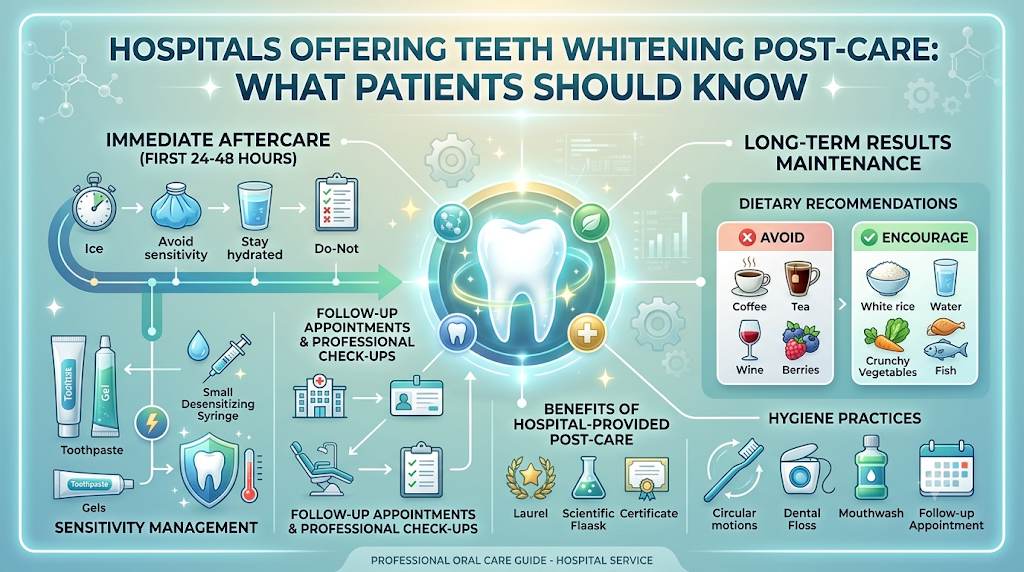
Professional teeth whitening can help remove certain stains and brighten natural teeth. It can make a smile look fresher, but the treatment does not end after the whitening session.Good aftercare helps patients manage temporary sensitivity and protect their teeth. It also helps them understand how to maintain their results. Some people may notice mild tooth sensitivity or gum irritation after treatment.
When researching hospitals offering teeth whitening post-care, patients should look beyond the whitening procedure itself. Dentist guidance, clear aftercare instructions, and access to follow-up support also matter. You can visit BESTDENTALHOSPITALS when researching dental hospitals and dental care options.
What Is Professional Teeth Whitening?
Professional teeth whitening is a dental treatment that helps lighten the color of natural teeth. It uses bleaching agents to reduce certain stains and discoloration.
Common bleaching agents include hydrogen peroxide and carbamide peroxide. These products help break down stain particles within the tooth.
There are two common ways to receive professional whitening.
In-office teeth whitening
A dentist performs this treatment at a dental clinic or hospital. The dentist applies a whitening product to the teeth under controlled conditions. The process may involve protective materials for the gums and soft tissues.
Dentist-supervised home whitening
A dentist may provide whitening gel and custom-made trays. Patients use these at home according to the dentist’s instructions. The dentist may review progress and adjust the plan when needed.
Before treatment, a dentist should examine the teeth and gums. They may check for cavities, gum disease, cracks, or other problems.
Whitening does not work the same way on every type of stain. It also does not change the color of crowns, veneers, or fillings. A dentist can explain whether whitening is suitable for your teeth.
Why Is Post-Care Important After Teeth Whitening?
Aftercare helps patients protect their teeth and understand what to expect. It is an important part of professional whitening treatment.
Some people experience temporary sensitivity after bleaching. Others may notice mild gum irritation. Proper guidance can help them manage these changes.
Post-care also supports healthy oral habits. Patients learn how to brush, clean between their teeth, and reduce exposure to staining foods and drinks.
Aftercare instructions may differ between patients. The whitening method, product strength, and dental health can all affect the advice.
A dentist can also explain when to seek help. This is useful if discomfort becomes severe or does not improve.
What Happens Immediately After Teeth Whitening?
Many patients notice brighter teeth soon after treatment. However, the final shade may take some time to settle.
Some people experience mild sensitivity. Teeth may react more strongly to cold drinks, hot foods, or sweet items. This usually improves, but the experience differs between individuals.
Mild gum irritation can also occur. This may happen if whitening material touches the gums. The dental team can explain how to manage it.
Other changes may include:
- Teeth may look brighter at first.
- The final shade may become clearer over time.
- Some areas may appear lighter than others.
- Existing dental restorations may not change color.
- Results may vary based on the original stains.
Severe, lasting, or worsening discomfort should not be ignored. Contact your dentist if symptoms concern you.
Important Teeth Whitening Aftercare Tips
Good daily care helps keep teeth clean and supports oral health after whitening. Follow the instructions provided by your dentist.
Brush gently
Use a soft-bristled toothbrush. Brush carefully without applying too much pressure. Hard brushing can irritate gums and wear down tooth surfaces over time.
Use suitable toothpaste
Fluoride toothpaste helps protect teeth against decay. If you notice sensitivity, ask your dentist whether toothpaste for sensitive teeth may help.
Clean between your teeth
Use dental floss or another dentist-recommended cleaning tool every day. This helps remove food particles and plaque from areas a toothbrush may miss.
Drink enough water
Water helps rinse away food particles and supports a clean mouth. Drinking water after meals can also reduce contact with staining drinks and foods.
Follow your dentist’s instructions
Your dentist may give advice based on the whitening product and your dental health. Follow that guidance instead of trying extra products on your own.
Keep regular dental visits
Routine checkups help your dentist monitor your teeth and gums. They can also discuss whether any further whitening treatment is suitable.
Do not repeat whitening sessions or combine several whitening products without professional advice.
Foods and Drinks to Consider After Whitening
Some foods and drinks contain strong pigments. These pigments can stain teeth over time, especially with frequent exposure.
Common examples include:
- Coffee and tea.
- Red wine.
- Dark-colored soft drinks.
- Berries and deeply colored fruits.
- Tomato-based sauces.
- Soy sauce and dark condiments.
- Tobacco products.
Your dentist may suggest limiting certain staining foods and drinks for a short time after treatment. This advice can depend on the whitening method used.
A strict white diet is not necessary for everyone. Instead, focus on balanced eating and good oral hygiene.
A few simple habits can help:
- Drink water after meals.
- Avoid sipping staining drinks throughout the day.
- Rinse your mouth with water after strongly colored foods.
- Brush at the times recommended by your dentist.
- Avoid tobacco to protect your teeth and gums.
These habits can help reduce new stains. They also support better oral health.
Managing Tooth Sensitivity After Whitening
Tooth sensitivity is one of the common concerns after professional whitening. Bleaching products can temporarily make teeth more sensitive to certain triggers.
You may notice discomfort when eating or drinking something very hot or cold. Some people also feel brief discomfort when breathing in cold air.
Try these steps if your teeth feel sensitive:
Avoid strong temperature triggers
Choose foods and drinks that do not cause discomfort. Avoid very hot or cold items if they make your teeth hurt.
Ask about sensitive-teeth toothpaste
Your dentist may suggest a toothpaste designed for sensitive teeth. Use it according to the product instructions and professional advice.
Follow recommended dental care
Some dentists may suggest a desensitizing product or treatment. Ask before adding anything to your routine.
Avoid extra whitening sessions
Repeated whitening can increase irritation or sensitivity. Do not use more whitening gel or strips without guidance.
Contact your dentist if symptoms continue
Mild sensitivity often improves, but severe or lasting pain needs attention. Your dentist can check whether another dental problem is present.
Do not take medicines or change prescribed treatment based only on online advice.
Table 1: Common Aftercare Concerns and Practical Steps
| Aftercare Concern | What Patients May Notice | Recommended Next Step |
|---|---|---|
| Temporary sensitivity | Brief discomfort with hot, cold, or sweet items | Avoid triggers and ask about suitable toothpaste |
| Gum irritation | Mild redness or soreness near the gums | Follow the dentist’s care advice and report ongoing irritation |
| Staining concerns | New stains after coffee, tea, or dark foods | Drink water and maintain daily oral hygiene |
| Persistent discomfort | Pain that is severe, worsening, or does not improve | Contact a dental professional for an assessment |
The right response depends on the cause and severity of the problem. Do not assume that every type of pain is a normal whitening effect.
How Dental Hospitals Support Teeth Whitening Post-Care
A dental hospital or clinic may provide support after whitening. However, available services vary between facilities.
Some may provide written aftercare instructions. Others may offer a follow-up appointment or a way to contact the dental team.
Possible support may include:
Personalized aftercare instructions
The dentist may explain how to care for teeth after the specific whitening treatment. Instructions can cover brushing, food choices, and sensitivity.
Guidance on oral hygiene
Dental professionals can demonstrate suitable brushing and flossing methods. They may also suggest products based on the patient’s needs.
Sensitivity support
The dentist can assess sensitivity and discuss suitable ways to manage it. They may recommend a desensitizing product when appropriate.
Follow-up dental checks
Some facilities may offer a review after treatment. This can help assess the teeth, gums, and patient’s concerns.
Advice on maintenance
The dental team can explain how to maintain results safely. They can also discuss whether future touch-up treatment is suitable.
Before booking, ask what support is included. Do not assume that every hospital offers a dedicated whitening aftercare programme.
Table 2: Dental Hospital Post-Whitening Support
| Support Service | How It Helps | What Patients Should Ask |
|---|---|---|
| Aftercare instructions | Explains how to care for teeth after treatment | Will I receive written care instructions? |
| Sensitivity guidance | Helps patients manage temporary discomfort | Who should I contact if sensitivity continues? |
| Follow-up checks | Allows the dentist to review concerns | Is a follow-up visit available? |
| Oral hygiene advice | Supports healthy brushing and cleaning habits | Which products and cleaning methods are suitable? |
| Maintenance planning | Helps patients understand how to protect results | When should I discuss further whitening? |
These services can make the aftercare process clearer. Ask the dental team to explain any service charges before treatment.
How to Maintain Teeth Whitening Results
Whitening results are not permanent. Teeth can become stained again through food, drinks, tobacco, and natural ageing.
Daily habits can help maintain a brighter appearance.
Brush twice daily
Use fluoride toothpaste and a soft toothbrush. Brush gently and clean all tooth surfaces.
Clean between teeth daily
Floss or use another suitable tool to remove plaque and food particles. Ask your dentist which method is best for you.
Limit frequent staining drinks
Coffee, tea, and dark drinks can add stains over time. You do not always need to avoid them completely. Try to limit frequent exposure.
Avoid tobacco
Tobacco can stain teeth and harm oral health. Ask a healthcare professional for support if you want to quit.
Attend regular dental checkups
Your dentist can check for new stains, cavities, and gum problems. Regular cleaning may also help maintain oral health.
Follow advice about touch-ups
Some patients may consider additional whitening later. Ask your dentist when this may be suitable. Avoid using whitening products more often than recommended.
A healthy routine matters more than trying to keep teeth extremely white. The goal should be clean, healthy teeth and realistic expectations.
Common Mistakes to Avoid After Teeth Whitening
Some habits can increase sensitivity or affect dental health after whitening. Avoid these common mistakes.
Using several whitening products together
Combining gels, strips, and whitening toothpaste may cause irritation. Ask your dentist before adding another product.
Ignoring ongoing sensitivity
Pain that does not improve may have another cause. Contact your dentist rather than assuming it is part of normal recovery.
Brushing too hard
Hard brushing does not make teeth whiter. It may irritate gums and damage tooth surfaces.
Trying harsh home remedies
Avoid abrasive mixtures, strong acids, and unverified online whitening methods. These may harm enamel or irritate the mouth.
Skipping routine dental care
Whitening does not replace brushing, flossing, or regular dental visits. Continue your normal oral health routine.
Repeating whitening too soon
More whitening does not always mean better results. Frequent treatment may increase sensitivity and irritation.
Expecting restorations to change color
Crowns, veneers, and fillings usually do not whiten like natural teeth. Ask your dentist about shade matching if you have visible restorations.
Professional advice is safer than experimenting with strong or untested products.
How to Choose a Dental Hospital for Teeth Whitening and Post-Care
Choosing a suitable dental hospital involves more than comparing treatment prices. Patients should understand the provider’s qualifications, treatment process, and support after whitening.
Consider these points:
- Qualified dental professionals: Check whether a trained dentist will assess and perform the treatment.
- Dental examination: Ask whether the dentist checks for cavities, gum problems, and other concerns first.
- Clear treatment information: The dentist should explain the whitening method and its limits.
- Discussion of side effects: Ask about sensitivity, gum irritation, and other possible concerns.
- Suitable hygiene practices: Ask about cleaning, sterilization, and infection prevention.
- Personalized aftercare: Find out whether instructions are based on your dental needs.
- Follow-up support: Ask how to contact the dental team if discomfort continues.
- Transparent costs: Request details about treatment fees and any separate follow-up charges.
- Maintenance advice: Understand how to protect your results without overusing whitening products.
A good dental consultation should give you time to ask questions. Avoid providers who promise perfect results or pressure you into extra treatments.
Frequently Asked Questions
1. What should I do after professional teeth whitening?
Follow the care instructions given by your dentist. Brush gently with a soft toothbrush and use fluoride toothpaste. Avoid foods or drinks that trigger sensitivity. Drink water and maintain daily oral hygiene. Contact your dentist if you notice severe pain, ongoing gum irritation, or other worrying symptoms.
2. How long can tooth sensitivity last after teeth whitening?
Sensitivity is often temporary, but the duration varies between people. Some patients notice it for a short time, while others may need more support. The whitening method and dental health can affect recovery. Contact your dentist if discomfort is severe, continues, or gets worse.
3. Can I drink coffee after teeth whitening?
Your dentist may advise limiting coffee for a short time after treatment. Coffee contains pigments that can stain natural teeth. The advice depends on the whitening method used. Drinking water after coffee and maintaining good oral hygiene can help reduce staining over time.
4. What foods should I consider limiting after whitening?
You may be advised to limit coffee, tea, red wine, dark sauces, and deeply colored foods for a short period. The advice can vary by treatment. A strict white diet is not necessary for everyone. Ask your dentist which foods and drinks to limit.
5. Is gum irritation normal after teeth whitening?
Mild gum irritation can happen if whitening material touches the gums. It should not be ignored if it becomes severe or continues. Follow your dentist’s instructions and contact the dental team if the irritation worsens, causes significant discomfort, or does not improve.
6. How can I maintain my teeth whitening results?
Brush twice daily with fluoride toothpaste and clean between your teeth every day. Limit frequent exposure to staining drinks and avoid tobacco. Attend regular dental checkups. Follow your dentist’s advice before using touch-up products. Whitening results can fade over time, so healthy habits are important.
7. Do dental hospitals provide follow-up care after whitening?
Some dental hospitals and clinics may offer follow-up checks or advice after whitening. Services vary by facility. Ask whether a review appointment is included and how to contact the dental team if sensitivity or gum irritation develops after treatment.
8. Can I use whitening toothpaste immediately after treatment?
Ask your dentist before using whitening toothpaste after professional treatment. Some products may be abrasive or may increase discomfort in sensitive teeth. A fluoride toothpaste may be more suitable during this period. Your dentist can suggest a product based on your dental health.
9. Does teeth whitening change the color of crowns or fillings?
No. Whitening products generally affect natural tooth structure, not crowns, veneers, or fillings. This may cause a difference in shade between natural teeth and restorations. Discuss this before treatment, especially if you have visible dental work near the front of your mouth.
10. When should I contact a dentist after teeth whitening?
Contact your dentist if you have severe or lasting tooth pain, significant gum irritation, or symptoms that become worse. Also seek advice if you notice unusual changes in your teeth or gums. A dental professional can check the cause and recommend suitable care.
Final Thoughts
Hospitals offering teeth whitening post-care can help patients understand what to expect after treatment. However, support services differ between hospitals and clinics.
Good aftercare starts with clear advice from a qualified dentist. Follow the recommended oral care routine, avoid unverified whitening remedies, and seek help if discomfort continues.
When researching dental hospitals and treatment options, BESTDENTALHOSPITALS.COM can be a useful starting point. Confirm the available services directly with the dental provider before booking.