Sudden tooth pain can make eating, sleeping, and daily tasks hard. Sometimes, it points to tooth decay or an infection that needs quick care. Knowing where to seek help can protect your teeth and overall health.
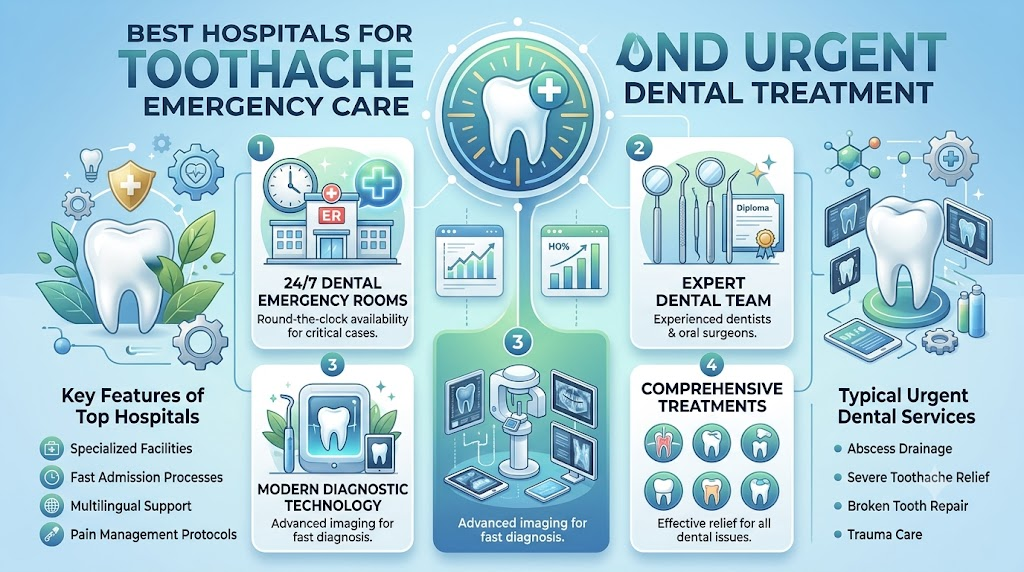
The best hospitals for toothache emergency care offer suitable assessment, trained dental staff, and clear treatment plans. However, not every toothache needs a hospital emergency department. Many patients need an emergency dentist who can treat the cause directly.
This guide explains common causes, warning signs, treatment options, and ways to compare dental services. You can also explore patient information at Bestdentalhospitals to learn more about dental care options.
What Is a Dental Emergency?
A dental emergency is a mouth or tooth problem that needs quick professional care. It may cause severe pain, bleeding, swelling, or damage to a tooth. Some problems can also threaten your general health.
Common dental emergencies include:
- Severe or lasting tooth pain
- A dental abscess, which is a pocket of pus
- Swelling of the face or gums
- A cracked or broken tooth
- A tooth knocked out by an injury
- Bleeding that does not stop
- A serious injury to the mouth or jaw
Not every toothache needs hospital emergency care. A dentist can often treat tooth decay, damaged fillings, and many infections. However, serious swelling or breathing problems need emergency medical attention.
Common Causes of Sudden Toothache
Tooth pain can start for many reasons. A dental examination helps identify the cause and the right treatment.
Tooth Decay
Tooth decay happens when bacteria damage the hard outer part of a tooth. Early decay may cause no pain. Deeper decay can lead to sharp pain or sensitivity to hot and cold foods.
Infection Inside a Tooth
Bacteria can reach the soft tissue inside a tooth. This tissue contains nerves and blood vessels. Infection may cause lasting pain, tenderness, or swelling.
Dental Abscess
A dental abscess is a pocket of pus caused by infection. It may develop near a tooth root or in the gums. The area may hurt, swell, or produce a bad taste.
Cracked or Broken Teeth
A fall, accident, or hard bite can crack a tooth. Pain may occur while chewing or when drinking something cold. A dentist should assess the damage promptly.
Gum Disease
Gum disease affects the tissues around the teeth. It may cause swollen gums, bleeding, tenderness, or loose teeth. Advanced disease can lead to serious dental problems.
Other Possible Causes
Food trapped between teeth can cause pressure and gum pain. A damaged filling or crown may expose sensitive tooth tissue. Wisdom teeth can also cause pain when they lack space or become infected.
Dental injuries may damage teeth, gums, or the jaw. Pain alone cannot confirm the cause. A qualified dentist must examine the mouth and may need dental X-rays.
When Should You Seek Emergency Dental Care?
Contact a dentist promptly when tooth pain is severe, lasting, or getting worse. Do not ignore pain that affects sleep, eating, or daily tasks.
Seek urgent dental advice if you notice:
- Pain when biting or chewing
- Swelling around a tooth or gum
- Fever with tooth pain
- Pus or a bad taste near a painful tooth
- A broken tooth or recent dental injury
- A loose adult tooth after an accident
- Pain that returns after temporary relief
Pain may improve even when the cause remains. For example, an infected tooth may still need treatment after the pain changes. Do not delay care just because the discomfort becomes less severe.
When Is a Hospital Emergency Department Needed?
Some dental problems can become medical emergencies. They may spread beyond the tooth and affect breathing, swallowing, or nearby tissues.
Seek emergency medical care immediately if you have:
- Difficulty breathing, swallowing, or speaking
- Rapidly spreading swelling of the mouth, face, or neck
- Swelling near the eye with vision changes
- Heavy bleeding that will not stop
- A serious facial or jaw injury
- Severe illness with signs of a spreading infection
Call local emergency services if breathing or swallowing becomes difficult. Do not wait for a routine dental appointment.
A hospital emergency department can assess serious symptoms and provide urgent medical treatment. It may also arrange specialist care when needed. Not every emergency department has a dentist available at all times.
Best Hospitals for Toothache Emergency Care: What to Look For
Choosing suitable care can help you receive timely assessment and treatment. Focus on safety, dental expertise, and access to follow-up care rather than advertising claims.
Consider these important factors before choosing a hospital or dental facility.
Qualified Dental Professionals
Ask whether the facility has qualified dentists or oral surgeons. Check their training, registration, and experience with urgent dental problems. Complex injuries or infections may require specialist care.
Diagnostic Services
Dental X-rays may help identify decay, infection, or damage below the gum line. Ask whether suitable imaging is available when needed. The clinician will decide which tests are appropriate.
Emergency Treatment Options
Check whether the facility can assess dental abscesses, repair damaged teeth, and arrange extractions when needed. Some cases may require root canal treatment or specialist referral.
Anesthesia and Infection Control
Ask about safe anesthesia services when treatment requires them. The facility should follow suitable cleaning, sterilization, and infection prevention practices. Staff should also explain treatment risks and pain relief options.
Clear Fees and Follow-Up Care
Ask for a treatment estimate when circumstances allow. Check which services and follow-up visits are included. Also ask whom to contact if pain or swelling worsens later.
Confirm qualifications, services, and opening hours directly with the facility. Some hospitals may not offer emergency dental treatment around the clock. Call ahead when it is safe to do so.
What to Compare in Emergency Dental Services
| Factor | What to Check | Why It Matters |
|---|---|---|
| Availability | Emergency appointments and opening hours | Helps patients find timely care |
| Dental expertise | Qualified dentists or oral surgeons | Supports appropriate assessment |
| Diagnostic services | Access to dental X-rays when needed | Helps identify the cause |
| Treatment options | Infection care, repair, or extraction | Helps match services to patient needs |
| Costs | Fees and included services | Helps clarify likely expenses |
| Follow-up | Aftercare and referral arrangements | Supports continued treatment |
Hospital Emergency Department or Emergency Dentist?
A dental clinic mainly treats problems affecting teeth and gums. An emergency dental service offers urgent appointments for problems such as severe toothache, broken teeth, and dental infections.
A hospital emergency department treats serious medical problems. It is often the right place for breathing problems, severe facial swelling, uncontrolled bleeding, or major injuries.
A dentist is usually best placed to treat the cause of tooth pain. The hospital may provide initial assessment and stabilization before arranging dental care.
If you have serious warning signs, do not delay emergency medical treatment while searching for a dentist. For severe tooth pain without dangerous symptoms, contact an emergency dental service promptly.
What Happens During an Emergency Dental Visit?
The dental team will ask about your symptoms and medical history. Tell them when the pain started and whether it has changed.
The visit may include these steps:
- Examination of your teeth, gums, mouth, and face
- Questions about medicines, allergies, and health conditions
- Dental X-rays when needed
- Assessment for decay, infection, swelling, or injury
- A discussion of suitable treatment options
- Written aftercare advice and follow-up instructions
Treatment depends on the cause and severity of the problem. It may include a filling, root canal treatment, drainage of an abscess, tooth repair, or extraction.
Some patients need treatment in more than one visit. The dentist will explain the options and help you understand the next steps.
How Dental Infections Are Treated
A dental abscess develops when bacteria cause an infection and pus collects. It may cause throbbing pain, swelling, tenderness, or fever. The infection needs prompt professional assessment.
Treatment may involve draining the pus and treating the affected tooth. A root canal may help save the tooth in suitable cases. Sometimes, the dentist may need to remove the tooth.
Antibiotics are not needed for every toothache. They may be used when an infection spreads or when specific medical signs make them appropriate. They do not replace necessary dental treatment.
Never use leftover antibiotics or take prescription medicines without professional advice. Delayed treatment can allow some infections to worsen.
What to Do While Waiting for Dental Care
Home care may offer temporary relief, but it cannot fix every cause of tooth pain. Arrange urgent dental advice and follow these simple steps.
- Rinse gently with warm salt water if you can spit safely.
- Eat soft foods and chew on the other side.
- Avoid foods and drinks that trigger pain.
- Apply a cold compress outside the cheek if swelling is present.
- Brush gently and keep your mouth clean.
- Ask a dentist or pharmacist about suitable pain relief.
Do not place aspirin or harsh substances directly on the tooth or gums. Do not try to drain an abscess at home. Avoid using sharp objects to remove trapped food.
For children, seek age-appropriate advice from a dentist or pharmacist. Never give a child adult medicines or doses.
Toothache Warning Signs and Where to Seek Help
| Symptom | Recommended Action | Urgency |
|---|---|---|
| Mild tooth pain without swelling | Arrange a dental appointment | Prompt assessment if persistent |
| Severe or lasting tooth pain | Contact an emergency dentist | Urgent |
| Tooth pain with fever or facial swelling | Seek urgent dental assessment | Urgent |
| Knocked-out adult tooth | Seek emergency dental care immediately | Time-sensitive |
| Heavy bleeding that will not stop | Seek emergency medical care | Emergency |
| Swelling with difficulty breathing or swallowing | Call local emergency services or go to an emergency department | Immediate emergency |
Symptoms can vary, and this table cannot replace professional assessment. When in doubt, seek medical advice. Breathing problems, swallowing problems, and serious injuries need immediate attention.
What to Expect From Emergency Dental Costs
The cost of emergency dental care depends on several factors. These may include the examination, imaging, treatment, anesthesia, and follow-up visits.
A simple examination may involve different fees from a root canal or extraction. Some patients may also need specialist treatment or additional visits.
Ask for a clear estimate when possible. Check whether the estimate includes tests, treatment, medicines, and follow-up care. Do not delay emergency treatment for breathing problems or other severe symptoms because costs are uncertain.
How to Prepare for an Emergency Dental Visit
Preparing a few details can help the dental team assess your problem. Bring a list of current medicines, known allergies, and relevant medical conditions.
Be ready to explain:
- When the tooth pain began
- Whether pain is constant or comes and goes
- Whether you have swelling, fever, or bleeding
- Whether a recent injury or dental procedure occurred
- Whether you have trouble swallowing or breathing
- Which medicines you have taken for the pain
Share all relevant health information with the clinician. If you have breathing or swallowing problems, seek emergency help rather than delaying care to gather documents.
Frequently Asked Questions
1. When should I seek emergency care for a toothache?
Seek urgent dental care for severe, lasting, or worsening pain. Get emergency medical help for breathing problems, swallowing difficulty, serious swelling, or uncontrolled bleeding.
2. Should I visit a hospital or an emergency dentist?
An emergency dentist can often treat the cause of tooth pain. A hospital emergency department is important for severe swelling, major injuries, or other dangerous symptoms.
3. Can a dental abscess go away on its own?
A dental abscess usually needs professional treatment. Pain may change, but the infection can remain. Arrange prompt dental care.
4. Does every toothache need antibiotics?
No. Many toothaches need dental treatment rather than antibiotics. A clinician will decide whether antibiotics are appropriate.
5. What should I do if my face swells from tooth pain?
Seek urgent dental assessment. If swelling spreads quickly or affects breathing, swallowing, or vision, seek emergency medical care immediately.
6. Can a hospital emergency department treat a broken tooth?
The team can assess serious injuries and provide urgent care. Some hospitals may not offer complete dental treatment, so specialist follow-up may be needed.
7. What can I do while waiting for an emergency dentist?
Keep your mouth clean, eat soft foods, and avoid triggers. A cold compress may help with swelling. Ask a professional about suitable pain relief.
8. How can I compare hospitals for emergency dental care?
Check dental staff qualifications, emergency access, imaging, treatment options, fees, and follow-up support. Confirm services directly with the facility.
9. When is a knocked-out tooth an emergency?
A knocked-out adult tooth needs immediate dental care. Handle it carefully by the crown, not the root. Seek urgent advice on safe storage and transport.
10. What symptoms mean I need immediate medical attention?
Breathing difficulty, swallowing problems, rapidly spreading swelling, chest symptoms, heavy bleeding, or serious facial injuries require immediate medical assessment.
Conclusion
Severe or lasting tooth pain should never be ignored. Prompt assessment can help identify the cause and guide suitable treatment.
Choose qualified dental professionals and check the facility’s emergency services, safety standards, and follow-up support. Seek emergency help for dangerous symptoms, and follow your clinician’s advice throughout treatment.