Dental implants can replace missing teeth. They can help restore a natural-looking smile. Implant placement needs careful planning and dental care. So, choosing the right dental care setting matters. Patients should check dentist training, imaging, hygiene, and follow-up care. Each person has different dental needs and health history. For dental hospital research, visit BESTDENTALHOSPITALS.COM.
What Are Dental Implants?
A dental implant can act like an artificial tooth root. It is placed into the jawbone by a dental professional. A crown, bridge, or denture may later attach to it.
Dental implants are one tooth replacement option. They are not suitable for every person. A dental professional can assess oral health and bone support.
The dental implant treatment plan can vary by patient. It may also depend on the number of missing teeth. A proper dental implant assessment helps the team plan care.
What Is Dental Implant Placement?
Dental implant placement is done in stages. First, the dental team studies the mouth and teeth. They may also use dental imaging for planning.
The implant is then placed into the jawbone. Healing happens before the final tooth is added. The final tooth is called a restoration.
The full process can include consultation, planning, placement, healing, and restoration. Each stage can take different amounts of time. Your dental team can explain the planned steps.
Why Does Hospital Choice Matter?
A dental implant hospital should support safe and organized care. Qualified dental professionals are an important part of this process. Clean treatment areas are also important.
Good planning may involve dental imaging and several dental experts. Some cases may also need oral surgery support. Follow-up care is another key part of dental implant care.
Patients should also ask about emergency support. They should learn who to contact after treatment. These details can make the care process easier.
What Makes a Hospital Suitable for Dental Implants?
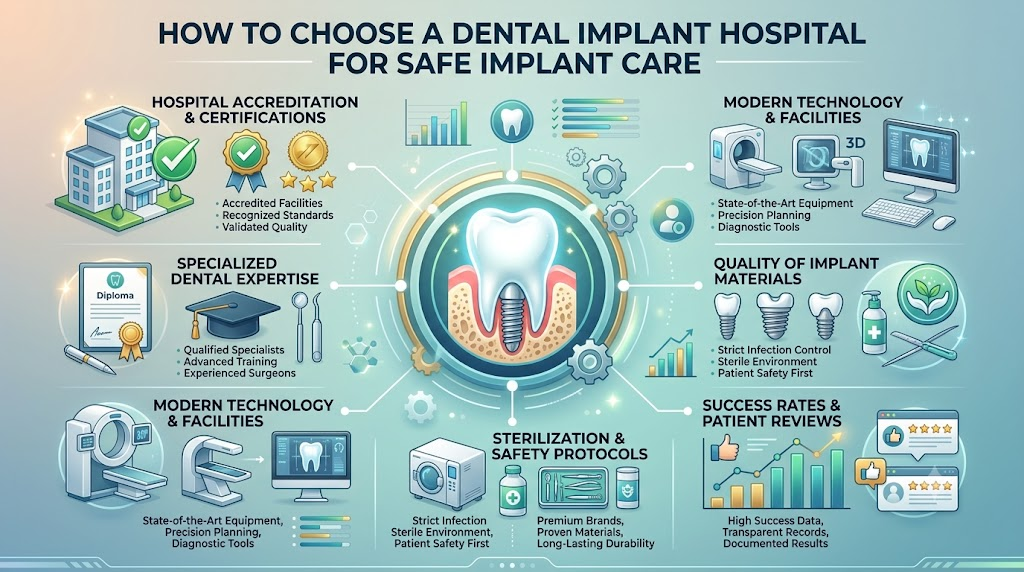
Patients can compare several basic factors. Start with dentist qualifications and implant experience. Then check the dental facilities and imaging services.
Sterilization practices also matter. Clear treatment plans can help patients understand their care. Written cost details can also reduce confusion.
Follow-up care should be explained before treatment begins. Patient communication is important too. Patients should verify all current services directly with the hospital.
Dentist Qualifications and Experience
Dental implant care may involve different dental specialists. An implant dentist may focus on implant treatment. An oral surgeon may manage certain surgical needs.
A periodontist focuses on gums and supporting tissues. A prosthodontist focuses on tooth replacement and restoration. The right specialist depends on the patient’s needs.
Training and experience can help support careful planning. Patients should ask about the dentist’s qualifications. They can also ask which specialist will handle each stage.
Dental Implant Planning
Planning comes before dental implant placement. The dentist first reviews the mouth and teeth. They may also ask about medical history.
The team may check gum health and jawbone support. They may study the bite and nearby teeth. Dental imaging may also help with planning.
The final tooth design is another important part. It helps the team plan the restoration. A clear plan can help everyone understand the treatment stages.
Dental Imaging for Implant Placement
Dental imaging can help the dental team study the jaw. X-rays can show teeth and nearby bone. A three-dimensional scan can provide more detailed views.
A 3D dental scan may help the team study bone shape. It can also show nearby structures. The dental team decides which imaging is suitable.
Patients should not try to read scans themselves. A dental professional must assess the images. Imaging supports planning but does not guarantee treatment results.
Gum Health Before Dental Implants
Healthy gums are important for good oral care. Gum problems may need attention before implant treatment. A dental professional can check the gums during an assessment.
Regular dental hygiene also remains important. Patients should follow their dentist’s oral care advice. Do not start new dental products without professional guidance.
Gum health and dental implants should be discussed during planning. The dental team can explain any concerns. They can also explain what may need attention first.
Jawbone Health and Dental Implants
Dental implants need suitable support from the jawbone. The dental team checks bone health during planning. Bone support can differ from one person to another.
Some patients may need extra procedures before placement. A bone graft is one possible procedure. However, it is not needed by everyone.
Only a dental professional can assess bone support. Patients should ask about their own dental implant assessment. The care plan may change based on the findings.
Dental Implant Placement Process
The general dental implant process may include these steps:
- Consultation: The dentist discusses dental needs and goals.
- Dental examination: The mouth and teeth are checked.
- Imaging and planning: Images help guide treatment planning.
- Implant placement: The implant is placed into the jawbone.
- Healing: The body needs time to heal.
- Restoration: A crown, bridge, or denture may be added.
The exact process can vary. Some cases may need extra stages. The dental team should explain the planned process clearly.
Dental Implant Materials
Dental implants may use materials such as titanium. The material choice can depend on the dental treatment plan. Different cases may need different approaches.
Patients should ask which implant material is planned. They can also ask why it was selected. Avoid choosing an implant based only on brand names.
A dental professional can explain material choices clearly. Patients should also ask about the planned restoration.
Technology in Dental Implant Care
Modern dental technology may support treatment planning. Digital imaging can help the team study the mouth. Three-dimensional scans can show the jaw in more detail.
Digital impressions can also support restoration planning. Computer-assisted planning may help the dental team prepare. These tools can support care but do not guarantee results.
Patients can ask what technology is available. They can also ask how it will support their treatment plan.
Sterilization and Dental Safety
Clean dental facilities are important for safe care. Dental tools should be handled with proper infection-control practices. Treatment areas should also be kept clean.
Instrument sterilization is a key part of dental safety. Safe equipment handling also matters. Patients can ask the hospital about its cleaning practices.
These questions are reasonable before dental implant treatment. Clear answers can help patients understand the care setting.
Dental Implant Cost and Treatment Planning
Dental implant cost can vary widely. Several factors can affect the total cost. These may include the number of implants and restorations.
Imaging and extra procedures may also affect cost. Specialist fees can vary too. Hospital location can also affect the final estimate.
Patients should ask for a clear written estimate. They should ask what the estimate includes. They should also ask about possible separate costs.
Dental Implant Recovery and Follow-Up
Dental implant recovery takes time. The body needs time to heal after placement. Follow-up visits help the dental team monitor progress.
The dentist may check healing before the final restoration. Follow-up needs can vary by patient. Some cases may need more visits than others.
Patients should follow their dental team’s instructions. They should also report unusual concerns promptly. Do not change the care plan without advice.
Dental Hygiene After Implant Placement
Dental hygiene remains important after implant placement. Regular oral care helps maintain overall mouth health. The dental team can explain suitable care for each patient.
Patients should follow their dentist’s instructions closely. Avoid adding special products without professional advice. Regular dental visits may also remain part of ongoing care.
Good dental implant aftercare includes careful follow-up. It also includes attention to changes in the mouth. Ask the dental team about any new concerns.
Who May Need Extra Dental Planning?
Some patients may need more careful planning. This can include people with gum problems or low bone support. A complex dental history may also need extra review.
People with diabetes may need individual assessment. Smoking can also affect dental care decisions. Multiple missing teeth may require a wider treatment plan.
These factors do not automatically rule out implants. A dental professional must assess each person. The final plan depends on individual needs.
Dental Implants for One Missing Tooth
One missing tooth may have several replacement options. An implant-supported crown is one possible option. Other tooth replacement choices may also exist.
The best option depends on the patient’s mouth and needs. A dental professional can explain the choices. Patients should compare these choices during consultation.
Dental implant hospitals may offer different services. Patients should confirm available services before booking treatment.
Dental Implants for Multiple Missing Teeth
Several missing teeth may need a different plan. Implant-supported bridges are one possible approach. Implant-supported dentures are another option.
The right plan depends on oral health and other factors. Bone support and bite may also matter. A dental team can explain the available options.
Do not assume one treatment suits every patient. Dental implant placement should follow a professional assessment.
Full-Mouth Dental Implant Planning
Full-mouth treatment can involve several stages. Careful planning is important when many teeth are missing. The team may study gums, bone, bite, and restorations.
Several dental professionals may also work together. Follow-up care can be an important part of the plan. Each case needs its own assessment.
Full-mouth implants are not right for everyone. Patients should discuss all tooth replacement options with a qualified dental professional.
Dental Implant Hospital vs Dental Clinic
Hospitals and dental clinics can provide different care settings. Some hospitals may have several specialists in one place. Some clinics may focus on specific dental services.
Complex cases may involve multiple dental professionals. Hospital-based care may also offer wider support. However, one setting is not always better for everyone.
Patients should compare the services they actually need. They should also check qualifications, facilities, planning, and follow-up care.
Dental Implant Hospital Comparison
| Hospital Factor | What Patients Can Check |
|---|---|
| Dentist qualifications | Training and implant experience |
| Dental imaging | Available planning technology |
| Hygiene | Sterilization and infection control |
| Treatment planning | Clear written treatment plan |
| Follow-up care | Post-treatment monitoring |
How to Compare Dental Implant Hospitals
Start by checking dentist qualifications. Next, review implant experience and dental facilities. Then ask about imaging and treatment planning.
Hygiene practices should also be discussed. Follow-up care should be clear before treatment. Patients should also understand the expected costs.
Do not choose a hospital based on one factor. A complete comparison gives a clearer picture. BESTDENTALHOSPITALS.COM can support dental hospital research during this process.
Patient Reviews and Dental Implant Experiences
Online reviews may provide useful service information. They may describe communication or general patient experiences. However, reviews cannot predict another person’s treatment result.
Patients should read reviews with care. Online reviews may not show the full treatment picture. They should not replace a dental consultation.
Ask direct questions about care and follow-up. Also confirm current services with the hospital.
Dental Implant Questions About Safety
Dental procedures can have possible risks. These may include infection, discomfort, swelling, or healing problems. Implant-related problems can also happen.
Risk can depend on the person and procedure. Medical and dental history may also matter. A dental professional can explain personal risks.
Patients should report concerning symptoms to their dental team. They should seek urgent care for severe or sudden problems.
How BESTDENTALHOSPITALS.COM Can Help
BESTDENTALHOSPITALS.COM helps readers research dental hospitals. It provides information for dental care and hospital discovery. Readers can use it when exploring implant care options.
The platform can support hospital and treatment research. Patients should confirm current implant services directly. Dentist credentials and treatment details should also be checked.
The platform does not guarantee treatment quality or results. Final dental decisions should follow professional assessment.
Practical Example
A person has a missing tooth and wants an implant. They compare dental hospitals by dentist qualifications, imaging, and planning.
They also check hygiene, costs, and follow-up care. Then they book a dental implant consultation. The dental team can assess their individual needs.
Frequently Asked Questions
1. What is dental implant placement?
Dental implant placement puts an artificial tooth root into the jawbone. A replacement tooth may later attach to it. The process can happen in several stages.
2. How do I choose a hospital for dental implants?
Compare dentist qualifications, imaging, hygiene, planning, cost, and follow-up care. Also check the hospital’s current implant services.
3. What qualifications should an implant dentist have?
Training and experience in implant care are important. The right specialist can depend on the patient’s needs.
4. Are dental implants suitable for everyone?
No. Suitability depends on dental and general health. A dental professional must assess each patient.
5. Why is dental imaging used for implant planning?
Imaging helps the dental team study teeth and jawbone. It can also show nearby structures.
6. How long does dental implant treatment take?
Treatment time varies between patients. It can depend on healing and the number of treatment stages.
7. What should patients ask about dental implant costs?
Ask for a clear written treatment estimate. Check what is included and which costs may be separate.
8. Is follow-up care important after implant placement?
Yes. Follow-up visits help the dental team check healing. They can also review the progress of treatment.
9. Can dental hospitals provide care for complex implant cases?
Some hospitals may have several dental specialists. Complex cases may need support from more than one professional.
10. How can BESTDENTALHOSPITALS.COM help with dental implant hospital research?
BESTDENTALHOSPITALS.COM helps readers research dental hospitals and implant care. Patients should confirm services and treatment details directly with each hospital.
Final Thoughts
Choosing a dental implant hospital needs careful research. Check dentist qualifications and implant experience. Also review planning, imaging, hygiene, and facilities.
Cost clarity is also important. Ask for a written treatment plan and estimate. Follow-up care should be explained before treatment begins.
Dental implant suitability differs from person to person. A qualified dental professional should assess individual needs. Patients should discuss their dental history before treatment.
BESTDENTALHOSPITALS.COM can help with dental hospital research. Use the platform to learn about care options and hospital factors. Always confirm current services directly with the dental team.